
Shopping Cart

Prosthetic gelatin
Prosthetic gelatin is the most accessible entry-level material for making character prosthetics. It melts in a water bath, is poured into the mold, and once cooled it produces a soft, translucent piece with a very convincing subcutaneous appearance. Because it is reusable and food-grade, it's ideal both for training workshops and for productions on a tight budget. It can be painted directly with alcohol-activated palettes and accepts intrinsic pigmentation through flocking.
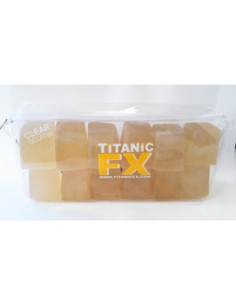 Colorless Prosthetic Gelatin
300 Bloom, food-grade, reusable.
Colorless Prosthetic Gelatin
300 Bloom, food-grade, reusable.
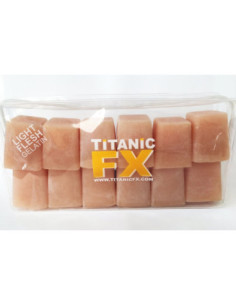 Light Flesh Prosthetic Gelatin
Base flesh tone, ready to mold.
Light Flesh Prosthetic Gelatin
Base flesh tone, ready to mold.
Liquid latex for masks and prosthetics
Latex remains one of the most versatile materials in the SFX workshop. You can use it to make poured masks in plaster molds, create lightweight prosthetics with a velvety appearance, or build skin layers for animatronic creatures. Prosthetic latex foam requires an oven but delivers the level of detail and flexibility demanded by film productions. Poured latex, on the other hand, is worked at room temperature and accepts direct pigmentation.
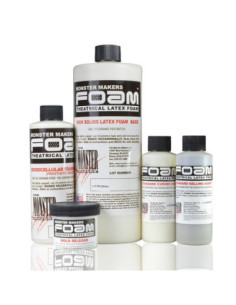 Prosthetic Latex Foam
Prosthetic grade, ultra-fine cells, oven-cured.
Prosthetic Latex Foam
Prosthetic grade, ultra-fine cells, oven-cured.
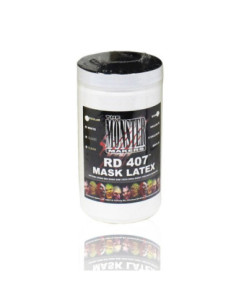 RD-407 Masking Latex Standard
Natural poured latex for plaster molds.
RD-407 Masking Latex Standard
Natural poured latex for plaster molds.
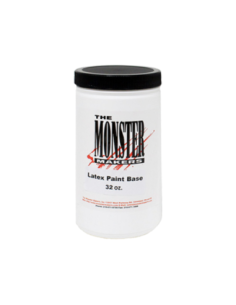 Latex Paint Base
Fluid base for latex paints and bald caps.
Latex Paint Base
Fluid base for latex paints and bald caps.
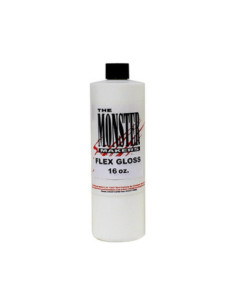 Flex Gloss
Flexible gloss coating, non-yellowing.
Flex Gloss
Flexible gloss coating, non-yellowing.
Alginates for face and body molds
Alginate is the first step when you need to capture an actor's negative in real time. It is harmless to the skin, generates no heat when setting, and reproduces the detail of pores and wrinkles with great fidelity. Once you have the negative, you fill it with plaster or resin to obtain the positive on which to build the prosthetic. Two setting speeds are available so you can adapt the process to the area being molded and the team's experience level.
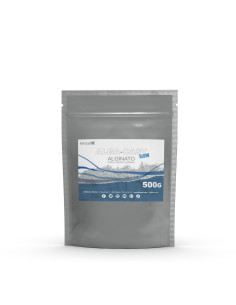 Alga-Cast Slow
Slow set, more working time for full faces.
Alga-Cast Slow
Slow set, more working time for full faces.
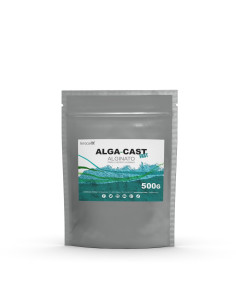 Alga-Cast Fast
Fast set, ideal for hands and small areas.
Alga-Cast Fast
Fast set, ideal for hands and small areas.
Cap plastics and encapsulants for prosthetics
The encapsulant is the layer that coats the silicone or gelatin prosthetic and allows alcohol-activated makeup to adhere without beading off. Without it, palettes slide on the silicone and the final result loses consistency. Depending on the solvent you use in your workflow — acetone or isopropyl alcohol — you'll choose one encapsulant or another. All of them form an elastic, transparent film that moves in sync with the prosthetic.
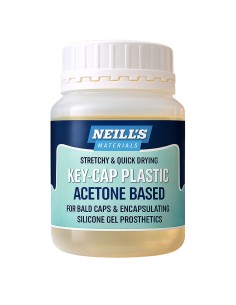 Key-Cap Plastic
Acetone base, for silicone prosthetics and bald caps.
Key-Cap Plastic
Acetone base, for silicone prosthetics and bald caps.
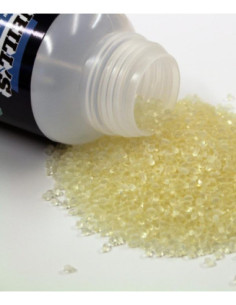 Key-Cap Beads
Acetone-base beads, dilute to your ideal consistency.
Key-Cap Beads
Acetone-base beads, dilute to your ideal consistency.
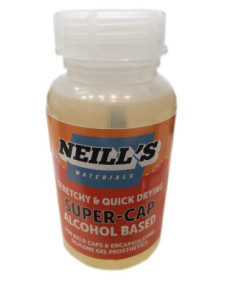 Super-Cap
IPA base, elastic and transparent for FX silicone.
Super-Cap
IPA base, elastic and transparent for FX silicone.
Adhesives and activators for prosthetics
Adhesion is the critical point of any prosthetic application: a poorly bonded prosthetic lifts with the actor's first expression and ruins the take. The Telesis adhesive family, formulated to medical grade, offers different drying speeds and formulations — silicone, acrylic, roll-on or pen applicator — so you can choose the one that best suits each area of the face and the time available. Complete the system with skin protectors, thinners, and sealers to extend the life of the application throughout long shooting days.

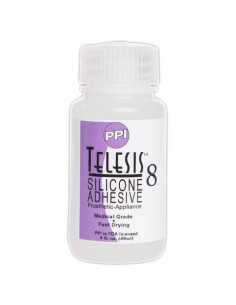 Telesis 8 Silicone Adhesive
Medical grade, strong and long-lasting for silicone.
Telesis 8 Silicone Adhesive
Medical grade, strong and long-lasting for silicone.
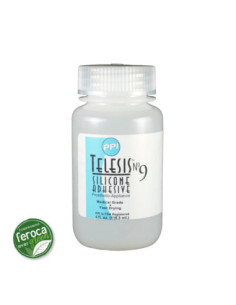 Telesis 9 Silicone Adhesive
The strongest in the range, pressure-sensitive.
Telesis 9 Silicone Adhesive
The strongest in the range, pressure-sensitive.
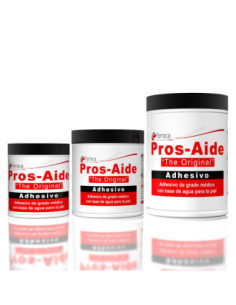 Pros-Aide
Water-based, non-toxic, a classic of the FX industry.
Pros-Aide
Water-based, non-toxic, a classic of the FX industry.
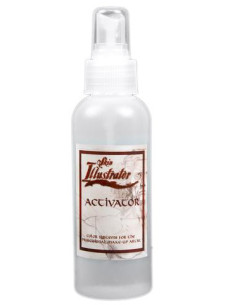 Skin Illustrator Activator
Ethanol+IPA, activates and sets alcohol palettes.
Skin Illustrator Activator
Ethanol+IPA, activates and sets alcohol palettes.
SFX makeup paints and alcohol palettes
Alcohol palettes are the industry standard for painting silicone, latex, and gelatin prosthetics because they adhere to any encapsulated surface, withstand sweat, and don't mix with skin oils. The Skin Illustrator range covers all needs: flesh tones, dark tones, aging effects, zombies, wounds, tattoos, hair, and teeth. If you work on location and need a compact format, go for the On Set series; if you want more pigment volume, the Single Pots are your best option.
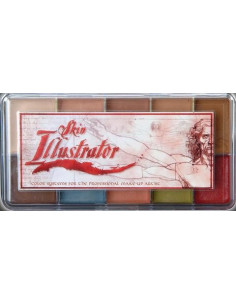 Flesh Tone Palette
10 flesh tones, professional coverage for skin.
Flesh Tone Palette
10 flesh tones, professional coverage for skin.
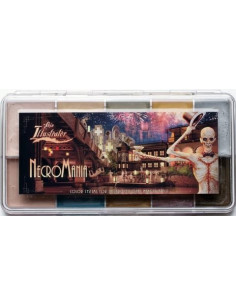 Necromania Palette
10 colors for death and decomposition effects.
Necromania Palette
10 colors for death and decomposition effects.
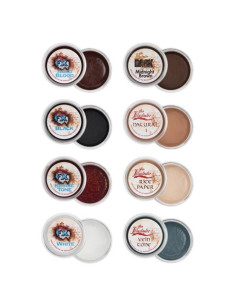 Single Pots
60% more pigment than a standard palette cell.
Single Pots
60% more pigment than a standard palette cell.
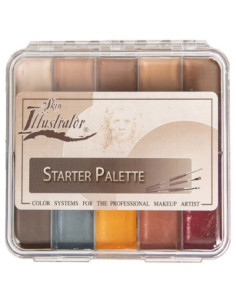 Starter Palette
10 essential colors, perfect for getting started in SFX.
Starter Palette
10 essential colors, perfect for getting started in SFX.
Artificial blood for special effects
Each type of blood has its function on set: shiny liquid blood mimics freshly shed arterial blood, pastes add dimension and texture to already built wounds, and scab blood simulates the healing process. For mouth scenes, gelatin capsules or food-grade blood are used. Choose the tone — bright arterial, medium venous, or dark aged — depending on the dramatic moment of the action.
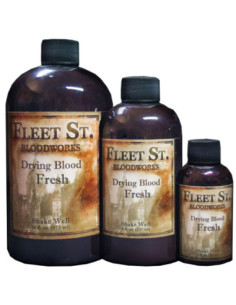 Drying Blood Fresh
Fresh tone, wet appearance when drying on skin.
Drying Blood Fresh
Fresh tone, wet appearance when drying on skin.
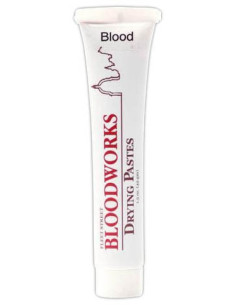 Fleet Street Blood Paste
Volume and texture paste for SFX wounds.
Fleet Street Blood Paste
Volume and texture paste for SFX wounds.
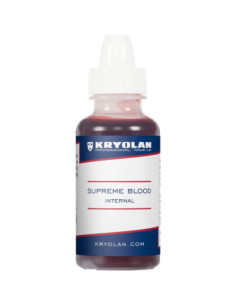 Supreme Internal Blood
Food-grade, safe for mouth and mucous membranes.
Supreme Internal Blood
Food-grade, safe for mouth and mucous membranes.
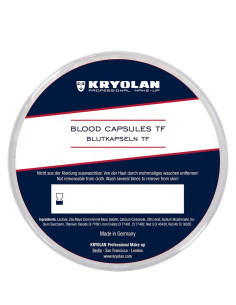 TF Blood Capsules
Bite them on camera for an immediate, safe effect.
TF Blood Capsules
Bite them on camera for an immediate, safe effect.
SFX prosthetics and transfers

Platinum silicone prosthetics are the most realistic solution for character transformations: their ultra-thin edges blend seamlessly with the actor's skin and allow an integrated makeup finish with no visible lines. If you need to replicate the same effect on multiple actors or across different takes, PTM transfers offer a quick-to-apply alternative that requires no mold-making. The professional temporary tattoos from the Tatú FX line — designed specifically for SFX — cover bruises, veins, burns, and zombie skin with a realism that holds up under camera scrutiny.
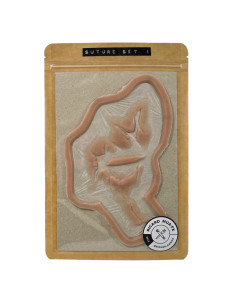 Suture Set 1 Prosthetic
Platinum silicone, realistic sutures, ultra-thin edges.
Suture Set 1 Prosthetic
Platinum silicone, realistic sutures, ultra-thin edges.
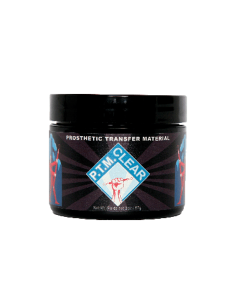 PTM Clear
Transparent transfer, reduces edge opacity.
PTM Clear
Transparent transfer, reduces edge opacity.
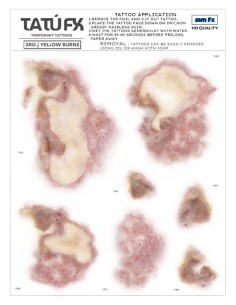 Tatú FX — 3rd Yellow Burns
7 temporary tattoos of 3rd-degree burns.
Tatú FX — 3rd Yellow Burns
7 temporary tattoos of 3rd-degree burns.
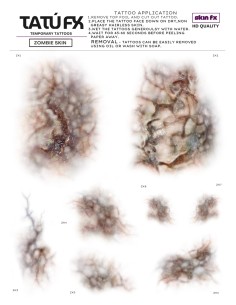 Tatú FX — Zombie Skin
8 zombie skin tattoos, professional SFX design.
Tatú FX — Zombie Skin
8 zombie skin tattoos, professional SFX design.
Makeup for teeth and mouth
Tooth effects are one of the details that most immediately break a character's credibility when poorly executed. Temporary dental lacquers are applied in seconds with a fine brush, withstand saliva throughout the entire shooting day, and are removed without damaging the enamel. Mouth FX kits add extreme colors — black, violet, blood red — for horror or fantasy characters.
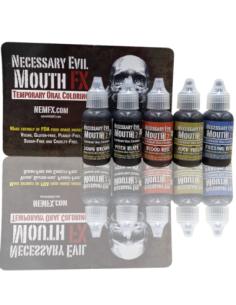 Mouth FX Kit 1
5 temporary oral colors, saliva-resistant.
Mouth FX Kit 1
5 temporary oral colors, saliva-resistant.
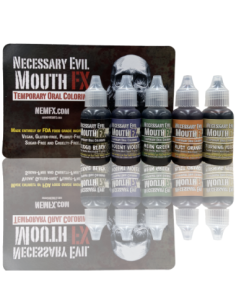 Mouth FX Kit 2
5 dark colors for horror tooth effects.
Mouth FX Kit 2
5 dark colors for horror tooth effects.
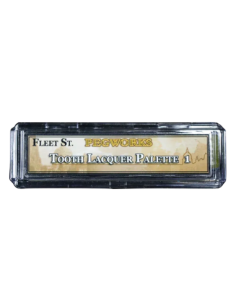 Tooth Lacquer Palette Series 1
Professional dental lacquers, brush-activated.
Tooth Lacquer Palette Series 1
Professional dental lacquers, brush-activated.
Professional brushes for SFX
A conventional makeup brush can't withstand alcohol or prosthetic adhesives. SFX-specific brushes are made with vegan synthetic bristles that are solvent-resistant, with long handles that give precise control in hard-to-reach areas. You'll find fine liners for working edge transitions, stipples for texturing, and flat brushes for applying adhesives over large areas.
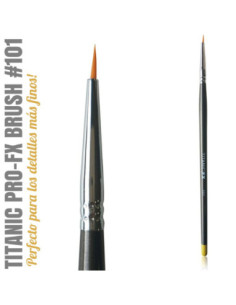 Brush 101 — Fine Liner
Fine tip for edges and prosthetic detail work.
Brush 101 — Fine Liner
Fine tip for edges and prosthetic detail work.
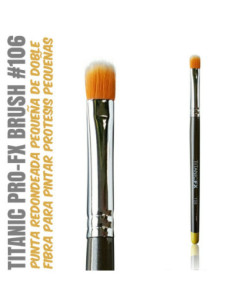 Brush 106 — Flat Stipple
Dual fiber for skin textures and veining.
Brush 106 — Flat Stipple
Dual fiber for skin textures and veining.
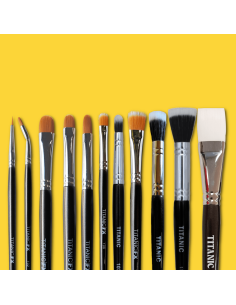 Titanic FX 11-Brush Set
Complete kit for the entire SFX workflow.
Titanic FX 11-Brush Set
Complete kit for the entire SFX workflow.
3D skin effects: waxes, scars, and wounds
When you don't have time to make a prosthetic, direct 3D-effect materials applied straight to the skin are the quickest solution. Professional wax sculpts open wounds, lumps, and deformities in seconds. Collodion creates depressions and scars by pulling the skin inward from the outside. Gelafix thermoplastic gelatin lets you build burns and wounds with great detail that holds up under subsequent makeup application.
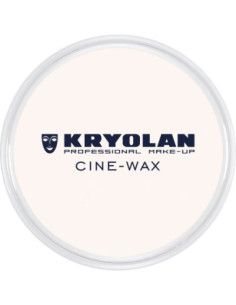 Cine-Wax
Organic wax for 3D wounds and deformities.
Cine-Wax
Organic wax for 3D wounds and deformities.
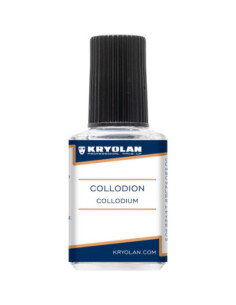 Collodion
Creates sunken scars on skin instantly.
Collodion
Creates sunken scars on skin instantly.
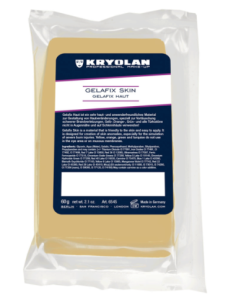 Gelafix Skin
Thermoplastic for detailed burns and wounds.
Gelafix Skin
Thermoplastic for detailed burns and wounds.
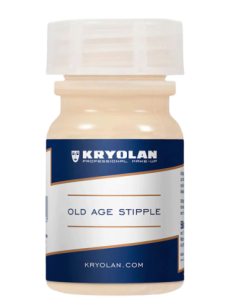 Old Age Stipple
Liquid latex for direct wrinkles and aging effects.
Old Age Stipple
Liquid latex for direct wrinkles and aging effects.
Frequently asked questions about SFX makeup
What adhesive should I use to attach a platinum silicone prosthetic?
For platinum silicone prosthetics the recommended adhesive is one from the Telesis family, available in several drying speeds. Telesis 8 is the most common: it offers a comfortable working time, strong adhesion, and is medical grade. If you need greater hold or pressure sensitivity, move up to Telesis 9. For self-applications or hard-to-reach areas, the roll-on or pen applicator format makes dosing easier. Always prep the actor's skin with Telesis Top Guard before applying the adhesive: it reduces irritation and improves adhesion.
Do I need to encapsulate the prosthetic before painting it with alcohol palettes?
Yes. Platinum silicone has a non-porous surface on which alcohol pigments don't anchor properly without an encapsulant layer. Apply Key-Cap Plastic or Super-Cap in thin coats and let it dry between each coat. Once encapsulated, the prosthetic accepts Skin Illustrator palettes and alcohol-activated liquid makeups perfectly. If you skip this step, the color moves or smears on contact.
What's the difference between prosthetic gelatin and prosthetic latex foam?
Prosthetic gelatin melts at around 60–70 °C, is poured into the mold, and sets at room temperature. It's reusable, affordable, and food-grade, but sensitive to heat: in very hot locations it can soften. Prosthetic latex foam requires mixing, pouring into a mold, and baking in an oven, but it delivers a lightness and surface detail that gelatin can't match. For theatre and low-budget productions, gelatin is the starting point; for film and television, latex foam is the professional standard.
Can I use alginate to take a mold of an actor's face safely?
Yes, as long as you use an alginate formulated specifically for body use, such as Alga-Cast Slow or Alga-Cast Fast. These alginates are non-toxic, generate no heat when setting, and reproduce skin detail without irritation. Always keep the actor's nostrils clear throughout the process and work with an assistant to monitor the setting time. Once you have the negative, fill it with plaster within the first few minutes: alginate shrinks over time and the positive will lose accuracy.
How do you remove Telesis adhesive from the actor's skin at the end of the day?
Telesis adhesive dissolves with Telesis IPM Gel or with the specific silicone remover. Apply the solvent to the edge of the prosthetic with a brush, wait a few seconds for it to penetrate under the prosthetic, and remove it carefully without pulling abruptly. Then clean any remaining adhesive from the skin with Telesis Brisk, which also refreshes and soothes the skin after a long day wearing prosthetics.
Which alcohol palette is best to start with in SFX makeup?
If you're just starting out, the Skin Illustrator Starter Palette is the most complete entry point: it brings together the 10 most-used colors in SFX and lets you learn the activation and layering technique without investing in a specialized palette. Once you've mastered the technique, you can expand with effect-specific palettes — Necromania for undead looks, Grunge for dirt, Bloody 5 for wounds — or with Single Pots to restock the tones you use most.