Shopping Cart



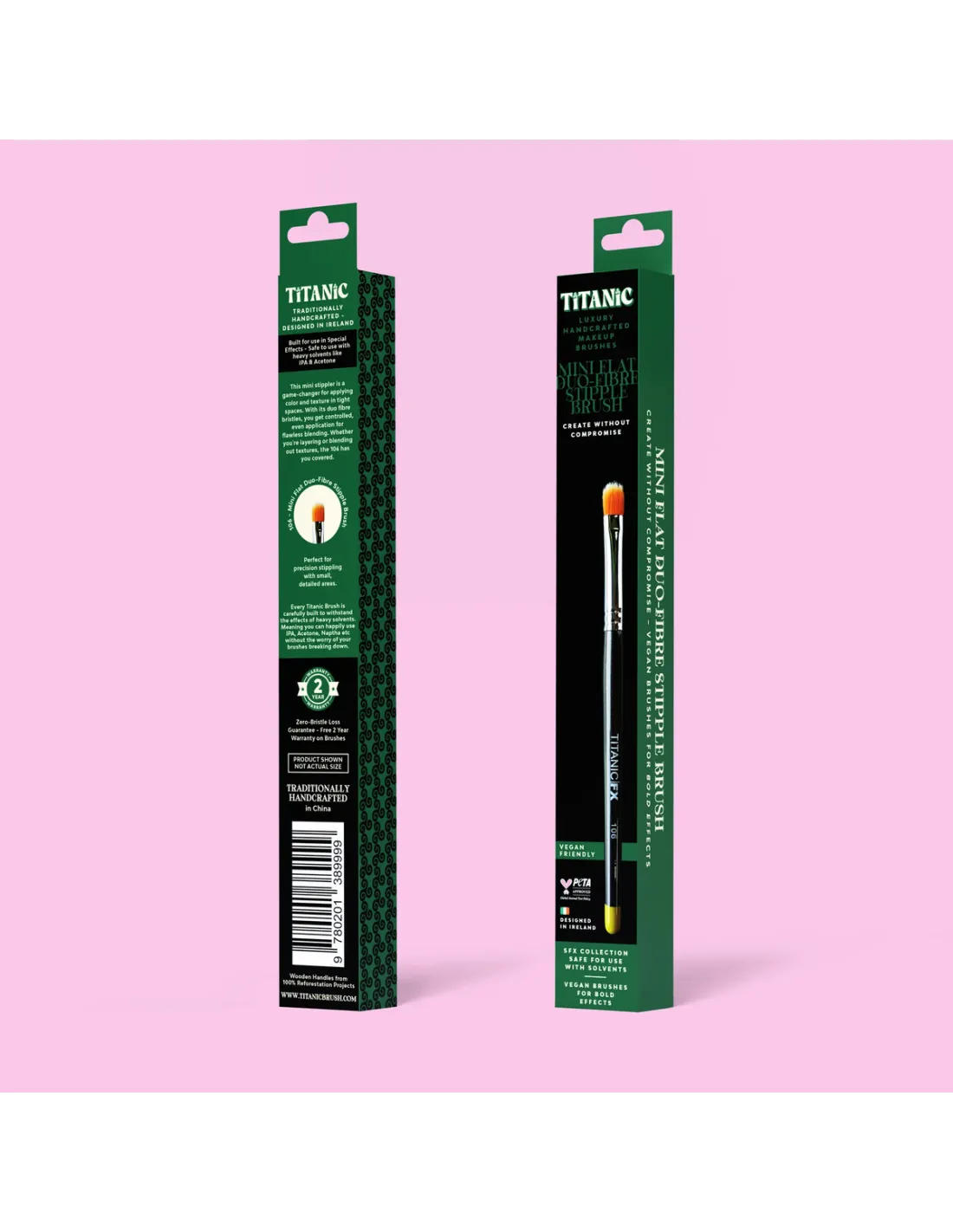
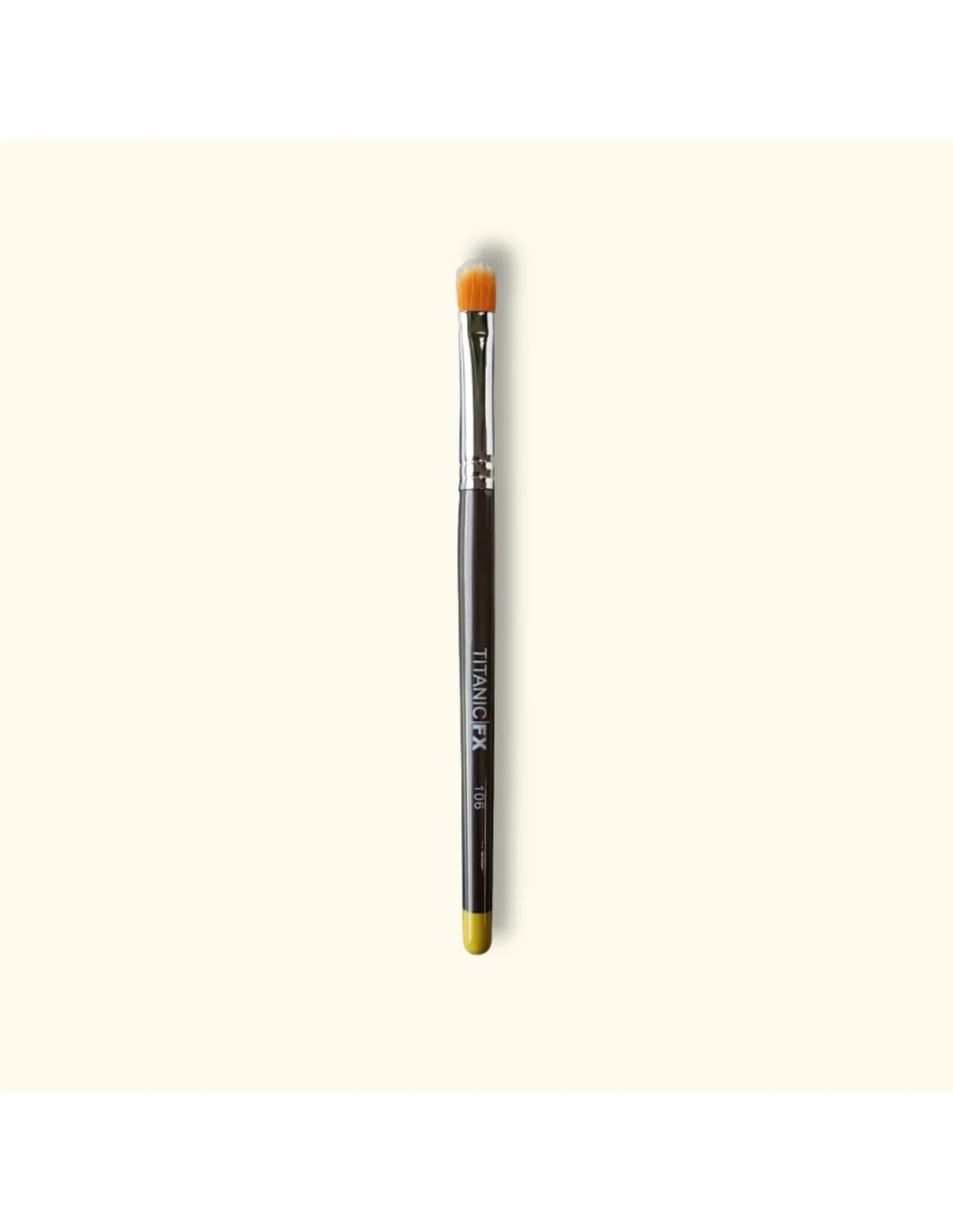
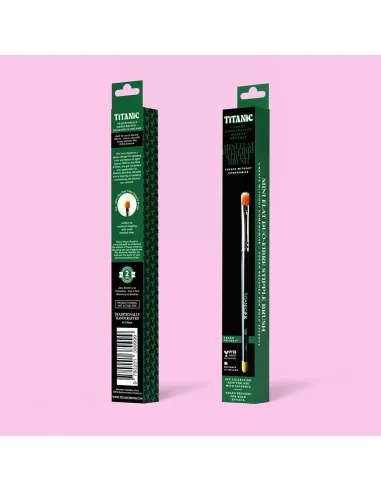
TITANIC PRO-FX BRUSH 106 -Stipple flat tip -small-
615006000
Temporarily out of stock
€15.00
18,15 € Tax incl.
18,15 € Tax incl.
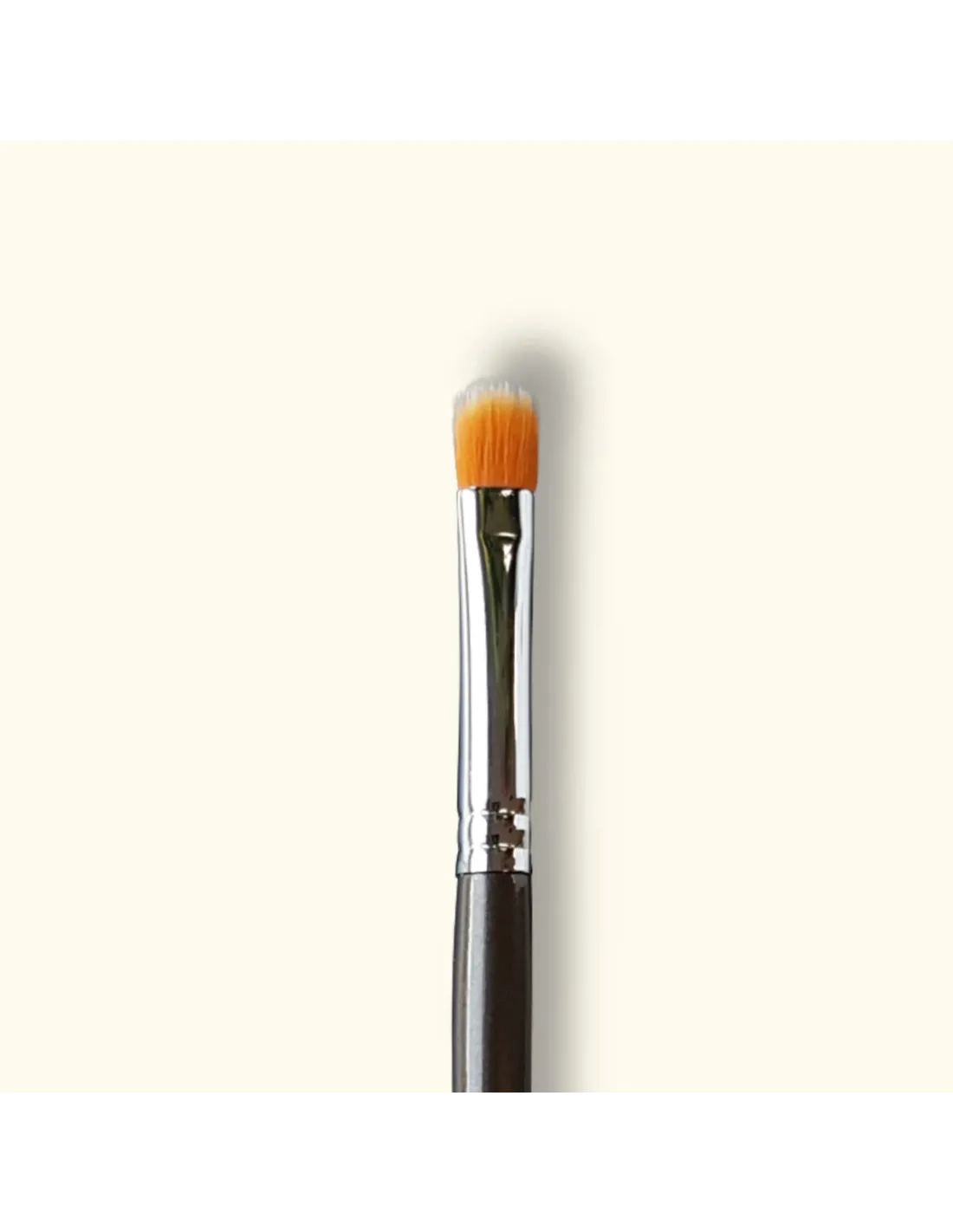
Small flat tip dual fibre stipple brush with solvent-resistant synthetic vegan bristles, for FX makeup and prosthetics.
The Titanic Pro-FX Brush 106 is a stipple brush with a small flat tip and dual fibre, specifically designed for special effects makeup and prosthetics work. Its synthetic vegan bristles resist common industry solvents and the handle is bonded with a high chemical resistance adhesive, built to withstand the demands of the workshop and film set.
Technical specifications
| Reference | Titanic Pro-FX Brush 106 |
|---|---|
| Brush type | Stipple (manual stippling) |
| Tip shape | Small flat |
| Fibre type | Dual fibre |
| Bristles | Synthetic vegan |
| Solvent resistance | Yes |
| Handle bonding | Solvent-resistant adhesive |
| Origin | Ethically sustainable materials |
| Main application | FX makeup, prosthetics, special effects |
What it is used for
The Brush 106 is designed for stipple techniques — manual stippling with a brush — that create skin textures, pores, scars and ageing effects directly on skin or on silicone and latex prosthetics. Its small flat tip allows working on detail areas where a larger brush lacks sufficient precision.
- Applying stipple textures in character makeup and special effects
- Painting and colouring silicone prosthetics with intrinsic or extrinsic paints
- Removing adhesives and prosthetics with solvents without the brush deteriorating
- Creating pore, scar and aged skin effects in detail areas
- Applying liquid latex in textured layers for damaged skin effects
- Working with acrylic, water-based and alcohol-based paints on prosthetics
- Use on film sets, theatre, cinema and professional character makeup work
How to use it
- Prepare your work area and have the paint, pigment or adhesive you are going to apply ready to hand.
- Load the brush sparingly: for stipple, just the right amount on the tip is enough. Too much product creates blotches, not texture.
- Press the flat tip onto the surface and apply pressure with a vertical dabbing motion, without dragging. Repeat the dabbing to build up the texture evenly.
- Vary the pressure to achieve different texture densities: more pressure gives a tighter texture; less pressure gives an open, airy texture.
- If working in multiple layers, allow each layer to dry before applying the next to prevent the texture from being flattened.
- When finished, clean the brush with the appropriate solvent for the material used (water for water-based paint, specific solvent for alcohol-based paint or adhesive).
- Dry the bristles by shaping them with your fingers and store the brush tip-up or horizontally to preserve its shape.
Usage tips
Controlling brush load
The stipple technique requires minimal loading. Load the brush, then wipe it once or twice on a clean surface (absorbent paper or palette) before applying it to the prosthetic or skin. This way you control exactly how much product you deposit with each dab and avoid build-ups that would ruin the texture.
Combining with other brushes in the range
The Brush 106 works best in combination with liner brushes such as the Titanic Pro-FX Brush 101 (fine liner) or the Brush 102 (angle liner). The stipple defines the background texture; the liners add the details of veins, wounds or cracks over that base.
Maintenance and lifespan
The synthetic bristles of the Brush 106 resist solvents, but careless cleaning shortens their life. Always clean the brush immediately after use, before the product dries. If you have worked with contact adhesives or dense paints, a second cleaning cycle with fresh solvent ensures no residue remains at the base of the bristles, which is where they start to split over time.
Frequently asked questions
What is the difference between a stipple brush and a regular flat brush?
A conventional flat brush is designed to drag paint in lines or across surfaces. A stipple brush like the Brush 106 has a dual fibre tip designed for vertical dabbing motion: when you press and lift, it deposits the product in small irregular dots that mimic the natural texture of skin. It is not used by dragging, but by dabbing.
Do these brushes withstand use with isopropanol and acetone?
The synthetic vegan bristles of the Brush 106 resist the common solvents used in prosthetics work, including isopropyl alcohol. Acetone with prolonged use can be more aggressive on any bristle; for occasional cleaning it holds up well, but if regular cleaning involves acetone, it is recommended to rinse with water afterwards and reshape the bristles before leaving to dry.
Can this brush be used to apply makeup silicone?
Yes. The Brush 106 is suitable for applying pigmented makeup silicone or intrinsic paints in textured layers. The stipple technique is especially useful for mimicking pore texture when working with low-viscosity silicones. Clean the brush with the recommended solvent for the silicone you are using before it cures.
How many texture layers can I build up with this technique?
There is no fixed limit: it depends on the product and the effect you are looking for. Generally, between 3 and 6 light stipple layers give a natural, three-dimensional texture result. The important thing is to let each layer dry before applying the next, especially when working with water-based paints or latex, which flatten if layered while still wet.
What advantage do synthetic vegan bristles have over natural ones for this type of work?
Natural bristles absorb product unevenly and deteriorate with solvents. The synthetic vegan bristles of the Brush 106 do not absorb; they deposit product in a more controlled manner and withstand solvents without deforming or losing bristles. For work with adhesives, alcohol-based paints and cleaning solvents, they are clearly superior.
Is it suitable for working directly on skin?
Yes, the Brush 106 is designed for special effects makeup work, which includes direct application on skin. The synthetic bristles are soft and non-irritating. For direct applications on skin, always use products approved for cosmetic use.
How do I know what size stipple brush I need?
The Brush 106 has a small flat tip, ideal for detail areas: around the eyes, nose, prosthetic edges and confined areas. For larger areas such as cheeks, forehead or body, a larger stipple brush is more appropriate. The Titanic Pro-FX range offers different options to cover all character makeup work needs.
No reviews
Tap to zoom