Shopping Cart



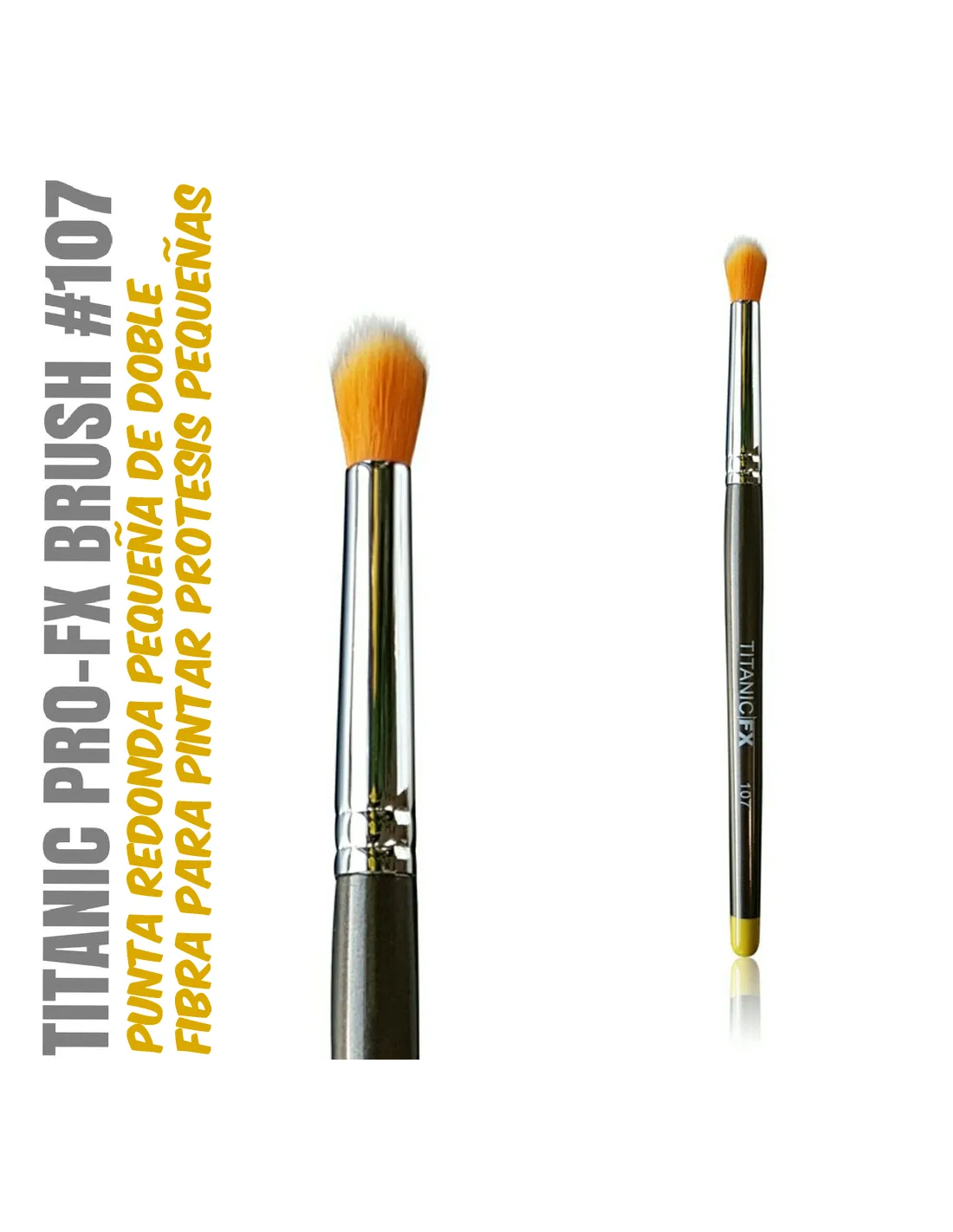
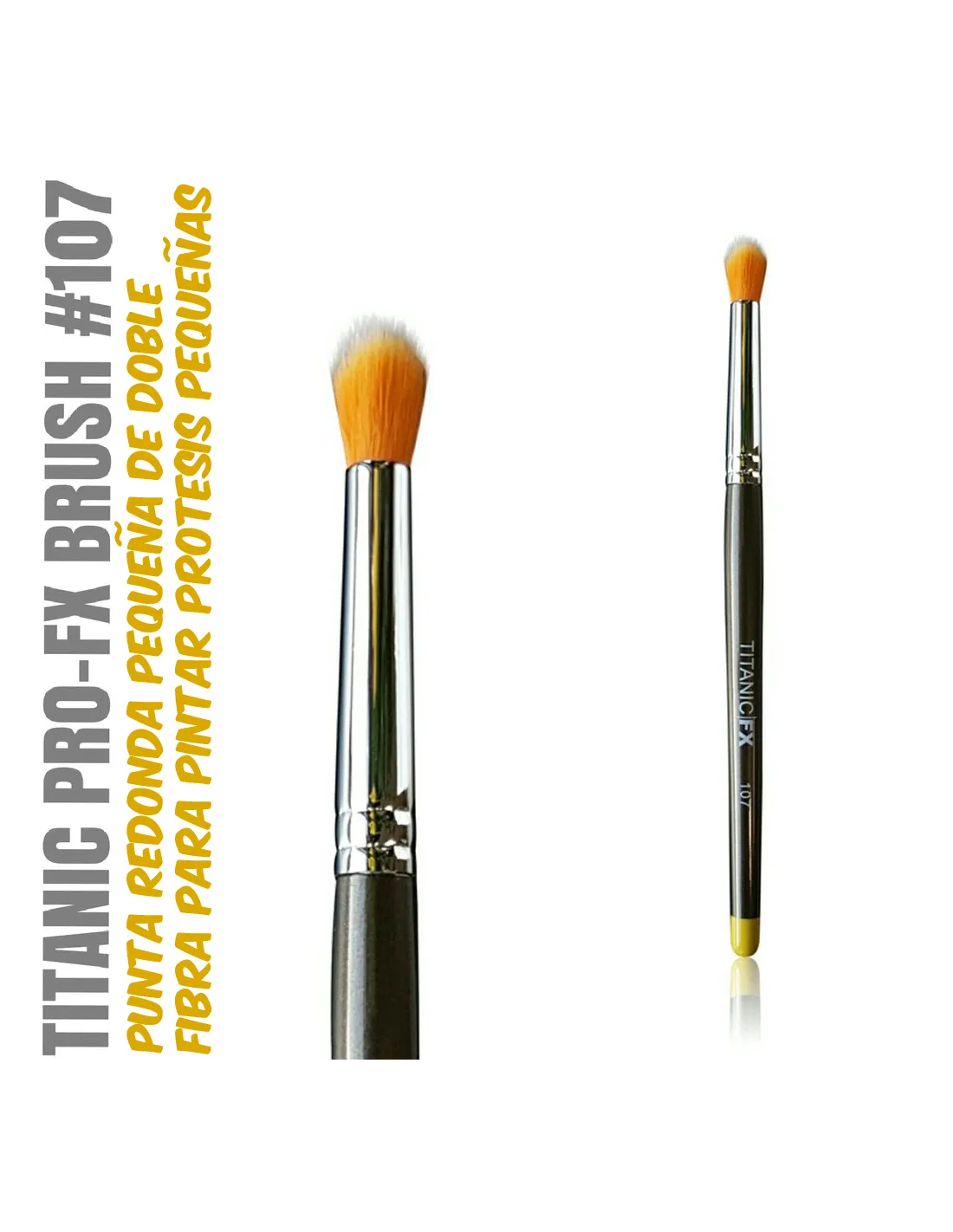
TITANIC PRO-FX BRUSH 107 -Stipple round tip small-
615007000
€15.00
18,15 € Tax incl.
18,15 € Tax incl.
Small round-tip stipple brush with dual fibre for FX makeup. Synthetic vegan bristles resistant to solvents.
The Titanic Pro-FX Brush 107 is a small round-tip stipple brush with dual fibre, designed specifically for manual stippling techniques in special effects makeup. Its synthetic vegan bristles resist contact with solvents and the ferrule is fixed with a special adhesive that withstands FX workshop products, from pigmented silicones to prosthesis removers.
Technical specifications
| Brush type | Stipple (manual stippling) |
|---|---|
| Tip shape | Small round |
| Fibre type | Vegan synthetic dual fibre |
| Solvent resistance | Yes |
| Ferrule adhesive | Solvent-resistant |
| Materials | Ethically sustainable |
| Range | Titanic Pro-FX Brush |
| Reference | 107 |
What it is used for
The 107 is the reference stipple brush for FX makeup artists who need to create skin textures, simulate pores, add ageing effects or blend prosthesis edges with a precise, controlled-size tool. Its small round tip allows work in detail areas without losing the characteristic irregularity of stippling.
- Creating skin textures with silicone paints or alcohol-activated paints
- Simulating pores, scars and skin ageing
- Blending and feathering edges of silicone or foam latex prostheses
- Applying thin layers of liquid makeup in detail areas
- Working with prosthetic adhesives in small areas
- Removing FX makeup residue with a solvent applied precisely
- Painting and pigmenting prostheses already placed on the actor
How to use it
- Load the brush with a moderate amount of paint, pigmented silicone or adhesive. Too much product creates blotches, not texture.
- Press the rounded tip onto the surface with a direct, perpendicular motion, lifting the brush between each tap to achieve the stippling effect.
- Vary pressure and angle to obtain different texture densities: more pressure creates a tighter pattern; lighter taps produce an open, airy texture.
- To blend prosthesis edges, work from the edge towards the interior of the piece, slightly overlapping each tap to soften the transition.
- When finished, clean the brush with the appropriate solvent for the product used (isopropyl alcohol for alcohol-activated paints, isopropyl alcohol or a specific cleaner for silicone paints).
- Leave the bristles to dry with the tip pointing upwards or horizontally — never resting on the tip, to preserve the shape of the dual fibre.
Usage tips
Control the amount of product
Stippling works with thin, repeated layers — not a single heavy load. Load the brush, remove the excess on a paper towel or palette, then apply. With silicone paints, this step is especially important because the product is more viscous and can fill in the texture if applied in excess.
Temperature and workshop conditions
If you are working with alcohol-activated paints in low-humidity conditions, drying can be very fast and the bristles may clump between taps. Keep a demineralised water spray to hand or work in a slightly more humid environment to maintain product fluidity at the tip without constantly reloading the brush.
Maintenance and cleaning
The ferrule of the 107 is bonded with solvent-resistant adhesive, allowing thorough cleaning without the risk of bristle loss. Even so, avoid submerging the handle in solvent for extended periods. For end-of-day cleaning, gently rub the bristles on a cloth dampened with solvent rather than swirling the brush inside the container. This extends the lifespan of the dual fibre and preserves the original tip shape.
Frequently asked questions
What is a stipple brush used for in FX makeup?
Stippling is a direct-pressure application technique that creates irregular textures similar to skin. The Titanic Pro-FX Brush 107 allows you to create pores, wrinkles, ageing effects and blend prosthesis edges in a controlled way, thanks to its small round tip and dual fibre.
Is it compatible with solvent-based paints?
Yes. The synthetic vegan bristles of the 107 resist contact with solvents commonly used in FX workshops, such as isopropyl alcohol. In addition, the ferrule is fixed with an adhesive specifically formulated to withstand these products, unlike watercolour or conventional makeup brushes.
What is the difference between a stipple brush and a flat brush for applying prostheses?
A flat brush distributes product over wide surfaces with a uniform layer. A stipple brush, by contrast, applies product through short, perpendicular taps, creating texture and density variation. For blending prosthesis edges and simulating skin, stippling gives more natural results than any flat brush.
Can it be used with silicone paints?
Yes, it is one of its most common uses. Silicone paints have higher viscosity, so it is best to load the brush sparingly and remove the excess before applying. The synthetic fibre of the 107 does not retain excess product and makes for effective cleaning with the appropriate solvent.
How do I clean the brush after using it with prosthetic adhesive?
Use the solvent recommended by the adhesive manufacturer, generally isopropyl alcohol or a specific remover. Gently rub the bristles on a cloth soaked in solvent until no residue remains. Thanks to the reinforced ferrule of the 107, you can carry out thorough cleaning without risk of the bond failing.
Are the bristles of animal origin?
No. The entire Titanic Pro-FX Brush range, including the 107, uses synthetic vegan bristles. Furthermore, the brush materials have been selected following ethical sustainability criteria, making it suitable for professionals who require tools free from animal-derived ingredients.
What size area can I work on with this brush?
Being a small round-tip stipple brush, the 107 is designed for detail areas: lip corners, eyelids, nose, edges of small prostheses or areas requiring precision. For larger surfaces such as full cheeks or forehead, it should be complemented with a larger-head stipple brush.
Can I use this brush to remove prostheses?
Yes. By applying a prosthesis remover with the 107 along the edge of the piece, you can work precisely to detach the prosthesis without irritating surrounding healthy skin. The solvent resistance of the bristles ensures the brush does not deteriorate during this process.
No reviews
Tap to zoom