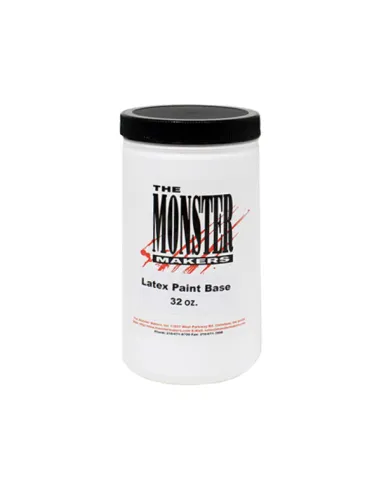
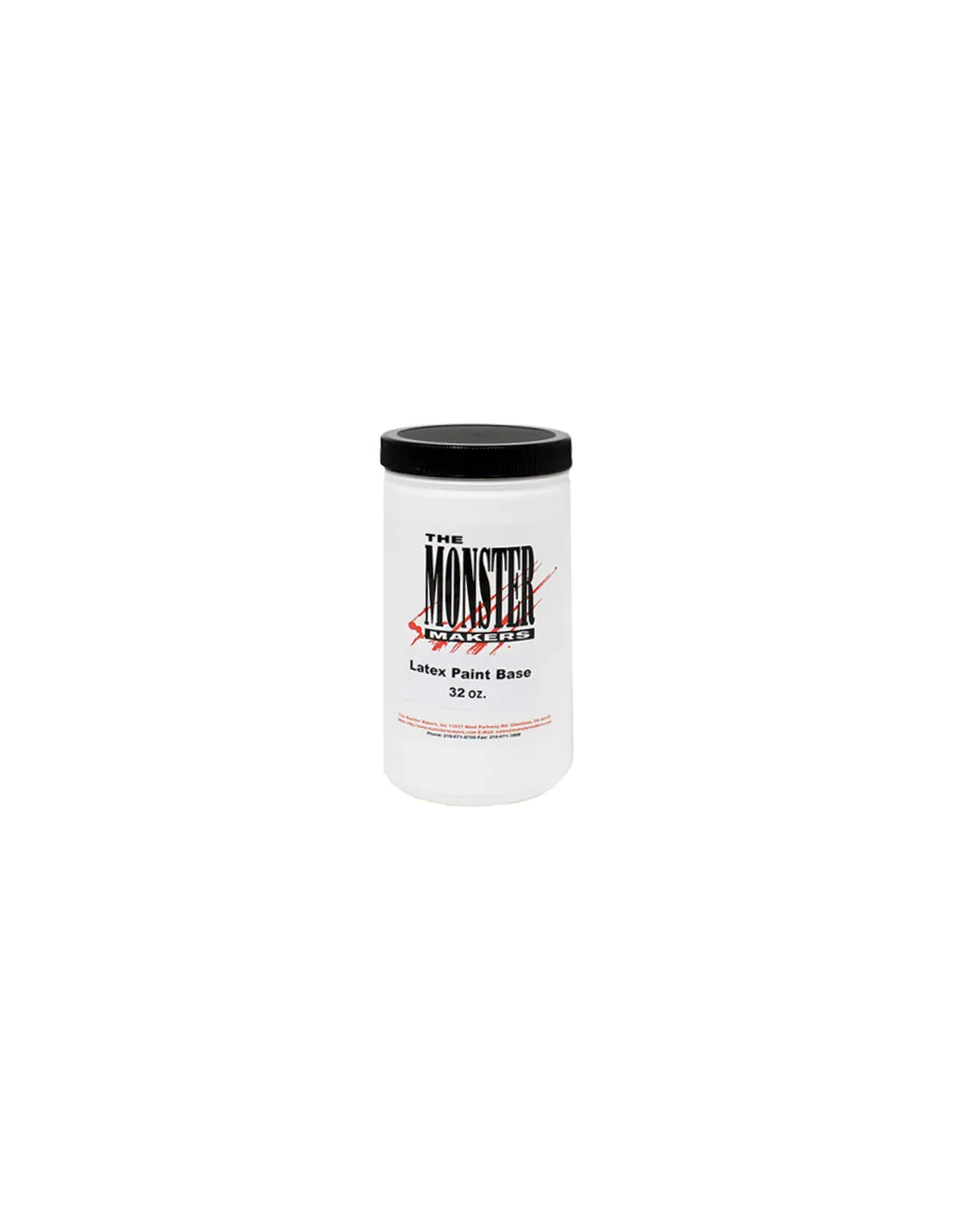
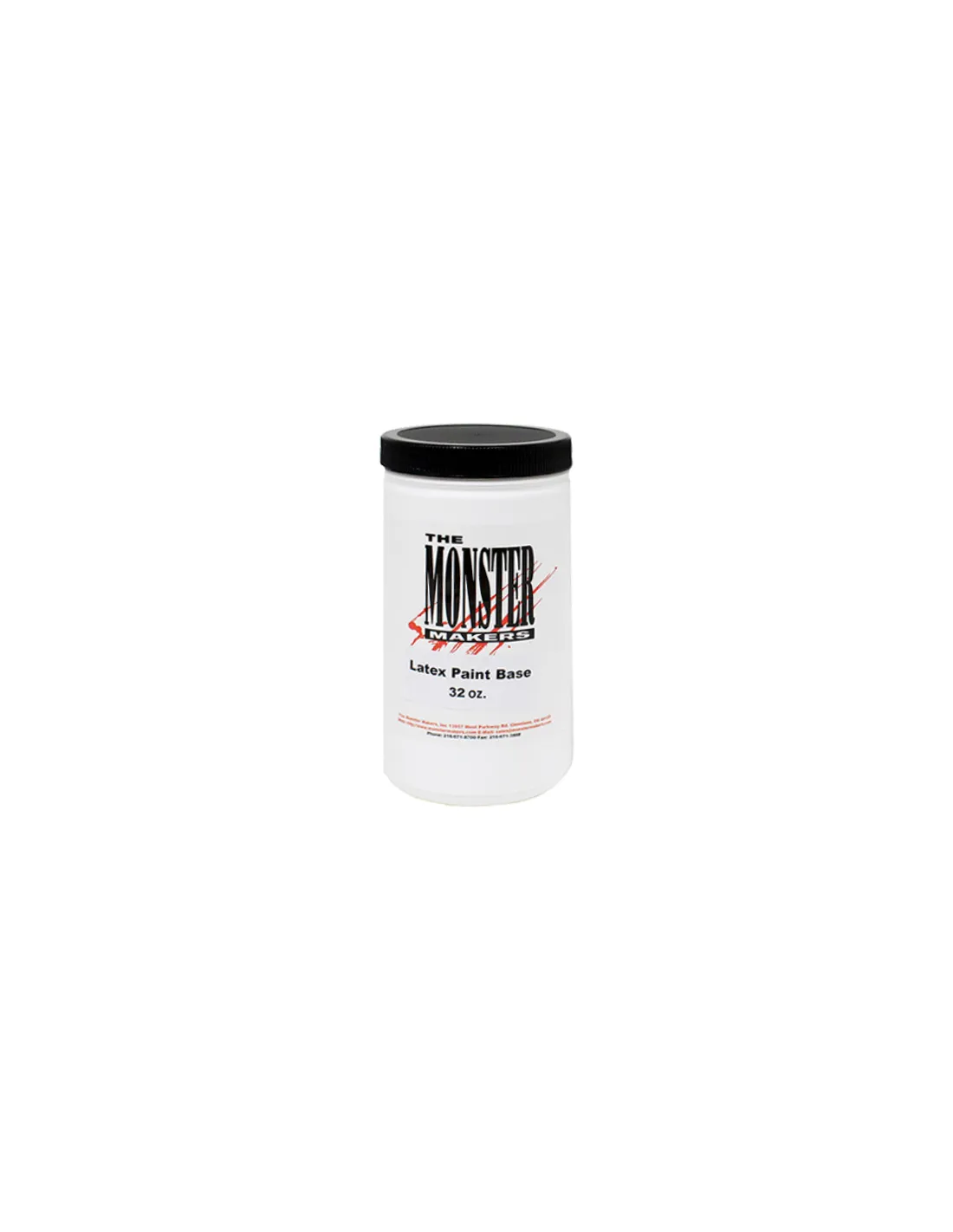
Latex Paint Base is a pre-vulcanised liquid latex, extremely fluid, designed to formulate your own flexible paints for latex masks, accessories and body parts. You can use it alone or combine it with Mask Paint and concentrated pigments to create custom colours with excellent adhesion and permanent flexibility. Air-dries with no additional process and gives a light tone once cured.
Technical specifications
| Property |
Value |
| Material type |
Pre-vulcanised liquid latex |
| Consistency |
Very liquid and fluid |
| Cured colour |
Light tone (translucent/cream) |
| Cure |
Air drying, no additional vulcanisation required |
| Flexibility |
High (permanent after drying) |
| Format |
1 Qt — 900 g |
| Recommended use |
Flexible paint for latex, bald caps, mixing with pigments |
What it is used for
Latex Paint Base is the ideal solution when you need a flexible paint that integrates perfectly with latex surfaces without cracking or peeling. Being a latex base, the resulting paint has the same elasticity as the substrate, making it indispensable in special effects and character work.
- Create custom paints for latex masks by mixing with Mask Paint or concentrated latex pigments
- Extend or lighten existing latex paint tones
- Make latex bald caps by brush application or impregnation over a mould
- Paint and finish latex accessories (noses, ears, prosthetic wounds) with custom colours
- Coat liquid latex for moulds pieces with a flexible colour layer
- Touch-ups and colour gradients on prosthetic latex foam pieces
- Character makeup applications on surfaces requiring extreme flexibility
How to use it
- Prepare the colour mix: pour the required amount of Latex Paint Base into a clean container. Add Mask Paint or concentrated latex pigments until you reach the desired tone. Mix thoroughly until you achieve a uniform colour.
- Adjust the fluidity: if you need more body, reduce the amount of base. If you want a more translucent or thinned paint for glazing, add a little more unpigmented base.
- Apply to the piece: using a brush, sponge or airbrush (thinning with distilled water if necessary), apply the mix to the clean, dry latex surface. Work in thin layers.
- Allow to air dry: each layer dries in a few minutes at room temperature. No oven or additional treatment is required; the latex is pre-vulcanised.
- Add additional layers: repeat the process for greater coverage or to create gradient and depth effects.
- Final finish: once dry, the paint remains flexible and permanent. You can apply a latex-compatible sealer if you want greater durability against friction.
Usage tips
Tool cleaning
Clean brushes and the airbrush with warm water immediately after use. Dried latex is very difficult to remove from bristles or the internal components of an airbrush. If the latex has started to dry, prolonged soaking in water can help soften it before scrubbing.
Tone and opacity control
The higher the proportion of base relative to pigment, the more translucent the layer will be. Use this to mimic the translucent appearance of real skin on prosthetic pieces: apply the darker, more transparent layers first, and reserve the more opaque ones for the areas of greatest volume. The base dries to a light tone, so it does not interfere with the final colours.
Compatibility with other latex pieces
Latex Paint Base adheres optimally to cured latex surfaces (masks, latex for masks pieces, prosthetic foam). Make sure the piece is clean, with no residue of talcum powder or release agent, to ensure maximum adhesion. If the surface has been talced, wipe it with a slightly damp cloth before painting.
Frequently asked questions
Do I need to do anything special to cure the latex, such as applying heat?
No. Latex Paint Base is a pre-vulcanised latex that dries simply by air at room temperature. It does not require an oven, UV lamp or any additional process. Drying time between layers is a few minutes depending on the thickness applied and ambient humidity.
Can I use this base to paint directly without adding pigment?
Yes. As it dries to a light tone, you can apply Latex Paint Base without pigment as a translucent sealing layer over latex pieces, or as a flexible primer before adding colour. It is also useful for adding body to heavily diluted glazes.
Which pigments are compatible with this base?
The most recommended are concentrated pigments specifically for latex and Mask Paint, formulated precisely for mixing with latex bases. Avoid solvent-based pigments, as they can destabilise the emulsion.
Can this paint be used on materials other than latex?
Latex Paint Base is optimised for latex surfaces. On other materials (silicone, polyurethane foam, fabric) adhesion may be reduced or absent. For those substrates there are more suitable specific paints and coatings.
How do you make a bald cap with this material?
Apply several layers of Latex Paint Base (alone or pigmented) over a head mould shaped for a bald cap, allowing each layer to dry before applying the next. The more layers you apply, the greater the thickness and strength of the cap. Once dry, demould carefully. The result is a flexible, light-toned bald cap that you can make up or paint over.
How long does the product last once opened?
Latex can be kept for several months if stored in a well-sealed container, away from extreme cold (do not freeze), excessive heat and direct light. If the latex develops a strong ammonia smell or lumps appear that do not disperse when shaken, it may have begun to deteriorate.
Can it be thinned with water for use in an airbrush?
Yes. You can add distilled water in small amounts to reduce viscosity and help it flow through the airbrush. Add the water gradually and mix well to avoid destabilising the emulsion. Excessive thinning can reduce coverage and adhesion.
Does the resulting paint hold up to the movement and flexing of the mask?
Yes. Being formulated on a latex base, the resulting paint is as flexible as the substrate itself. It does not crack or flake when the mask is bent or stretched, unlike conventional acrylic paints.
How much product do I need?Calculate the exact amount before buying and avoid wasting material.
Go to the calculator →