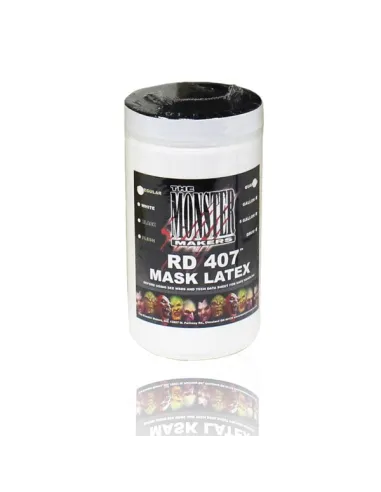
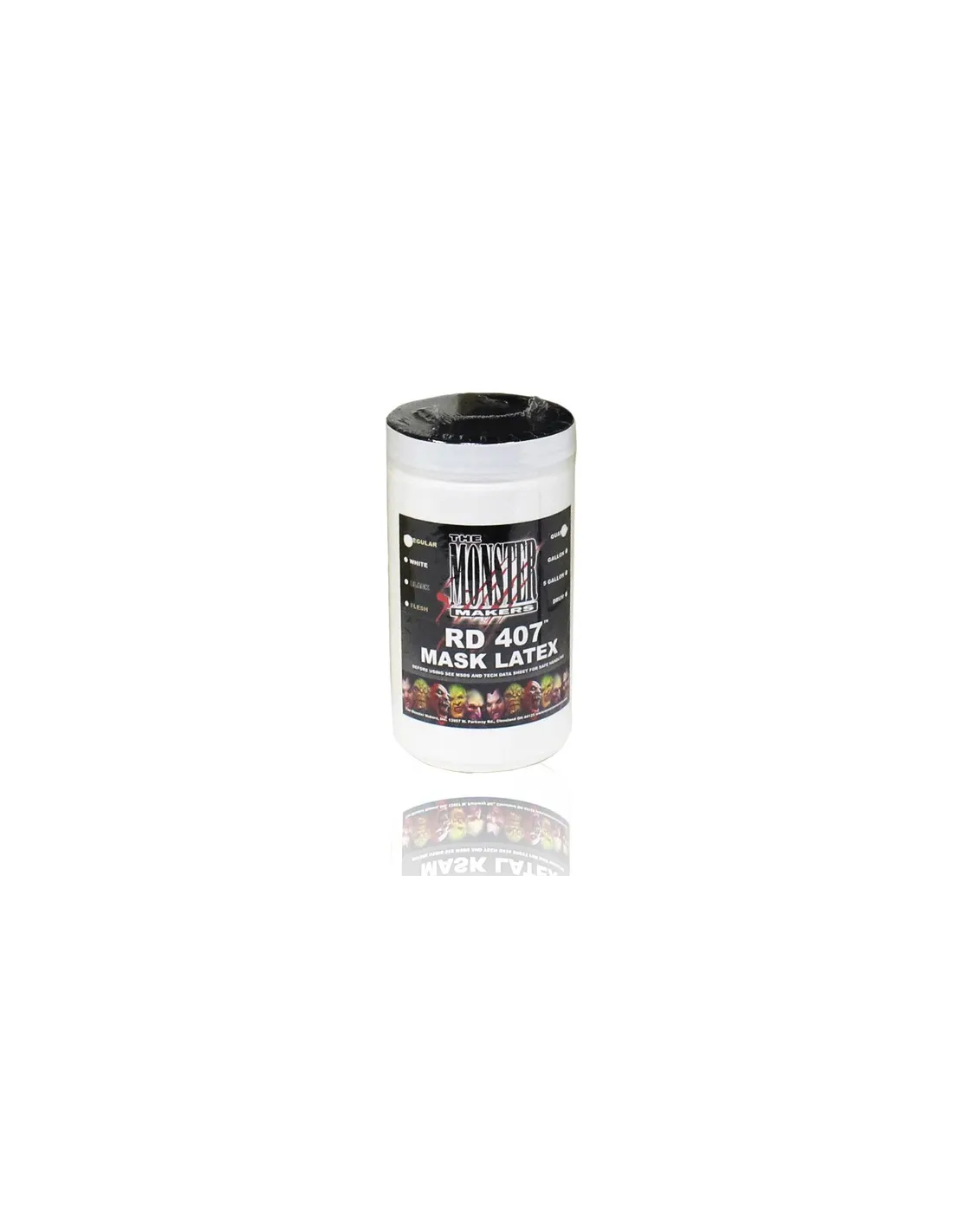
RD-407 Masking Latex Standard is a top-quality casting latex formulated specifically for use with plaster moulds. Made from air-drying natural latex, it produces an elastic and durable skin with fast build-up and exceptional detail reproduction. It is the go-to reference for mask makers and special effects artists worldwide, with a formulation that has been refined for over 50 years.
Technical specifications
| Property |
Value |
| Material type |
Natural casting latex (pre-vulcanised) |
| Colour |
Natural |
| Components |
1 component |
| Cure method |
Air drying (water evaporation) |
| Vulcanisation |
Pre-vulcanised, no additional processing required |
| Recommended mould type |
Plaster |
| Application method |
casting or brush application |
| Skin contact |
NOT suitable uncured. Only once fully cured |
What it is used for
RD-407 is designed for the production of latex pieces on moulds, and is the preferred choice of special effects workshops, mask manufacturers and entertainment craftspeople. Its most common applications are:
- Manufacturing latex masks on plaster moulds
- Creating flexible props and set dressing for theatre, film and television
- Production of special effects prosthetics on moulds (do not apply directly to skin uncured)
- Decorative pieces with an elastic finish and fine detail
- Reproducing textures and organic elements in SFX productions
How to use it
- Prepare the plaster mould: it must be completely dry and clean. A porous, well-cured mould promotes latex adhesion and speeds up skin formation.
- Gently shake the container before use to homogenise the material. Avoid creating foam.
- Pour the RD-407 directly into the mould or apply it with a brush in successive layers, depending on your preferred technique.
- If casting, fill the mould, wait a few minutes for the first skin layer to form in contact with the plaster, then pour out the excess.
- Leave to air dry. You can repeat the filling and emptying process to build up thickness. The time between layers depends on the ambient temperature and humidity.
- Once the desired thickness has been reached, allow to cure completely until the latex takes on a uniform colour and dry appearance.
- Demould carefully, gently stretching the piece from the edges inwards.
- If you wish to paint the piece, apply Mask Paint, a paint formulated specifically for latex, for a flexible and durable finish.
Important warning: RD-407 contains natural latex and ammonia. Always work in a well-ventilated space with adequate protection (gloves, mask). DO NOT apply directly to human skin in its uncured state. Skin contact is only permitted once the material is fully cured. Not suitable for people with latex allergies.
Tips for use
The plaster mould: key to the result
RD-407 is formulated specifically for plaster moulds. The natural porosity of this material absorbs water from the latex and accelerates skin formation. Make sure the mould is completely dry before starting: residual moisture can slow down the process and cause bubbles. It is not necessary to apply a Release agent to new plaster moulds, although on heavily used moulds it can help preserve surface detail.
Controlling thickness and layers
The final thickness of the piece depends on the number of casting cycles. For a standard mask, between 3 and 6 layers is usually sufficient, but this varies depending on the size and design. Allow each layer to dry thoroughly before adding the next: a wet layer on top of another wet layer can cause internal irregularities. If you are working with a brush on detail areas, apply the latex in thin, even layers.
Storage and preservation
Store RD-407 in its original, tightly sealed container, in a cool place away from direct sunlight. Avoid extreme temperatures: both intense cold (below 5 °C) and excessive heat can degrade the material. Do not leave it in open metal containers, as prolonged contact with air can create a surface film that affects the viscosity of the product.
Frequently asked questions
Does it require vulcanisation or any additional process to cure?
No. RD-407 is a pre-vulcanised latex that cures simply by evaporation of water in air. It requires no oven, catalyst or any additional process. You only need time and good ventilation conditions.
What type of mould is recommended for this latex?
RD-407 is formulated specifically for plaster moulds. The porosity of plaster facilitates water absorption and accelerates the formation of the latex skin. It is not optimised for silicone moulds or other non-porous materials.
Can it be applied directly to skin?
Not uncured. RD-407 must not be applied directly to human skin while uncured, as it contains ammonia and other components that can cause irritation. Once fully cured as a finished piece, brief contact may be acceptable, although it should always be noted that it contains natural latex, which can trigger allergic reactions in sensitive individuals.
How long does each layer take to dry?
Drying time depends on temperature, ambient humidity and the thickness of each layer. Under normal workshop conditions (20–25 °C and moderate humidity), a thin layer may be ready for the next application in 15–30 minutes. Full curing of the finished piece may require several hours or even leaving it to rest overnight.
What paints can be used on the latex once cured?
To paint RD-407 pieces, it is recommended to use paints specifically designed for latex, such as Mask Paint, formulated to adhere and flex with the material without cracking. Conventional acrylic paints can work but tend to crack with deformation.
What is the difference between this latex and standard mould-making liquid latex?
RD-407 is formulated specifically for mask and prosthetic manufacturing, with a viscosity and skin build-up optimised for that purpose. The Látex Líquido para Moldes is a more general-purpose product, useful for moulding, textures and other workshop applications. The choice depends on the type of project.
Can it be used in silicone or resin moulds?
RD-407 is optimised for plaster moulds. In silicone or resin moulds, since the porosity that facilitates water absorption is absent, skin formation is much slower and uneven. Other more suitable alternatives exist for these substrates.
What precautions should be taken when handling it?
Always work in a well-ventilated space, as the product contains ammonia which can be irritating when inhaled. Use protective gloves to avoid prolonged skin contact. If you are allergic to latex, do not handle this product. Keep the container closed when not in use and out of reach of children.
How much product do I need?Calculate the exact amount before buying and avoid wasting material.
Go to the calculator →