Shopping Cart



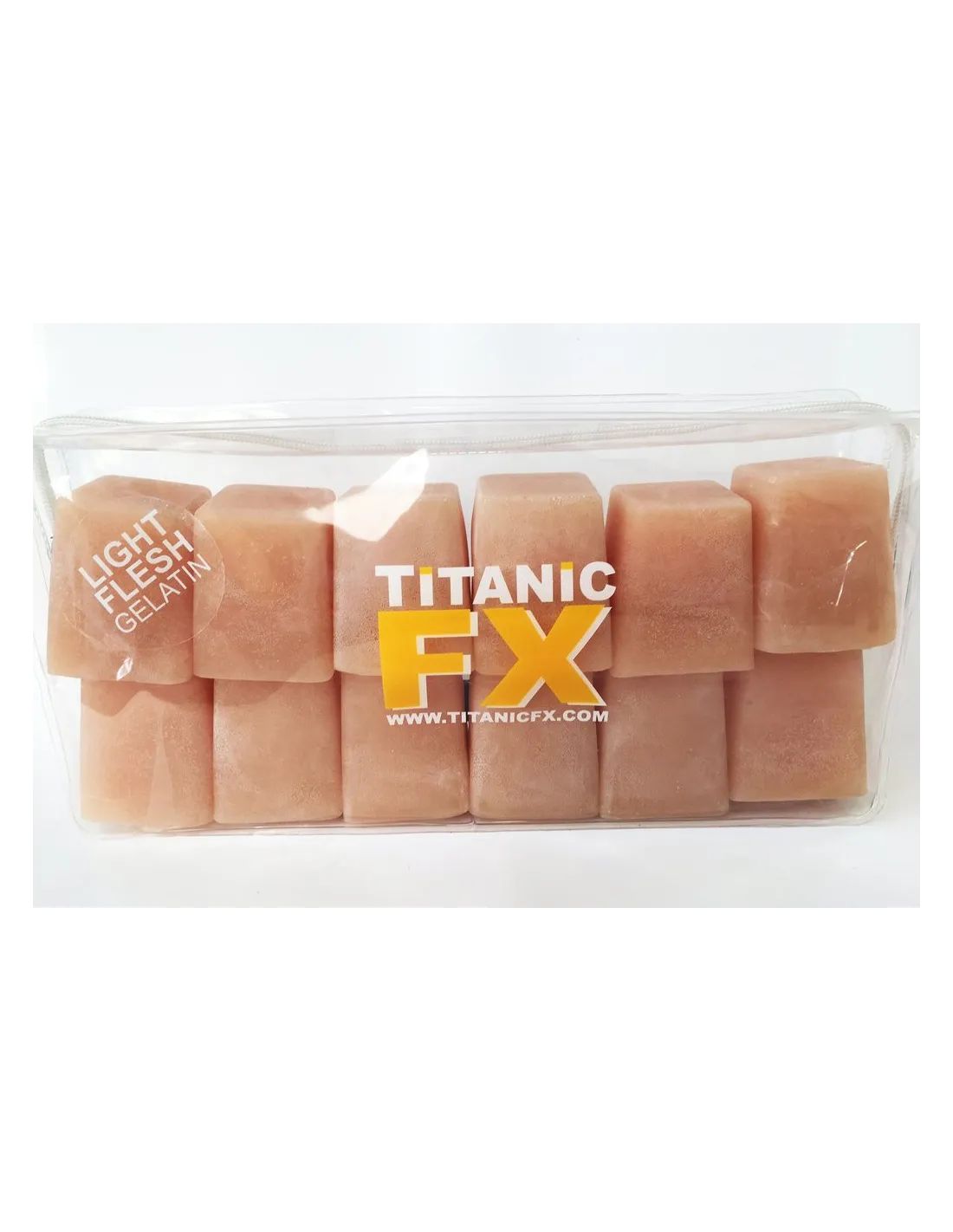
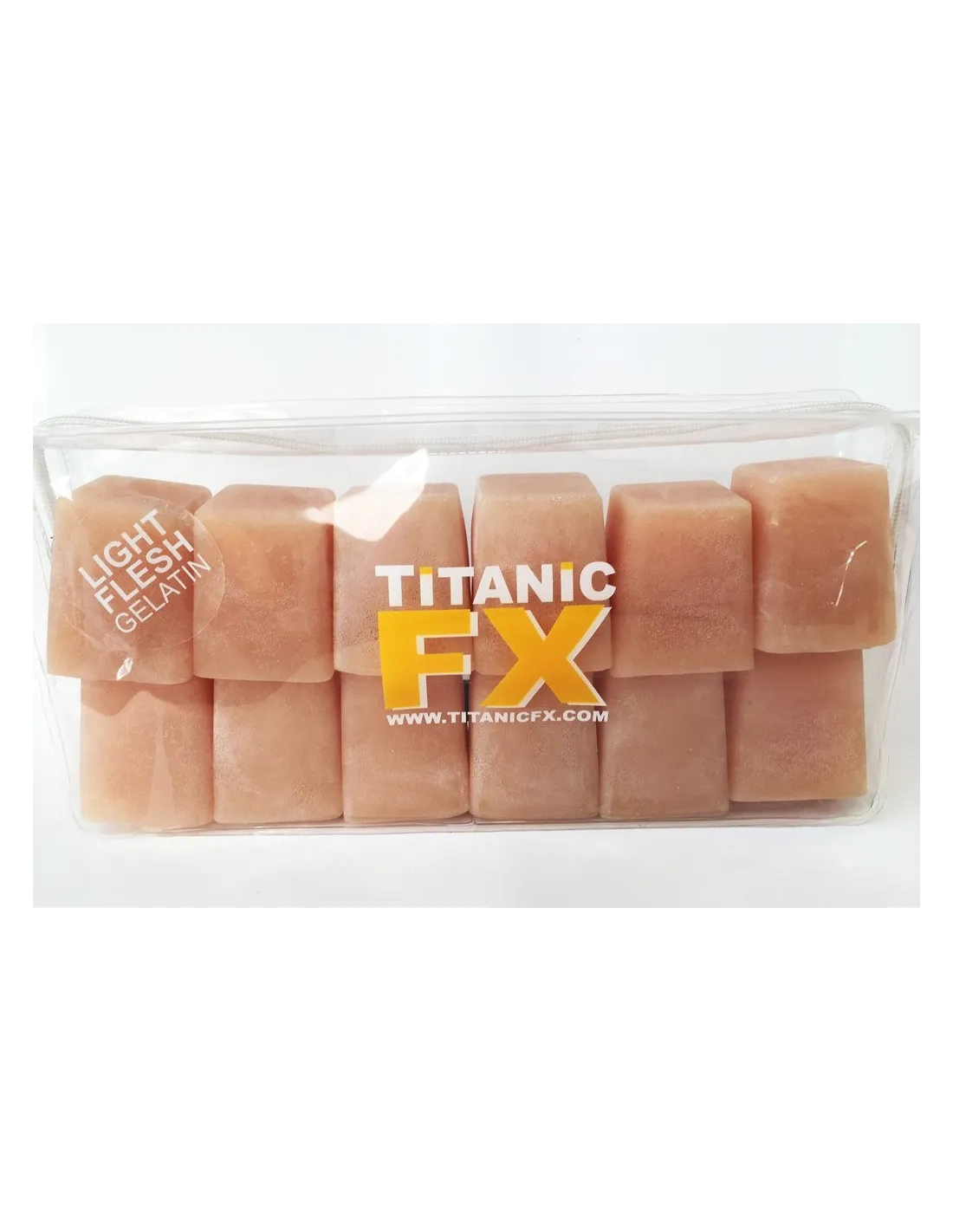
Titanic Fx Prosthetic Gelatin -Light colored flesh-
280002000
€45.00
54,45 € Tax incl.
54,45 € Tax incl.
300 Bloom prosthetic gelatine in light flesh tone. Food Safe, reusable and ready to melt. Ideal for prosthetics and FX special effects. 1 kg.
Titanic FX Prosthetic Gelatin in light flesh tone is a 300 Bloom quality, Food Safe and medical grade gelatine, specifically formulated to mimic the colour and texture of human skin in special effects makeup and prosthetics work. It comes pre-mixed, pre-coloured and pre-flocked, ready to melt and apply with no additional preparation. It is reusable, making it a highly efficient option for both professional FX workshops and training and practice.
Technical specifications
| Property | Value |
|---|---|
| Bloom Quality | 300 Bloom |
| Colour | Light flesh (pre-coloured) |
| Finish | Pre-flocked |
| Format | 1 kg ingot |
| Grade | Food Safe / Medical |
| Toxicity | Non-toxic |
| Reusable | Yes |
| Supply state | Ready to melt and use |
What it is used for
This gelatine is designed to reproduce the appearance and behaviour of real skin in artistic makeup and special effects applications. Its light flesh tone makes it suitable for working with pale or medium-light skin tones without the need for additional pigmentation, although it can be adjusted with compatible pigments if required.
- Wound, cut and laceration prosthetics for film, television and theatre
- FX makeup for ageing, burns and deformations
- Creation of prosthetic pieces for direct application on skin
- Fabrication of soft props imitating human tissue or skin
- Training and practice of prosthetic techniques before working with more demanding materials
- Rapid prototyping of effects requiring flexibility and an organic appearance
How to use it
- Cut the ingot into smaller portions if you do not need the entire block. This reduces heating time and makes it easier to control the amount.
- Place the required amount in a heat-safe container, such as a wax warmer or a heat-resistant silicone container. You can also use a microwave in short 20–30 second intervals.
- Heat at a moderate temperature (around 65–80 °C), stirring frequently to achieve a homogeneous melt and prevent boiling. Boiling the gelatine degrades its structure and reduces its quality.
- Once melted and homogeneous, pour or apply the gelatine into the mould or directly onto the area to be worked, according to the technique used.
- Allow to cool at room temperature or speed up the process with cold air. The gelatine sets quickly as the temperature drops.
- Carefully demould once solidified. If the piece is to be applied to skin, use a suitable prosthetic adhesive to secure it.
- To reuse, melt the material again following the same steps. Avoid contaminating the gelatine with dirt, water or foreign materials that could degrade it.
Usage tips
Temperature control: the key factor
Temperature is what most influences the final result. Keep the melted gelatine above its gelling point without reaching boiling point. If you see active bubbles at the bottom of the container, reduce the temperature immediately. An overheated gelatine loses elasticity and its ability to reproduce fine details. If using a microwave, always work in short pulses and stir between each one.
Moulds and work surfaces
Prosthetic gelatine works well with silicone, plaster and some plastic moulds. With porous moulds such as plaster, apply a suitable release agent before pouring to facilitate demoulding without damaging the piece. With silicone moulds this is generally not necessary. If you are working in layers, make sure the previous layer is firm but not completely cold, to achieve good adhesion between layers.
Storage and reuse
One of the great advantages of this gelatine is that it can be melted and solidified repeatedly without losing its properties, as long as it is not overheated or contaminated. Store leftovers in a clean, airtight container, away from direct light and heat. If the material has absorbed moisture or shows signs of degradation (acidic smell, grainy texture after melting), do not use it in direct skin applications.
Frequently asked questions
Can I apply this gelatine directly on skin?
Yes. Titanic FX Prosthetic Gelatin is Food Safe and medical grade, so skin contact is safe. For direct application, make sure the temperature is low enough to avoid burns. It is recommended to test on a small area before applying to larger areas, especially on sensitive skin.
How many times can it be reused?
The gelatine can be melted and reused multiple times when handled correctly, avoiding overheating and contamination. With careful use, the material retains its properties through many melt-and-set cycles.
Can it be pigmented to adjust the tone?
Yes. Although this version comes pre-coloured in light flesh, you can adjust the tone by adding compatible oil-soluble pigments while the material is melted. Add the pigment gradually and stir thoroughly to achieve a uniform colour before pouring or applying.
What is the difference between this version and the uncoloured gelatine?
The uncoloured version is transparent or neutral and requires manual pigmentation for each project. The light flesh version already incorporates the colour, flock and tone adjustments to simulate light skin tone, saving time in production. If you need greater creative control over the final colour, the Titanic FX Uncoloured Prosthetic Gelatin is the most flexible option.
At what temperature does it melt and at what temperature does it solidify?
300 Bloom prosthetic gelatine melts at around 60–80 °C depending on the environment and container. It begins to gel below approximately 35–40 °C. In warm environments the working time is longer; in cold environments it sets faster. This is relevant when working on set under high-power lights, where the gelatine may soften if not correctly formulated for high temperatures.
Does it hold up well under set lighting or intense heat?
Titanic FX gelatine has been tested in professional productions under set conditions with high-intensity lights, demonstrating stable behaviour during long takes. However, no prosthetic gelatine is immune to extreme heat, so in very demanding shoots it is recommended to control environmental conditions and have spare material on hand.
Can I use it in plaster moulds?
Yes, but plaster moulds are porous and can make demoulding difficult. Always apply a suitable release agent before pouring the gelatine to protect both the mould and the piece. Silicone moulds generally do not require a release agent and offer cleaner demoulding.
Is it suitable for beginners or training?
Absolutely. Titanic FX Prosthetic Gelatin is one of the most recommended materials for learning prosthetic techniques thanks to its ease of use, reusable nature and low cost of error. It allows you to practise casting, layering, colour integration and skin adaptation before moving on to more demanding silicone or foam latex materials.
No reviews
Tap to zoom