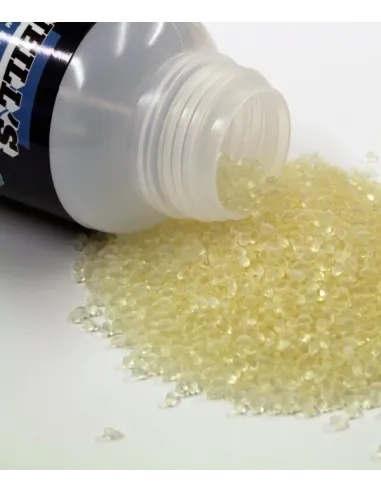
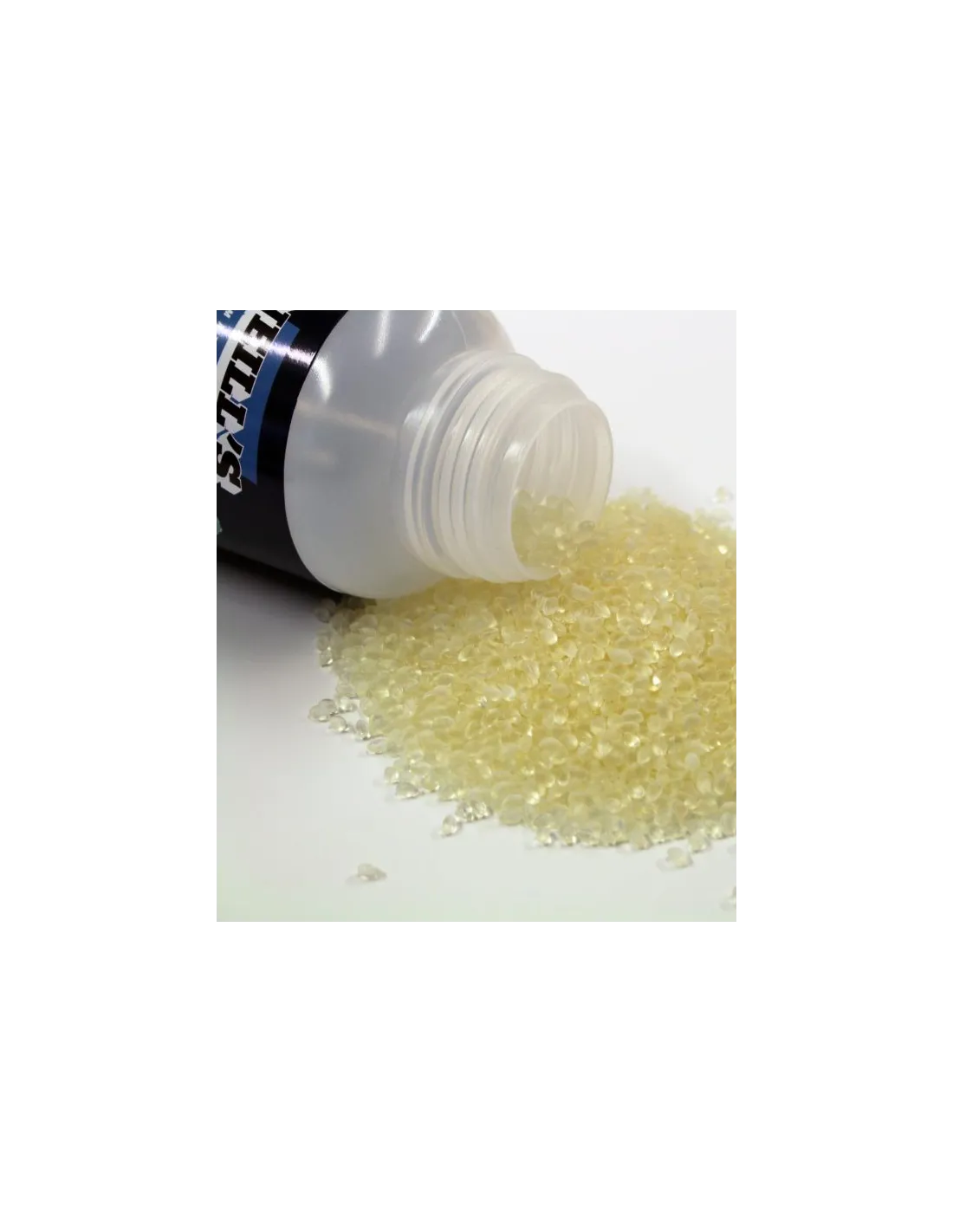
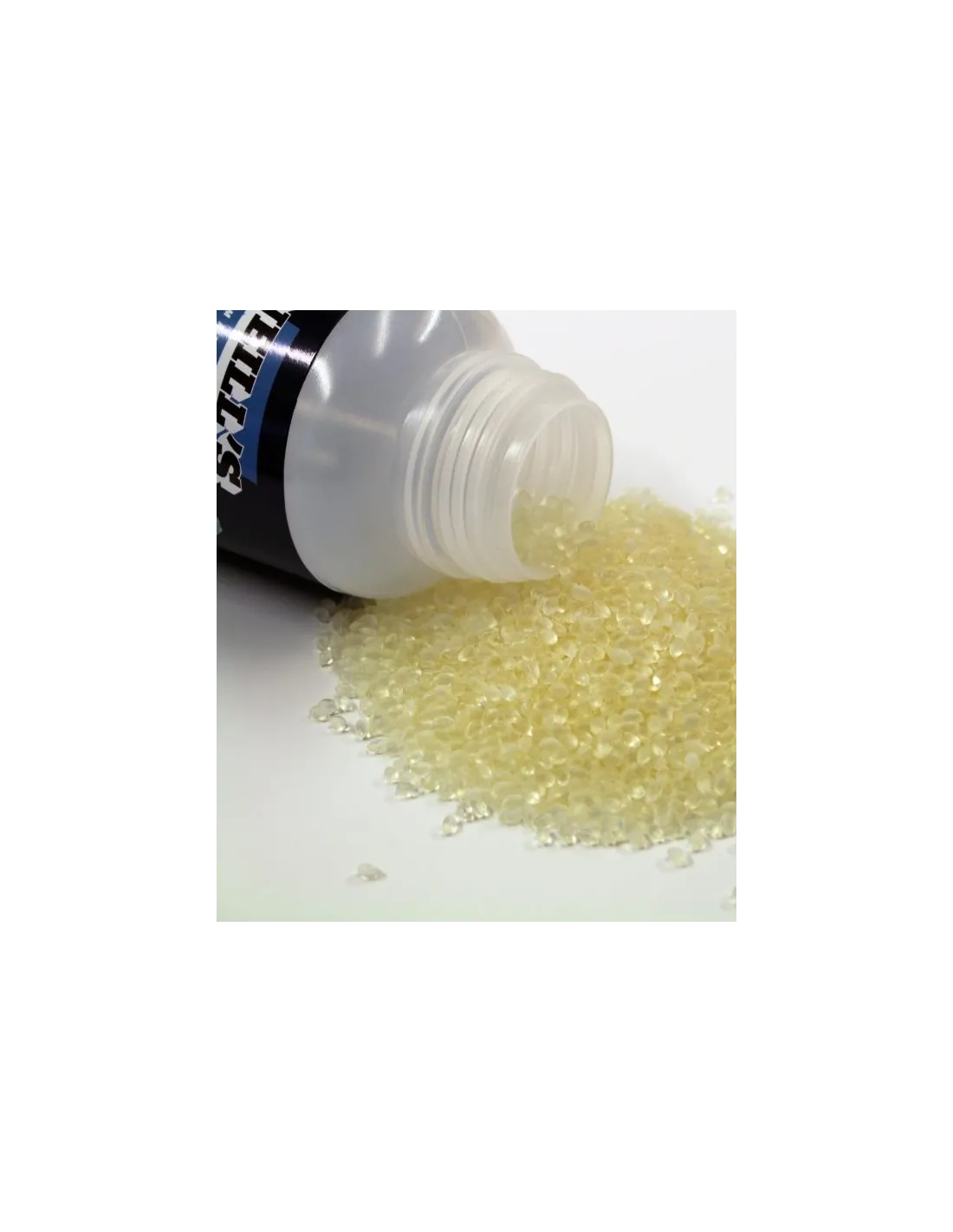
Key-Cap Beads is the acetone-based bead encapsulant developed by Neill Gorton, designed for FX professionals and artists who want full control over the dilution of their own Bald Cap Plastic from scratch. You dissolve the beads in acetone and obtain a high-quality encapsulant for silicone gel prosthetics or for making bald caps, with an extraordinary yield: 100 g of beads produces up to 500 g of finished product.
Technical specifications
| Parameter |
Value |
| Format |
Solid beads |
| Solvent base |
Acetone |
| Yield |
100 g of beads → up to 500 g of ready-to-use product |
| Main applications |
FX prosthetics encapsulant, bald caps |
| Additional thinning |
With acetone (for prosthetic edges or airbrushing) |
| Body suitability |
For use in special effects makeup on skin |
What it's used for
Key-Cap Beads is the starting point for any professional FX prosthetics work requiring an acetone-based encapsulant. It lets you prepare the exact quantity you need, adjust viscosity to your process, and reuse any leftover material without wasting already-dissolved product.
- Encapsulating platinum silicone gel prosthetics to blend them seamlessly with the actor's skin.
- Making professional-quality bald caps, both by brush application and airbrushing.
- Extra thinning of prosthetic edges to achieve imperceptible transitions with the skin.
- Airbrushing bald caps (by thinning further with pure acetone AC-1).
- Film, television, theatre and live special effects production.
How to use it
- Weigh the beads — determine the amount of finished encapsulant you need. The base ratio is 1 g of beads for every 5 g of finished product.
- Dissolve in acetone — add the beads to a container with pure acetone AC-1. Always use a sealable container to prevent evaporation.
- Stir and wait — stir periodically until all the beads are completely dissolved. The solution should be homogeneous and lump-free.
- Adjust viscosity — if you need a more fluid product for brushing fine edges or for airbrushing, add more acetone until you reach the desired consistency.
- Apply in layers — brush the encapsulant over the mould or silicone gel prosthetic in thin layers. Allow the solvent to evaporate completely between each layer.
- Skin adhesion — to secure the finished prosthetic, use a dedicated adhesive such as PROTAC or Telesis 8.
- Blend the edges — slightly thin the dissolved Key-Cap Beads with acetone and apply it over the edges of the already-adhered prosthetic to blend them into the skin.
Safety warning — Acetone base
Acetone is a flammable and volatile solvent. Always work in a well-ventilated space, away from flames, sparks and heat sources. Wear nitrile gloves, safety goggles and a respirator with an organic vapour filter. Keep the container closed when not in use to prevent evaporation and reduce exposure. Store the product in a cool, dry place away from heat.
Usage tips
Prepare only what you need
Once the beads are dissolved in acetone, the product may thicken if the container is not properly sealed, as the solvent gradually evaporates. Prepare just the amount needed for your session, or store the mixture in an airtight jar. If it thickens, simply add more acetone AC-1 and stir to restore the consistency.
Thin layers for perfect bald caps
For a professional-quality bald cap, the key is applying multiple very thin layers over the bald cap mould, allowing the solvent to evaporate completely between each one. Typically 4 to 8 layers are needed depending on the desired thickness. The intermediate layers can be airbrushed by thinning the product further, while the final layers are applied by brush to ensure uniform edges.
Invisible edges on prosthetics
Edge blending is one of the most critical stages in an FX prosthetic. Apply Key-Cap Beads very thinly diluted over the edge of the prosthetic already adhered with Telesis 8, using a fine brush or a cotton swab. The encapsulant integrates with the encapsulated edge and visually blends into the skin, eliminating the separation line. To dissolve the adhesive and facilitate removal at the end of the day, you can use Telesis 8 Thinner.
Frequently asked questions
How much acetone do I need to dissolve the beads?
There is no fixed ratio, as it depends on the viscosity you need. As a starting point, add the beads gradually to the acetone and stir until completely dissolved. For a standard brush-on encapsulant, the typical ratio is around 1:4 (1 part beads to 4 parts acetone by weight). You can adjust by adding more acetone AC-1 if you want a more fluid product for airbrushing or edge blending.
What is the difference between using beads or buying the pre-dissolved product?
The beads give you full control over the concentration and viscosity of the final product, along with superior yield and a longer shelf life. Key-Cap Plastic already dissolved is more convenient for those who want to start working immediately without prior preparation. Both are based on the same Neill Gorton formulation.
Can it be used to encapsulate any type of prosthetic?
Key-Cap Beads is optimised for encapsulating platinum silicone gel prosthetics, which is the current professional standard in FX. It is also compatible with the bald cap manufacturing process. It is not recommended for encapsulating latex foam or gelatine, which have their own finishing processes.
How is an encapsulated prosthetic adhered to skin?
To adhere the prosthetic to the actor's skin you need a dedicated adhesive. The most common options are PROTAC, an acrylic adhesive with excellent skin compatibility, or Telesis 8, a silicone adhesive particularly suited for silicone prosthetics on skin with high sweat resistance.
Can I airbrush the encapsulant?
Yes. Simply thin the dissolved Key-Cap Beads with more acetone AC-1 until you achieve a suitable viscosity for the airbrush. This technique is especially useful for intermediate bald cap layers, as it allows very uniform, thin coats. Bear in mind that airbrushing acetone increases inhalation risk: always use a respirator with an organic vapour filter.
How long does the product last once dissolved?
The dissolved solution keeps well as long as the container is hermetically sealed to prevent acetone evaporation. If the product thickens over time, simply add more acetone and stir. Undissolved beads have a much longer shelf life and can be stored for months under appropriate conditions (cool, dry place away from heat).
Is there a water-based or IPA alternative for those sensitive to acetone?
Yes. If you prefer to work with a less aggressive encapsulant base, Super-Cap is Feroca's isopropyl alcohol (IPA)-based alternative, with less odour and easier handling in spaces with limited ventilation.
What materials do I need to make a complete FX prosthetic?
A professional FX prosthetics workflow requires: a platinum silicone for the prosthetic gel, an encapsulant such as Key-Cap Beads for the outer skin, a body adhesive such as PROTAC or Telesis 8 for skin application, intrinsic pigments for gel colouring, and external paints for the final finish. Add to this modelling tools, moulds and personal protective equipment (gloves, respirator, goggles).