Shopping Cart



Prosthesis Suture Set 1
221000700
Temporarily out of stock
€24.00
29,04 € Tax incl.
29,04 € Tax incl.
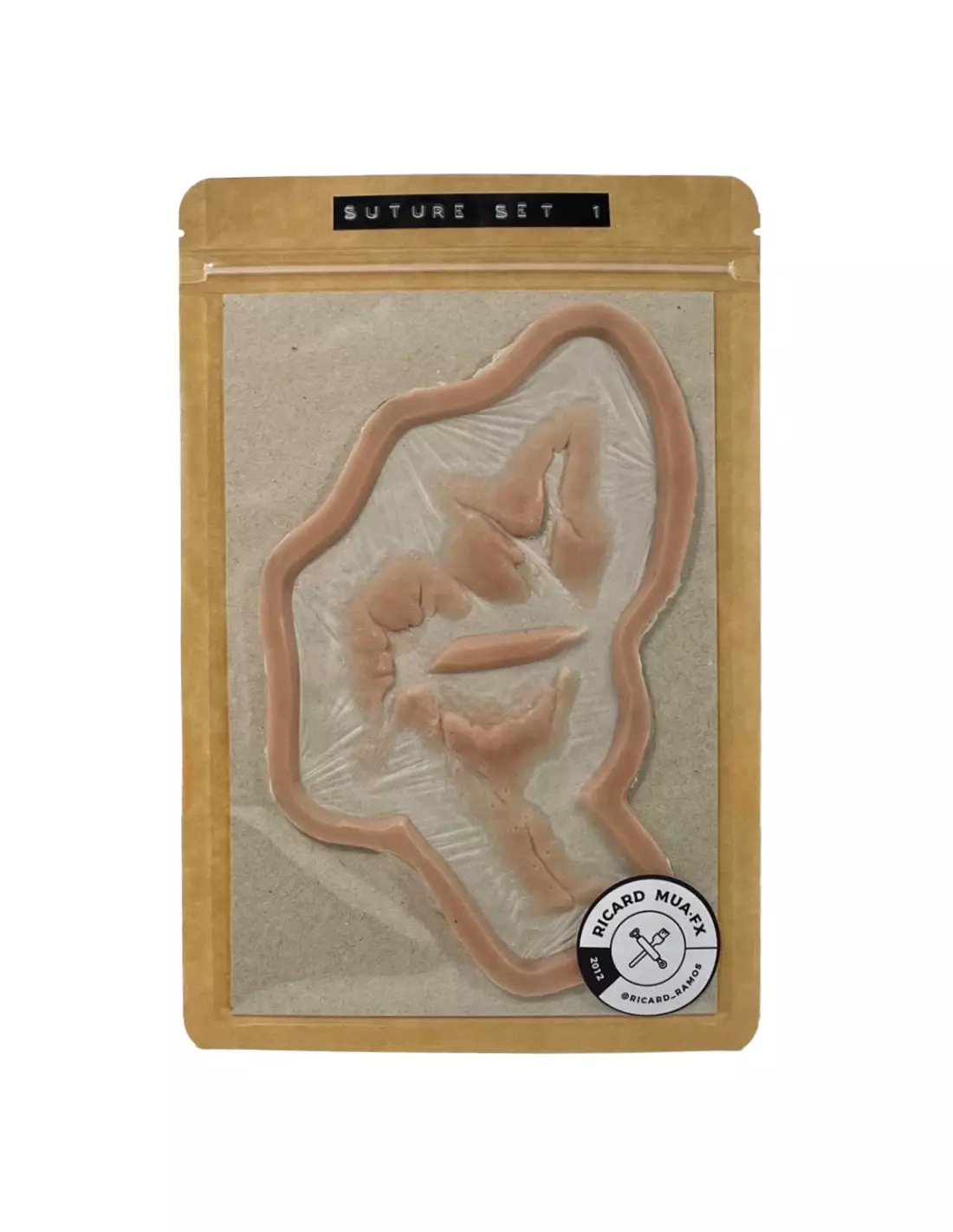
Platinum silicone suture prosthetic for SFX, designed by Ricard MUA FX. Invisible encapsulated edge. Professional and recreational use.
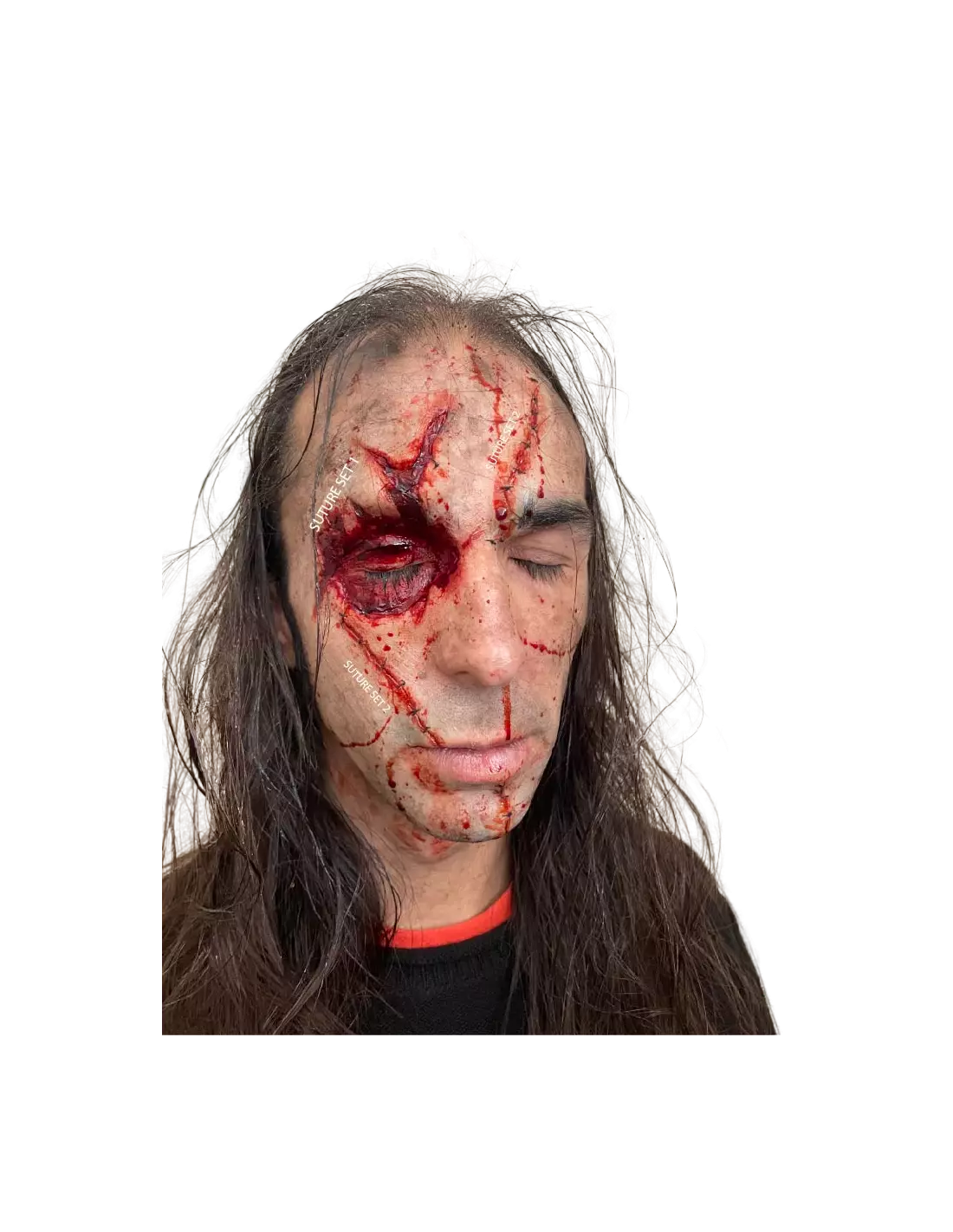
The Prótesis Suture Set 1 is a special effects prosthetic made from platinum silicone, designed by Ricard MUA FX to simulate suture wounds with professional-level realism. Its encapsulated edge blends seamlessly with skin without leaving visible lines, making it a go-to tool for makeup artists in film, television, theatre, and photo production.
Technical specifications
| Material | Platinum silicone (addition cure) |
|---|---|
| Finish | Encapsulated edge (bald cap finish) |
| Designer | Ricard MUA FX |
| Compatibility | Safe for use on skin |
| Application | Prosthetic adhesive on skin |
| Use | Special effects, character makeup, Halloween, film, theatre |
What it is used for
The Suture Set 1 is designed to convincingly recreate sutured wounds on any area of the body. It is suitable for both professional productions and high-end recreational use:
- Simulating sutured wounds for film and television
- Character makeup for injured characters or zombies in theatrical productions
- Special effects and artistic makeup photo sessions
- Halloween costumes with a professional-level finish
- SFX makeup demonstrations and training
- Short film shoots and independent audiovisual productions
How to use it
- Clean and dry the skin area where you will apply the prosthetic. Any trace of grease or sweat will reduce adhesion.
- Check the position of the prosthetic dry before applying adhesive, to make sure the visual effect is as desired.
- Apply a thin layer of prosthetic adhesive on the skin (not on the silicone). Allow it to become slightly tacky before placing the prosthetic.
- Press the prosthetic from the centre outwards to the edges to avoid air bubbles being trapped under the piece.
- Blend the encapsulated edges into the skin using acetone solvent with a fine brush, working in small areas until the transition is imperceptible.
- Once integrated, apply silicone-compatible makeup (PTM - Light Flesh or PTM - Clear) to match the tone with the surrounding skin.
- Finish with shadows and pigments according to the desired effect: fresh wound, old scar, etc.
- To remove the prosthetic, gently peel back the edges using a prosthetic adhesive remover. Do not pull the piece off dry.
Important — Platinum silicone inhibition: The Suture Set 1 is made from cured platinum silicone. If you are making your own silicone around this type of piece or working with platinum silicone in the same space, be aware that certain materials inhibit the cure: sulphur-based clays, latex, cyanoacrylate adhesives, latex gloves, and some polyurethane materials. Contact with these materials can leave the silicone uncured in the affected area. The prosthetic itself, already cured, does not present this risk when used on skin.
Usage tips
Skin preparation
Well-prepared skin makes the difference between a prosthetic that looks stuck on and one that looks like part of the body. Clean the area with micellar water or isopropyl alcohol and wait until it is completely dry. On very oily skin, apply a light skin sealer before the adhesive. On skin with hair, consider whether it is necessary to shave the area to achieve a cleaner edge.
Painting and realistic finishing
Platinum silicone does not accept water-based paints or conventional acrylics. Use makeup formulated specifically for silicone, such as PTM - Light Flesh for flesh tones or PTM - Clear for custom blends. Apply in thin layers and build up the colour gradually. For the suture areas, a reddish touch on the thread edges and a slight purple on the surrounding skin noticeably increase realism.
Storage and reuse
Platinum silicone is durable, but the encapsulated edges are the most delicate area. Always remove the prosthetic carefully and clean off adhesive residue with a dedicated remover — never with acetone directly on the silicone. Store the piece on its original support or on a flat surface, away from direct light and heat. A well-maintained prosthetic can be reused multiple times without loss of detail.
Frequently asked questions
What adhesive is recommended for attaching this type of prosthetic to skin?
For platinum silicone prosthetics like the Suture Set 1, it is recommended to use adhesives formulated specifically for prosthetics on skin (medical grade or SFX grade). Always apply to the skin, not to the silicone, and allow the adhesive to reach its optimal tack point before placing the prosthetic.
How long can a silicone prosthetic be worn on skin?
It depends on the adhesive used and each person's skin. Under normal shooting or makeup conditions, a well-applied prosthetic can stay in place for several hours without issue. On sensitive skin or in very hot environments, it is advisable to do prior tests and keep remover on hand.
Can a silicone prosthetic be painted with conventional makeup?
Not directly. Platinum silicone rejects water-based pigments and standard acrylics. To paint the Suture Set 1 you need makeup formulated for silicone, such as PTM - Light Flesh or PTM - Clear, which adhere correctly to the silicone surface.
Is it safe for sensitive skin?
Platinum silicone is one of the most biocompatible materials available and is used in medical applications. However, sensitivity may come from the adhesive used, not from the prosthetic itself. If you have sensitive skin, always do a patch test with the adhesive 24 hours before use.
Can it be reused multiple times?
Yes. Platinum silicone prosthetics are designed to be reusable. The key is in removal: always use a dedicated adhesive remover and do not pull forcefully on the encapsulated edges. Clean the piece thoroughly after each use and store it flat, protected from dust.
What is the difference between a silicone prosthetic and a foam latex one?
Platinum silicone offers greater translucency and a feel closer to real skin, making it ideal for close-ups and high-definition productions. Foam latex is lighter and more flexible, but less realistic in texture and colour. The Suture Set 1, being made of platinum silicone, is designed for work where detail and realism are the priority.
Can I transfer designs or tattoos onto the prosthetic once applied?
Yes, you can use transfers specifically designed for silicone and skin, such as those available as Tattoo and PTM Transfer Paper, to add graphic details on the prosthetic or on the adjacent skin, integrating the visual effect coherently.
Does it work equally well on any part of the body?
The Suture Set 1 is designed to adapt to different areas, but zones with greater movement (joints, neck) require more care when applying the adhesive and sealing the edges to prevent the prosthetic from lifting during movement. On flat areas with less movement, results are easier to achieve.
No reviews
Tap to zoom