Shopping Cart



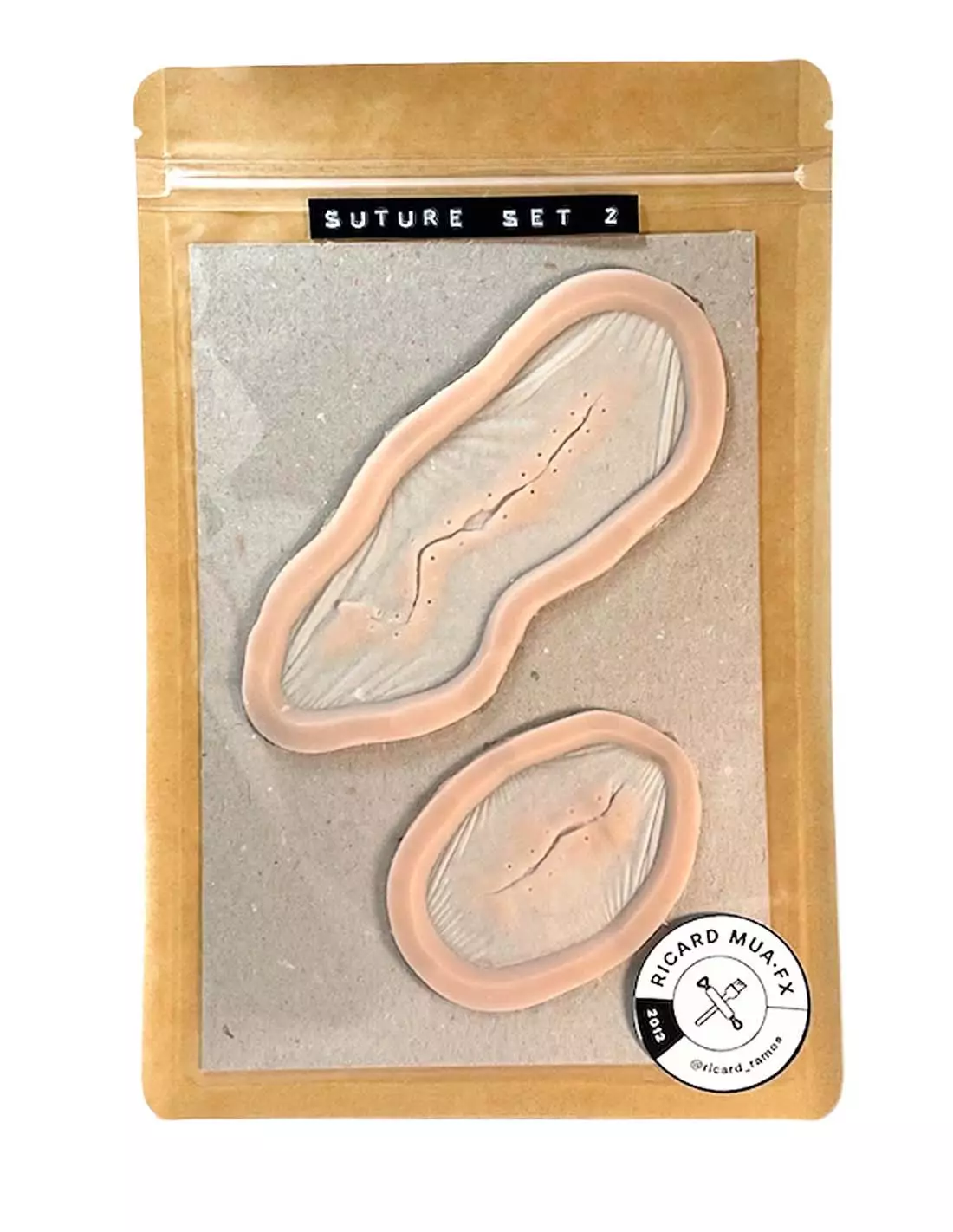
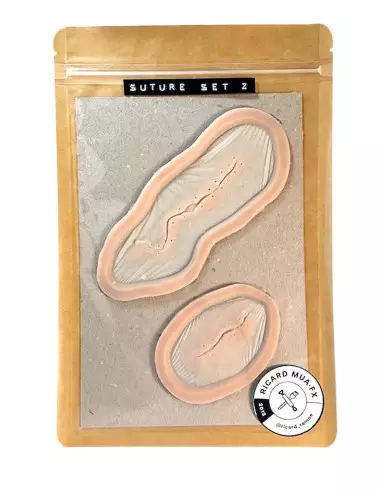
Prosthesis Suture Set 2
221000800
Temporarily out of stock
€19.00
22,99 € Tax incl.
22,99 € Tax incl.
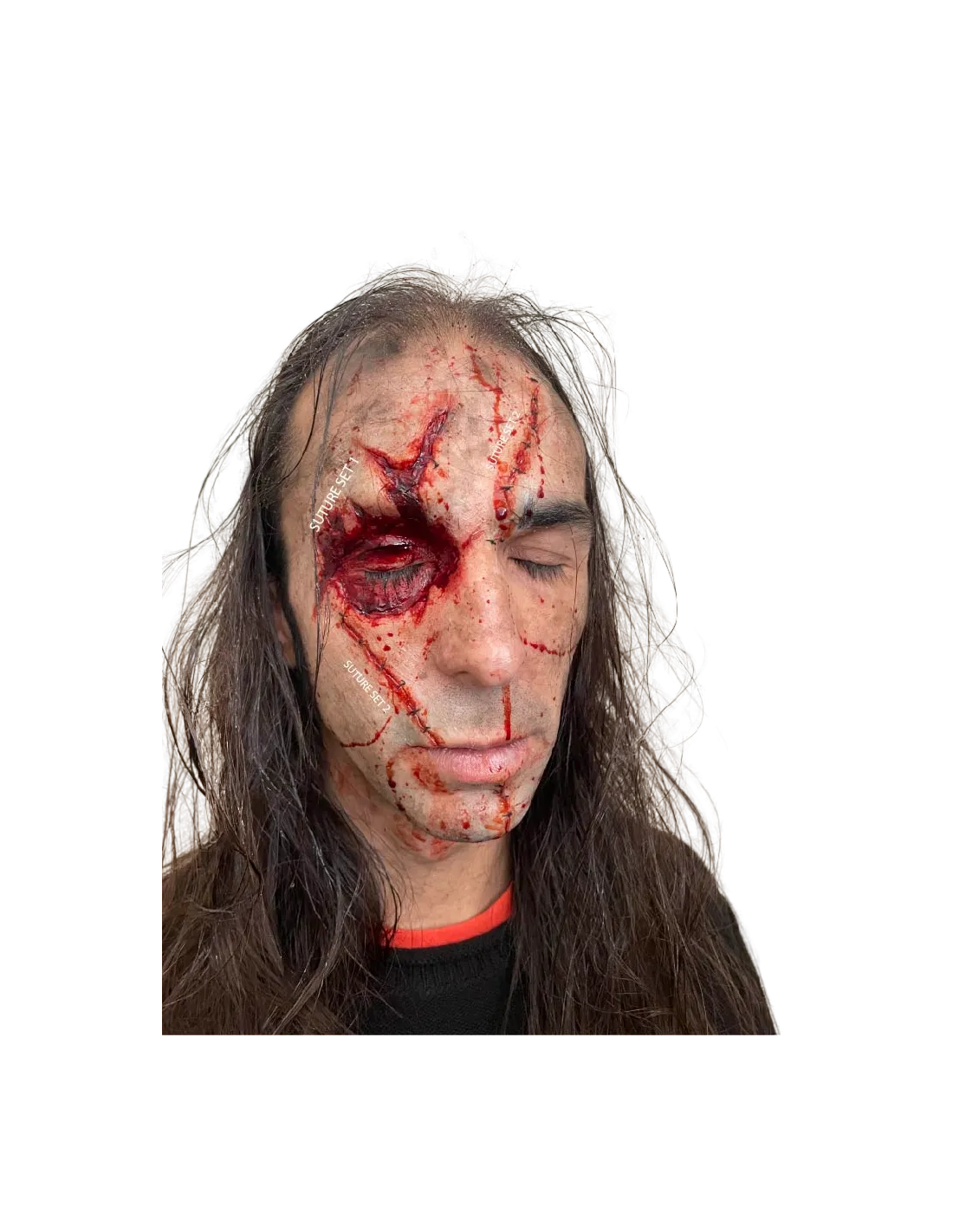
Platinum silicone SFX prosthetic designed by Ricard MUA FX. Simulates sutured wounds with professional realism for film, Halloween and special effects.
The Suture Set 2 Prosthetic is a special effects piece made from platinum silicone, designed by Ricard MUA FX to simulate sutured wounds in a convincing and professional way. Its skin-grade silicone construction ensures natural integration with the face or body, eliminating visible transition lines and delivering a result ready for camera or stage.
Technical specifications
| Feature | Detail |
|---|---|
| Base material | Platinum silicone (addition cure) |
| Effect type | Sutured wound |
| Designer | Ricard MUA FX |
| Finish | Encapsulated (bald cap) edges for skin blending |
| Compatibility | Skin-safe, extended wear |
| Application | Silicone adhesive or medical prosthetic adhesive |
What it's used for
This prosthetic is designed for professional special effects makeup artists and demanding enthusiasts who need fast, high-impact results. The suture design makes it particularly useful in contexts where the wound must look real even under film lighting or close-up photography.
- Character makeup for injured characters in film and television productions
- Theatre productions featuring trauma or violence effects
- Horror, fashion or editorial photo shoots
- Professional-level Halloween events
- Practice and portfolio work for SFX makeup artists in training
- Medical simulations and emergency response training exercises
How to use it
- Clean and degrease the application area with isopropyl alcohol. The skin must be completely free of creams, oils or makeup.
- Dry-fit the prosthetic over the chosen area to check position and fit before applying any adhesive.
- Apply a thin layer of silicone adhesive or medical adhesive to the back of the prosthetic and, if necessary, to the skin as well.
- Gently press the prosthetic from the centre outward to the edges, ensuring even adhesion with no air bubbles.
- Blend the encapsulated edges into the skin using acetone applied with a fine-tipped brush, feathering outward until the transition disappears.
- Once integrated, apply makeup foundation with a sponge or airbrush to match the skin tone. Work with products formulated for silicone or use PTM Clear as a pigmentation base if you need better colour adhesion.
- Add blood, bruising or dirt details with characterisation products to complete the effect.
- To remove, apply medical adhesive remover along the edges and carefully lift the prosthetic. Clean any adhesive residue with the same remover.
Important notice — Platinum silicone inhibition: The Suture Set 2 is made from platinum silicone. If you intend to make your own moulds or work with addition-cure silicones in the same workshop environment, be aware that the platinum catalyst is inhibited by contact with sulphur, tin, sulphur-based clays, latex, cyanoacrylate adhesives and certain PVC materials. Although the prosthetic is already cured and poses no such risk in use, this is important to know if you combine it with other uncured materials in your workflow.
Usage tips
Skin preparation for maximum durability
Perfectly clean, degreased skin is the difference between a prosthetic that holds up through a full shooting day and one that lifts after two hours. Don't cut corners on this step: use 70–99% isopropyl alcohol and allow it to dry completely before applying the adhesive. If the actor has very oily skin, repeat the process twice.
Blending the edge with acetone
The encapsulated finish on the edges allows them to be blended into the skin using acetone applied with a fine-tipped brush. Work with small amounts and brush strokes moving outward, from the edge of the prosthetic toward the skin. Do not over-saturate: too much acetone can damage the encapsulation. Once blended, allow to dry fully before applying makeup.
Pigmentation on silicone
Conventional makeup does not adhere well to silicone without a suitable base. Use products specifically designed for silicone characterisation, or apply a layer of PTM Light Flesh or PTM Clear as a primer, which significantly improves colour adhesion and allows for more precise work on skin tones. For tattoo transfers or additional textures, the Tattoo and PTM Transfer Paper is an effective complement for adding detail to adjacent areas.
Frequently asked questions
Is it safe to use this type of prosthetic directly on skin?
Yes. The Suture Set 2 is made from skin-grade platinum silicone, a biocompatible material widely used in the professional makeup industry and in medical applications. It is designed for extended wear in contact with the skin without causing irritation under normal conditions. If you have particularly sensitive skin, perform a patch test before full use.
What adhesive should I use to attach a silicone prosthetic?
It is recommended to use adhesives specifically designed for silicone prosthetics or skin-grade medical adhesives. Standard contact adhesives do not bond correctly to cured silicone. Check with your supplier which adhesive is compatible with platinum silicone for best results.
How many times can a silicone prosthetic be reused?
Platinum silicone is a highly durable material. With proper care — gentle cleaning with water and mild soap after each use, stored in a cool place away from direct light — a prosthetic like the Suture Set 2 can be reused many times without losing detail or flexibility. Avoid folding it excessively or exposing it to harsh solvents during cleaning.
How do you paint a silicone prosthetic for long-lasting colour?
Silicone does not accept conventional makeup well without a proper base coat. The most effective approach is to use products formulated for silicone, or to first apply materials such as PTM Clear or PTM Light Flesh, which act as a primer and allow pigments to bond correctly and withstand movement and perspiration throughout the day.
Can I use a silicone prosthetic on children?
Platinum silicone is skin-safe, but the application process involves adhesives and solvents (such as acetone) that require caution. With children, it is recommended that an adult or professional always handles application and removal, avoiding contact with eyes and mucous membranes. Also verify skin tolerance with a prior patch test.
What is the difference between a silicone prosthetic and one made from latex or foam?
Platinum silicone offers a texture and translucency far closer to real skin than latex or foam latex, resulting in more convincing results on camera and at close range. It is also hypoallergenic and more durable. Latex can cause allergic reactions and deteriorates more quickly. Silicone comes at a higher cost, but justifies the investment in productions that demand maximum realism.
How should a silicone prosthetic be stored correctly?
Store the Suture Set 2 in its original packaging or in a sealed polyethylene bag, away from direct sunlight and heat sources. Avoid contact with materials containing sulphur or compounds that may stain the silicone. Do not stack heavy objects on top of it that could permanently deform it.
Can the prosthetic be modified or customised before use?
Yes, within certain limits. You can carefully trim the edges to adjust the shape to a specific application area. You can also add intrinsic pigmentation with silicone colours prior to final application if you need a different base tone. Applying direct heat or attempting to reshape it with abrasive tools is not recommended, as these could damage the surface detail.
No reviews
Tap to zoom