Shopping Cart


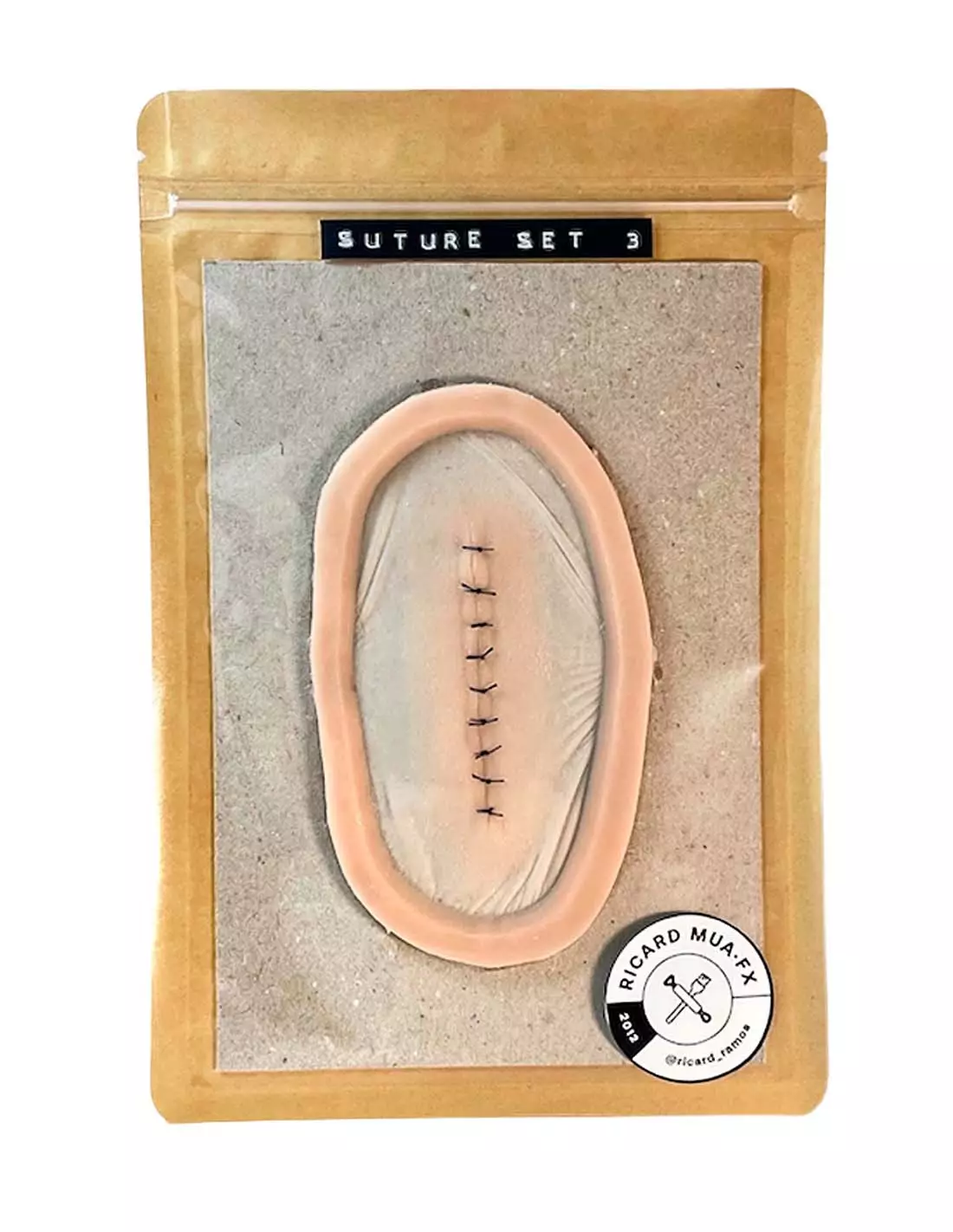
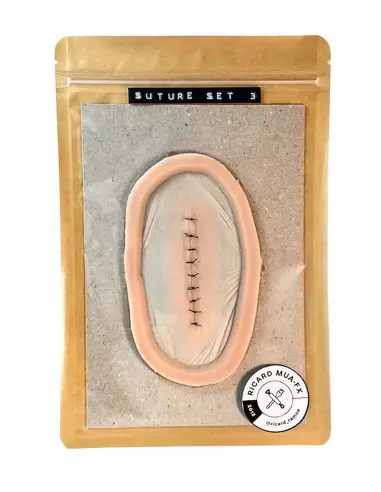
Protesis Suture Set 3
221000801
Temporarily out of stock
€19.00
22,99 € Tax incl.
22,99 € Tax incl.
Platinum silicone FX prosthetics created by Ricard MUA FX. Realistic suture set for special effects, film, theatre and Halloween.
The Protesis Suture Set 3 is a special effects prosthetic set made from platinum silicone, designed by Ricard MUA FX to achieve wound and suture transformations with a professional level of detail and realism. If you work in special effects makeup, audiovisual production, or need a convincing result for any project, this set delivers the quality and versatility you demand.
Technical specifications
| Feature | Detail |
|---|---|
| Material | Platinum silicone (addition cure) |
| Type | FX prosthetic — suture set |
| Designer | Ricard MUA FX |
| Finish | Encapsulated with bald cap, feathered edges |
| Use | Skin application, compatible with prosthetic adhesives and paints |
| Safety | Biocompatible materials, safe for extended skin contact |
| Applications | Film, television, theatre, Halloween, cosplay, FX photography |
What it's used for
The Suture Set 3 is designed for makeup artists who need to recreate sutured wounds, surgical scars, or trauma effects with maximum credibility. Platinum silicone offers a translucency and texture that mimics skin very convincingly, and the feathered encapsulated edges allow near-invisible blending with real skin.
- Simulation of sutured wounds and surgical scars in film and television shoots
- Trauma and injury effects for theatrical productions
- Character makeup for Halloween and horror events
- Special effects photography and editorial projects
- Practice and training for FX makeup artists in professional education
- Cosplay and advanced character looks requiring realistic wounds
How to use it
- Prepare the application area: thoroughly clean and degrease the skin where you will place the prosthetic. The skin must be dry and free of creams or oils.
- Dry fit test: place the prosthetic dry on the chosen area to check the fit and position before applying adhesive.
- Apply the adhesive: use a silicone-compatible adhesive or transfer material on the skin and/or the back of the prosthetic, according to the chosen adhesive. Allow it to become slightly tacky if the product requires it.
- Position the prosthetic: place the prosthetic from the centre outward to the edges, pressing gently to eliminate air bubbles.
- Blend the edges: work the encapsulated edges with acetone or the appropriate product to integrate them with the skin and eliminate any visible line.
- Paint and finish: apply paints formulated specifically for silicone to match the skin tone and add colour effects (bruising, redness, necrosis) as needed. You can use PTM Clear as a base or transparent sealer.
- Removal: carefully peel off the prosthetic using a suitable adhesive remover. Clean away adhesive residue gently to avoid damaging the skin.
Warning — Platinum silicone inhibition: although this product is an already-cured prosthetic, if you work with platinum silicones in your workshop to make similar pieces, bear in mind that this type of silicone can be inhibited (fail to cure correctly) by contact with materials containing sulphur, tin, amines, latex, sulphur-based clays, or cyanoacrylate adhesives. Make sure all materials and surfaces in contact with uncured silicone are compatible before use.
Usage tips
Perfect edge integration
The finish of a prosthetic depends largely on how the edges are worked. The encapsulated edges of the Suture Set 3 are designed to blend out, but require patience: apply acetone with a fine brush in small amounts, working from the outside inward. Avoid applying too much at once to prevent lifting an already-adhered edge.
Painting and colour finishing
Platinum silicone does not accept conventional water- or oil-based paints directly. Always use paints formulated specifically for silicone or silicone-based pigments. To achieve a natural suture appearance, work in thin layers: first a base tone, then add pinkish or purplish tones around the wound, and finally the thread details if needed. PTM Clear can help you seal and finish without altering the colour.
Storage and reuse
If the prosthetic has not been damaged during removal, it can be reused. Carefully clean away adhesive and paint residue using a mild solvent. Store it in its original packaging or in a sealed plastic bag, away from direct light and heat. Avoid folding or forcibly compressing it to preserve the finest details of the piece.
Frequently asked questions
Is it safe to use this type of prosthetic directly on skin?
Yes. The Suture Set 3 is made from platinum silicone, a biocompatible material widely used in skin-contact applications. It is safe for extended use, provided the adhesive you use is also suitable for skin contact and there is no known silicone allergy.
What adhesive should I use to attach a silicone prosthetic to skin?
Silicone prosthetics require adhesives specifically compatible with this material. Conventional adhesives do not bond well to silicone. Check with Feroca for compatible PTM family products, such as PTM Light Flesh, which also allows edge blending with skin.
Can a silicone prosthetic be reused after use?
Yes, in general it is possible as long as the piece has not been torn during removal. Clean away adhesive residue with a suitable remover, store it properly, and you can use it across multiple sessions. Platinum silicone is durable and holds its shape and detail well.
What paints can I use to match skin tone on a silicone prosthetic?
You must use paints formulated specifically for silicone or silicone-based pigments. Conventional water-based or acrylic paints do not adhere durably to silicone and will flake off with movement. Check the Feroca catalogue for paints compatible with platinum silicone prosthetics.
Is this set suitable for use on long shooting days?
Yes. Platinum silicone is flexible, breathable, and does not deteriorate with sweat or heat from studio lights. With a good adhesive and correct edge sealing, the Suture Set 3 holds up perfectly through long shooting days without losing adhesion or realism.
Can I use these effects for Halloween or events without prior experience?
The Suture Set 3 is designed for professional results, but its application does not require specialist training if you follow the steps correctly. For a first-time user, it is recommended to do a prior test with the chosen adhesive and practise edge blending before the actual event.
How do I remove the prosthetic without damaging the skin?
Apply a skin-safe adhesive remover around the edges of the prosthetic and wait a few seconds for it to take effect. Peel carefully from the edges toward the centre, without pulling abruptly. Clean away residue with the same remover and a soft gauze.
Is it possible to transfer tattoos or additional textures onto the already-applied prosthetic?
Yes. You can use transfer papers such as the Tattoo and PTM Transfer Paper to add tattoos, veins, or other textures onto the prosthetic or adjacent skin, achieving a more integrated and complete effect.
No reviews
Tap to zoom