
Shopping Cart
Professional clays for scale modeling
Oil- or wax-based clay doesn't harden in the air, which lets you work on a piece for days or weeks without rushing. It's the preferred material for sculpting figure prototypes, architectural models and animation characters because it accepts tools with precision and can be reheated to make corrections. Hardness is the key parameter: soft varieties can be worked directly with your fingers at room temperature, while hard ones require preheating but hold fine detail and texturing tools much better. All of Feroca's professional clays are sulfur-free, making them compatible with both addition and condensation silicones.
Monster Clay
Monster Clay is the reference clay for character sculpture, masks and collectible figures. Its oil-wax formula lets you smooth surfaces with solvent or heat and accepts texturizers with great fidelity. Available in several hardness levels and in grey or green versions for better visual contrast during detailing.
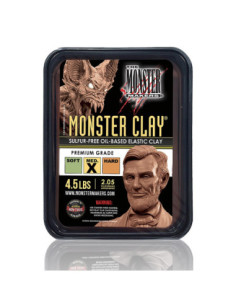 Monster Clay MEDIUM
Medium hardness, sulfur-free, 2.05 kg.
Monster Clay MEDIUM
Medium hardness, sulfur-free, 2.05 kg.
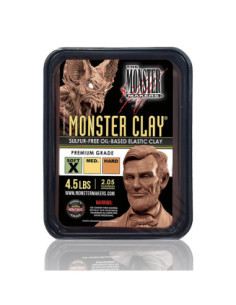 Monster Clay SOFT
Soft hardness, usable straight from room temperature.
Monster Clay SOFT
Soft hardness, usable straight from room temperature.
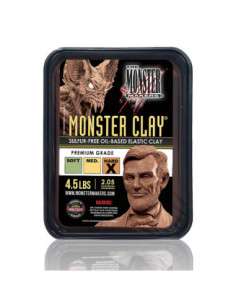 Monster Clay HARD
High hardness, maximum retention of fine detail.
Monster Clay HARD
High hardness, maximum retention of fine detail.
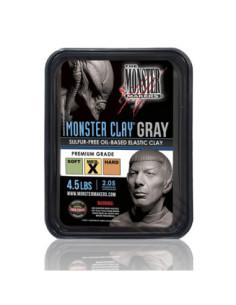 Monster Clay GRAY MEDIUM
Grey version, superior visual contrast for detailing.
Monster Clay GRAY MEDIUM
Grey version, superior visual contrast for detailing.
Chavant NSP and Chavant range
Chavant clays are the industry standard in special effects and precision modeling. The NSP range covers three hardnesses (Soft, Medium, Hard) and offers a surface that smooths perfectly with a heated spatula or alcohol. The Clayette format makes it easier to manage large volumes in production workshops.
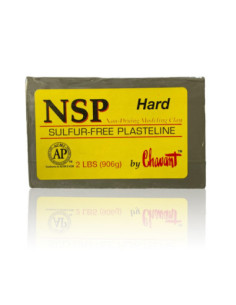 Chavant Hard
High hardness, green, 906 g, sulfur-free.
Chavant Hard
High hardness, green, 906 g, sulfur-free.
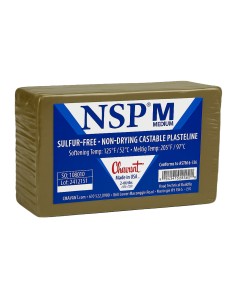 Chavant Medium
Balanced medium hardness for figures and models.
Chavant Medium
Balanced medium hardness for figures and models.
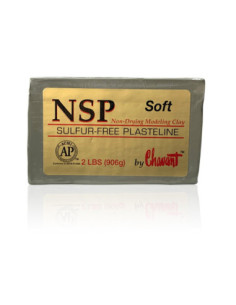 Chavant Soft
Soft hardness, ideal for delicate organic details.
Chavant Soft
Soft hardness, ideal for delicate organic details.
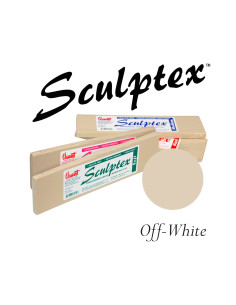 Chavant NSP Sculptex
Off-white, Soft 14A and Medium 26A available.
Chavant NSP Sculptex
Off-white, Soft 14A and Medium 26A available.
J. Herbin and other precision clays
The J. Herbin range is especially valued in figure modeling for its predictable behavior at different temperatures and its guaranteed compatibility with silicones. The hardness numbers (40, 50, 55, 70) make it easy to choose based on the type of piece.
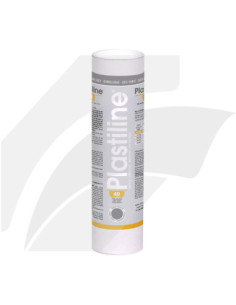 J. HERBIN Hardness 40 Grey
Dark grey, soft, reusable indefinitely.
J. HERBIN Hardness 40 Grey
Dark grey, soft, reusable indefinitely.
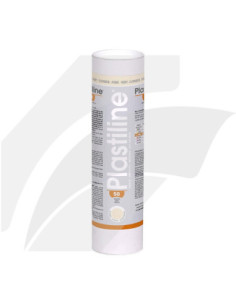 J. HERBIN Hardness 50 Ivory
Ivory, medium, sulfur-free, silicone compatible.
J. HERBIN Hardness 50 Ivory
Ivory, medium, sulfur-free, silicone compatible.
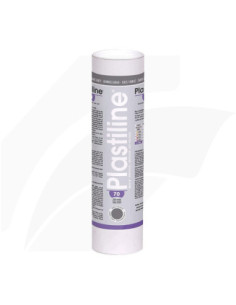 J. HERBIN Hardness 70
High hardness, 1 kg, fine details and reliefs.
J. HERBIN Hardness 70
High hardness, 1 kg, fine details and reliefs.
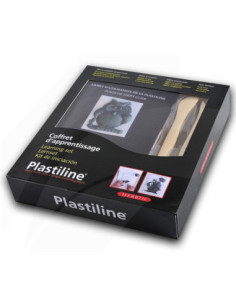 J. HERBIN Starter Kit
Complete kit with MDF board, acrylic sheet and 350 g.
J. HERBIN Starter Kit
Complete kit with MDF board, acrylic sheet and 350 g.
Polymer clays: flexible modeling and oven curing
Polymer clays differ from oil-based clays in that they harden in a domestic oven, making them the natural choice for wargame miniatures, artistic figures, articulated dolls and diorama elements that you need to handle once finished. The Cosclay family adds a distinctive property: after baking it retains rubber-like flexibility, eliminating breakage in thin pieces such as fingers, wings or antennae.
Super Sculpey
Super Sculpey is the reference polymer clay for professional figure sculpture. It's worked cold and hardens at 130 °C in a conventional oven. The Firm version offers greater green strength for working details without deformation.
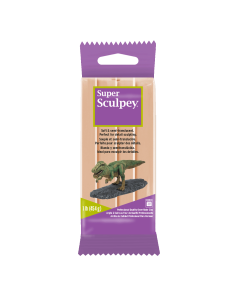 Super Sculpey Beige
Translucent, 454 g, professional figure sculpture.
Super Sculpey Beige
Translucent, 454 g, professional figure sculpture.
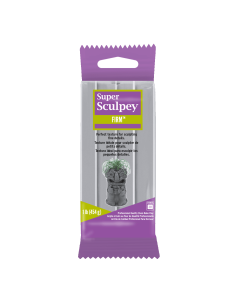 Super Sculpey Firm Gray
Firm grey, high green strength, precise detail.
Super Sculpey Firm Gray
Firm grey, high green strength, precise detail.
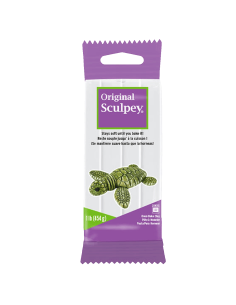 Super Sculpey White
White, 454 g, modeling and painting afterwards.
Super Sculpey White
White, 454 g, modeling and painting afterwards.
Cosclay: flexible polymer clay
Cosclay is a plastic-rubber hybrid that cures at 135 °C while maintaining lasting flexibility. It's the go-to choice for articulated miniatures, stop motion and diorama pieces that need to withstand continuous handling. The Cosclay ecosystem includes bakeable adhesive, softening agent, release agent and liquid versions to complete any production process.
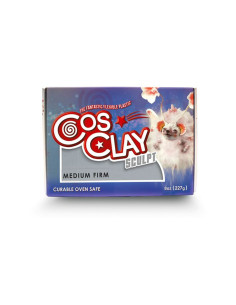 Cosclay Sculpt Medium Firm Gray
Grey, firm, flexible after baking, 227 g.
Cosclay Sculpt Medium Firm Gray
Grey, firm, flexible after baking, 227 g.
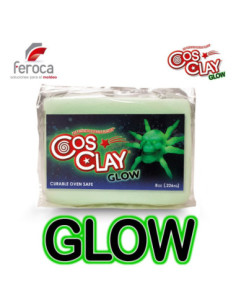 Cosclay Glow
Luminescent, flexible, glow in the dark effect.
Cosclay Glow
Luminescent, flexible, glow in the dark effect.
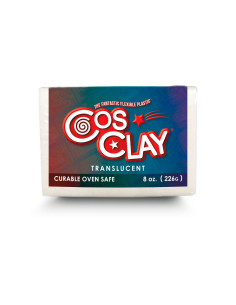 CosClay Translucent
Translucent, flexible, mixes with alcohol inks.
CosClay Translucent
Translucent, flexible, mixes with alcohol inks.
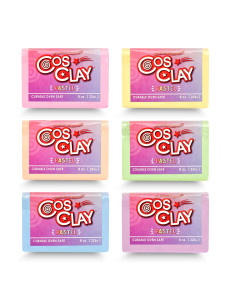 CosClay Pastel Six Colours
Kit of 6 pastel colors, 6 × 227 g, oven-curable.
CosClay Pastel Six Colours
Kit of 6 pastel colors, 6 × 227 g, oven-curable.
Modeling tools and accessories
The quality of the final result depends as much on the material as on the tools. Texture stamps let you reproduce skin, scales and organic surfaces with exact repeatability. Silicone kidney tools are essential for smoothing and compacting without leaving fingerprints. Anatomical armatures provide a correctly proportioned base on which to sculpt masks and character heads.
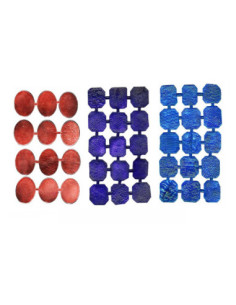 Texture Stamp
Urethane rubber skin stamps for clay.
Texture Stamp
Urethane rubber skin stamps for clay.
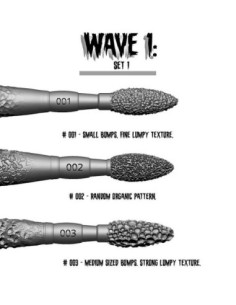 Texture Wave1 Set 1
3 rollers with 9 micro-textures printed in resin.
Texture Wave1 Set 1
3 rollers with 9 micro-textures printed in resin.
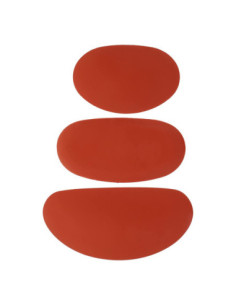 Silicone Kidney Tools
3 sizes for smoothing clay without fingermarks.
Silicone Kidney Tools
3 sizes for smoothing clay without fingermarks.
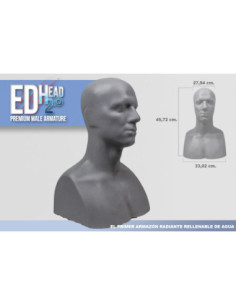 Armature ED HEAD H2.0
Water-fillable male head, easy demolding.
Armature ED HEAD H2.0
Water-fillable male head, easy demolding.
Molds for reproducing figures and miniatures
Once the original in clay or polymer clay is finished, the next step is to capture it in a mold. Condensation silicones are the most widely used in scale modeling because they don't require a release agent on most surfaces and are compatible with polyurethane resins and plaster. If the mold is going to be used for many pours or you need to see the inside to position the casting, a translucent silicone is especially practical.
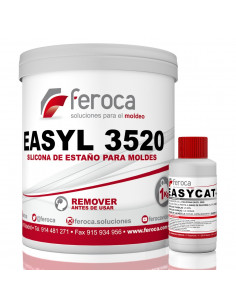 EASYL 3520
Shore A20, great elasticity for complex undercuts.
EASYL 3520
Shore A20, great elasticity for complex undercuts.
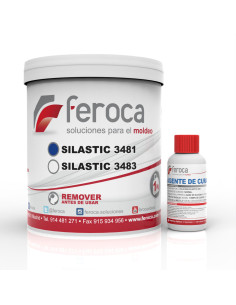 Silastic 3481
Shore A21, professional, high tear resistance.
Silastic 3481
Shore A21, professional, high tear resistance.
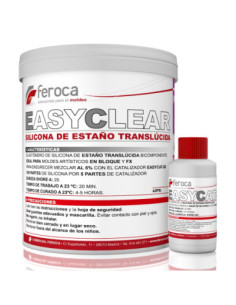 EASYCLEAR
Translucent, Shore A20, block molds and hyperrealism.
EASYCLEAR
Translucent, Shore A20, block molds and hyperrealism.
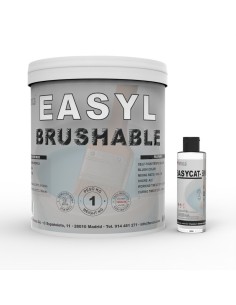 EASYL Brushable
Thixotropic Shore A27, brush-applied without sagging.
EASYL Brushable
Thixotropic Shore A27, brush-applied without sagging.
Polyurethane resins for reproducing figures
Polyurethane resins are the standard casting material for reproducing figures, diorama bases, model parts and wargame elements. They mix at a 1:1 ratio, have short working times ranging from 60 seconds to several minutes depending on the product, and cure to the hardness of a technical plastic. The choice of base color (white, black, translucent amber or natural) determines how easy it is to paint afterwards.
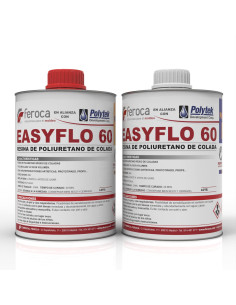 EasyFlo 60
Bright white, 1:1, ideal for painting figures.
EasyFlo 60
Bright white, 1:1, ideal for painting figures.
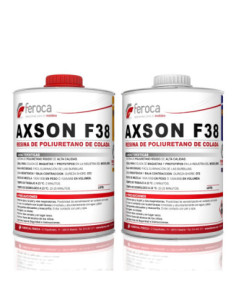 SikaBiresin F38
Shore 72D, specifically designed for precision modeling.
SikaBiresin F38
Shore 72D, specifically designed for precision modeling.
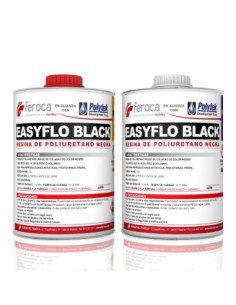 EasyFlo Black
Black, Shore 70D, opaque finish straight from mold.
EasyFlo Black
Black, Shore 70D, opaque finish straight from mold.
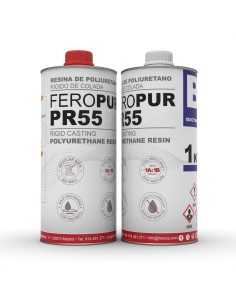 Feropur PR55+E55
Rigid two-component, Shore 75D, versatile casting.
Feropur PR55+E55
Rigid two-component, Shore 75D, versatile casting.
Putties for repair and structure building
In scale modeling and diorama work it's common to need putties to fill mold imperfections, join pieces of different materials or build bases and terrain. Two-component epoxy putty is especially useful because it mixes by hand, cures underwater and can be sanded, drilled and painted.
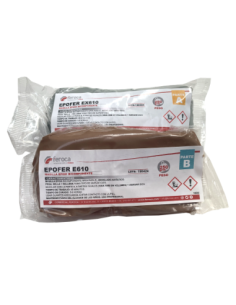 Epoxy Putty 610
Two-component 1:1, cures underwater, hand-kneadable.
Epoxy Putty 610
Two-component 1:1, cures underwater, hand-kneadable.
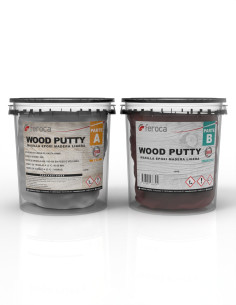 Wood Putty
Lightweight epoxy, wood-like finish, 1:1 mix.
Wood Putty
Lightweight epoxy, wood-like finish, 1:1 mix.
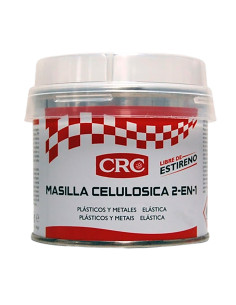 CRC Cellulosic Putty
Fine finish, 250 g, for surface corrections.
CRC Cellulosic Putty
Fine finish, 250 g, for surface corrections.
3D resin printing for scale modeling and miniatures
3D printing with photopolymer resins has changed the workflow in scale modeling. LCD/MSLA printers with 4K or 8K resolution let you print wargame miniatures, diorama pieces and collectible figures with a level of detail that equals or surpasses hand molding, at a very competitive cost per piece. The process has three phases: printing, washing with isopropyl alcohol and UV curing. Each one requires the right materials.

Photopolymer resins for LCD/MSLA printers
The choice of resin determines surface resolution, mechanical strength and ease of post-processing. For wargame miniatures and high-definition figures, low-viscosity, low-shrinkage 4K or 8K resins are recommended. For functional prototypes there are ABS-type resins with greater impact resistance. Water-washable resins simplify cleaning in workshops without specialized ventilation.
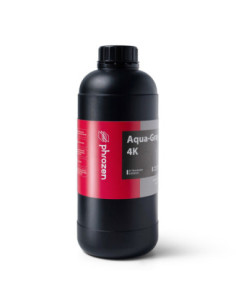 Phrozen Aqua-Gray 4K
Grey 4K, low shrinkage, high dimensional accuracy.
Phrozen Aqua-Gray 4K
Grey 4K, low shrinkage, high dimensional accuracy.
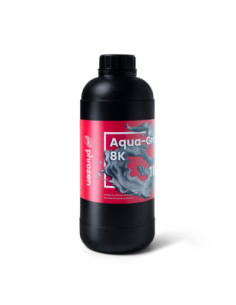 Phrozen Aqua-Gray 8K
Grey 8K, low viscosity, extreme miniature detail.
Phrozen Aqua-Gray 8K
Grey 8K, low viscosity, extreme miniature detail.
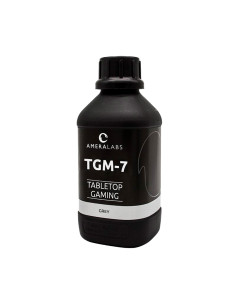 Ameralabs TGM-7 Grey
Formulated for board game miniatures.
Ameralabs TGM-7 Grey
Formulated for board game miniatures.
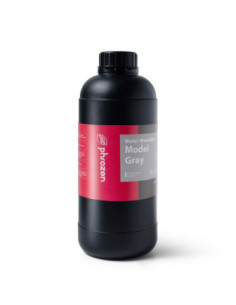 Phrozen Water-Washable Model Gray
Water-washable, grey, prototypes and figures.
Phrozen Water-Washable Model Gray
Water-washable, grey, prototypes and figures.
Resin printers
For extreme-detail scale modeling, screen resolution is the limiting factor. Phrozen printers with an 8K panel offer an XY resolution of 22 to 43 microns, enough to reproduce fabric textures, rivets or engraved reliefs at 1:72 scale.
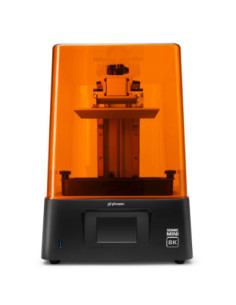 Phrozen Sonic Mini 8K
8K, 22 µm XY, compact format for miniatures.
Phrozen Sonic Mini 8K
8K, 22 µm XY, compact format for miniatures.
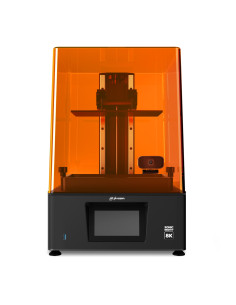 Phrozen Mighty 8K
8K, 28 µm, 10" screen, extended build volume.
Phrozen Mighty 8K
8K, 28 µm, 10" screen, extended build volume.
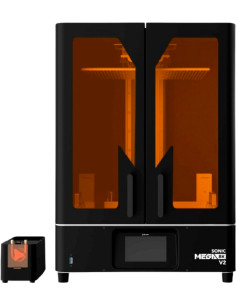 Phrozen Sonic MEGA 8K V2
Large format 330×185 mm, serial production.
Phrozen Sonic MEGA 8K V2
Large format 330×185 mm, serial production.
3D resin post-processing: sanding, washing and curing
Resin-printed pieces come out of the machine not fully cured: they need washing to remove excess liquid resin and UV exposure to reach their final hardness. After curing, mechanical post-processing begins: removing supports with precision cutters, progressive sanding and applying primer before painting. To achieve a perfectly paintable surface on wargame miniatures, sanding with fine-grit paper (400 to 1000) followed by spray primer is the standard procedure.
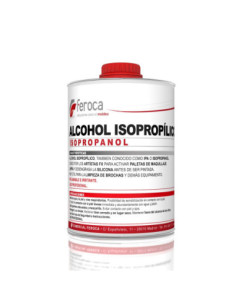 Isopropyl Alcohol 99.9%
3D resin wash, high-purity cleaner.
Isopropyl Alcohol 99.9%
3D resin wash, high-purity cleaner.
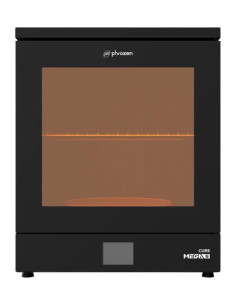 Phrozen Cure Mega S
Rotating UV chamber, large interior capacity.
Phrozen Cure Mega S
Rotating UV chamber, large interior capacity.
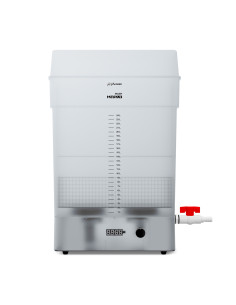 Phrozen Wash Mega S
25 L wash station, automatic dual vortex.
Phrozen Wash Mega S
25 L wash station, automatic dual vortex.
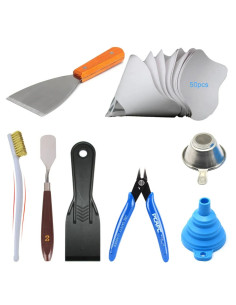 3D Tool Kit
8 essential tools for complete post-processing.
3D Tool Kit
8 essential tools for complete post-processing.
Cutting and finishing tools for 3D printing
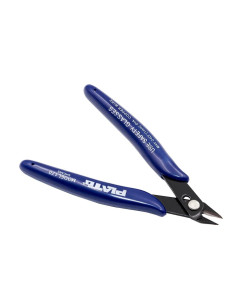 3D Cutting Pliers
Precise side cut for removing supports.
3D Cutting Pliers
Precise side cut for removing supports.
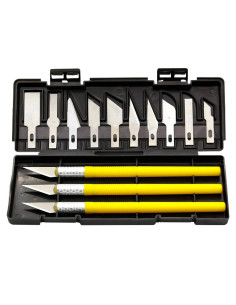 3D Scalpel Set
Set of 3 handles and 13 interchangeable blades.
3D Scalpel Set
Set of 3 handles and 13 interchangeable blades.
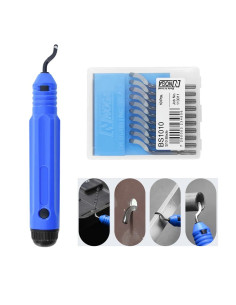 3D Deburring Tool
Removes burrs and layer lines from printed pieces.
3D Deburring Tool
Removes burrs and layer lines from printed pieces.
Personal protective equipment for 3D printing
Uncured photopolymer resins are irritating to skin and mucous membranes. Always wear nitrile gloves when handling them and a certified mask when working in poorly ventilated spaces.
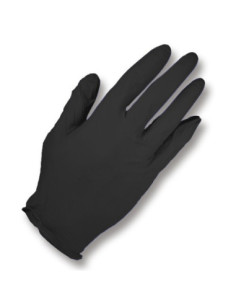 Powder-Free Nitrile Gloves
Do not inhibit silicone, disposable, ambidextrous.
Powder-Free Nitrile Gloves
Do not inhibit silicone, disposable, ambidextrous.
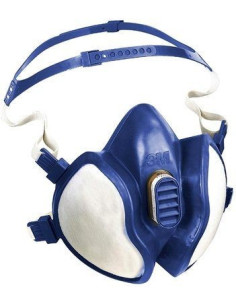 3M 4251 Reusable Mask
FFA1P2 filters, organic vapor protection.
3M 4251 Reusable Mask
FFA1P2 filters, organic vapor protection.
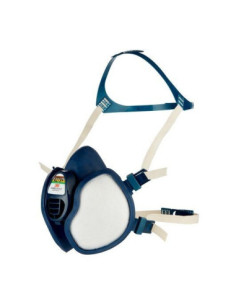 3M 4279 Reusable Mask
FFABEK1P3 filter, extended multi-gas protection.
3M 4279 Reusable Mask
FFABEK1P3 filter, extended multi-gas protection.
Frequently asked questions about scale modeling and materials
What's the difference between 3D resin printing and traditional mold casting?
They are two complementary approaches, not mutually exclusive. 3D resin printing starts from a digital file and produces the piece directly without needing a physical original or a mold: it's ideal when you design in 3D software, when you need scale variations or when the geometry has undercuts that would be very difficult to sculpt by hand. Traditional casting, on the other hand, starts from a physical original sculpted in clay or polymer clay, captures it in a silicone mold and reproduces the shape in polyurethane resin: it's irreplaceable when hand sculpting brings an organic character that digital modeling can't easily achieve, and when you need to produce many identical copies of an existing original. In practice many modelers combine both methods: they print a base structure in 3D, then sculpt and detail it by hand with clay, and then take a silicone mold of the result to reproduce it in polyurethane resin.
What 3D resin is best for wargame miniatures?
For wargame miniatures at 28 mm or 32 mm scale you need a low-viscosity, low-shrinkage resin capable of reproducing details smaller than 0.1 mm: rivets, straps, engravings and fabric textures. The 4K and 8K resins in the Phrozen Aqua-Gray range are specifically formulated for this use and work well in printers with a 4K or 8K panel. Ameralabs TGM-7 Grey is another highly regarded option for its balance between rigidity and break resistance, which reduces losses on thin parts like spears or swords. If your printer is a compact format like the Phrozen Sonic Mini 8K, the 22 µm XY resolution is sufficient for the level of detail that competitive wargaming demands.
What professional clay should I choose for hand-sculpting a miniature?
It depends on the size of the piece and your working method. For small miniatures from 30 to 75 mm, where fine detail is the priority, medium-to-hard clays like Chavant Hard or Monster Clay Hard are the most suitable because they withstand tool pressure without deforming. If you plan to work with your fingers and want greater plasticity, Monster Clay Medium or Chavant Medium offer a good balance. J. Herbin clays are especially recommended if you plan to make an addition silicone mold afterwards, since their formulation guarantees full compatibility. For larger figures, such as 1:4 scale busts or 200 mm characters, a soft hardness lets you work with less effort and makes smoothing with a spatula easier.
How do you paint a 3D resin-printed piece?
Painting a 3D resin piece involves several stages. First you remove the supports with cutting pliers and a scalpel, then sand the marks with wet-and-dry sandpaper starting at 220 grit and finishing at 600 or 800 depending on the finish you're after. Then you apply a spray primer with good adhesion on plastic, preferably in neutral grey to reveal surface imperfections. Once the primer is dry you can correct any flaws with cellulosic putty or lightweight epoxy putty before applying the base color coat. For wargame miniatures the most common workflow is grey primer, base coat with airbrush or brush, shade wash, highlights and finally matte or satin protective varnish. White or ivory resins make painting in light colors easier because they require fewer base coats.
Can I use Cosclay polymer clay for wargame miniatures and then mold them?
Yes, and it's a very efficient combination. You sculpt the miniature in Cosclay Sculpt Medium Firm, which has enough green strength to work fine details. Once you're happy with the sculpture, you bake the piece at 135 °C for 30 minutes. The cured piece is flexible and tough, which makes handling it easier without risk of breakage during the molding phase. You then prepare the condensation silicone mold and pour white polyurethane resin to produce as many copies as you need. The advantage over clay is that the cured original is more dimensionally stable during the molding process and handles the exothermic heat of the silicone reaction better.