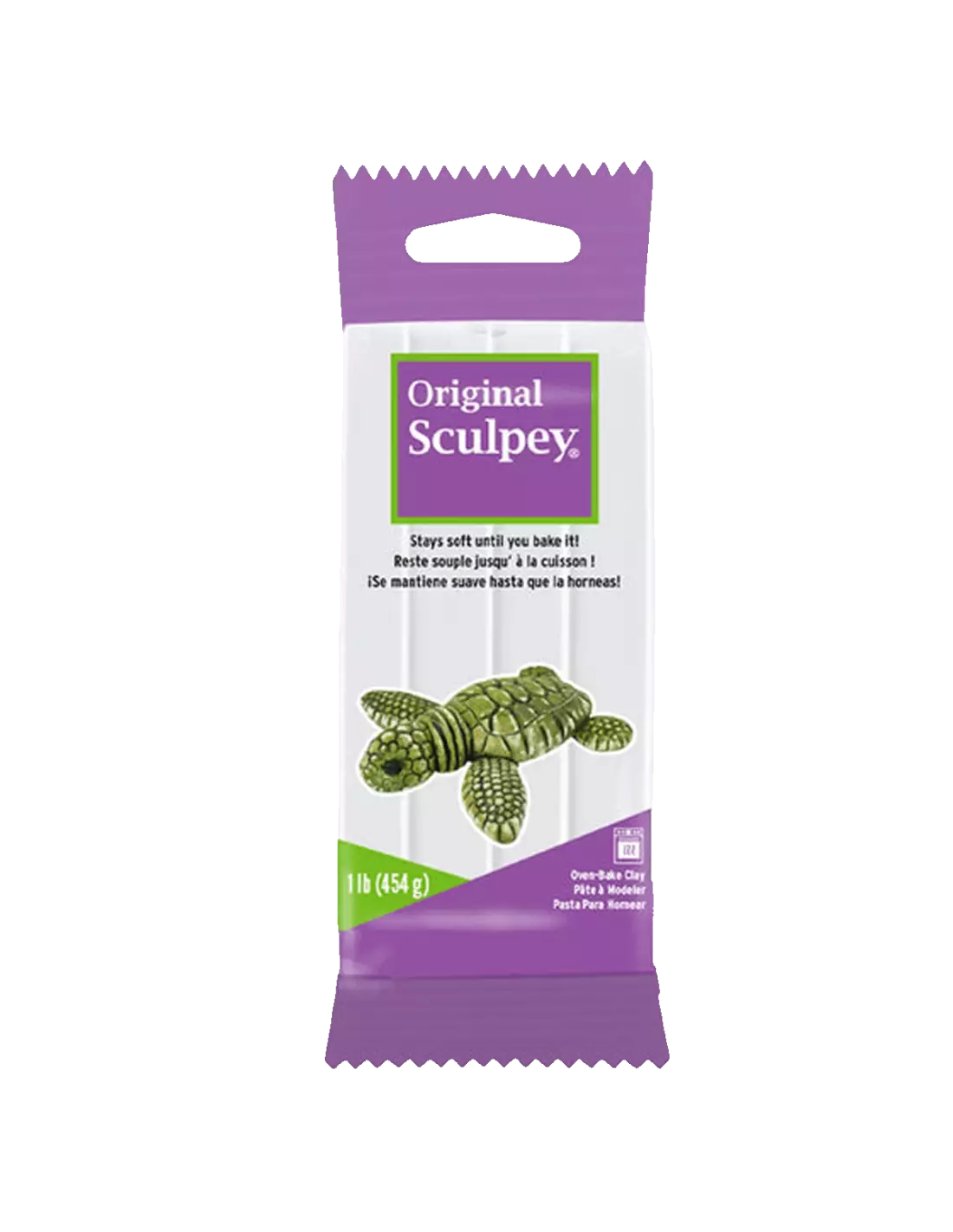
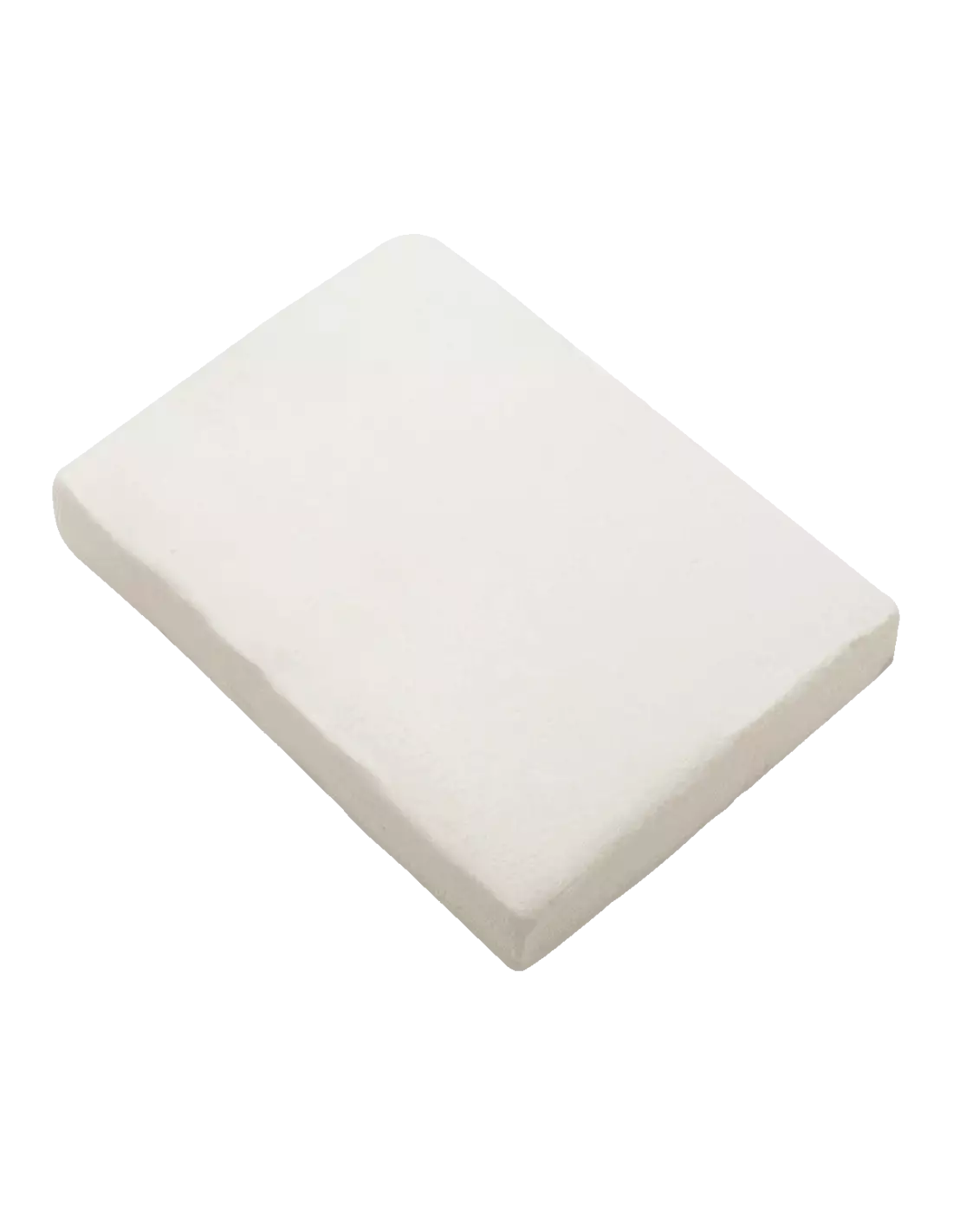
Super Sculpey White is a white polymer clay that stays workable at room temperature, letting you take your time and make as many corrections as you need. With 454 g per block and a smooth, ceramic-like finish once cured, it is the go-to choice for sculptors, prototype makers and special effects professionals who need a clean, neutral base for painting, sanding or moulding.
Technical specifications
| Parameter |
Value |
| Material type |
Polymer clay (PVC plastisol) |
| Colour |
White |
| Content |
454 g |
| Baking temperature |
130 °C (275 °F) |
| Baking time |
15 min per 6 mm of thickness |
| Cure method |
Heat cure (conventional oven or toaster oven) |
| Air drying |
No |
| Finish after curing |
Smooth, ceramic-like, paintable |
| Toxicity |
Non-toxic |
What it is used for
Super Sculpey White is designed for detailed sculptures that will receive further treatment: painting, priming, sanding or moulding in silicone or resin. Its white tone makes it easy to read light across the form during the sculpting process and works perfectly as a neutral base for any chromatic finish.
- Sculpting figures, busts and character maquettes
- Prototypes of decorative or small-scale industrial parts
- Creating masters for silicone or resin moulds
- Making props and elements for special effects
- Artistic sculpture and three-dimensional illustration work
- Anatomical models for study or presentation
- Restoration and replication of small pieces
How to use it
- Condition the material: knead the block with your hands until the clay is soft and workable. If it is very cold, work it for a few minutes to activate it.
- Build the base shape: start with large volumes and gradually add mass. You can use an internal armature of wire or aluminium foil for large pieces to save material.
- Refine the detail: use a set of modelling tools to work textures, planes and fine finishes. The clay does not dry out, so you can pause your work whenever you need.
- Smooth the surface: run slightly damp fingers over it or use isopropyl alcohol with a brush to smooth the surface before baking.
- Bake the piece: preheat the oven to 130 °C. Bake for 15 minutes per 6 mm of thickness. Do not exceed 150 °C to avoid darkening or burning.
- Cool before handling: allow the piece to cool to room temperature. Avoid removing it from the oven while still very hot abruptly to prevent cracking.
- Post-processing: once cool, you can sand, drill, paint with acrylics or primer, and join pieces with cyanoacrylate adhesive.
Usage tips
Oven temperature: the critical point
Always use an independent oven thermometer. Domestic ovens often deviate several degrees from the temperature shown on the dial. Above 150 °C the clay can darken or release fumes. If you use a toaster oven, make sure the piece is not too close to the heating element.
Build over an internal armature for large pieces
For busts or figures larger than 10 cm, first build an internal armature with tightly packed aluminium foil or wire. This reduces the actual thickness of the clay, makes baking time more predictable and prevents internal bubbles or cracks caused by excessive mass build-up.
Compatibility with silicone moulds
Super Sculpey White is fully compatible with tin silicones. If you intend to use the cured piece as a master for a platinum silicone, seal the surface thoroughly with lacquer or primer before pouring the rubber, as plasticiser residues from the PVC can inhibit the cure of addition silicones. Always run a cure test on a small area before moulding the entire piece.
Frequently asked questions
Can it be baked in a regular domestic oven?
Yes. Super Sculpey White can be baked in any standard domestic oven or toaster oven at 130 °C. Use an oven thermometer to verify the actual temperature, as many ovens have deviations. If you bake large pieces frequently, avoid sharing the oven with food afterwards.
How long can you work with it before baking?
Working time is unlimited. Polymer clay does not harden in air, so you can work on a piece for days, weeks or months. It only cures when heat is applied in the oven.
Can two baked pieces be joined together?
Yes, in several ways. You can add raw clay onto an already cured piece and bake again, or join cured pieces with cyanoacrylate adhesive, which provides a fast and strong bond on the ceramic-like surface.
Can the clay be painted once cured?
Yes. The smooth finish of Super Sculpey White after curing accepts acrylics, enamels and primers without any issues. For a more even finish, apply a coat of primer before painting. The white base colour makes it much easier to achieve coverage with any tone.
Can the cured piece be sanded or drilled?
Yes. Once cured, the clay has a consistency similar to hard ceramic: it can be sanded starting from 220-grit sandpaper, drilled, milled and polished. This is one of its key advantages over other modelling materials that do not allow mechanical post-processing.
Is it suitable for use as a master for silicone moulds?
Yes, it is one of its most common uses. The cured and sealed piece (with lacquer or primer) works perfectly as a master for tin silicones. For platinum silicones, always seal the surface before moulding and carry out a prior cure test, as plasticiser residues can inhibit the cure of addition silicones.
What is the difference between Super Sculpey Beige and Super Sculpey Firm Gray?
The main difference is colour and hardness. Super Sculpey Beige has a flesh tone that makes it easier to read volumes on character figures. Super Sculpey Firm Gray is firmer and designed for fine detail work where the clay must not give way under the tool. Super Sculpey White is the intermediate, most neutral option, ideal when the piece will be painted or given a chromatic treatment.
Can it be mixed with other polymer clays?
Yes. Super Sculpey White can be mixed with Super Sculpey Firm Gray to adjust hardness to your working preference, or with Cosclay Sculpt to achieve a final result with greater flexibility after curing. Mix thoroughly and evenly before baking.