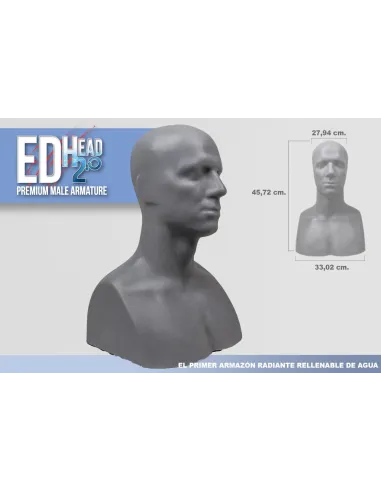
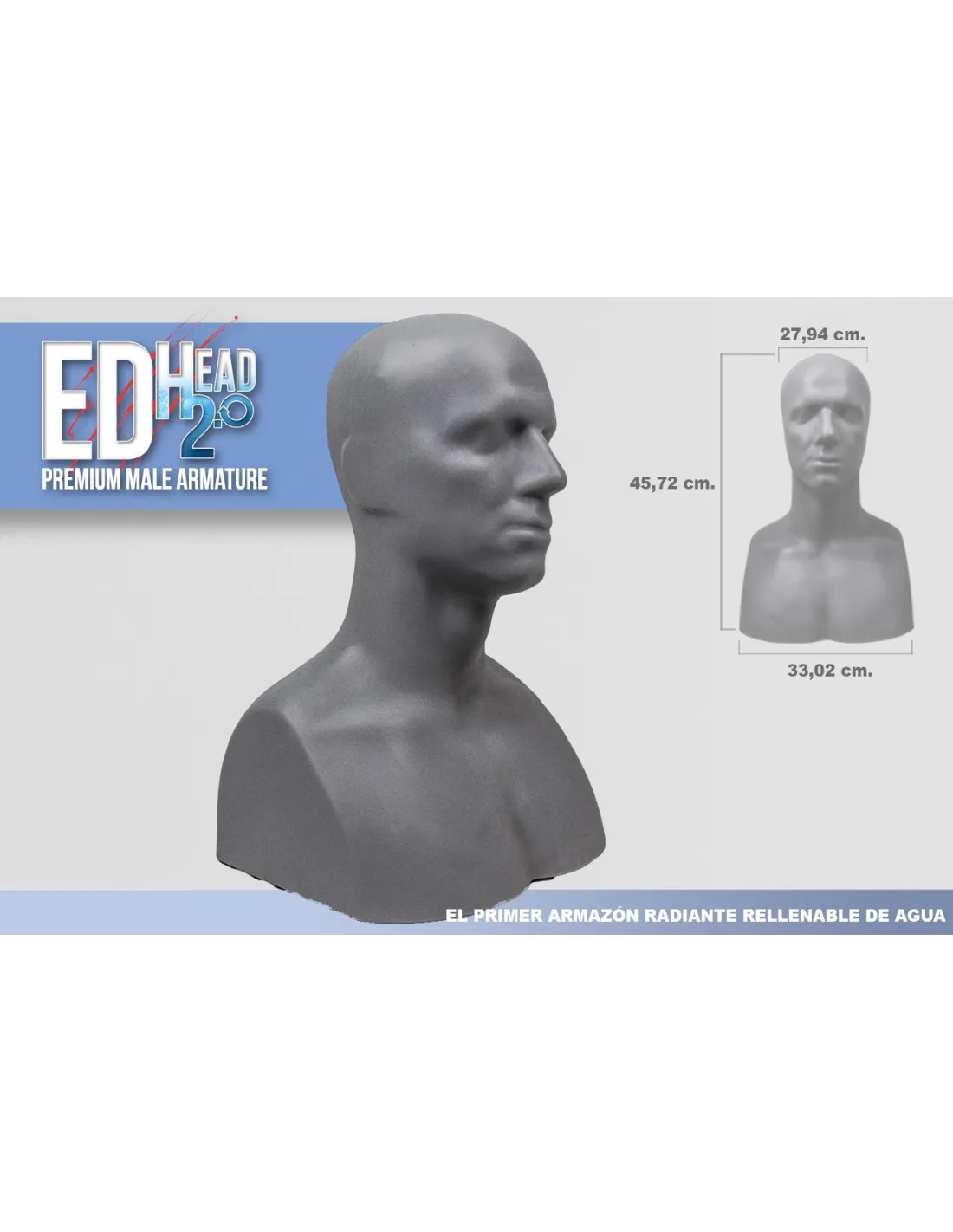
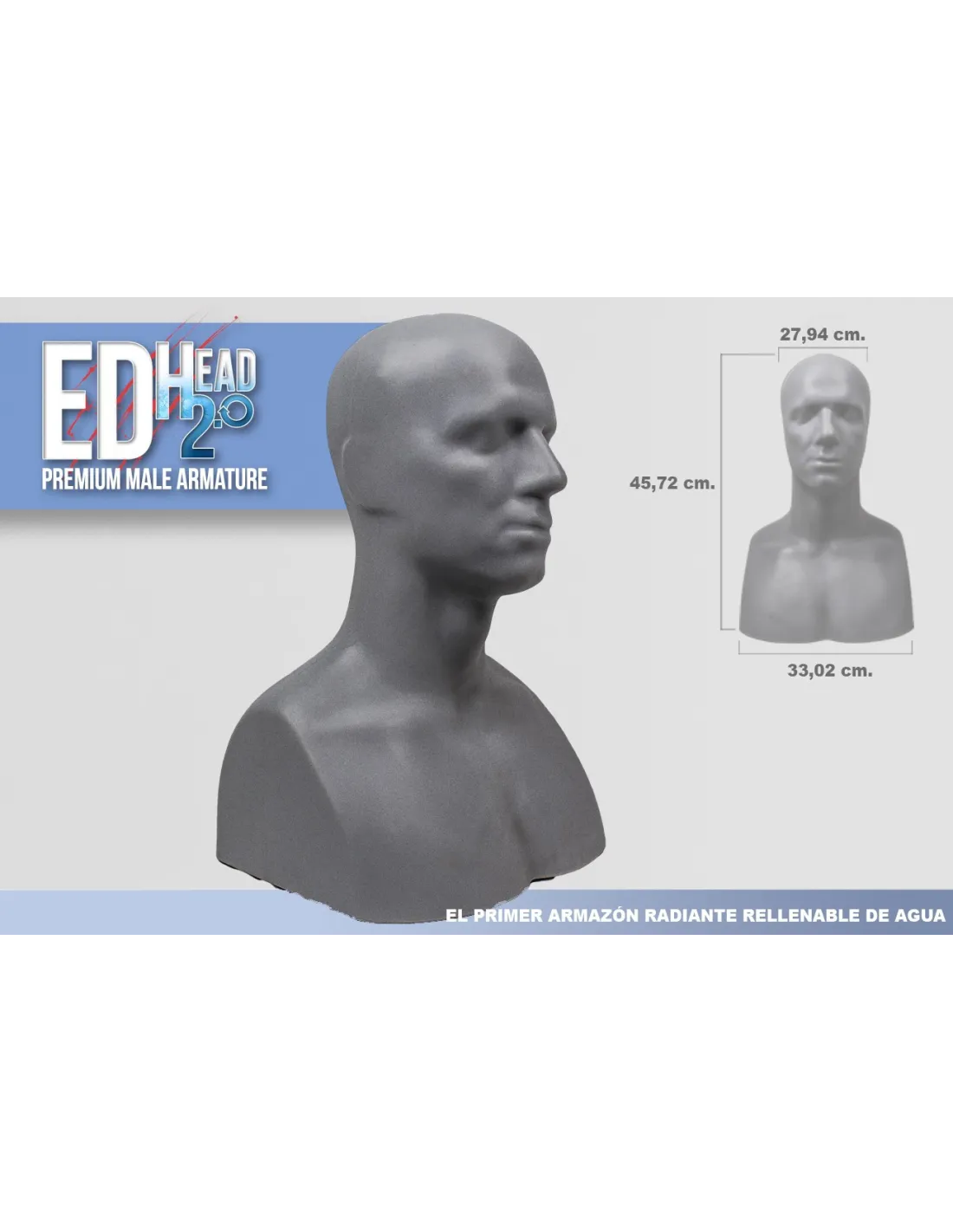
The Ed Head H2.0 is a full-size male anatomical Armature made from high-density plastic, designed specifically for professional sculpting with wax-based clays and mask-making for special effects. Its RAD (Radiant Assisted Demold) system turns the Armature into a hot water vessel that softens the clay from the inside, making demoulding fast, clean and effortless. If you're looking for a durable, precise work base built for real workshop use, this is the Armature.
Technical specifications
| Feature |
Detail |
| Model |
Male (Ed H2.0) |
| Scale |
Full size |
| Material |
High-density plastic |
| Demould system |
RAD — Radiant Assisted Demold Technology |
| Fill function |
Fillable with hot water via screw cap |
| Reusable |
Yes, continuous use with no appreciable wear |
| Recommended use |
Sculpting with professional wax-based clays, FX mask-making |
| Includes |
Insert bottle cap for water filling |
What it's used for
The Ed Head H2.0 is the go-to work base for any artist or mask maker who needs a precise anatomical form to sculpt on and subsequently mould. The RAD technology is especially useful when working with professional wax-based clays, as the heat from the water softens the clay from within and releases the mould without damaging it or deforming the sculpture.
- Full-size head and face sculpting for special effects
- Latex, silicone or foam latex mask-making
- Base for plaster, silicone or resin moulds over clay sculpture
- Heat-assisted demoulding: filled with hot water to soften the clay and ease mould release
- Male anatomical reference for proportion studies and character design
- Use in prosthetic makeup, film, theatre and professional costume production workshops
How to use it
- Place the Ed Head H2.0 Armature on a stable surface or mounted on a suitable sculpting stand.
- Sculpt your design directly onto the form using a professional wax-based clay. The Armature surface is ready to receive clay without any special pre-treatment.
- Once the sculpture is complete, apply your mould material (silicone, plaster, alginate, etc.) following the usual process.
- When the mould has cured, turn the whole assembly upside down with the base facing up.
- Unscrew the insert cap at the base of the Armature.
- Fill the inside of the Armature with hot water.
- Wait a few minutes. The heat will transfer through the plastic into the clay, softening it from the inside.
- Gently separate the mould. The softened clay will release easily without pulling details or deforming the mould negative.
- Empty the water, clean the Armature and repeat the process as many times as needed.
Usage tips
Water temperature and wait time
There is no need to use boiling water. Very hot tap water or water at around 60–70 °C is more than enough to activate the RAD system. Within a few minutes you will notice the clay in the contact area with the Armature starting to yield. If the mould is very thick (heavy plaster, for example), it may need a little more time. Be patient and avoid forcing the separation before the clay has softened.
Surface preparation before sculpting
Although the Armature requires no primer, many sculptors apply a very thin layer of warmed and rubbed clay over the surface to improve adhesion of subsequent layers. This is especially useful for the first thin layers. If you are going to make a silicone mould directly over the sculpture, make sure to use a suitable Release agent on the clay.
Maintenance and storage
After each use, rinse the inside of the Armature with clean water to prevent residue build-up. Make sure the screw cap is tightly closed before storing to prevent dust or dirt from getting in. The high-density plastic is highly resistant to common workshop solvents, but avoid prolonged contact with pure acetone as it may degrade the surface over time.
Frequently asked questions
Which types of clay work best with this Armature?
The RAD system on the Ed Head H2.0 is designed for professional wax-based clays, which soften with heat. Oil-based clays with a high wax content, such as Monster Clay, respond very well to radiant heat. Air-dry clays or oven-cure clays (polymer clays) are not compatible with this system as they do not respond to heat in the same way.
Can I make a mould directly on the Armature without prior sculpting?
Yes. The Ed Head H2.0 has accurate anatomical proportions and can be used directly as a positive to obtain a mould of the head shape. In that case, apply a suitable Release agent over the Armature surface before pouring or applying the mould material.
Is it compatible with platinum silicone moulds?
The Armature itself is compatible. However, if you use a sulphur-containing clay on it and then apply platinum (addition) silicone, the silicone may not cure correctly in the areas in contact with the clay. Always use clays certified as sulphur-free when working with platinum silicones.
What is the difference between this Armature and the female model?
The Ed Head H2.0 is the male model, with the characteristic proportions of an adult male face. The Alanna Head H2.0 is its female equivalent. Both share the same RAD hot water filling system and the same high-density material. The choice depends on the type of character or mask you are developing.
Is there a half-mask version of this Armature?
Yes. The Armature Half Mask Ed Head H2.0 is the version reduced to the frontal facial area, ideal for masks that do not cover the full head. It also incorporates the RAD system.
How many times can it be reused?
The Ed Head H2.0 is made from high-density plastic to withstand continuous workshop use. There is no set usage limit: it can be used indefinitely as long as it is handled with care and contact with aggressive solvents is avoided.
Do I need any special tools to work with it?
No. Standard sculpting tools and your working clay are all you need. For the demoulding process you only need hot water and the screw cap included with the Armature. If you want to work more comfortably, you can mount the Armature on a rotating stand or a sculpting easel.
Can I apply liquid latex directly onto a sculpture made on this Armature?
Latex is applied to the mould, not directly onto the sculpture on the Armature. The usual process is: sculpt on the Armature, make the negative mould (plaster, silicone, etc.), demould with the help of the RAD system, and then apply the latex inside the negative mould to obtain the final mask.
How much product do I need?Calculate the exact amount before buying and avoid wasting material.
Go to the calculator →