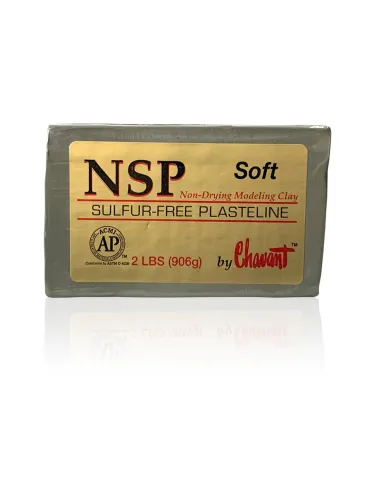
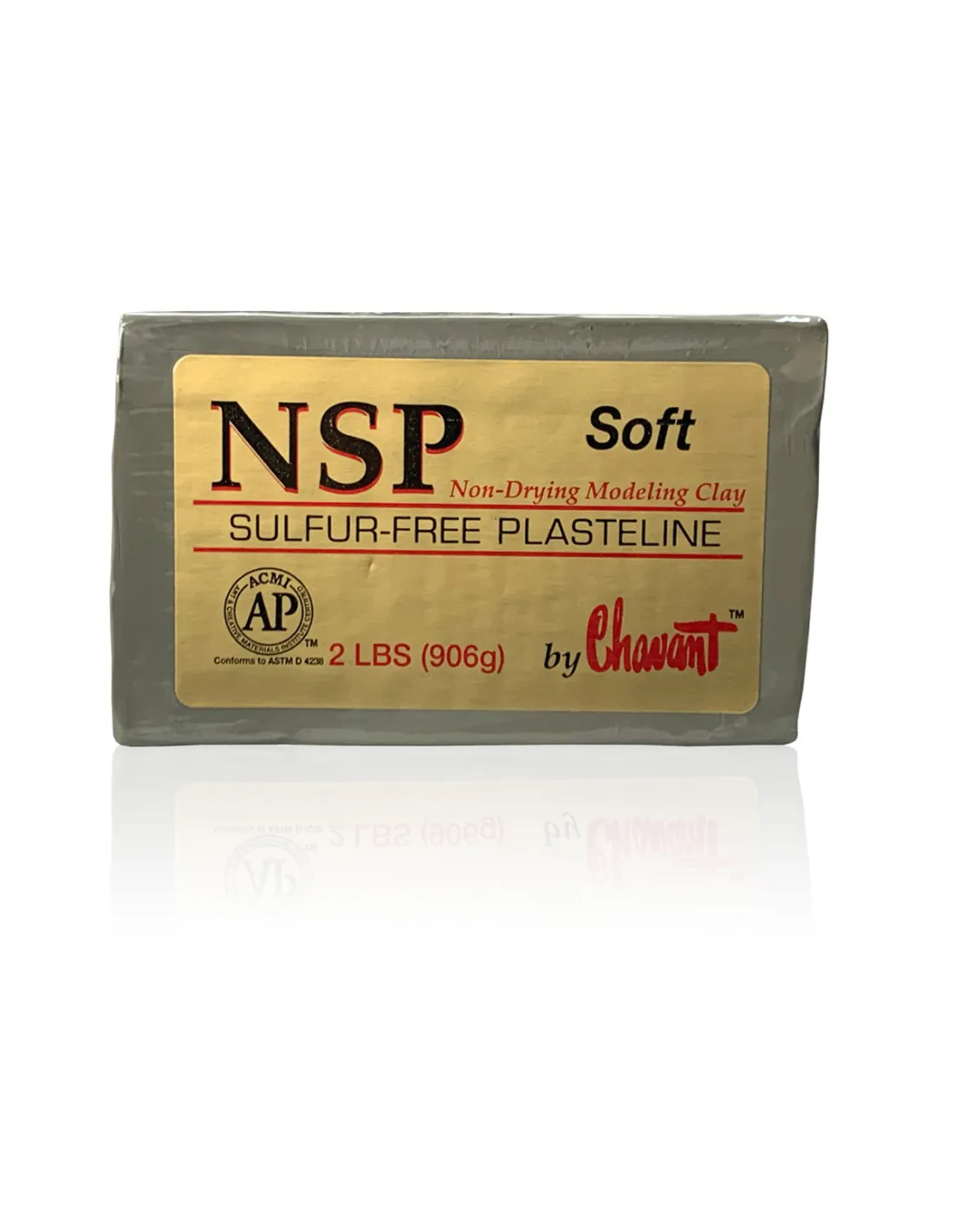
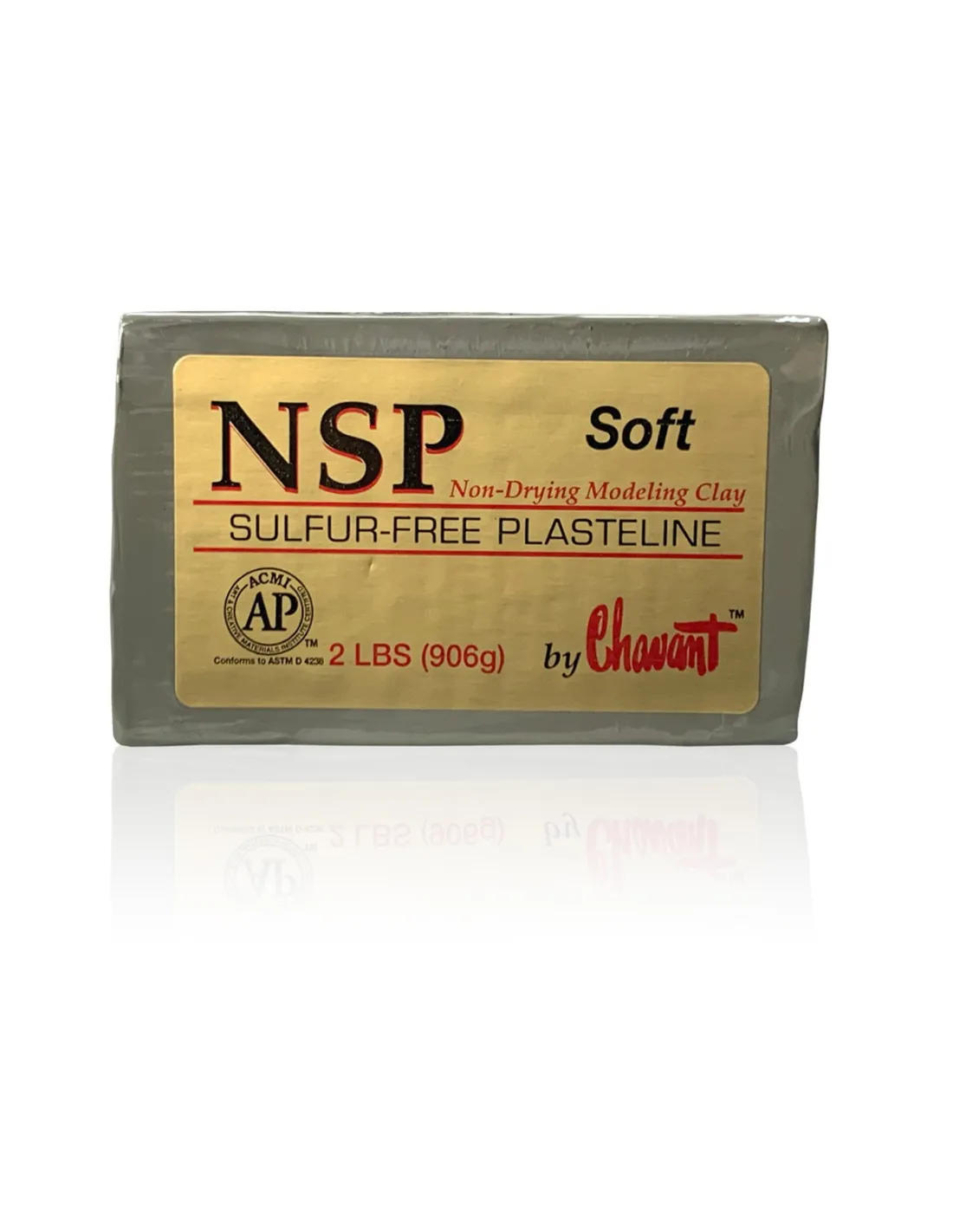
Chavant Soft is the soft hardness variant of the Chavant professional clay range, an undisputed reference in sculpture, prototyping and special effects. Its sulphur-free formulation makes it fully compatible with platinum silicones, with no risk of inhibition. At 906 g per block, it is the material of choice for detailed hand modelling, CNC machining and creating originals intended for moulding.
Technical specifications
| Property |
Value |
| Hardness |
Soft |
| Format |
906 g block |
| Sulphur-free |
Yes — compatible with platinum silicones |
| Approximate softening temperature |
~85 °C |
| Reusable |
Yes |
| Generates dust |
No |
| Toxicity |
Non-toxic |
| Presentation |
Individually wrapped blocks |
What it is used for
Chavant Soft is designed for professionals and students working in figurative sculpture, industrial prototyping or special effects production. Its soft hardness makes it especially suitable for intensive hand modelling, fine detail work with tools and large-volume pieces where continuous malleability is needed without constantly heating the material.
- Modelling originals for platinum silicone moulds
- Two-part mould clay beds for symmetrical pieces
- Concept prototyping in industrial design and automotive
- Figurative and character sculpture for FX and animation
- CNC milling and machining on heated blocks
- 3D scanning of sculpted originals
- Extruding and smoothing with fine finishing
- Training and teaching in Fine Arts and design schools
- Creating prosthetics and character pieces for FX
How to use it
- Condition the material: gently heat the block in an oven at low temperature (50–60 °C) or with a heat gun until it is workable. Do not exceed 85 °C to avoid changes in composition.
- Work the mass: knead with your hands or use a roller to homogenise the temperature and eliminate any hard spots. In cold environments, pre-heating is essential.
- Model and detail: apply the material onto the desired support or armature using stainless steel tools, styluses or spatulas. Localised heat from a warmed spatula allows you to melt local areas for smoothing and adding fine detail.
- Add or remove material: you can incorporate new portions while warm and remove excess with a spatula or with a mild solvent (isopropyl alcohol for surface cleaning).
- Check surfaces: verify that the piece is free of fingerprints and bubbles before moulding. A final smoothing with a warm spatula or clean cloth gives a uniform finish.
- Prepare for moulding: being sulphur-free, you can apply platinum silicone directly onto the original with no risk of inhibition. No sealing or intermediate barriers are required.
- Store leftover material: keep off-cuts and scraps wrapped in cling film or in the original bag. Chavant Soft is fully reusable.
Usage tips
Working temperature control
Chavant Soft responds very well to localised heat. In a cold workshop (below 18 °C) it is advisable to pre-heat the entire block before starting. For very fine details, a metal spatula warmed in hot water or with a heat gun is more precise than heating the whole block. If the material becomes too soft and loses its shape, let it cool for a few minutes before continuing.
Compatibility with platinum silicones
Being sulphur-free, Chavant Soft is directly compatible with platinum silicones without the need for intermediate sealants. If in the same workshop you use vegetable-based industrial clays or other sulphur-containing clays for other projects, make sure to maintain strict separation of tools and surfaces to avoid cross-contamination that could inhibit silicone cure.
Choosing hardness according to the project
Within the Chavant range, the Soft variant is the most suitable for prolonged hand modelling, large-volume pieces and work in temperate environments. If you need greater detail definition or are going to mill by CNC without pre-heating, consider Chavant Medium or Chavant Hard, which hold their shape more firmly at room temperature.
Frequently asked questions
Is it safe to use this clay directly with platinum silicones?
Yes. Chavant Soft is formulated without sulphur, the main inhibiting agent of addition (platinum) silicones. You can pour or apply the silicone directly onto the original without the need for sealants or intermediate layers. This is one of the reasons why the Chavant range is the reference in professional moulding workshops.
What is the difference between the various hardnesses of professional clay?
Hardness determines ease of hand modelling and detail definition. The Soft variant is the most malleable at room temperature, ideal for intensive hand modelling and large-volume pieces. Medium offers a balance between malleability and detail retention. Hard is the most suitable for very fine detail, CNC milling and work in warm environments where a soft clay would lose definition.
Can professional clay be reused once worked?
Yes. Chavant Soft is fully reusable. Off-cuts, scraps and discarded pieces can be melted together and used again. Just avoid mixing it with other clays that contain sulphur, as this would contaminate the material and you would lose compatibility with platinum silicones.
At what temperature does it soften for working?
Chavant Soft begins to soften noticeably from 50–60 °C. The melting temperature is around 85 °C. For workshop use, a heat gun or a domestic oven at low temperature is sufficient. It is not necessary to reach full melting to model; a slight warming is enough to gain malleability.
Can this clay be CNC milled?
Yes. Chavant Soft can be CNC machined once heated to the appropriate temperature. For cold milling it is preferable to use the Hard variant, as it maintains greater firmness and retains shape better during machining without deforming from the heat of the cutter. In any case, both accept milling with the correct parameters.
Is it suitable for making clay beds?
Yes, and it is one of its most common uses in professional moulding workshops. The clay bed is the technique by which half of the original piece is embedded in clay to pour the first half of the mould. Being sulphur-free, Chavant Soft allows platinum silicones to be used in direct contact with the clay bed without inhibition.
What tools are recommended for working with professional clay?
Stainless steel tools (spatulas, styluses, loops) are the most recommended for their ease of cleaning and durability. For smoothing surfaces, a warmed metal spatula or a clean cloth lightly dampened with isopropyl alcohol gives very good results. Avoid untreated wooden tools, as they absorb material and are difficult to clean.
How much clay do I need to model a full-size head?
A complete human head at full size typically requires between 3 and 5 kg of material, depending on the layer thickness over the armature and whether it is worked solid or with an internal structure. With Chavant Soft in 906 g blocks, you would need between 3 and 6 blocks. For a full bust up to the shoulders, the amount can easily double.