Shopping Cart


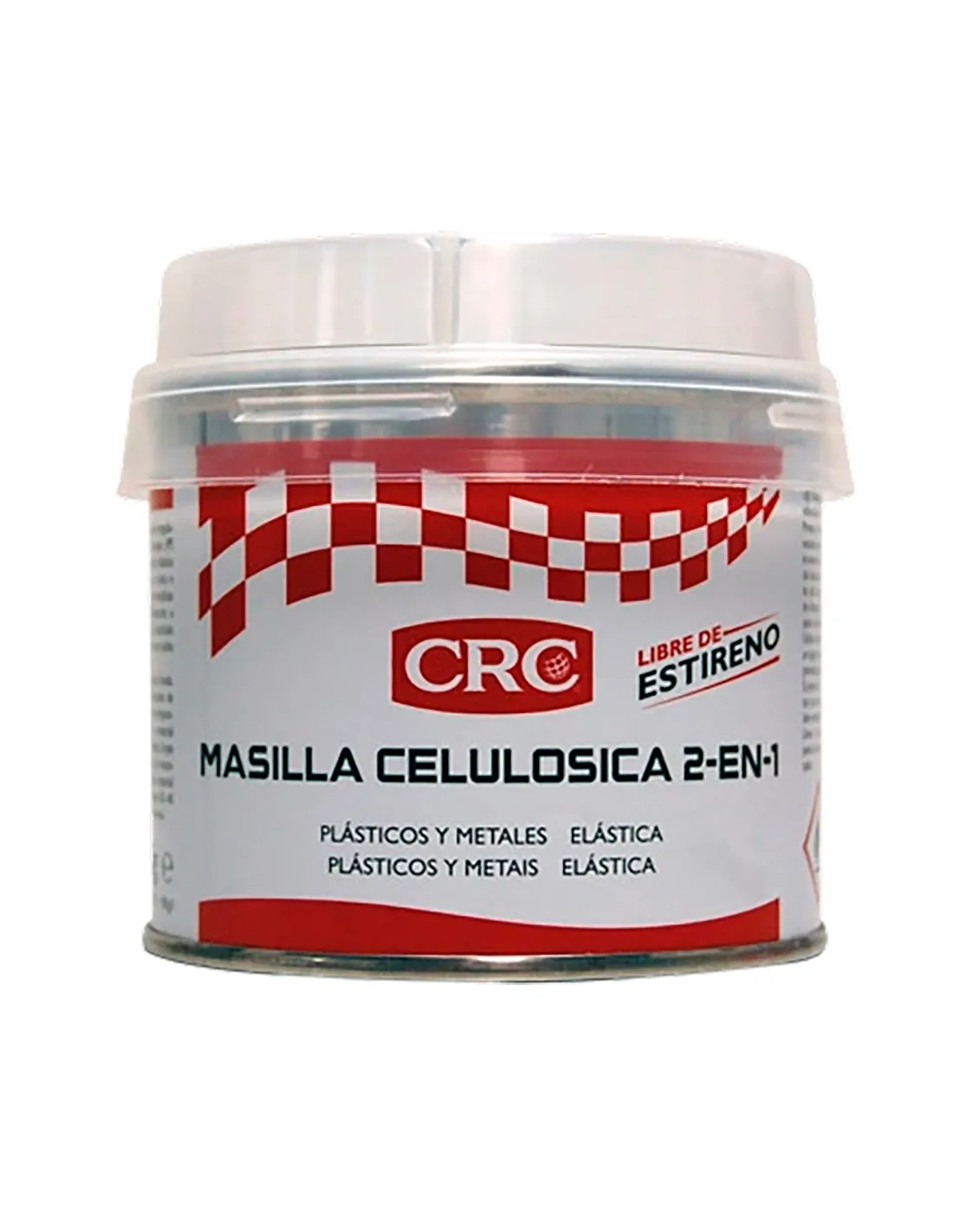
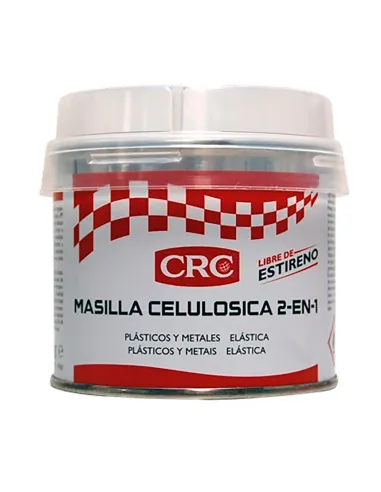
CRC Cellulose Putty - 250gr
301803300
€11.00
13,31 € Tax incl.
13,31 € Tax incl.
Fine-finish polyester cellulosic filler with catalyst included. 250 g. For cracks, deformities and surface preparation on plastics, metals and wood.
CRC Masilla Celulósica is a fine-finish polyester filler formulated for surface repairs that require a smooth, even finish that sands easily. It comes in a 250 g container with the catalyst already included, ready to use without needing to purchase additional components. It is the standard choice for fine touch-ups before painting or lacquering on bodywork, plastics, wood and metal.
Technical specifications
| Parameter | Value |
|---|---|
| Product type | Fine-finish cellulosic polyester filler |
| Format | 250 g (filler + catalyst included) |
| Consistency | Smooth, easy to spread |
| Finish | Smooth, sandable |
| Compatible materials | Plastics, metals, wood, fibreglass, bodywork |
| Application tool | Spatula or flexible spreader |
| Recommended use | Fine finish, surface preparation for painting |
What it is used for
This cellulosic filler is designed for finish repairs where a lightweight, easy-to-apply product is needed that allows an impeccable result before painting. It is the ideal top coat over previous repairs made with higher-build fillers such as CRC Masilla de Fibra de Vidrio, and is perfect for jobs that require precise, superficial sanding.
- Filling of fine cracks and small deformities in bodywork
- Surface repairs on plastics and metals
- Surface preparation for painting or lacquering
- Fine finish coat over previous repairs with high-build or fibreglass fillers
- Touch-up of parts in wood, fibreglass and other rigid substrates
- Correction of imperfections in composite parts before final finishing
How to use it
- Prepare the surface: clean and degrease the area to be treated. Sand lightly to improve adhesion and remove dust with a dry cloth.
- Prepare the mix: take the required amount of filler onto a clean surface (cardboard, palette or board) and add the included catalyst according to the manufacturer's instructions. Mix thoroughly with a spatula until you obtain a uniform colour with no streaks.
- Apply the filler: spread with a spatula or flexible spreader in thin layers over the area to be repaired. Work with smooth, even strokes to avoid air bubbles.
- Allow to cure: wait for the filler to harden completely before sanding. The time varies depending on ambient temperature and the amount of catalyst used.
- Sand: start with a medium grit and finish with a fine grit to obtain a smooth, level surface.
- Inspect and repeat if necessary: if small imperfections remain, apply a second thin coat and repeat the sanding process.
- Clean and paint: degrease the sanded surface — it is now ready to paint or lacquer.
Warning: the catalyst (methyl ethyl ketone peroxide) is an oxidising agent that can cause irritation to skin, eyes and respiratory tract. Always work in a well-ventilated space and use nitrile gloves and safety goggles. Do not add excess catalyst: it can trigger an exothermic reaction, make the cured filler brittle and hinder sanding. Follow the proportions indicated by the manufacturer.
Usage tips
Catalyst proportions
The amount of catalyst determines the working time and curing quality. Too much causes excessively fast curing, overheating and a brittle filler. Too little leaves the surface soft and difficult to sand. In summer or at high temperatures, slightly reduce the proportion; in winter or cold conditions, increase it slightly. Always mix uniformly until the catalyst streaks have completely disappeared.
Application in thin layers
Although the temptation is to fill in a single pass, thin layers cure better, sand more easily and deliver a more uniform finish. For deeper defects, it is advisable to first apply one or two coats of a higher-build filler — such as CRC Masilla de Fibra de Vidrio or CRC Masilla Metálica — and reserve the cellulosic filler for the surface finish.
Progressive sanding
Always wait for complete curing before sanding. Starting too early can tear the filler or leave marks. Use wet-and-dry sandpaper if you want a very fine finish before painting. For surfaces with a curved geometry, a flexible sanding block will help you follow the profile of the part without creating unwanted flat spots.
Frequently asked questions
What is the difference between a cellulosic filler and a fibreglass filler?
Cellulosic filler, like this CRC Masilla Celulósica, is formulated for fine finishing: it is softer, easier to spread and to sand, but has less filling capacity for deep defects. CRC Masilla de Fibra de Vidrio has greater bulk and structural strength, but requires more sanding work. The standard approach is to use the fibreglass filler first for filling and the cellulosic filler as the finish coat.
Can it be applied directly onto metal without a primer?
Yes, as long as the metal is clean, dry, degreased and sanded to create a rough surface. However, in applications where the part will be exposed to moisture or demanding conditions, it is recommended to apply a primer before the filler to improve adhesion and corrosion protection.
How long does it take to dry before sanding?
Curing time depends on ambient temperature and the proportion of catalyst used. Under normal conditions (20–25 °C) it is usually ready to sand in about 20–40 minutes. In cold conditions the process takes longer; in heat it accelerates. Check that the surface does not yield to pressure before starting to sand.
Can it be used to repair plastic parts?
Yes. CRC Masilla Celulósica is compatible with rigid plastics that have been correctly prepared (sanded and degreased). It is not suitable for flexible plastics, as the cured filler is rigid and may crack with substrate deformation.
Can I use this filler to fill deep defects?
That is not its ideal use. For defects deeper than 3–4 mm, it is better to start with a higher-build filler such as CRC Masilla de Fibra de Vidrio or CRC Masilla Metálica. The cellulosic filler is reserved for the final fine finish layers.
What happens if I have mixed filler left over?
Once mixed with the catalyst, the filler begins to cure and cannot be stored. Only prepare the amount you are going to use immediately. Uncatalysed filler can be stored in the tightly closed container following the manufacturer's instructions.
Is it necessary to apply a primer after sanding before painting?
Yes. Although the cellulosic filler provides a very smooth surface, it is recommended to apply a primer before painting to ensure adhesion of the topcoat, improve the finish and protect the repair. Remove sanding dust and degrease the surface before priming.
Can it be applied over epoxy filler?
Yes. CRC Masilla Celulósica can be applied as a finish coat over fully cured and sanded epoxy fillers, such as Masilla Epóxica 610. Make sure the substrate is dry, clean and sanded to promote inter-coat adhesion.
No reviews
Tap to zoom