Shopping Cart



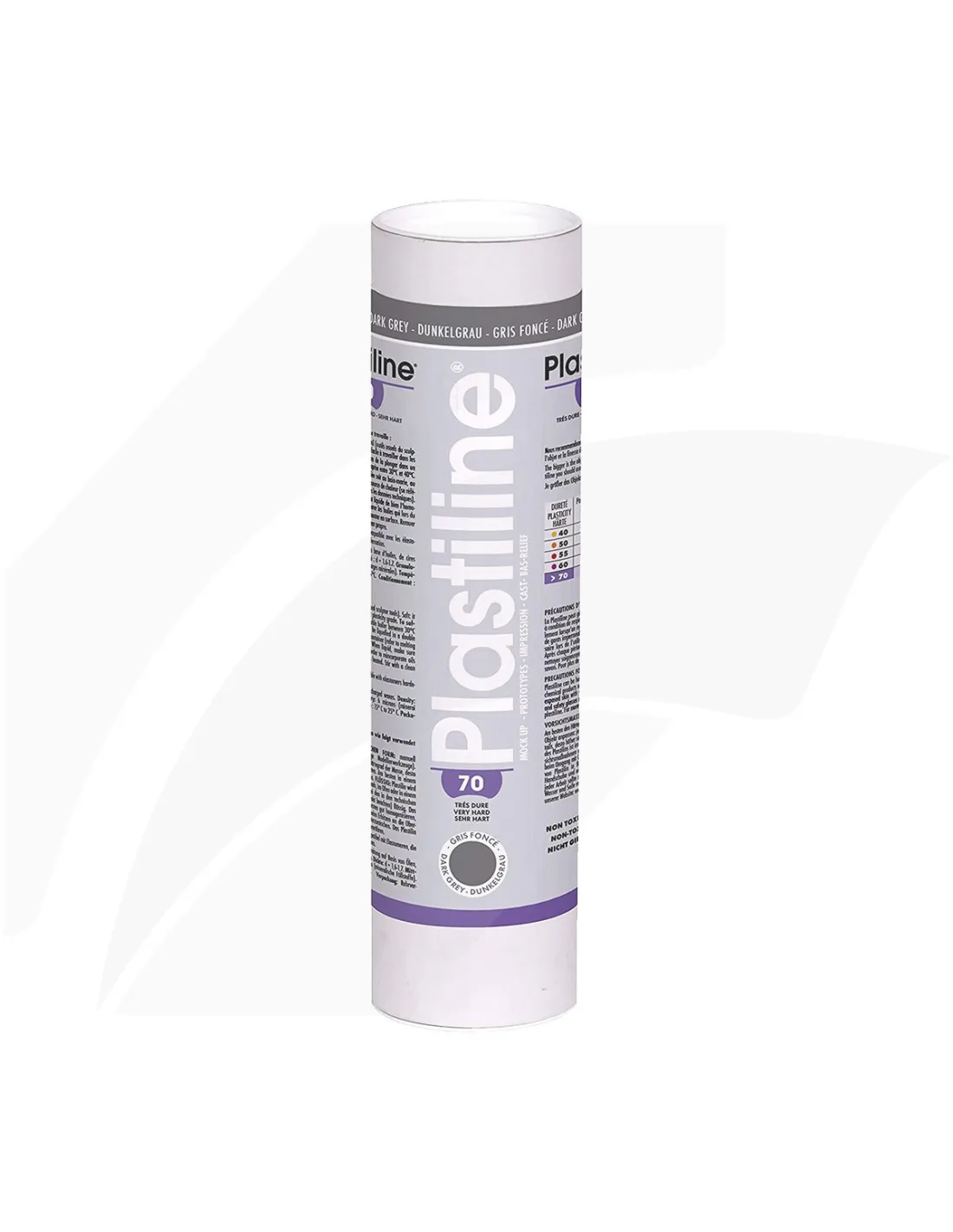
J. HERBIN Hardness 70 -Professional Modeling Plastiline-
204303701
€22.00
26,62 € Tax incl.
26,62 € Tax incl.
J. Herbin Dureza 70 professional modelling clay, dark grey, 1 kg. Compatible with condensation silicones. Ideal for sculpture, FX and modelmaking.
J. Herbin Dureza 70 is a high-density professional modelling clay, formulated for sculptors, special effects artists and modelmakers who demand firmness, stability and precise response to detail. Compatible with condensation (tin) silicones, it is an essential workshop material for building originals, preparing moulds and maintaining complex geometries without deformation.
Technical specifications
| Property | Value |
|---|---|
| Hardness | 70 (high) |
| Colour | Dark grey |
| Weight per unit | 1 kg |
| Working states | Solid, softened or fluid (with heat application) |
| Silicone compatibility | Condensation silicones (tin). NOT suitable for addition silicones (platinum) |
| Reusable | Yes, indefinitely |
| Working temperature | Ambient or heated (bain-marie, oven, heat gun) |
What it is used for
J. Herbin Dureza 70 is designed for work where the material must hold firm under its own weight and respond precisely to tools. Its high density makes it especially suitable for large-format pieces, sculptures with fine detail and any original intended for mould-making with condensation silicone. It is the preferred hardness among experienced modelmakers and FX professionals.
- Sculpting characters, creatures and figures for special effects (FX)
- Modelling for Stop Motion and animation
- Building originals for mould-making with condensation silicone
- Detail correction on pieces to be moulded
- Creating registration walls and support beds for two-part moulds
- Outlining profiles and separating parting planes
- Modelling heads, busts and large-volume pieces
- Prototyping and technical scale models in modelmaking
How to use it
- Prepare the material: at room temperature J. Herbin 70 has a firm consistency. If you need greater workability, warm it in an oven at low temperature (40–60 °C), in a bain-marie or with a hot air gun for a few minutes.
- Knead and model: once softened, work the clay with your hands or sculpting tools to achieve the base shape. For large pieces, build over an internal armature of wire or rigid foam to save material and weight.
- Add detail: as the material cools it regains firmness, which facilitates fine detail work with spatulas, scribers and serrated tools. You can alternate heat and cold cycles to control hardness in each area.
- Refine the surface: smooth with metal tools or with a little mineral solvent applied with a fine brush to eliminate marks and obtain a clean surface ready for moulding.
- Prepare the original for the mould: apply release agent if pouring directly over the piece, build containment walls with more clay or boards, and pour the chosen condensation silicone.
- Recover the material: after demoulding, remove silicone residues, gather the clay pieces and store them in an airtight bag. The material is reusable indefinitely.
Warning — Platinum silicone inhibition: J. Herbin Dureza 70 contains compounds that inhibit the curing of addition (platinum) silicones. Do not use this clay in direct or indirect contact with platinum silicones: the rubber will remain uncured or develop sticky areas. When working with platinum silicones, use only sulphur-free clays certified as compatible. If you already have an original modelled with J. Herbin 70 and need to mould it with platinum silicone, seal the entire surface completely with lacquer or shellac and always run a cure test before pouring the full mould.
Usage tips
Temperature control for different working phases
Temperature is your main control tool with J. Herbin 70. For the mass-building and general shaping phases, warm the block in an oven at around 50 °C for 10–15 minutes: the material will flow easily and bond well. For fine detail work, let the piece cool to room temperature or even place it in the fridge for a few minutes: the extra firmness allows you to cut, engrave and texture with much greater precision. Work in sections so you don't heat the entire piece when you only need to work on a specific area.
Efficient construction of large-volume pieces
For large sculptures (heads, busts, full figures), do not fill the interior with solid clay. Build an armature with galvanised or aluminium wire and fill the interior volume with rigid polyurethane foam or aluminium foil balls. Then cover with a 1–2 cm layer of J. Herbin 70. You save material, reduce the weight of the piece and make transport easier without risk of deformation.
Preparing registration walls for two-part moulds
When preparing a two-part mould, use the clay itself to build the parting plane wall. Flatten a uniform layer of J. Herbin 70 under the original piece up to the parting line, making sure it sits perfectly perpendicular to the mould plane. Create conical registration marks with the rounded end of a pencil or pen. A smooth, well-sealed clay surface ensures the first silicone pour does not seep through to the other side and that the two halves register precisely.
Frequently asked questions
What is the difference between a high-hardness and a medium-hardness clay?
A high hardness such as J. Herbin 70 is more resistant to deformation, holds fine detail under the piece's own weight and allows more precise cuts and engravings. A medium hardness is easier to work by hand without needing as much heat, but deforms more on large pieces. The choice depends on the type of work: for large-format sculptures, extreme detail or pieces that will spend a long time in the workshop, hardness 70 is the safest option.
Which type of silicone can I use with this clay?
J. Herbin Dureza 70 is compatible exclusively with condensation silicones (tin catalyst). It is not suitable for addition silicones (platinum): the compounds present in its formulation inhibit the curing of platinum rubber. If you need to work with platinum silicone, you must seal the entire surface of the original completely or use a sulphur-free clay certified as compatible.
How do you soften a high-hardness clay?
You can soften it in several ways: in a domestic oven at 40–60 °C for 10–15 minutes, in a bain-marie with hot water (without the water directly touching the clay), or with a hot air gun applied directly to the area to be worked. Do not exceed 80 °C to avoid degrading the material or losing cohesion. Once warm, work quickly before it cools and regains its hardness.
Does the clay dry out or harden permanently?
No. J. Herbin Dureza 70 does not cure or air-dry. Its hardness is thermoplastic: it softens with heat and hardens on cooling, but this is always reversible. This makes it reusable indefinitely. If you need a permanent original that will not deform, you will need to make a mould and reproduce it in resin or another casting material.
Can you paint or apply finishes to the clay?
Clay has an oil-based composition that makes adhesion of water-based paints difficult. To record textures or finishes before moulding, the most common approach is to work directly on the surface without painting. If you need to apply a sealing lacquer (for example, to be able to use platinum silicone over it), use an alcohol-based spray lacquer or shellac and allow it to dry completely before pouring.
How much clay do I need to model a life-size head?
A solid life-size human head requires approximately 4–6 kg of material. However, if you build over an armature or fill the interior with rigid foam or low-cost materials, you can reduce clay consumption to 1–2 kg for the outer modelling layer. For a full bust up to the shoulders, estimate an additional 3–5 kg depending on layer thickness.
Is it suitable for beginners?
Hardness 70 is recommended for users with some modelling experience, as its high consistency demands more manual effort and more conscious heat management. For those starting out in professional modelling, medium hardnesses are more accessible. That said, if you already have experience in sculpture or modelmaking, J. Herbin 70 delivers greater precision and firmness from the very first use.
How should it be stored and preserved correctly?
Store the clay in an airtight plastic bag or wrapped in cling film to prevent it from accumulating dust or particles that could scratch the surface during modelling. Store at room temperature, away from direct heat sources that could unintentionally deform the blocks. No refrigeration or special conditions are required. Its shelf life is practically indefinite if kept clean and covered.
No reviews
Tap to zoom