Shopping Cart



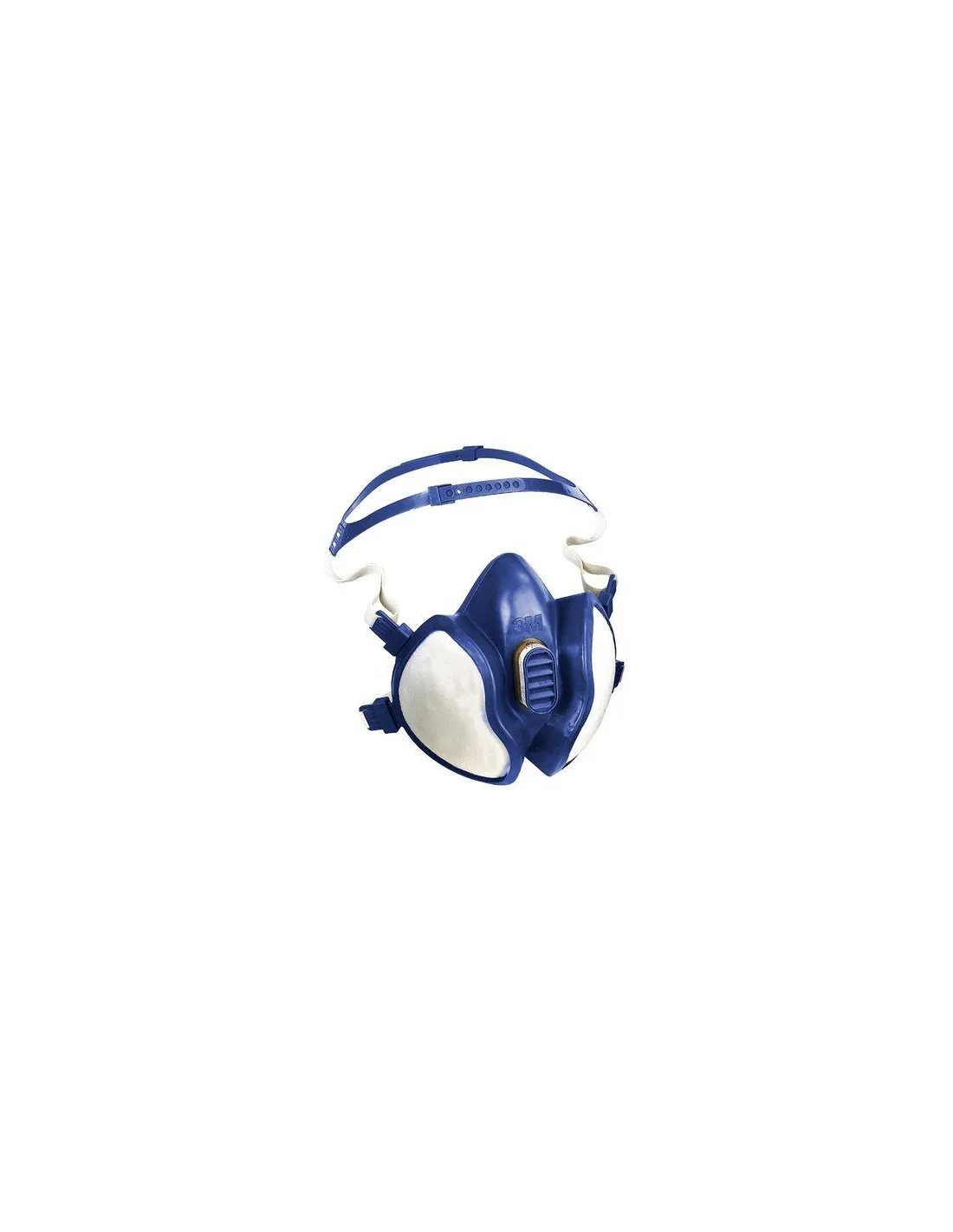
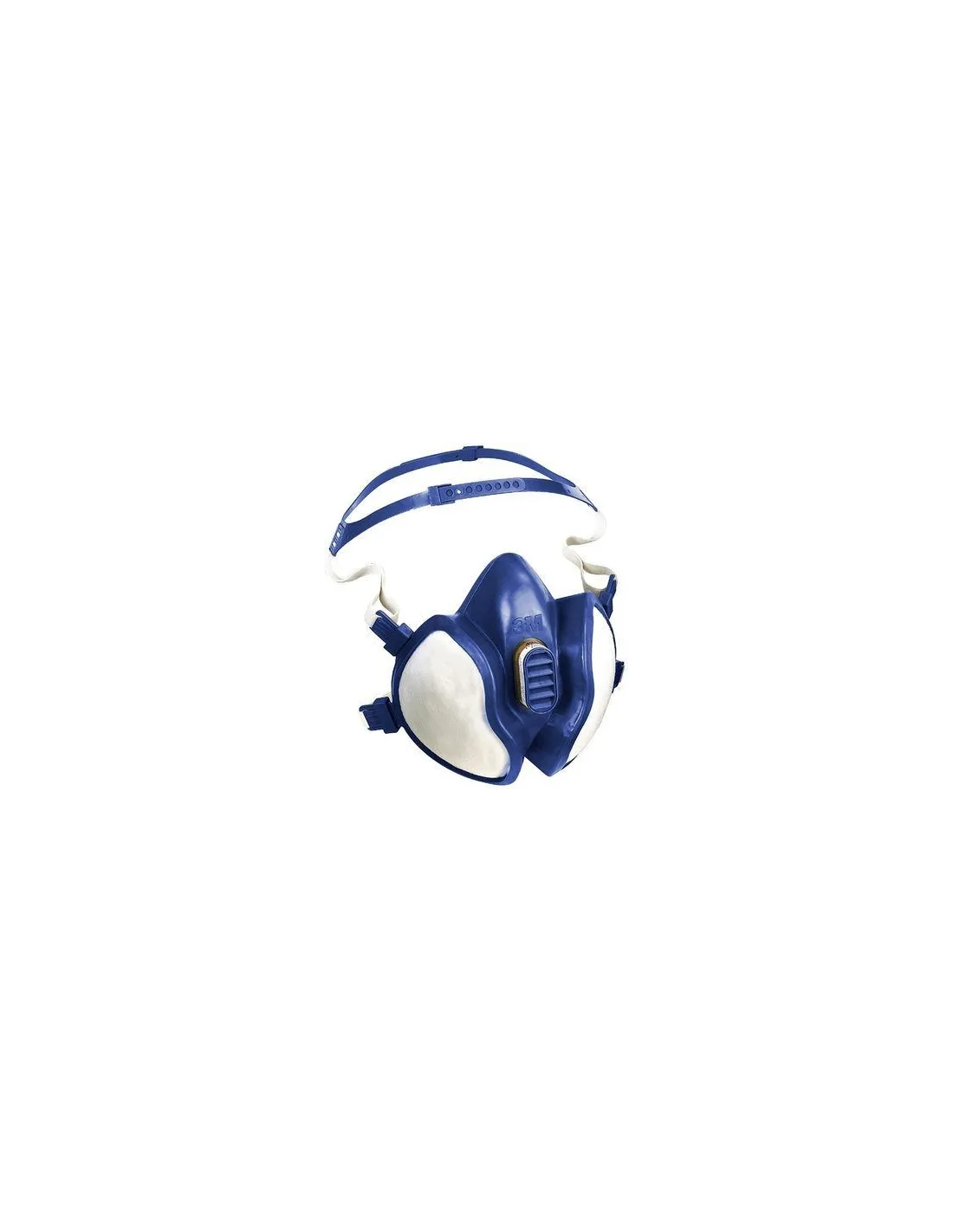
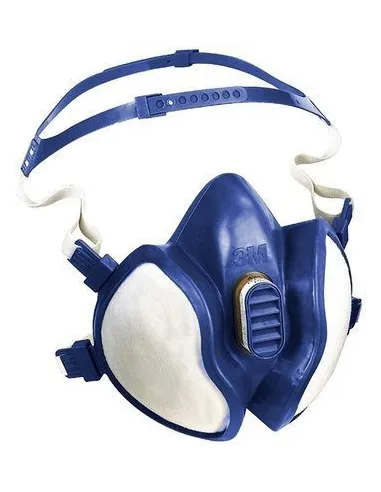
Reusable Mask 4251 3M
309100106
€30.00
36,30 € Tax incl.
36,30 € Tax incl.
3M 4251 Reusable Mask with integrated FFA1P2 R D filters. Protection against organic vapours and particles in workshop environments.
The 3M 4251 Reusable Mask is a single-piece half mask with integrated activated carbon filters, designed to protect against organic vapours and particles in workshop environments. Its low profile, hypoallergenic material and quick-adjust harness make it a comfortable and reliable safety tool for working with resins, silicones, solvents and other chemical materials.
Technical specifications
| Feature | Detail |
|---|---|
| Type | Reusable half mask |
| Filter class | FFA1P2 R D |
| Protection | Organic vapours (good warning properties, b.p. ≥ 65 °C) and particles |
| Vapour protection level | Up to 10 × OEL or 1000 ppm (whichever occurs first) |
| Particle protection level | Up to 12 × OEL |
| Facepiece | Thermoplastic elastomer (soft, hypoallergenic) |
| Harness | Polypropylene |
| Adjustment straps | Polypropylene / cotton |
| Gas and vapour filter | Activated carbon |
| Particle filter | Polypropylene |
| Construction | Single-piece, integrated filters (no separate filter maintenance) |
| Exhalation valve | Central, low resistance to reduce heat build-up |
| Reusable | Yes (storage bag included) |
What it is used for
This mask is designed for professionals and advanced hobbyists working with materials that emit organic vapours, particles or a combination of both. In the context of moulding, composites and special effects workshops, it is the PPE of choice for mixing, pouring and sanding operations:
- Working with polyurethane, epoxy and polyester resins: mixing, casting and demoulding
- Application and handling of silicones and their catalysts
- Use of solvents such as acetone, isopropyl alcohol, naphtha or hexane
- Sanding, cutting and laminating fibreglass or carbon fibre
- Spraying release agents, encapsulants or paints
- Painting, varnishing or surface finishing work
- Any workshop operation with limited ventilation and presence of chemical vapours
How to use it
- Check the condition of the mask and filters before each use. Discard the unit if you detect damage to the facepiece or if the filters are saturated (you notice a persistent smell when inhaling).
- Hold the mask by the facepiece with the harnesses facing down and place it over your nose, mouth and chin.
- Pass the upper harness over the head and position it at the middle of the skull. The lower harness should sit at the nape of the neck.
- Adjust the polypropylene/cotton straps until you achieve a firm but comfortable seal around the entire facepiece.
- Perform the positive seal check: cover the exhalation valve with your palm and exhale gently. If you notice air leaking around the perimeter, readjust the mask until sealed.
- Perform the negative seal check: cover the air inlet areas and inhale. The mask should collapse slightly against the face with no air ingress.
- Once work is finished, store the mask in the included storage bag to extend filter service life.
Safety warning: This mask protects against organic vapours with good olfactory warning properties and a boiling point equal to or above 65 °C. It is not suitable for oxygen-deficient atmospheres, or for gases such as ammonia, chlorine dioxide or hydrogen cyanide. Always consult the safety data sheet of the material you are handling to confirm that this mask provides sufficient protection. If in doubt, use a higher-level respiratory protective equipment.
Usage tips
Correct storage between sessions
Activated carbon filters become saturated over time even when not in use, because they absorb vapours from the surrounding air. Always store the mask in the included storage bag and, if you are not going to use it for several weeks, consider placing the bag inside an airtight container. A filter saturated at rest offers just as poor protection as one exhausted during use.
When to replace the mask
As this is an integrated filter unit (filters are not separately replaceable), the service life of the filters determines the service life of the entire mask. You should replace it when you detect a smell while inhaling during work, when the facepiece loses elasticity or shows cracks, or when you have exceeded the recommended hours of use for the contaminant in question. Do not attempt to extend service life by washing or regenerating the filters.
Combining with other PPE
The mask protects the respiratory tract, but does not replace eye or hand protection. Always combine it with safety glasses and powder-free nitrile gloves when working with resins, silicones or solvents. The low profile of this mask is specifically designed to allow simultaneous use with protective eyewear without interference.
Frequently asked questions
What is the difference between a disposable respirator and a reusable mask with filters?
Disposable respirators (such as FFP2 or FFP3 type) protect mainly against particles and aerosols, but are not designed to retain organic vapours. The 3M 4251 Reusable Mask incorporates activated carbon filters that adsorb organic vapours as well as filtering particles, making it more suitable for workshop work with resins, solvents and other volatile chemicals.
Can I use this mask for sanding fibreglass or carbon fibre?
Yes. The P2 particle filter rating of the 3M 4251 Mask makes it suitable for retaining fine particles generated during sanding and cutting of composite materials. If you are also working with uncured resin or cleaning solvents, the combined protection against vapours and particles is particularly useful.
How often does the mask need to be replaced?
It depends on the contaminant, concentration and duration of use. A clear sign that the mask needs to be replaced is detecting a smell when inhaling during work. As it is a non-dismountable integrated filter unit, when the filters are exhausted the entire mask must be replaced. Always store it in its bag to slow down saturation at rest.
Is this mask compatible with safety glasses?
Yes. The low-profile design of the 3M 4251 Mask is specifically intended to improve peripheral vision and facilitate simultaneous use with safety glasses. Check that the facial seal is not compromised by the glasses frame by performing the seal check after putting on both pieces of equipment.
Can I use this mask when working with polyurethane or epoxy resins?
Yes, provided the vapours emitted are organic vapours with good olfactory warning properties and a boiling point equal to or above 65 °C. Consult the safety data sheet of the specific product to confirm that the A1 filter class is sufficient for the intended working concentration. For applications with high concentrations or highly volatile components, a higher level of protection may be required.
What does the FFA1P2 R D classification mean?
FF indicates a half mask with integrated filters. A1 designates the class of the gas and organic vapour filter (protection up to 1000 ppm or 10 × OEL). P2 is the particle filter efficiency (up to 12 × OEL). R means reusable. D indicates that the filter has passed the dust clogging test (dolomite), guaranteeing stable performance in environments with fine particles.
What other PPE do I need when working with moulding materials or composites?
In addition to respiratory protection, you need powder-free nitrile gloves to avoid dermal contact with resins, catalysts and solvents, and safety glasses to protect your eyes from splashes. For spraying operations or those generating large amounts of dust, also consider hearing protection and appropriate work clothing.
Where can I find the safety data sheet for the materials I use in the workshop?
Feroca provides safety data sheets (MSDS/SDS) for all its products. You will find them on each product page on the website, or you can request them directly from the Feroca team. Consulting the safety data sheet before working with a new material is essential for choosing the right PPE.
No reviews
Tap to zoom