Shopping Cart



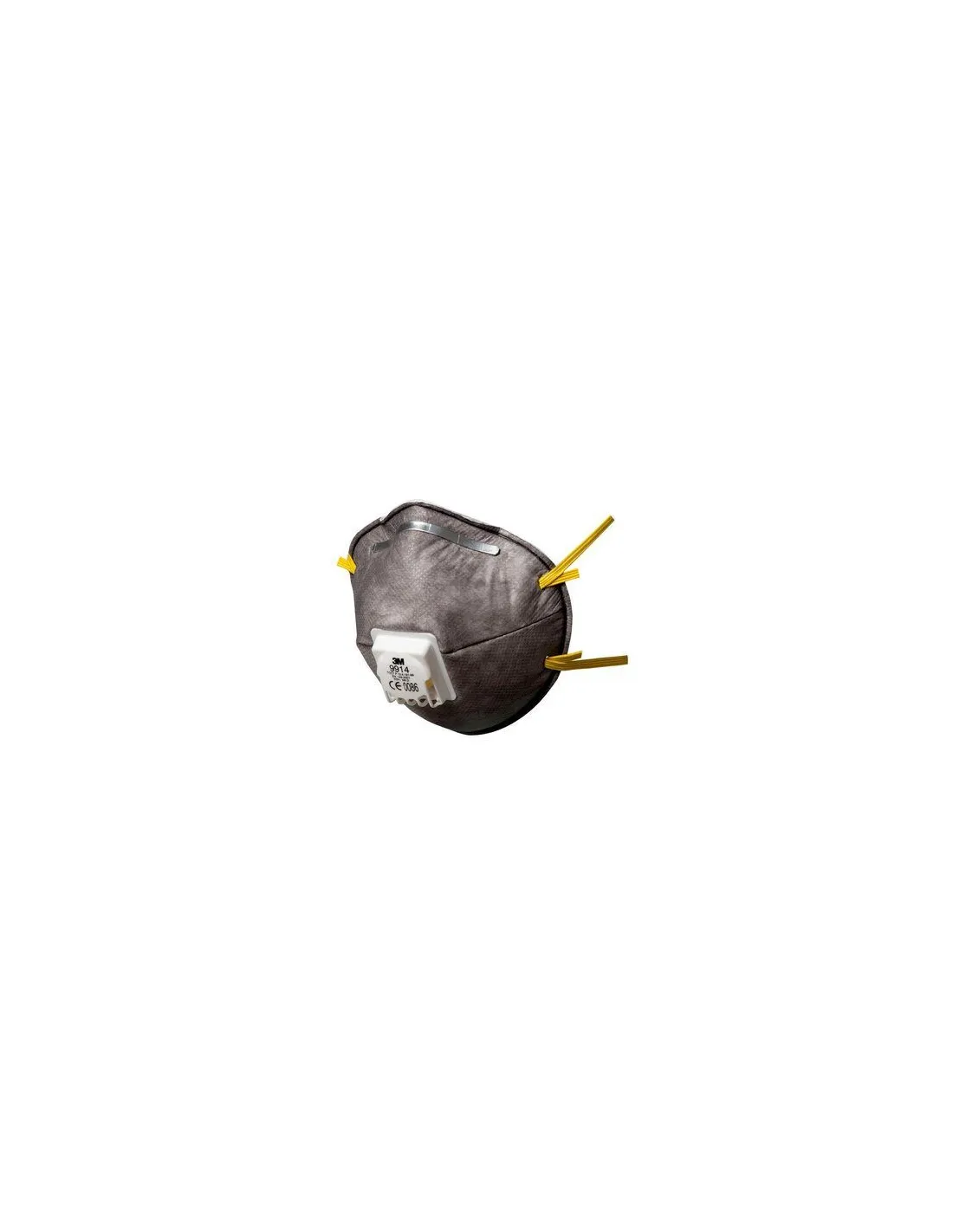
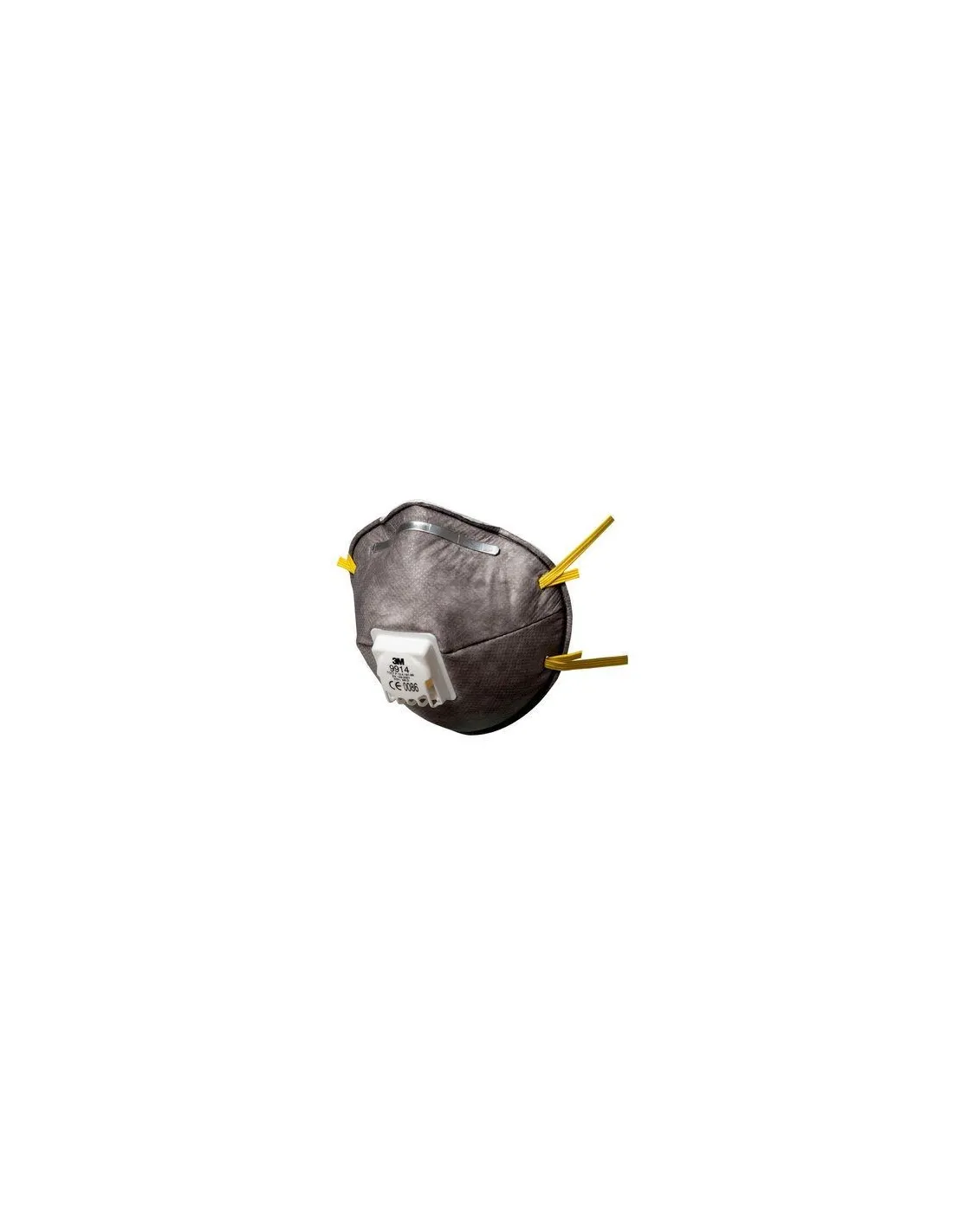
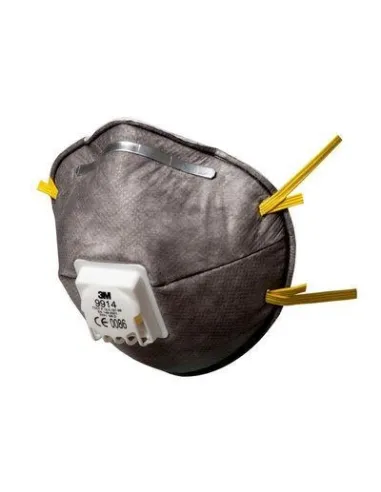
3M™ Gas Filter Mask 9914
309100108
€9.00
10,89 € Tax incl.
10,89 € Tax incl.
Disposable FFP1 respirator with Cool Flow valve and activated carbon layer. Protection against dust, mist and organic vapours. Standard EN 149:2001+A1:2009.
The 3M™ 9914 is a disposable cup-shaped respirator with FFP1 protection level, designed for workshop environments where particles, mists and nuisance organic vapours coexist. Its activated carbon layer and Cool Flow™ valve make it a comfortable and reliable option for extended work sessions with resins, silicones, composites and other workshop materials.
Technical specifications
| Parameter | Value |
|---|---|
| Protection level | FFP1 |
| Standard / Certification | EN 149:2001+A1:2009 FFP1 NR D — CE Approved |
| Style | Cup-shaped |
| Exhalation valve | Yes — 3M™ Cool Flow™ |
| Carbon layer | Yes — protection against nuisance organic vapours (below TLV) |
| Protection against | Dust, mist, particles (up to 4× TLV) and nuisance organic vapours |
| Latex components | No |
| Reusable | No (disposable) |
| Level identification | Colour-coded straps |
| Range | Specialty and welding |
What it is used for
The 3M™ 9914 is designed for tasks where particles and vapours are generated simultaneously at nuisance levels but below the threshold limit value (TLV). It is the go-to PPE in composites workshops, special effects, 3D printing and modelling when handling materials that release light vapours.
- Sanding, cutting and laminating fibreglass and carbon fibre
- Mixing and applying polyester, epoxy and polyurethane resins
- Working with RTV silicones and their catalysts
- Post-processing of 3D printed parts (sanding, priming, painting)
- Applying gel coats, varnishes and finishes with light solvents
- Light welding and environments with low-concentration fumes
- Handling putties, fillers and foams
How to use it
- Remove the respirator from its packaging and check that the Cool Flow™ valve and straps are in good condition.
- Hold the respirator with the valve facing down and the straps facing back.
- Place the cup over your nose and chin, covering both completely.
- Pass the lower strap behind the neck and the upper strap over the top of the head.
- Shape the metal nosepiece with both hands, pressing from the centre outwards, until a firm seal is achieved.
- Perform a positive fit check: cover the valve with your palm and exhale gently. If you notice air leaking around the perimeter, readjust the nosepiece and straps.
- Discard it at the end of the work session or when you notice difficulty breathing, visible damage or odour saturation.
Important notice: This respirator is disposable and single-use (NR). Do not reuse it on subsequent work sessions. The FFP1 level protects against particles and organic vapours at nuisance levels, but is not suitable for concentrations above the TLV or for oxygen-deficient atmospheres. For higher exposures or intense vapours, use a reusable respirator with combined filters.
Usage tips
Correct fit: the key to protection
A poor fit almost entirely negates the respirator's effectiveness. Spend an extra 30 seconds properly shaping the nosepiece and tensioning the straps symmetrically. If you have a beard or several days of stubble, the perimeter seal is compromised; in that case, consider a full face mask with appropriate filters.
When to replace it
Do not wait until the respirator feels saturated before changing it. Discard it if: you notice increased breathing resistance, you can smell odours through the carbon filter, the cup structure has deformed, or the straps have lost their elasticity. When working with polyester resins or solvents, the useful life of the carbon layer can be short; work in ventilated spaces and change the respirator frequently.
Compatibility with other PPE
The convex cup shape and face-separated design allow it to be combined with safety glasses without creating pressure or reducing the seal. Always combine it with powder-free nitrile gloves and safety glasses when handling resins, silicones or composites.
Frequently asked questions
What is the difference between FFP1, FFP2 and FFP3?
FFP1 filters at least 80% of airborne particles and provides basic protection against dust and mists at low concentration, plus the action of the carbon layer against nuisance vapours. FFP2 (minimum 94%) is used when particle concentration is higher, such as with spray paints or polyurethane resins. FFP3 (minimum 99%) is required in heavily contaminated environments or with toxic agents. The 3M™ 9914 is FFP1, ideal for most everyday workshop tasks with moulding materials and composites.
What does the Cool Flow™ valve do?
The Cool Flow™ valve allows exhaled air to be expelled directly to the outside without passing through the filter material, significantly reducing the build-up of heat and moisture inside the cup. The result is a cooler and more comfortable respirator, especially during physical work or in warm environments such as summer workshops or poorly ventilated spaces.
Does this respirator protect against resin and solvent vapours?
The activated carbon layer in the 3M™ 9914 provides protection against organic vapour concentrations below the threshold limit value (TLV). It is suitable for light vapours produced when mixing epoxy resins, silicones or when applying varnishes. If you work with large volumes, enclosed spaces or concentrated solvents, you will need a reusable respirator with higher-capacity combined filters, such as the Reusable Respirator 4279 3M.
Can I reuse the respirator the next day?
No. The 3M™ 9914 is certified as NR (Not Reusable). It is designed for a single work session. Reusing it results in loss of carbon filter effectiveness and possible internal contamination. If you need a reusable option to reduce waste and long-term cost, consider the Reusable Respirator 4251 3M.
What PPE should I use when working with resins or silicones?
The minimum recommended equipment is: a respirator appropriate for the material (particle and/or vapour filter depending on the product), powder-free nitrile gloves and safety glasses. If you work with exothermic materials or those that generate intense vapours, add an apron and always work in a ventilated area. Always consult the safety data sheet (MSDS) of each product.
Does Feroca provide safety data sheets for its products?
Yes. Safety data sheets (MSDS/SDS) are available on each product page or upon request from the Feroca team. It is essential to consult them before working with any resin, silicone or solvent to know the required PPE.
Is the respirator compatible with safety glasses?
Yes. The convex cup design and face-separated shape allow the 3M™ 9914 to be used alongside wraparound safety glasses such as the 3M™ SecureFit™ Transparent Safety Glasses without interference with the seal or uncomfortable pressure on the nose bridge.
Does this respirator contain latex?
No. The 3M™ 9914 contains no natural rubber latex components, making it suitable for people with latex sensitivity or allergy.
No reviews
Tap to zoom