Shopping Cart



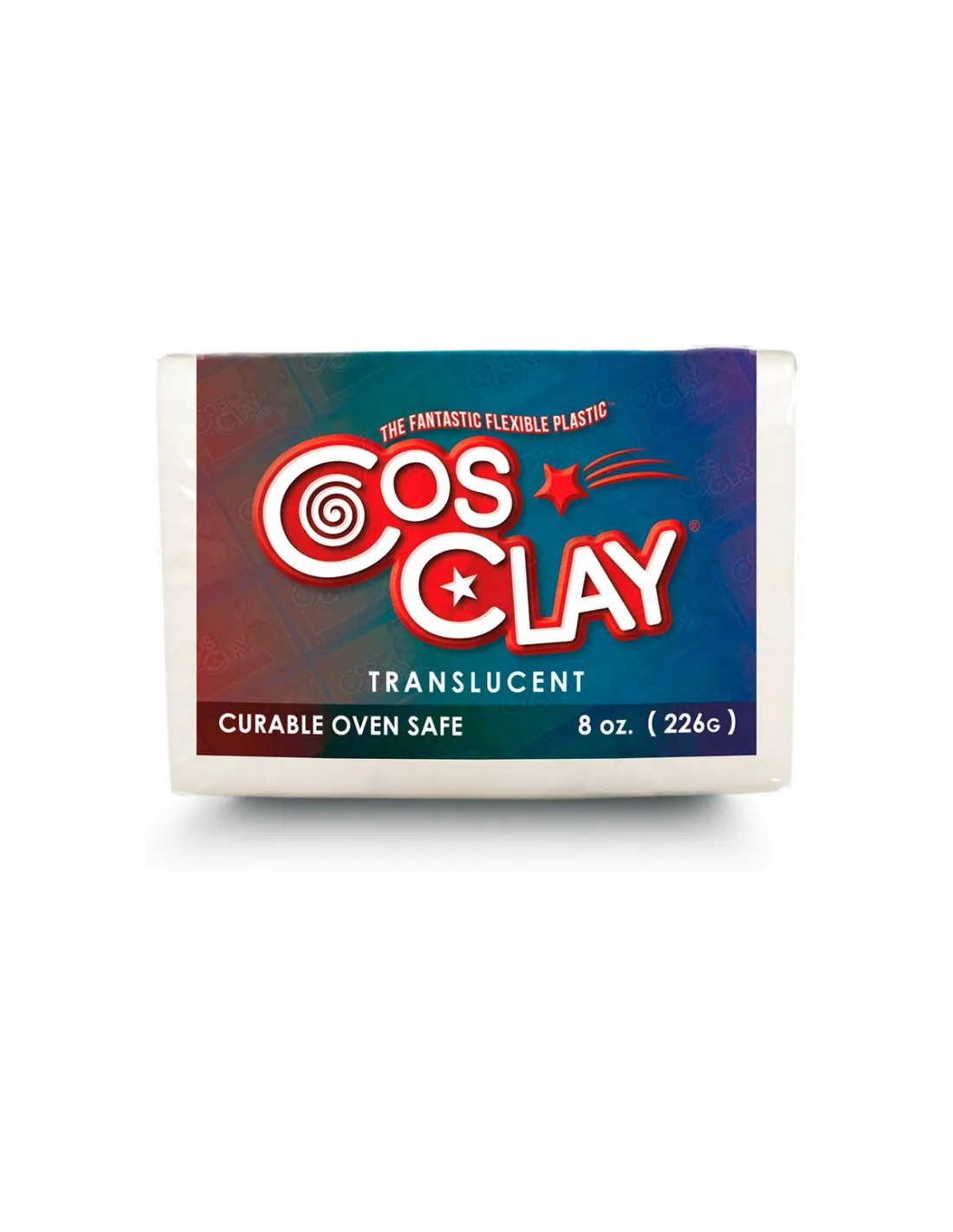

CosClay Translucent 226g - 8oz
204329000
€12.00
14,52 € Tax incl.
14,52 € Tax incl.
Flexible and translucent polymer clay, 226 g. Oven cure at 135 °C. High post-cure flexibility. Ideal for skin effects, stop motion, and artistic figures.
CosClay Translucent is a flexible, translucent polymer clay designed for artists and professionals working with light effects, synthetic skins, or chromatic layers visible beneath the surface. It cures in an oven at 135 °C while retaining remarkable flexibility after curing, making it an essential tool for articulated pieces, stop motion, and any project where the material must withstand handling without breaking.
Technical specifications
| Property | Value |
|---|---|
| Type | Flexible polymer clay |
| Color | Translucent |
| Format | 226 g (8 oz) |
| Cure temperature | 135 °C in a conventional oven |
| Post-cure flexibility | High — not brittle |
| Green strength | High — holds shape during sculpting |
| Oven slump | None |
| Colour compatibility | Can be blended with alcohol inks for translucent colours |
| Working condition | Ready to use straight from the box |
What it is used for
CosClay Translucent is designed for projects where translucency is a decisive technical or aesthetic element. Light passes through it naturally, allowing you to create hyperrealistic skin effects, petals, fins, wings, and any structure where the interplay of light and depth is key. Its post-cure flexibility makes it especially suitable for articulated pieces or those subject to frequent handling.
- Artistic figures and sculptures with internal or subsurface light effects
- Stop motion and articulated puppets requiring flexible, durable parts
- Prosthetics and special effects character work with a synthetic skin appearance
- Petals, wings, fins, and translucent organic elements
- Tabletop RPG miniatures and collectibles where fine detail and durability are required
- Translucent colour layers by blending the clay with alcohol inks
- Artistic prototypes and jewellery pieces that need break resistance
How to use it
- Condition the clay: CosClay Translucent is ready to use straight from the box. Knead it briefly in your hands to bring it to working temperature; no extended conditioning is needed.
- Sculpt your piece: Work the clay with your usual sculpting tools. It holds its shape well and does not slump during the process, making fine detail work easier.
- Add colour if needed: Blend alcohol inks directly into the clay to achieve custom translucent colours. Knead until the pigment is evenly distributed.
- Preheat the oven: Bring a conventional oven to 135 °C. Use an oven thermometer if your appliance is not precise; the correct temperature is critical for proper curing and final flexibility.
- Bake the piece: Place the piece on baking paper or an ungreased tray. Baking time depends on thickness — as a common reference for polymer clays, approximately 15–30 minutes per 6 mm of thickness.
- Allow to cool before handling: Remove the piece from the oven and let it cool completely at room temperature. The clay achieves its final flexibility as it cools.
- Sand, paint, or seal as needed: Once cool, you can sand, paint with acrylics, or apply finishes. The translucent surface responds well to combinations with other CosClay clays for mixed opacity and translucency effects.
Usage tips
Oven temperature control
Domestic ovens often have deviations of ±15–20 °C from the indicated value. Always use a standalone oven thermometer to verify the actual temperature. Baking above 150 °C can cause the material to darken and lose translucency. Baking below 130 °C may result in an incomplete cure, leaving the piece brittle or tacky.
Colour mixing and translucent effects
To achieve realistic skin effects, blend CosClay Translucent with small amounts of alcohol inks in flesh, pink, or peach tones. Knead in thin, layered quantities to simulate the depth of the dermis. You can also mix it with CosClay Sculpt Medium Firm Gray to modulate the opacity and firmness of specific areas of the piece.
Storage and compatibility with other materials
Store leftover clay in airtight bags or wrapped in baking paper, away from direct light and heat. Bear in mind that polymer clays with a high sulphur content can inhibit the curing of platinum silicones if you later plan to mould your unbaked pieces. If you are unsure about the compatibility of your clay with a platinum silicone, always run an inhibition test before moulding the final piece.
Frequently asked questions
Can I mix this clay with other polymer clays?
Yes. CosClay Translucent is compatible with other polymer clays that share a similar cure temperature (130–135 °C). You can blend it with CosClay Sculpt Medium Firm Gray to combine flexible and opaque areas in the same piece, or with Super Sculpey Beige to adjust firmness and tone. Always run a small test before mixing large batches.
What happens if I bake it at a higher temperature than recommended?
Sustained temperatures above 150 °C can cause CosClay Translucent to darken, lose translucency, and emit fumes. Use an oven thermometer to verify the actual temperature and do not exceed 135–140 °C. If your oven has a fan (convection mode), reduce the temperature by 5–10 °C from the indicated value.
Is it flexible from the start or only after curing?
In its green state (unbaked), the clay is pliable and holds its shape well during sculpting, with high slump resistance. The final, elastic flexibility is achieved after oven curing and complete cooling. Once cool, the baked piece does not break under moderate bending.
Can it be used with silicones for mould making?
It depends on the type of silicone. With condensation (tin) silicones there is no issue: you can mould both unbaked and cured pieces directly. With platinum (addition) silicones, polymer clays may contain compounds that inhibit curing. Always run an inhibition test first: apply a small amount of platinum silicone onto the clay and confirm it cures correctly before moulding the final piece.
Can it be painted once baked?
Yes. After curing and cooling, CosClay Translucent accepts acrylic paint, alcohol inks applied to the surface, and varnishes compatible with plastic. To preserve translucency, use very thin coats of paint or work with glazes. For a matte finish, apply a water-based varnish in a thin layer.
How long does it last unused?
Stored correctly in an airtight bag, away from heat and direct light, polymer clay retains its properties for years. It does not dry out in air like ceramic clay: hardening only occurs through heat (oven). If the clay feels too hard when taken out of the bag after prolonged storage, knead it in your hands for a few minutes to restore its plasticity.
Is it safe to work with indoors?
CosClay Translucent is safe for use in a workshop or studio with basic ventilation. Ventilate the space during baking. Do not bake above the recommended temperature to avoid generating fumes. As with any polymer clay, wash your hands after working with it and do not use the baking utensils for food purposes afterwards.
How much do I need for a medium-sized project?
The 226 g format is sufficient for small to medium pieces: a miniature head, a set of petals, wings, or secondary elements of a figure. For larger projects or when you need to keep material in reserve for repairs and touch-ups, consider combining this format with blocks of CosClay Sculpt for the opaque core and using the Translucent only in the surface layers where translucency adds aesthetic value.
No reviews
Tap to zoom