
Shopping Cart

Modelling the original: professional clays
Professional clay is the material of choice for sculpting the original before making the mould. It doesn't harden in air, it's reusable, and its compatibility with platinum silicones allows demoulding without cure inhibition. There are three main families depending on the base and thermal behaviour:
Monster Clay: reusable oil-based clay
Monster Clay is a sulphur-free professional clay that softens with heat and regains firmness as it cools. Its finish accepts polishing with isopropyl alcohol to achieve perfectly smooth surfaces, and it is fully compatible with platinum and tin silicones. Available in three firmnesses and two colours (brown and grey) to suit every sculpting style.
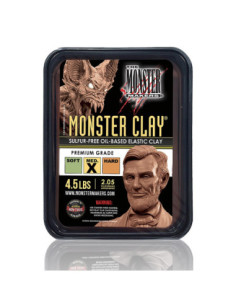 Monster Clay MEDIUM
Medium firmness, sulphur-free, silicone compatible.
Monster Clay MEDIUM
Medium firmness, sulphur-free, silicone compatible.
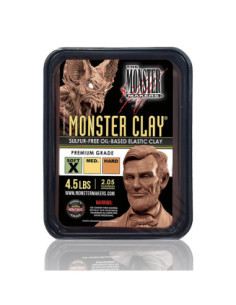 Monster Clay SOFT
Soft firmness, ideal for fine detail and textures.
Monster Clay SOFT
Soft firmness, ideal for fine detail and textures.
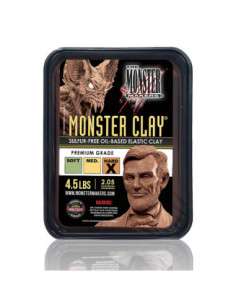 Monster Clay HARD
High firmness, 2.05 kg, for large-format sculptures.
Monster Clay HARD
High firmness, 2.05 kg, for large-format sculptures.
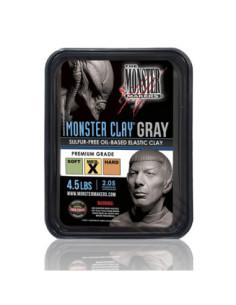 Monster Clay GRAY MEDIUM
Grey version for better reading of light and shadow.
Monster Clay GRAY MEDIUM
Grey version for better reading of light and shadow.
Chavant: the sulphur-free industry standard
Chavant clays are the standard choice in special effects studios and industrial model making. Their sulphur-free formula makes them directly compatible with platinum silicones without any pre-treatment. The Clayette line is specially formulated for large volumes and filling structural armatures.
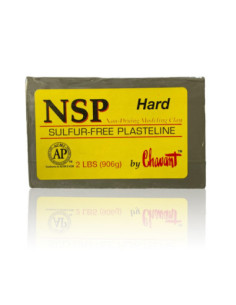 Chavant Hard
High firmness, green, ideal for precision model making.
Chavant Hard
High firmness, green, ideal for precision model making.
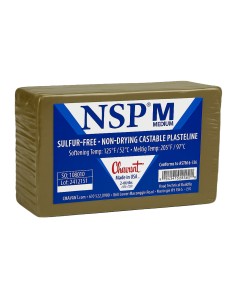 Chavant Medium
Medium firmness, the most versatile in the Chavant range.
Chavant Medium
Medium firmness, the most versatile in the Chavant range.
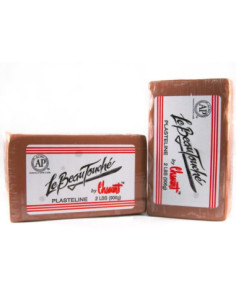 Le Beau Touché
Soft when warm, great response for organic detail.
Le Beau Touché
Soft when warm, great response for organic detail.
 Clayette de Chavant Medium
Budget-friendly format for filling large sculptures.
Clayette de Chavant Medium
Budget-friendly format for filling large sculptures.
J. Herbin and Castilene: technical precision
The J. Herbin range offers a numbered firmness scale (40–70) for very precise selection of material behaviour. Castilene, with a wax-like texture, responds especially cleanly to carving with tools and polishing with a heated spatula.
 J. HERBIN Firmness 40 Grey
Soft, grey, compatible with platinum silicones.
J. HERBIN Firmness 40 Grey
Soft, grey, compatible with platinum silicones.
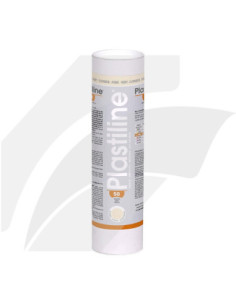 J. HERBIN Firmness 50 Ivory
Medium firmness, ivory colour for high visual readability.
J. HERBIN Firmness 50 Ivory
Medium firmness, ivory colour for high visual readability.
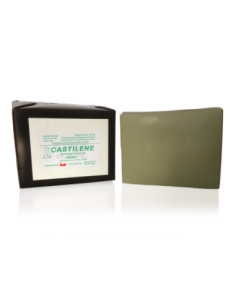 Castilene Medium
Wax-like texture, carves cleanly with tools or heat.
Castilene Medium
Wax-like texture, carves cleanly with tools or heat.
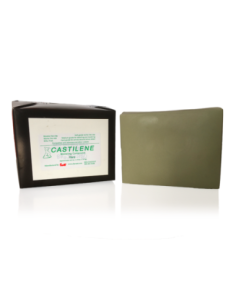 Castilene Hard
High firmness, very fine finish for miniatures and jewellery.
Castilene Hard
High firmness, very fine finish for miniatures and jewellery.
Tip: if you use sulphur-based clays (industrial or vegetable-based) with platinum silicones, the sulphur inhibits the cure. Always use clays labelled as sulfur-free or apply a sealer coat before moulding.
Anatomical armatures for head and mask sculpture
Sculpting directly on a life-size anatomical armature ensures correct proportions from the very first stroke. The ED HEAD and ALANNA HEAD H2.0 armatures incorporate RAD technology: they are filled with hot water to soften the clay from the inside and make demoulding easier without distorting the sculpture.
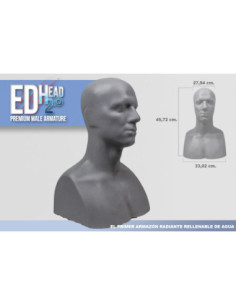 Armature ED HEAD H2.0
Male armature, hot water makes demoulding easier.
Armature ED HEAD H2.0
Male armature, hot water makes demoulding easier.
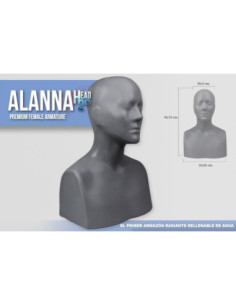 Armature ALANNA HEAD H2.0
Life-size female armature with RAD technology.
Armature ALANNA HEAD H2.0
Life-size female armature with RAD technology.
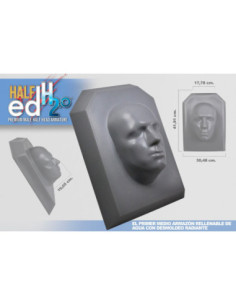 Half Mask Armature ED HEAD H2.0
Male half mask, ideal for prosthetics and FX.
Half Mask Armature ED HEAD H2.0
Male half mask, ideal for prosthetics and FX.
Polymer clays: permanent modelling without a ceramic kiln

Polymer clays harden in a domestic oven at 130–135 °C and retain a degree of flexibility that prevents the breakage common in thin pieces. They are the standard material for art dolls, miniatures, stop motion and collectible figures. The Cosclay range adds a hybrid plastic-rubber technology that keeps the piece flexible even after curing.
Super Sculpey: the standard for artistic figures
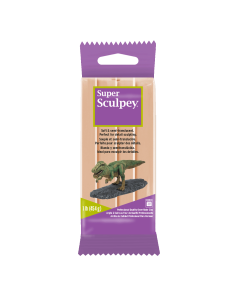 Super Sculpey Beige
Translucent beige, the reference for professional artistic figures.
Super Sculpey Beige
Translucent beige, the reference for professional artistic figures.
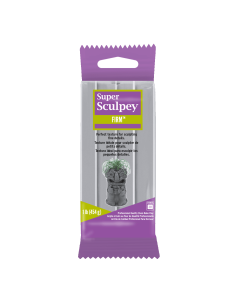 Super Sculpey Firm Gray
High firmness grey, maximum detail for miniatures and prototypes.
Super Sculpey Firm Gray
High firmness grey, maximum detail for miniatures and prototypes.
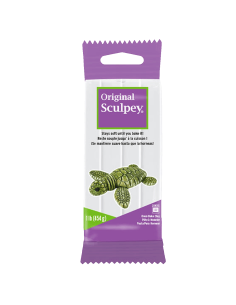 Super Sculpey White
White, ideal for pieces that will be painted or photographed.
Super Sculpey White
White, ideal for pieces that will be painted or photographed.
Cosclay: polymer clay that stays flexible after curing
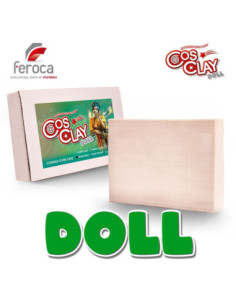 Cosclay Doll Warm Beige
Warm skin tone, flexible after baking at 135 °C.
Cosclay Doll Warm Beige
Warm skin tone, flexible after baking at 135 °C.
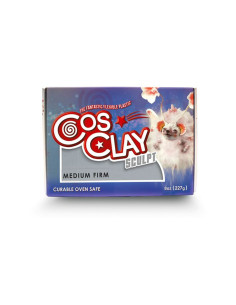 Cosclay Sculpt Medium Firm Gray
Firm, grey, for precise technical sculpting.
Cosclay Sculpt Medium Firm Gray
Firm, grey, for precise technical sculpting.
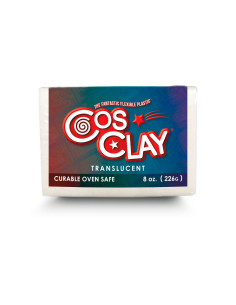 CosClay Translucent
Translucent, for skin, petal and glass effects.
CosClay Translucent
Translucent, for skin, petal and glass effects.
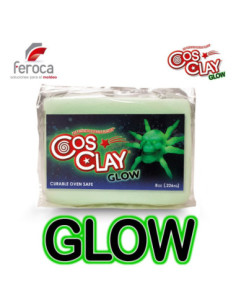 Cosclay Glow
Luminescent effect, flexible, for fantasy pieces.
Cosclay Glow
Luminescent effect, flexible, for fantasy pieces.
Natural and pottery clays
Natural clays are essential for ceramic sculpture, wheel throwing and educational modelling. The Sio-2 ARGILA and Sio-2 PLUS ranges are worked by hand and harden in air or in a ceramic kiln; stoneware pastes incorporate grog to reduce shrinkage and withstand high firing temperatures.
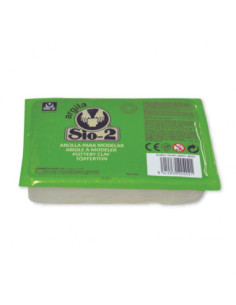 Arcilla Sio-2 ARGILA White
100% natural pottery clay, white, child-safe.
Arcilla Sio-2 ARGILA White
100% natural pottery clay, white, child-safe.
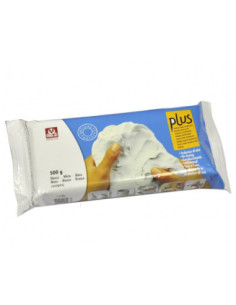 Arcilla Sio-2 PLUS White
Air-hardens without firing, high plasticity.
Arcilla Sio-2 PLUS White
Air-hardens without firing, high plasticity.
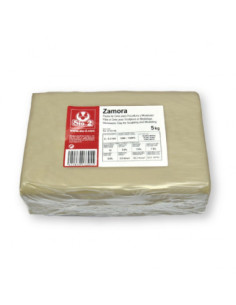 Arcilla Sio-2 Gres Zamora
Stoneware paste with fine grog for ceramic sculpture.
Arcilla Sio-2 Gres Zamora
Stoneware paste with fine grog for ceramic sculpture.
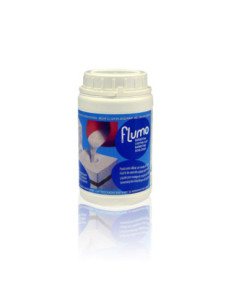 Flumo - Liquid Clay
No-fire slip, dries with ceramic hardness in air.
Flumo - Liquid Clay
No-fire slip, dries with ceramic hardness in air.
Texturing tools and modelling accessories
Surface texturing makes the difference between a flat sculpture and a characterful piece. Texture stamps and rollers let you reproduce skin, scales and fabrics in a single pass over soft clay or plasteline.
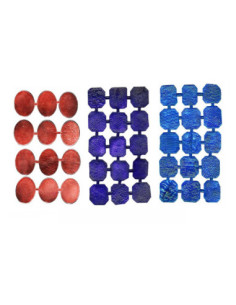 Texture Stamp Monster Makers
Urethane rubber skin stamps for plasteline.
Texture Stamp Monster Makers
Urethane rubber skin stamps for plasteline.
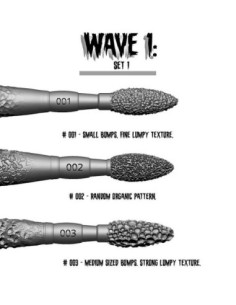 Texture Wave1 - Set 1
3 micro-texture rollers, 9 different patterns.
Texture Wave1 - Set 1
3 micro-texture rollers, 9 different patterns.
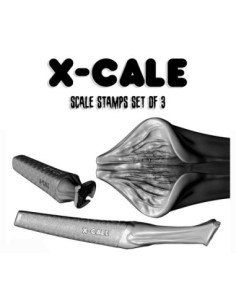 Texture X-Cale Stamp - Scales
3 scale stamps 3D-printed in resin.
Texture X-Cale Stamp - Scales
3 scale stamps 3D-printed in resin.
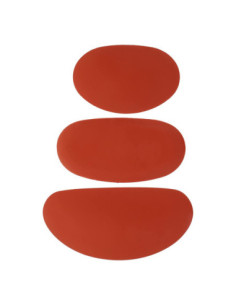 Silicone Kidney Tools - 3 Units
Set of 3 sizes for smoothing and shaping clay.
Silicone Kidney Tools - 3 Units
Set of 3 sizes for smoothing and shaping clay.
Moulds for sculpture and artistic casting
Once the original is finished, the silicone mould lets you reproduce it in the final material: resin, plaster or gypsum. The choice between tin silicone and platinum silicone depends on the budget, the casting material and the number of reproductions planned.
Platinum silicone: maximum fidelity and durability
Platinum silicones offer zero shrinkage, a longer mould life and direct compatibility with polyurethane and epoxy resins. They are the professional option for long runs and pieces with demanding detail requirements.
 EASYPLAT 00-30
Shore 00-30, translucent, 1:1 mix for flexible moulds.
EASYPLAT 00-30
Shore 00-30, translucent, 1:1 mix for flexible moulds.
 EASYPLAT MOLD-40
Shore A40, translucent, 30 min working time, high resistance.
EASYPLAT MOLD-40
Shore A40, translucent, 30 min working time, high resistance.
 PlatSil 73-15
Shore A15, translucent, 20 min working time for detailed pieces.
PlatSil 73-15
Shore A15, translucent, 20 min working time for detailed pieces.
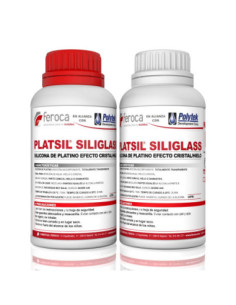 PlatSil SiliGlass
Water, ice or glass effect, Shore A40 transparent.
PlatSil SiliGlass
Water, ice or glass effect, Shore A40 transparent.
Tin silicone: budget-friendly option for short runs
Condensation silicones are a solid entry point for workshops on a tight budget or when working with plaster and gypsum as the casting material. They show a slight shrinkage after curing, so they are recommended for short runs or prototypes.
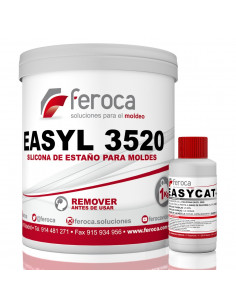 EASYL 3520
Shore A20, high elasticity for geometries with undercuts.
EASYL 3520
Shore A20, high elasticity for geometries with undercuts.
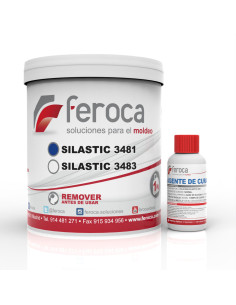 Silastic 3481
Shore A21, 90 min working time, high tear resistance.
Silastic 3481
Shore A21, 90 min working time, high tear resistance.
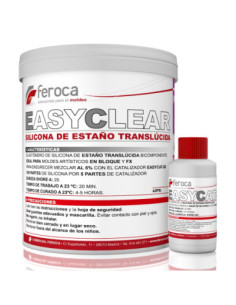 EASYCLEAR
Translucent, so you can see the piece inside the mould.
EASYCLEAR
Translucent, so you can see the piece inside the mould.
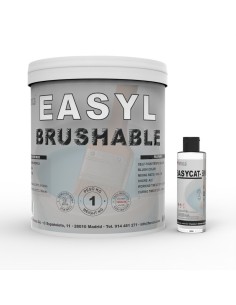 EASYL Brushable
Thixotropic, applied by brush directly onto the original.
EASYL Brushable
Thixotropic, applied by brush directly onto the original.
Artistic casting: polyurethane resins
Polyurethane resins are the most versatile casting material for reproducing sculptures: they cure in just a few minutes, faithfully reproduce every detail of the mould and accept pigmentation throughout the mass. Depending on the application, choose between white resins for painting, black resins for direct finishes or translucent resins for depth effects.
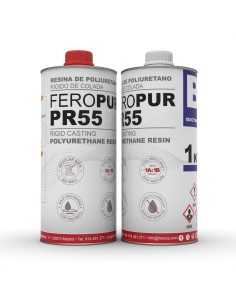 Feropur PR55+E55
Rigid 1:1, Shore 75D, for casting figures and prototypes.
Feropur PR55+E55
Rigid 1:1, Shore 75D, for casting figures and prototypes.
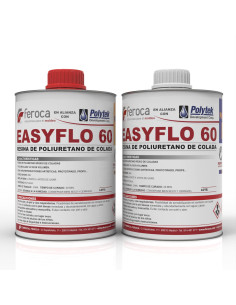 EasyFlo 60
Bright white, low viscosity, reproduces maximum detail.
EasyFlo 60
Bright white, low viscosity, reproduces maximum detail.
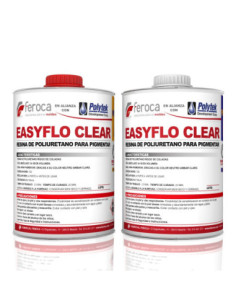 EasyFlo Clear
Translucent amber, ideal for pigmenting or amber effect.
EasyFlo Clear
Translucent amber, ideal for pigmenting or amber effect.
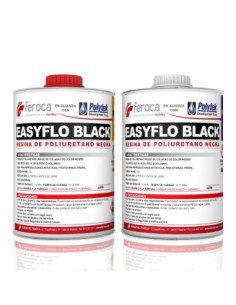 EasyFlo Black
Black, Shore 70D, direct finish without painting.
EasyFlo Black
Black, Shore 70D, direct finish without painting.
High-strength plasters and gypsum for artistic casting
Technical plasters let you reproduce sculptures with a fine, hard finish that accepts paint, patinas and surface treatments. The ALADUR and EXADURO ranges are formulated for high-detail reproductions with Brinell hardness above 1000 kg/cm².
 ALADUR 9
High resistance, fine detail, for artistic reproductions.
ALADUR 9
High resistance, fine detail, for artistic reproductions.
 EXADURO
Brinell hardness 1300 kg/cm², for matrices and counter-moulds.
EXADURO
Brinell hardness 1300 kg/cm², for matrices and counter-moulds.
 Arquero - High Strength Plaster
Very low expansion, ideal for prototypes and patterns.
Arquero - High Strength Plaster
Very low expansion, ideal for prototypes and patterns.
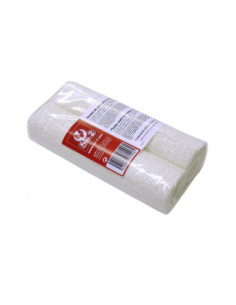 Sio-2 Plaster Bandages
Sets in 2–3 min, for structures and quick shell moulds.
Sio-2 Plaster Bandages
Sets in 2–3 min, for structures and quick shell moulds.
Repair and finishing putties for sculptures
When the sculpture has already cured or you're working on a rigid support, two-part putties let you fill, correct and add volume without having to redo the whole piece. Hand-kneadable epoxy putty and polyester putties are the quickest options for localised repairs.
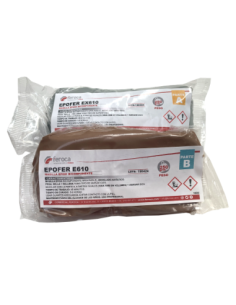 Epoxy Putty 610
Hand-kneadable two-part putty, hardens underwater.
Epoxy Putty 610
Hand-kneadable two-part putty, hardens underwater.
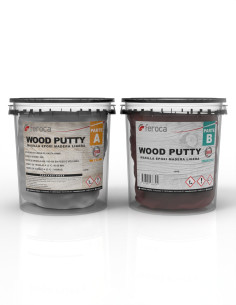 Wood Putty - Lightweight Epoxy Putty
Lightweight, wood finish, easy-to-sand 1:1 mix.
Wood Putty - Lightweight Epoxy Putty
Lightweight, wood finish, easy-to-sand 1:1 mix.
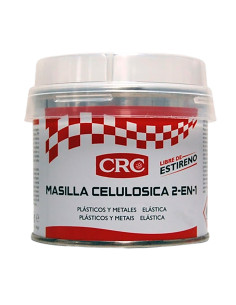 CRC Cellulosic Putty
Fine finish, easy sanding for surface corrections.
CRC Cellulosic Putty
Fine finish, easy sanding for surface corrections.
Comparison table: choose your modelling material
| Material | Hardens | Platinum silicone compatible | Reusable | Use profile |
|---|---|---|---|---|
| Monster Clay / Chavant / J. Herbin | No (thermoplastic) | Yes | Yes | Professional sculpture, FX, moulds |
| Super Sculpey / Cosclay | Oven 130–135 °C | Yes (after curing) | No | Art dolls, miniatures, stop motion |
| Arcilla Sio-2 ARGILA / PLUS | Air or ceramic kiln | Not applicable | No | Ceramic sculpture, wheel throwing, education |
| Epoxy Putty 610 | Chemical (dual-temperature) | Yes | No | Repair and volume addition |
| Polyurethane Resin (EasyFlo, Feropur) | Chemical (2–10 min) | Not applicable (casting) | No | Reproduction of originals |
Frequently asked questions about sculpture and artistic casting
Which professional clay should I use if I'm going to mould with platinum silicone?
Any clay labelled as sulfur-free is compatible with platinum silicone. At Feroca you'll find the full Monster Clay, Chavant, J. Herbin and Castilene ranges, all sulphur-free. If you work with industrial vegetable-based clay (which does contain sulphur), apply a coat of shellac or sealer before moulding to prevent cure inhibition.
How many reproductions can a platinum silicone mould handle?
A well-maintained platinum silicone mould can handle between 50 and several hundred pours of polyurethane resin, depending on the geometric complexity and the care taken during demoulding. Tin silicone, which shrinks slightly during curing, has a shorter lifespan and is recommended for runs of up to 20–30 pieces.
Can I cast plaster directly into a silicone mould?
Yes. Both platinum and tin silicone are compatible with plaster and gypsum. In most cases you don't need a release agent because silicone doesn't stick to plaster. To extend the life of the mould during long runs, apply a light coat of petroleum jelly or wax release agent.
What's the difference between Cosclay and Super Sculpey?
Super Sculpey hardens in the oven at around 130 °C and the result is a rigid plastic-like material that can break in very thin sections. Cosclay incorporates a hybrid plastic-rubber technology that keeps the piece flexible after curing, making it much more resistant to breakage in fingers, ears, legs and any thin elements. Both accept painting, sanding and polishing once cured.
Which resin is best for artistic casting in silicone moulds?
For pieces that are going to be painted, EasyFlo 60 or Feropur PR55 White are the most common options: white, low viscosity and demoulding in under 10 minutes. If you want to pigment the resin throughout the mass or achieve a translucent effect, EasyFlo Clear is the best base. For direct black finishes without painting, EasyFlo Black is the most efficient choice.
Do Sio-2 clays need a ceramic kiln or will a domestic oven do?
Sio-2 PLUS clays harden in air without firing, so they don't need any oven at all. ARGILA clays and stoneware pastes require firing in a ceramic kiln at temperatures between 970 and 1300 °C depending on the product; a domestic oven cannot reach those temperatures. If you're looking for a clay that hardens in a domestic oven, go for polymer clays (Super Sculpey or Cosclay), which cure at 130–135 °C.