Shopping Cart



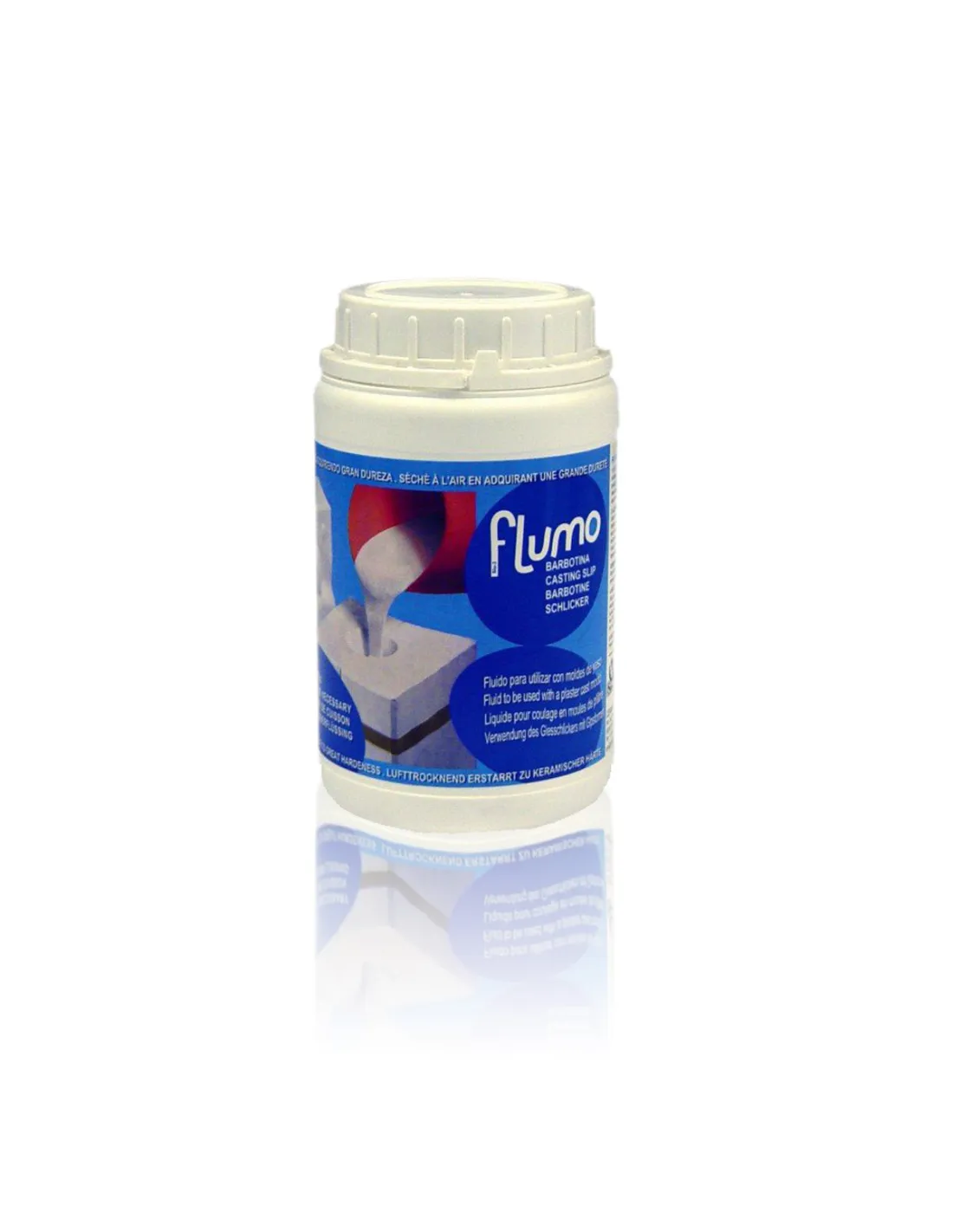
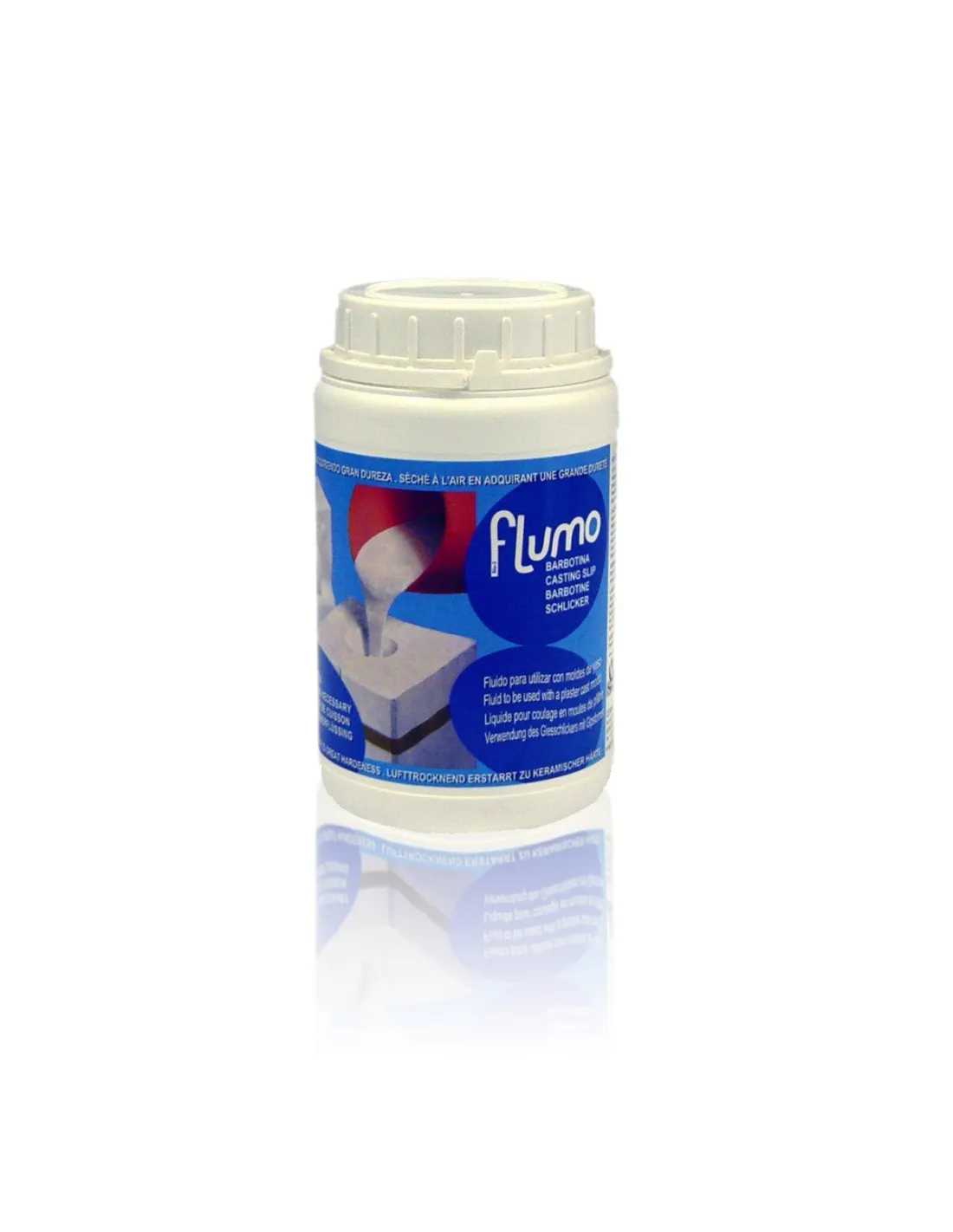
Flumo - Liquid Clay -1L
210042001
€13.00
15,73 € Tax incl.
15,73 € Tax incl.
Liquid clay slip, no firing required. Air-dries to ceramic hardness. Ideal for plaster slip casting moulds. EN-71 and AP certified.
Flumo is a slip — liquid clay — that air-dries without the need for a ceramic kiln, achieving a hardness and strength comparable to conventionally fired ceramic pieces. It is formulated to work with plaster moulds using the classic casting system, and is especially suited for the manufacture of dolls, miniatures and high-precision decorative pieces.
Technical specifications
| Presentation | Ready-to-use liquid (slip) |
|---|---|
| Format | 1 litre |
| Drying | Air-dry, no kiln firing required |
| Result | High ceramic hardness and strength |
| Raw colouring | Water-soluble pigments or dyes |
| Post-drying finish | Paintable, varnishable, polishable, carvable, drillable |
| Thinner | Distilled water (only if necessary) |
| Standards | EN-71 (Europe) / AP non-toxic seal (USA) |
| Shelf life (sealed container) | Minimum 2 years |
What it is used for
Flumo is designed for any slip casting technique in plaster moulds that would normally require earthenware or porcelain with kiln firing. By eliminating the kiln, the process is greatly simplified without sacrificing piece quality. It is a reference material in the world of crafts, hobby and semi-industrial production of figures.
- Manufacturing of articulated dolls and doll heads
- Miniatures for scale models, wargame and decoration
- Decorative and ornamental pieces with a ceramic look
- Reproduction of figures with multi-part plaster moulds
- Prototypes and models in kiln-free ceramic workshops
- Educational activities and crafts with children (EN-71 compliant)
How to use it
- Shake the container well before opening. Do not discard the more liquid part on the surface; it is part of the mixture and must be reincorporated.
- Stir slowly until completely homogeneous, avoiding the incorporation of air to prevent bubbles in the final piece.
- Allow to rest for a few minutes once stirred so that any bubbles rise to the surface and are eliminated.
- If you need to tint the slip, add water-soluble pigments or dyes at this point and mix until a uniform colour is achieved.
- Carefully pour the liquid clay into the clean and dry plaster mould, filling it to the brim.
- Monitor the casting time: the plaster absorbs water from the slip, forming a solid layer on the mould walls. Once the desired wall thickness is reached, pour out the excess slip.
- Allow to harden in the mould until the piece separates on its own or can be demoulded without deforming.
- Carefully remove the piece and allow it to dry completely in the air in a ventilated area, away from direct heat sources.
- Final finish: once dry, the piece can be painted, varnished, carved or drilled according to the intended use.
Tips for use
Viscosity and dilution
If the slip has thickened due to evaporation or prolonged storage, always correct it with distilled water, added in small amounts and mixed slowly. Tap water contains lime and mineral salts that can alter the rheology of the mixture, causing unpredictable viscosity variations and surface defects in the piece.
Bubble control
Air bubbles are the most common problem in slip casting. To minimise them: always stir slowly and in a circular motion, never with abrupt movements; allow the product to rest for at least 5 minutes before pouring; and fill the mould in a continuous, thin stream. If you have a vacuum chamber, degassing the slip before casting virtually eliminates all pores.
Plaster mould maintenance
Plaster moulds must be thoroughly dry before each casting: a damp mould slows absorption and produces uneven walls. Between castings, leave the mould open in a ventilated area for at least 30–60 minutes. Do not apply conventional release agents to moulds intended for slip casting, as the plaster absorbs water from the mixture by capillary action and any barrier layer would prevent this process.
Frequently asked questions
Is it necessary to fire the pieces in a ceramic kiln?
No. Flumo is formulated precisely to eliminate that stage. The pieces air-dry and achieve a hardness and strength comparable to conventional ceramics without any firing whatsoever. This makes it suitable for kiln-free workshops and educational use.
What type of mould can I use it with?
Flumo is designed for plaster moulds, which are the traditional support for the slip casting technique. The plaster gradually absorbs water from the mixture, forming the solid wall of the piece. It is not compatible with silicone moulds or other impermeable materials for this specific absorption casting technique.
Can I colour the liquid clay before pouring it?
Yes. In its liquid state, Flumo readily accepts water-soluble pigments and dyes. Add the colourant before casting, mix well to achieve a homogeneous colour and allow to rest to eliminate bubbles. Once the piece has dried, you can also paint or varnish it with any type of paint or varnish.
How long does a piece take to dry?
Drying time depends on the thickness of the piece, ambient temperature and relative humidity. Under normal conditions (20–25 °C, moderate humidity), thin-walled pieces may be ready to demould within a few hours, but complete drying can take 24–48 hours. Do not accelerate the process with direct heat, as this can cause cracking.
Can the dried piece be worked like ceramic?
Yes. Once dry, the piece can be carved with modelling tools, drilled, sanded and polished. It also accepts all types of finishes: acrylic paints, water-based or solvent-based varnishes, and patinas. The final hardness is comparable to ceramic, even though it has not been fired.
How long does the product keep in its container?
Flumo has a minimum shelf life of two years in its original sealed container when stored under suitable conditions (cool place, frost-free and away from extreme temperatures). Once the container has been opened, close it tightly after each use to prevent the top layer from drying out or forming a skin.
Is it safe to use with children?
Yes. Flumo complies with European toy safety standard EN-71 and holds the AP non-toxic product seal from the US standard. It is a suitable material for educational activities and children's workshops, always under adult supervision when handling the plaster mould.
What should I do if the slip has thickened in the container?
If Flumo has lost fluidity, add small amounts of distilled water while stirring slowly until the correct viscosity is restored. Never use tap water: the minerals it contains can alter the rheology of the mixture. If a dry film has formed on the surface, remove it before homogenising the rest of the product.
No reviews
Tap to zoom