Shopping Cart



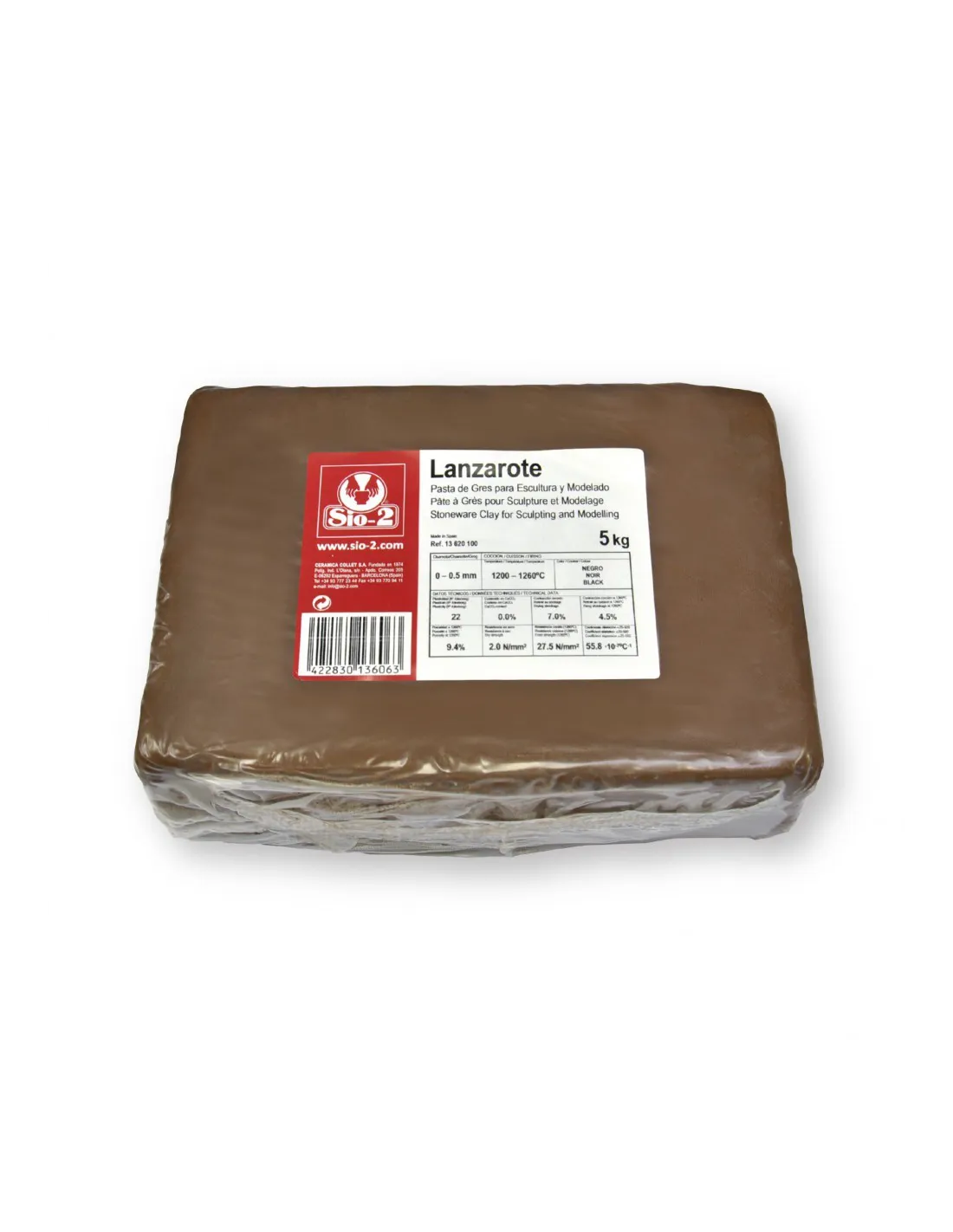
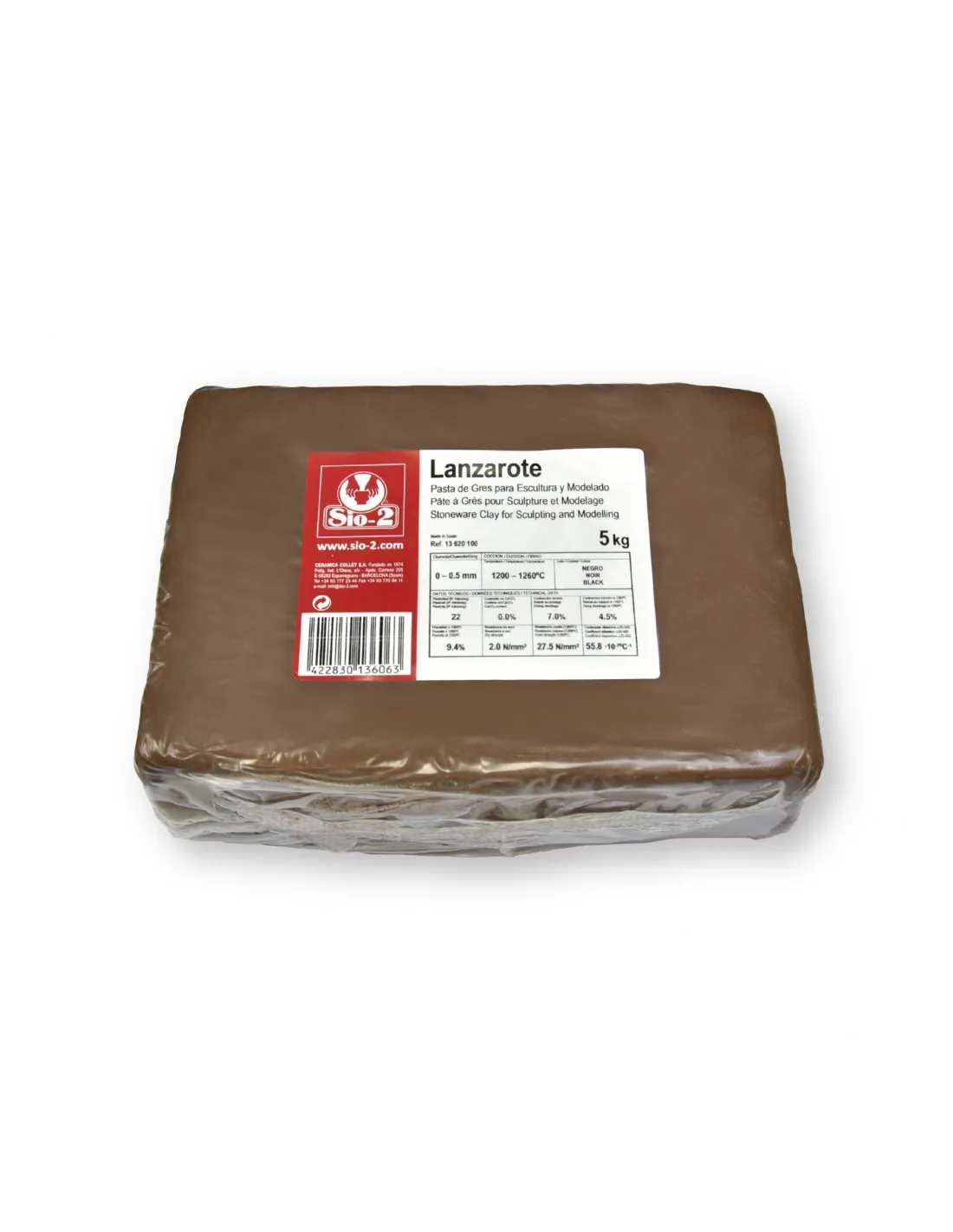
Sio-2 Gres Lanzarote Clay
210041002
€12.00
14,52 € Tax incl.
14,52 € Tax incl.
Sio-2 stoneware clay for professional sculpture and modelling. 0–0.5 mm grog, excellent plasticity and very high detail level. 5 kg container.
Sio-2 Gres Lanzarote is a fine-grained stoneware clay specially formulated for high-definition sculpture and modelling. Its 0–0.5 mm grog guarantees a very workable texture that allows precise detail reproduction without sacrificing the structural integrity of the piece. It is the go-to choice for professional sculptors and ceramicists who need a stoneware clay with outstanding plasticity in a ready-to-use 5 kg container.
Technical specifications
| Parameter | Value |
|---|---|
| Material type | Stoneware clay |
| Main application | Sculpture and modelling |
| Grog size | 0 – 0.5 mm |
| Plasticity | Excellent |
| Detail level | Very high |
| Presentation | Professional 5 kg container |
| Raw colour | Natural stoneware (Lanzarote tone) |
What it is used for
Gres Lanzarote is designed for work that demands maximum definition in hand modelling and for medium and large-format pieces where clay plasticity is key to the construction process. Its fine grog makes it compatible with coil, pinch and slab building techniques, as well as with the potter's wheel.
- Figurative sculpture and busts with a high level of detail
- Fine surface texture modelling
- Thin-walled wheel-thrown pieces
- Ceramic prototyping for craft production
- Slab work and coil building
- Decorative and studio ceramics
- Maquettes and volumetric models for kiln firing
How to use it
- Condition the clay. Open the container and check the consistency. If the clay is too hard, cover it with a damp cloth and leave it to rest for a few hours. If it is too soft, work it on an absorbent surface (plaster board) until the desired plasticity is achieved.
- Wedge the clay. Perform a thorough hand wedging to eliminate air pockets that could cause cracking during drying or firing. Use the spiral wedging or ram's head technique.
- Model. Work the piece with standard modelling tools. The 0–0.5 mm grog allows the use of fine-tipped tools without the clay tearing.
- Dry slowly. Cover the piece with plastic and allow it to dry gradually and evenly to avoid cracks. For large-volume pieces, extend the drying phase over several days.
- First firing (bisque). Fire in a ceramic kiln following the recommended temperature curve for stoneware clays. The typical firing temperature for stoneware ranges between 1220 °C and 1280 °C, although you should verify the manufacturer's specific recommendations for this product.
- Glazing and second firing (optional). Once the bisque piece has cooled, apply the glaze or slip of your choice and carry out the glaze firing according to the material's temperature range.
Usage tips
Container storage
Gres Lanzarote clay will deteriorate if it dries out. Always seal the container tightly after each use, and if you plan to store it for more than a week without opening, place a piece of damp sponge inside the plastic wrapping around the clay to maintain the moisture level. Store the container in a cool place away from direct sunlight.
Recovering trimmings and leftovers
Do not throw away the clay trimmings generated during modelling. Collect them, combine the wet and dry pieces, and work them with water until the consistency is homogeneous. Once the clay is uniform again, it can be reused without any problem. For very dry fragments, crush them, cover with water and leave to soak for 24 hours before wedging.
Drying control for complex pieces
In sculptures with protruding parts (limbs, cantilevered elements, pronounced reliefs), these areas dry faster than the core of the piece. Cover them with small pieces of plastic to equalise the drying rate and prevent internal stresses that could lead to cracks. For hollow pieces, make sure to leave a ventilation hole before firing.
Frequently asked questions
What is the difference between a clay with fine grog and one without grog?
Grog is previously fired and ground clay that is incorporated into the raw clay body. Its main function is to reduce shrinkage during drying and firing, improve resistance to thermal shock and add body to the clay. Gres Lanzarote uses 0–0.5 mm grog, meaning the particle size is very fine and allows detailed work while maintaining the dimensional stability of the piece.
Can I use this clay on the potter's wheel?
Yes. The excellent plasticity of Gres Lanzarote makes it suitable for wheel throwing. Its fine grog does not hinder centring or wall raising, and the particle size is small enough not to interfere with the surface finish of thrown pieces.
At what temperature is this stoneware fired?
Stoneware clays are typically fired between 1220 °C and 1280 °C. To obtain the optimal properties of Gres Lanzarote, consult the specific recommendations from manufacturer Sio-2 and carry out preliminary tests with small samples to adjust the firing curve to your kiln.
Can this clay be glazed?
Yes. Once fired for the first time (bisque), the piece becomes porous and accepts glazes, slips and colouring oxides perfectly. Make sure the glaze's firing range is compatible with stoneware (approximately cone 6 to cone 10).
How do I know if the clay has dried out too much in the container?
If when you open the container the clay is hard, cracked or has lost cohesion, it has dried out excessively. In that case, break the clay into small pieces, cover them completely with water and leave to soak for 24 to 48 hours. Then remove the excess water and wedge until the working consistency is restored. With well-packaged and stored stoneware clays, this problem is uncommon.
How much does this clay shrink during drying and firing?
Stoneware clays have a total shrinkage (drying + firing) that typically ranges between 10% and 14%, depending on the clay body and firing temperature. To obtain the precise figure for Gres Lanzarote, make a test tile measuring the piece in its raw state and after the final firing.
What is the difference between this clay and the Sio-2 PLUS or ARGILA clays?
The Sio-2 PLUS Blanca and Sio-2 PLUS Terracota clays are more versatile clay bodies with different final colour tones, while Sio-2 ARGILA Blanca offers a whiter, more neutral finish. Gres Lanzarote stands out for its very fine grog (0–0.5 mm) and its specific orientation towards sculpture with a very high level of detail. The choice depends on the type of work, the firing temperature you use and the desired final colour.
Is it suitable for use with children or in educational workshops?
Natural stoneware clay contains no toxic components and is suitable for use in workshops. However, as with any raw clay, it can generate fine dust when drying, so it is recommended to work in well-ventilated spaces and avoid inhaling dry particles. In educational environments with minors, use must be supervised by an adult.
No reviews
Tap to zoom