Shopping Cart



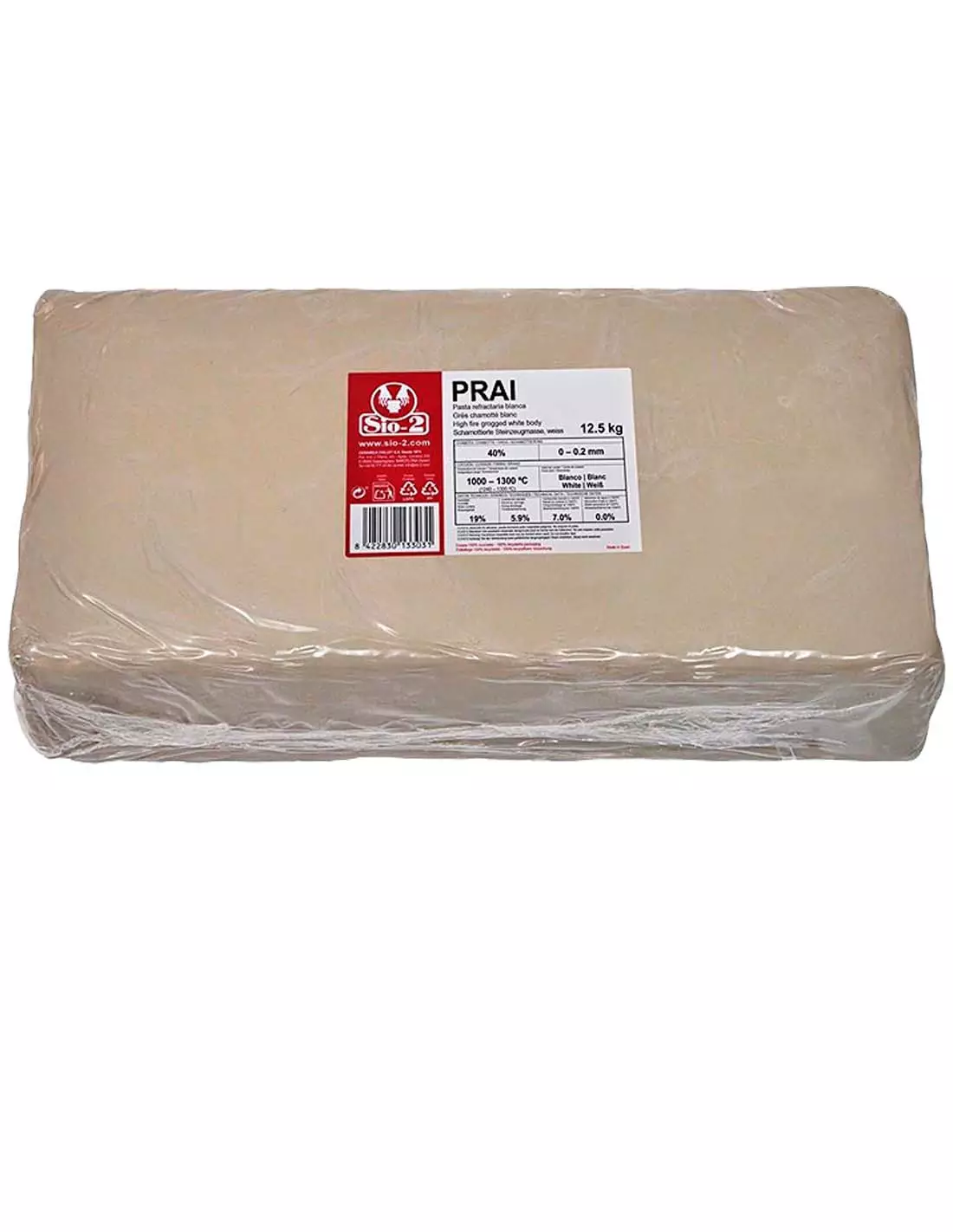
Sio-2 PRAI Clay White 12.5kg
210041003
€30.00
36,30 € Tax incl.
36,30 € Tax incl.
White refractory stoneware clay with 40% impalpable grog. Firing temperature 1240–1300 °C, Food Safe ISO 6486. Format 12.5 kg.
The Sio-2 PRAI White Clay is a high-quality refractory stoneware body formulated for sculpture, modelling and functional ware production. Its 40% impalpable grog (0–0.2 mm) provides structural strength without compromising detail, and its Food Safe certification to ISO 6486 makes it suitable for tableware and functional pieces as well as artistic work destined for high-temperature firing.
Technical specifications
| Parameter | Value |
|---|---|
| Clay type | White refractory stoneware |
| Grog | 40% — particle size 0–0.2 mm (impalpable) |
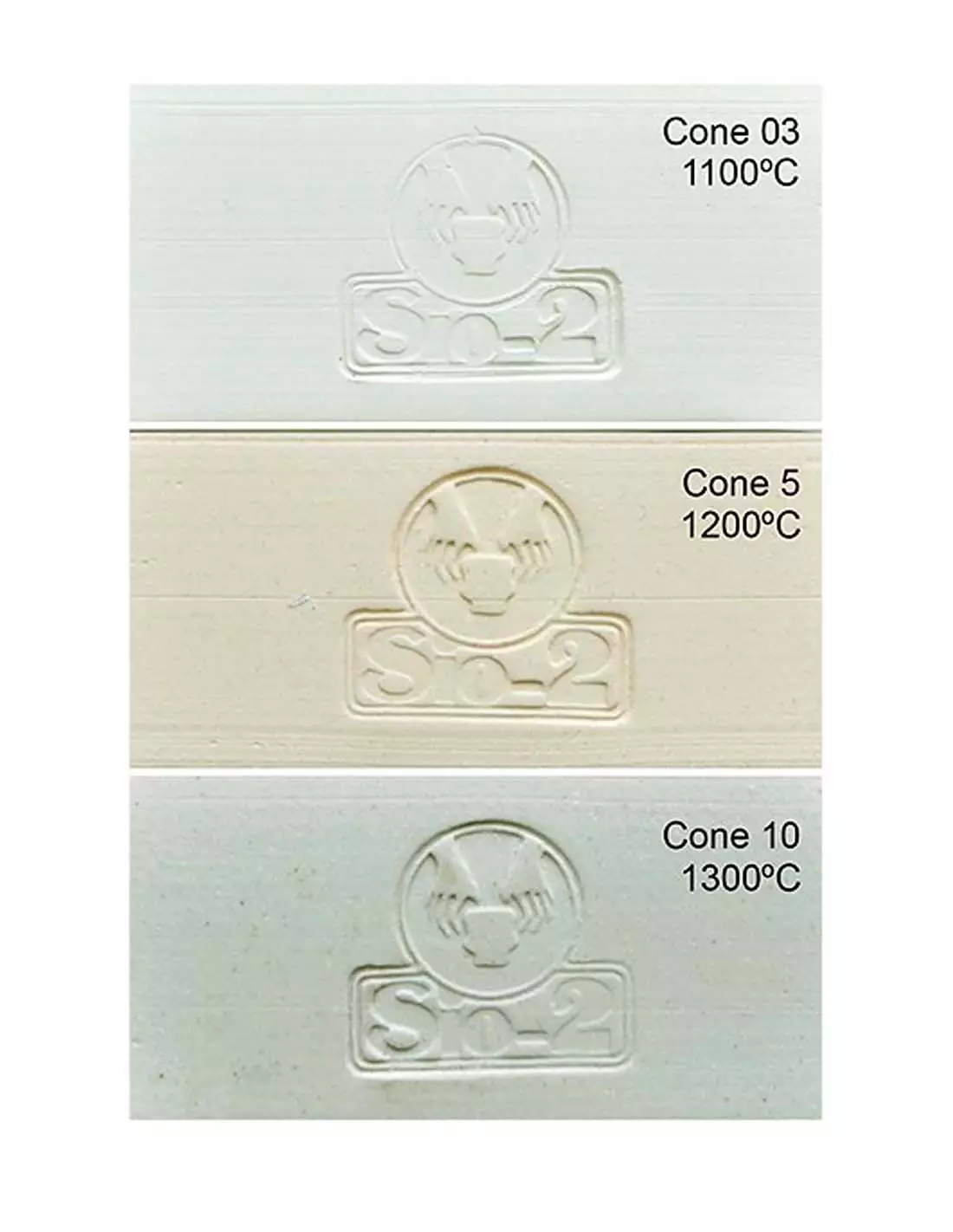
| Firing temperature | 1240–1300 °C |
| Bisque temperature | 1000 °C |
| Working moisture | 19% |
| Plasticity (Atterberg PI) | 16 |
| Calcimetry (CaCO₃) | 0% |
| Drying shrinkage | 5.9% |
| Firing shrinkage (1300 °C) | 7.0% |
| Porosity / water absorption (1300 °C) | 0.0% |
| Dry mechanical strength | 3.0 N/mm² |
| Fired mechanical strength (1300 °C) | 51.0 N/mm² |
| Thermal expansion coefficient (25–500 °C) at 1250 °C | 60.4 × 10⁻⁷ °C⁻¹ |
| Certification | Food Safe ISO 6486 |
| Format | 12.5 kg |
What it's used for
PRAI White is designed for pieces subjected to high temperatures that require high mechanical strength once fired. Its impalpable grog allows clean surfaces with a good level of detail, and its zero porosity after firing at 1300 °C makes it fully suitable for Food Safe use. It is a versatile body covering everything from artistic production to functional studio ceramics.
- Sculpture and artistic modelling in medium and large formats
- Tableware, mugs, bowls and Food Safe certified functional pieces
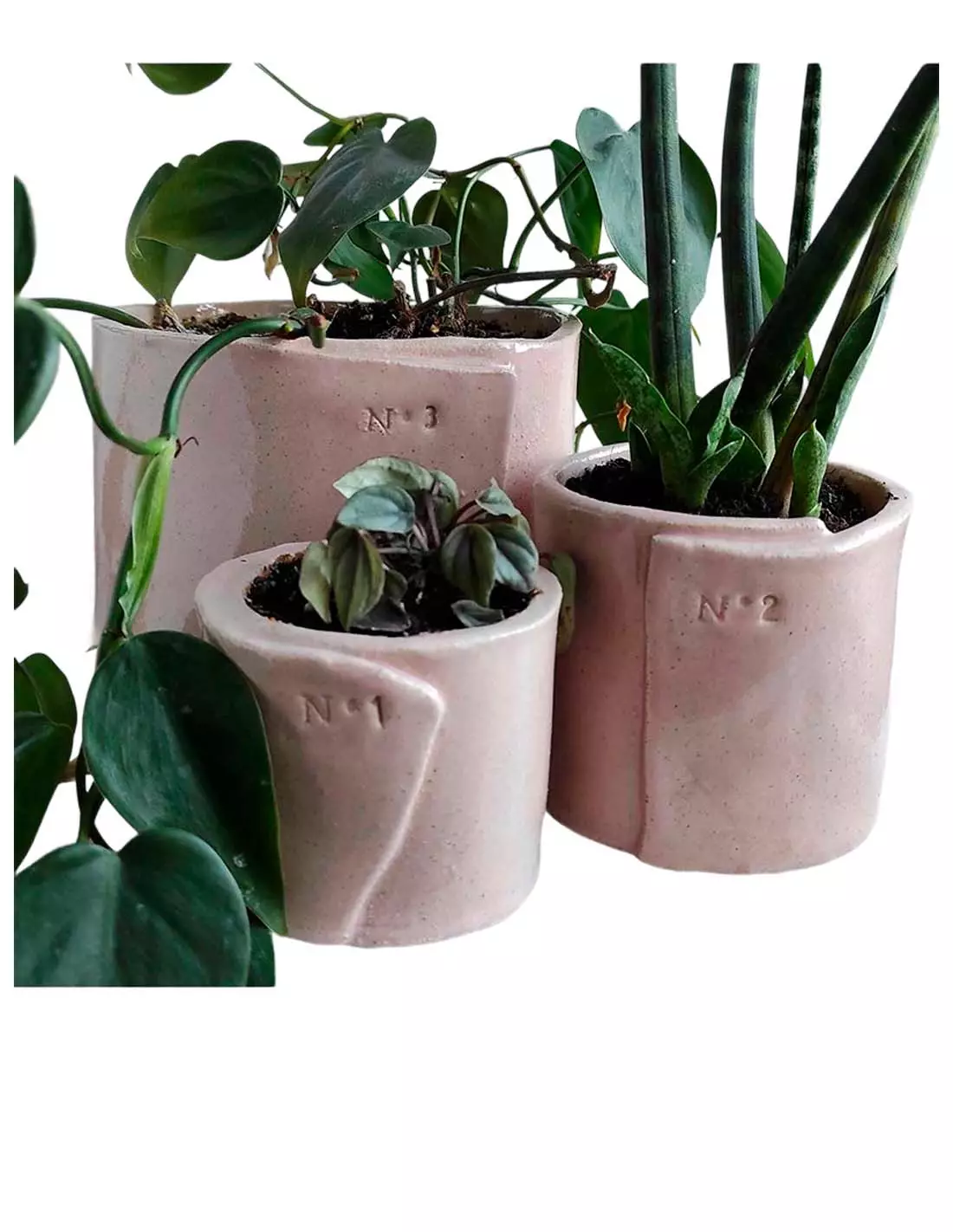
- Plant pots, vases and outdoor decorative pieces resistant to weathering
- Ceramic studio production: series of utilitarian ware
- Technical pieces requiring high mechanical strength after firing
- Wheel throwing, hand building, and slab or coil techniques
How to use it
- Condition the clay: Take the required amount from the 12.5 kg block and wedge it thoroughly to homogenise moisture and remove air pockets. If the body is slightly dry, you can add water gradually while wedging.
- Shape the piece: Work using your preferred techniques — wheel throwing, hand building, slabs or coils. The IP 16 plasticity offers a good balance between workability and green strength. The slower drying gives you more working time than other clay bodies.
- Greenware drying: Allow the piece to dry gradually and evenly, protecting it from draughts and sudden temperature changes to avoid cracking. Account for the 5.9% drying shrinkage in your piece design.
- Bisque firing (optional but recommended): Carry out a first firing at 1000 °C to harden the piece before glazing. This makes handling easier and reduces the risk of breakage.
- Glazing (if applicable): Apply glazes compatible with the 1240–1300 °C firing range to the bisque-fired piece.
- Final firing: Fire in the 1240–1300 °C range. The piece will achieve 0.0% porosity and a mechanical strength of 51.0 N/mm², making it suitable for Food Safe use and outdoor exposure.
- Cooling: Allow the kiln to cool in a controlled manner to avoid thermal shock. Do not open the kiln until the temperature has dropped below 200 °C.
Usage tips
Drying management to prevent cracking
PRAI White has a drying shrinkage of 5.9%, moderate for a grogged stoneware body. Cover pieces with plastic for the first 24–48 hours to slow down drying of thinner sections, which tend to dry before the interior and thicker areas. For large-format pieces, especially sculptures with varying wall thickness, allow several days of drying before loading the kiln.
Compatibility with glazes and slips
For best results, use glazes formulated for stoneware at 1240–1300 °C. Always check that the glaze's thermal expansion coefficient is compatible with that of the clay body (60.4 × 10⁻⁷ °C⁻¹ at 1250 °C) to avoid crazing or flaking after firing. If you are making Food Safe pieces, also ensure the glaze meets the requirements of ISO 6486.
Storage and preservation
Store the block tightly sealed in its original bag or in an airtight plastic bag to maintain the 19% working moisture. If the clay partially dries out, you can recover it by wrapping it in a damp cloth for several hours before use. Avoid extreme storage temperatures and direct sunlight exposure.
Frequently asked questions
What is the difference between a clay with impalpable grog and one with coarse grog?
Impalpable grog (0–0.2 mm, as in PRAI White) provides structural strength and reduces shrinkage without penalising surface finish or level of detail. Coarse grog improves thermal shock resistance more and reduces shrinkage further, but leaves a rougher texture. For functional pieces with clean finishes or detail work, impalpable grog is the best option.
Is it safe for Food Safe use without glazing?
PRAI White has 0.0% porosity after firing at 1300 °C, which technically makes it non-absorbent. However, to ensure full Food Safe suitability and ease of cleaning, it is always recommended to glaze surfaces in contact with food using a Food Safe certified glaze. The clay body itself is certified to ISO 6486, but the final finish also affects the safety of the piece.
Can I use this clay on the potter's wheel?
Yes. PRAI White is suitable for wheel throwing thanks to its IP 16 plasticity and impalpable grog content, which does not interfere with centring or the throwing process. It is equally suitable for hand building, coil and slab techniques.
What total shrinkage should I account for when designing a piece?
Total shrinkage is the sum of drying shrinkage (5.9%) and firing shrinkage at 1300 °C (7.0%), giving an approximate total shrinkage of 12.9%. This figure is key to calculating the greenware size if you need a finished piece with specific dimensions.
What is the maximum firing temperature for this clay?
The recommended range is 1240–1300 °C. The technical data in the datasheet are referenced at 1300 °C, which is the optimum temperature for maximum mechanical strength (51.0 N/mm²) and 0.0% porosity. Exceeding 1300 °C may cause deformation or excessive vitrification.
Is it suitable for outdoor pieces exposed to frost?
Yes. The 0.0% porosity after firing at 1300 °C means the piece does not absorb water and is therefore not susceptible to breakage from ice expansion. It is a suitable choice for garden pieces, planters and outdoor sculptural elements in cold climates, provided the firing has been carried out correctly within the indicated range.
How does this clay differ from other stoneware bodies in the catalogue?
PRAI White stands out for its high impalpable grog content (40%), which makes it especially resistant and suitable for pieces with greater mechanical demands, while maintaining a clean finish. If you are looking for a body with lower grog content or different firing behaviour, you can compare it with the Arcilla Sio-2 PLUS Blanca or the Arcilla Sio-2 ARGILA Blanca.
How long can I store the clay without it deteriorating?
When stored properly in its airtight bag, away from heat and direct sunlight, the clay can be kept in good condition for months. If it partially dries out, it can be rehydrated by wrapping it in a damp cloth or adding water during wedging. Avoid freezing, as this can alter its plasticity.
No reviews
Tap to zoom