Shopping Cart



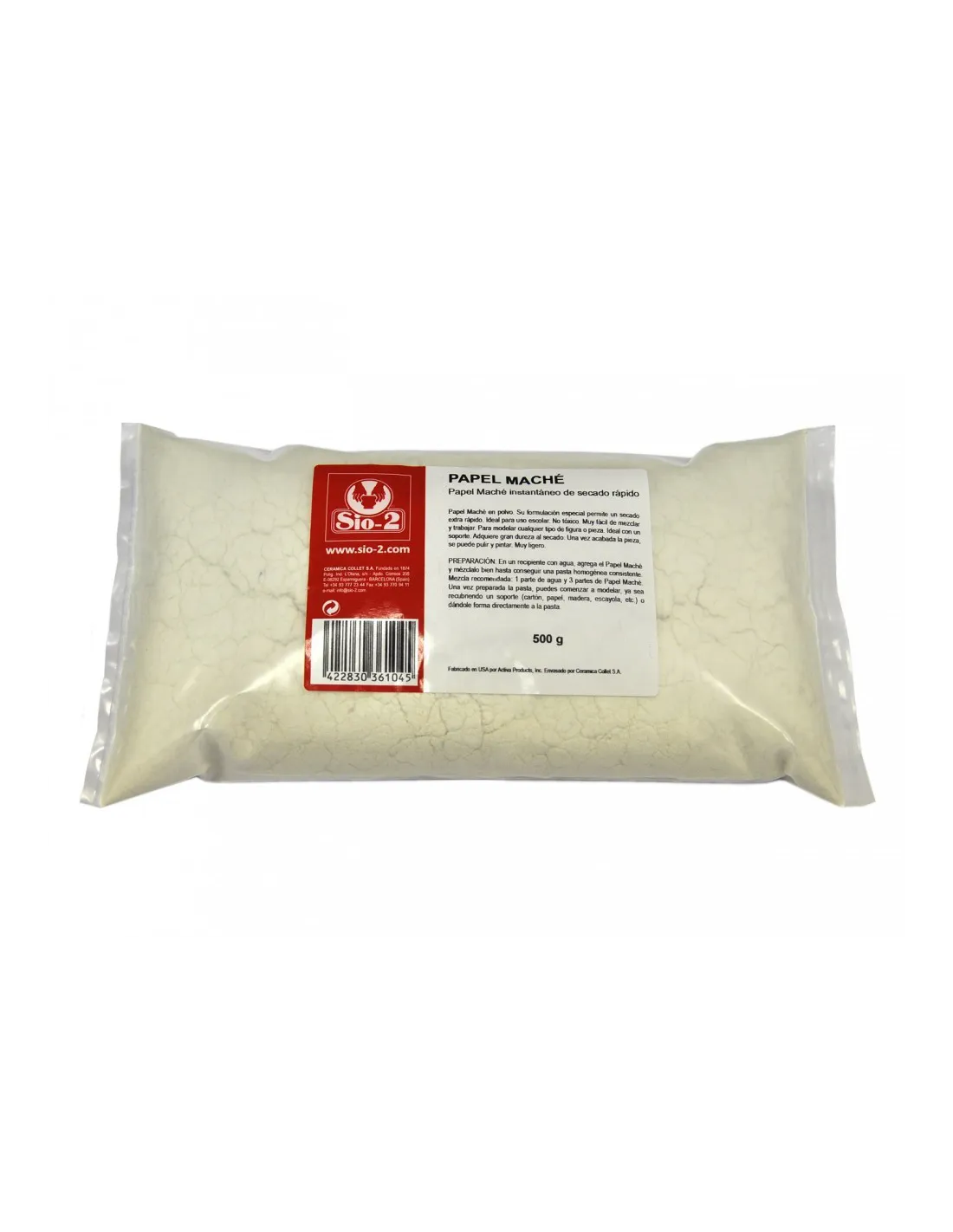
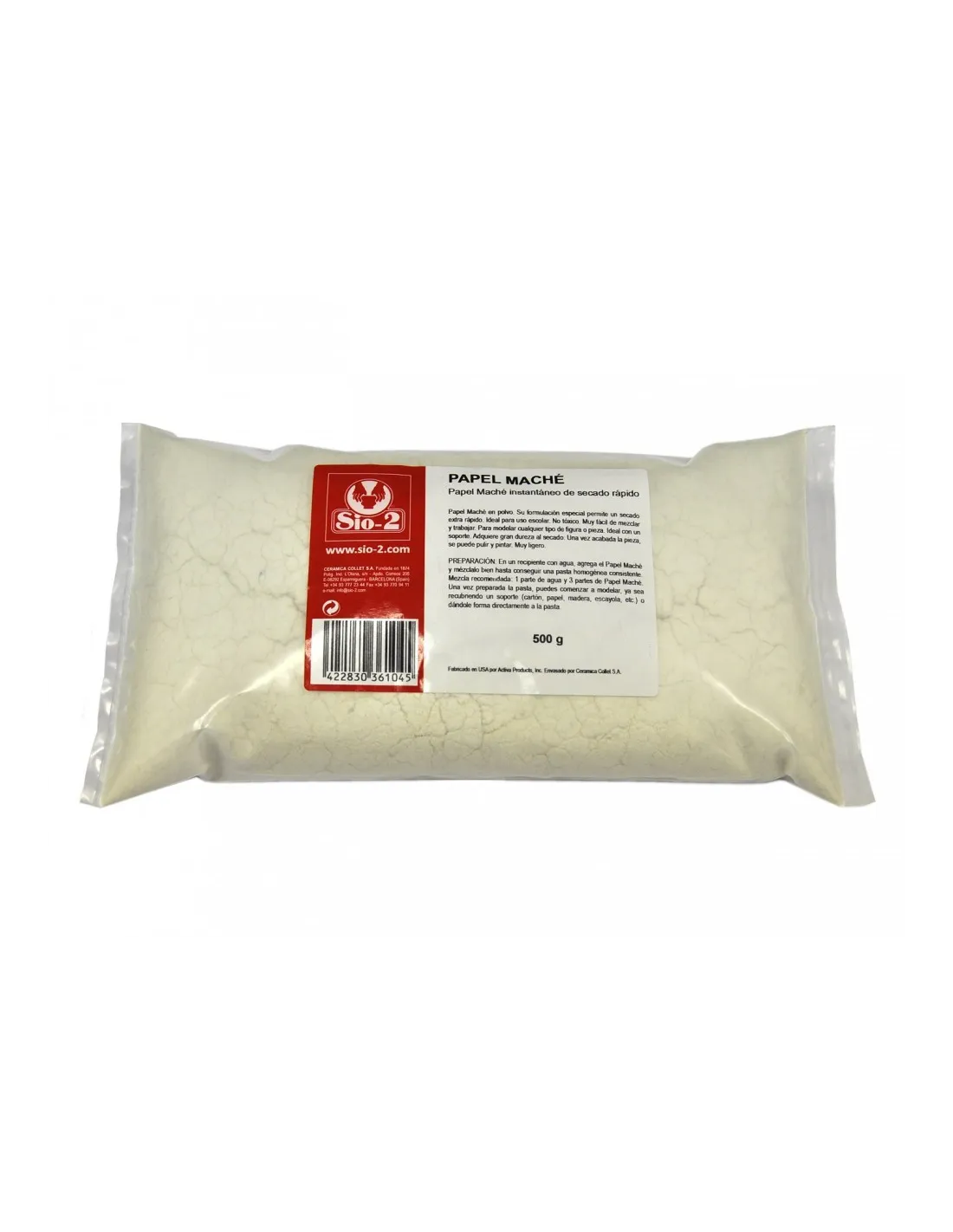
Paper Maché SIO-2
210051001
€10.50
12,71 € Tax incl.
12,71 € Tax incl.
Fast-drying powder papier mâché, non-toxic and very easy to work with. Ideal for school and creative modelling. 500 g pack.
SIO-2 Papier Mâché is a fast-drying powder modelling clay formulated so that anyone can create three-dimensional figures and pieces without complications. Simply mix with water to obtain a lightweight, highly workable paste that, once dry, becomes very hard, can be sanded and painted with any water-based or solvent-based paint.
Technical specifications
| Parameter | Value |
|---|---|
| Format | Powder to mix with water |
| Content per pack | 500 g |
| Drying | Fast (extra fast compared to traditional papier mâché) |
| Toxicity | Non-toxic |
| Final finish | Hard, lightweight, sandable and paintable |
| Recommended use | Indoor |
What it is used for
SIO-2 Papier Mâché is designed for creative, decorative and school modelling. Its powder formulation makes it much more convenient to store and dose than wet pastes, and its accelerated drying allows you to advance your project without long waits. Some of its most common applications:
- Modelling figures, sculptures and scale models over a support (balloons, cardboard, wire mesh, wire armature)
- Arts and crafts in school environments and children's workshops
- Restoration and filling of lightweight decorative pieces
- Creating masks, puppets and props
- Textured finishes on rigid surfaces
- General artistic and decorative projects
How to use it
- Prepare the mix: pour the required amount of powder into a clean container and add water gradually while stirring until you obtain a smooth, workable paste with no lumps or excess liquid.
- Prepare the support (optional but recommended): for bulky or hollow pieces, first build a cardboard, balloon, wire or mesh structure to serve as an internal armature.
- Apply the paste: model with your hands or a spatula, applying the paste in layers over the support or directly if the piece is small. Thin layers dry faster and guarantee a better result.
- Let it dry: place the piece in a dry, well-ventilated area. Drying is faster than with traditional pastes; even so, thick pieces may require several hours or even a full day.
- Sand and finish: once dry and hard, you can sand the surface with fine-grit sandpaper to smooth out imperfections.
- Paint and decorate: apply a coat of primer if desired and paint with acrylics, tempera or other water-based paints. Solvent-based paints are also accepted on a fully dry surface.
Tips for use
Mix consistency
The amount of water directly affects workability and drying time. A drier mix (less water) is firmer and dries faster; a wetter mix is more fluid and allows more detailed work, but takes slightly longer to harden. Adjust the ratio according to the type of work. If the paste is too sticky, add a little more powder; if it cracks when spreading, add a few drops of water.
Layered application
For large or very voluminous pieces, it is preferable to apply several thin layers rather than a single thick one. This reduces the risk of cracking during drying and improves the final strength of the piece. Allow each layer to at least partially dry before adding the next.
Storing unused product
Once the pack is opened, seal it well after each use to prevent the powder from absorbing ambient moisture. Prepared paste cannot be stored; mix only the amount you will use in each working session to avoid waste.
Frequently asked questions
Do I need a support to work with this paste?
It is not strictly necessary, but it is highly recommended for pieces of a certain size or with overhanging areas. SIO-2 Papier Mâché works especially well over cardboard structures, balloons or wire armatures, which reduce material consumption and speed up drying by reducing the required paste thickness.
What type of paints can be used to finish the piece?
Once dry and hard, the surface accepts acrylic paints, tempera and water-based paints in general. You can also use solvent-based paints or enamels. For a uniform finish, first apply a coat of primer or white gesso.
How long does it take to dry?
Drying time depends on the thickness of the applied layer, the temperature and the ambient humidity. In thin layers, it can be ready within a few hours. For thicker pieces or in humid environments, it may need between 12 and 24 hours. The SIO-2 formulation is designed for faster drying than conventional papier mâché pastes.
Is it suitable for children?
Yes, SIO-2 Papier Mâché is non-toxic and is also designed for school use. Even so, as with any workshop material, it is recommended that younger children work under adult supervision and avoid putting the paste in their mouths.
Can it be used without a support to make solid pieces?
Yes, you can model solid pieces or small figures directly without a support. Bear in mind that the greater the thickness, the longer it will take to dry and the greater the possibility of small surface cracks appearing. In those cases, apply a second thin coat of paste to cover them once the first layer is dry.
Can it be sanded and drilled once dry?
Yes. One of the advantages of SIO-2 Papier Mâché is that once dry it acquires considerable hardness, allowing you to sand it with fine-grit sandpaper to smooth the surface, and also to drill or carve it with hand or power tools to add details or create assemblies.
Can it be mixed with pigments or dyes?
Yes, you can incorporate powder pigments or water-based dyes directly into the mix to obtain coloured paste. This is useful when you do not want to paint the piece afterwards or want unpainted areas to already have a base tone.
What is the difference compared to the clays in the same range?
SIO-2 Papier Mâché is a cellulose-based paste (paper), which gives it a lighter and more fibrous finish than SIO-2 natural clays, which are formulated with clay minerals and offer greater plasticity and surface detail. Papier mâché is ideal for large, lightweight pieces; clays are preferable for detail modelling and finer sculpture.
No reviews
Tap to zoom