
Shopping Cart


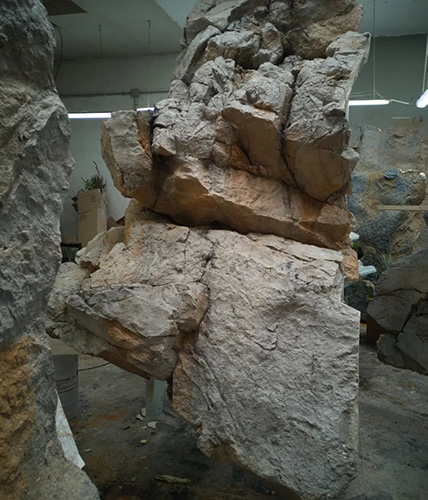
Polyurethane foams for sculpting and filling
Polyurethane foam is the go-to construction material in theming. It lets you create large, lightweight volumes that can then be carved, sanded and coated. Depending on the density and rigidity you need, you can choose from several formulations:
Rigid foams
Rigid foams are ideal for building the inner body of figures, rock panels, architectural sets or any piece that needs to hold its shape. They expand in a mould or in open space, reach densities ranging from 64 to 300 kg/m³ and can be carved with a craft knife, gouges or heat tools. The higher the density, the finer the cell and the more detail the mould captures.
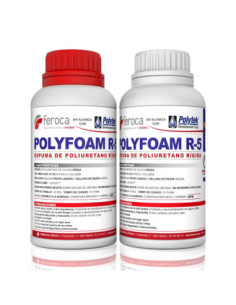 PolyFoam R-5
Low-density rigid foam for large volumes.
PolyFoam R-5
Low-density rigid foam for large volumes.
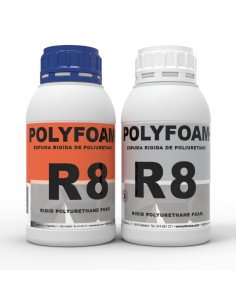 PolyFoam R-8
Higher free density, fine cell, detailed surface.
PolyFoam R-8
Higher free density, fine cell, detailed surface.
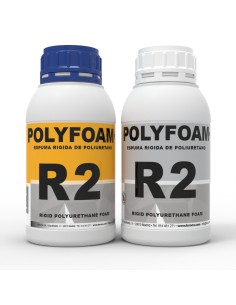 PolyFoam R2
Adjustable moulded density, lightweight filling and sets.
PolyFoam R2
Adjustable moulded density, lightweight filling and sets.
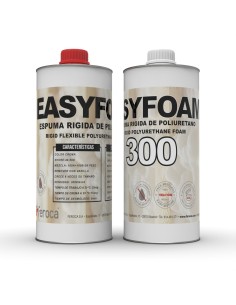 EASYFOAM 300
High density, Shore 40-50D hardness, detailed sculpting.
EASYFOAM 300
High density, Shore 40-50D hardness, detailed sculpting.
Flexible and integral-skin foams
For elements that need to absorb impacts, articulate or present a continuous, durable outer skin — such as parade heads, animatronic figures or contact props — flexible and integral-skin foams are the best option. The integral skin forms on its own in contact with the mould, eliminating the need for additional coatings.
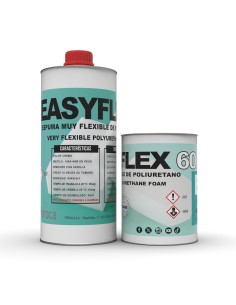 EASYFLEX 60
Flexible, 60 kg/m³, for filling figures and animatronics.
EASYFLEX 60
Flexible, 60 kg/m³, for filling figures and animatronics.
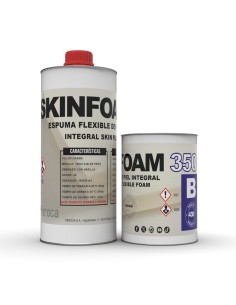 SKINFOAM 350
Continuous integral skin, Shore A45, ready-to-paint finish.
SKINFOAM 350
Continuous integral skin, Shore A45, ready-to-paint finish.
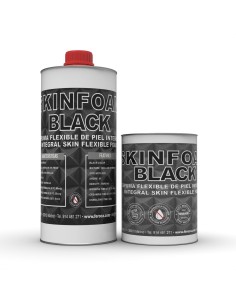 SKINFOAM 350 BLACK
Black integral skin for dark pieces with no need to paint.
SKINFOAM 350 BLACK
Black integral skin for dark pieces with no need to paint.
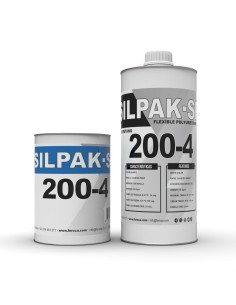 SilPak SP 200-4
2-part flexible foam, soft and shock-absorbing for fillings.
SilPak SP 200-4
2-part flexible foam, soft and shock-absorbing for fillings.
Polyurethane casting resins for reproduction
Once the foam volume has been built or the sculpture carved, polyurethane resins allow you to reproduce pieces in series with high fidelity and durability. They are the standard solution for accessories, figures, decorative elements and props that need to withstand continuous use in publicly accessible installations.
Rigid casting resins
Two-part rigid polyurethane resins are poured into a mould, cure quickly and demould in minutes. With them you can reproduce any sculpted piece without losing detail. They are especially useful when you need to produce a large number of identical copies.
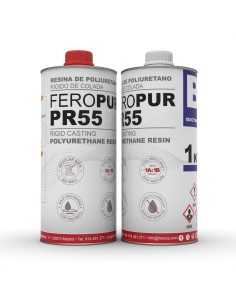 Feropur PR55+E55
Rigid 75D, 1:1 mix, reproduction of decorative elements.
Feropur PR55+E55
Rigid 75D, 1:1 mix, reproduction of decorative elements.
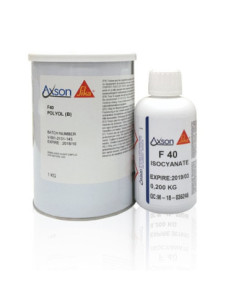 Axson F40
83 Shore D, very resistant, for rigid moulds and prototypes.
Axson F40
83 Shore D, very resistant, for rigid moulds and prototypes.
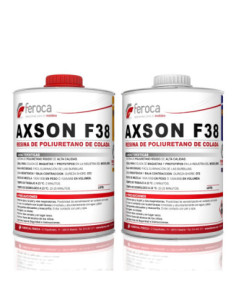 SikaBiresin F38
Shore 72D, 2-min working time, ideal for model making.
SikaBiresin F38
Shore 72D, 2-min working time, ideal for model making.
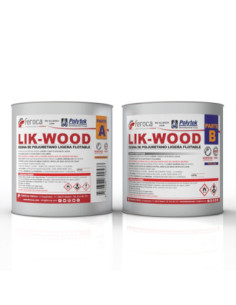 Lik-Wood
Lightweight 65D resin that floats, low-weight set pieces.
Lik-Wood
Lightweight 65D resin that floats, low-weight set pieces.
White and pigmentable polyurethane resins
For pieces that will be painted or mass-pigmented directly, white or translucent formulations offer a neutral base that improves final colour coverage and makes subsequent painting easier.
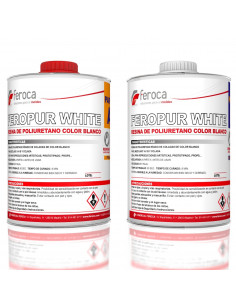 Feropur PR55 WHITE
White rigid 1:1, perfect base for finish painting.
Feropur PR55 WHITE
White rigid 1:1, perfect base for finish painting.
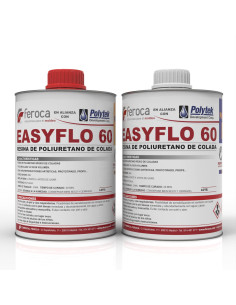 EasyFlo 60
Bright white, fast cure, for small-format pieces.
EasyFlo 60
Bright white, fast cure, for small-format pieces.
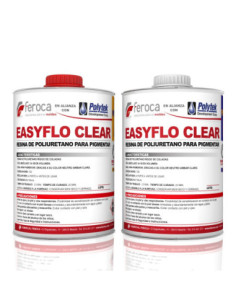 EasyFlo Clear
Amber translucent, Shore 72D, ideal for custom pigmenting.
EasyFlo Clear
Amber translucent, Shore 72D, ideal for custom pigmenting.
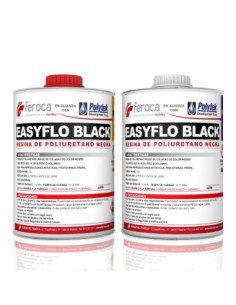 EasyFlo Black
Black Shore 70D, no need for dark paint afterwards.
EasyFlo Black
Black Shore 70D, no need for dark paint afterwards.
Polyester resins and fibreglass laminating
When you need to coat a foam piece to give it surface hardness, waterproof it or build a resistant structural shell, the polyester resin plus fibreglass system is the most economical and proven solution. It is applied in successive layers: first a surface veil for the finish, then one or more mat layers for structural reinforcement.
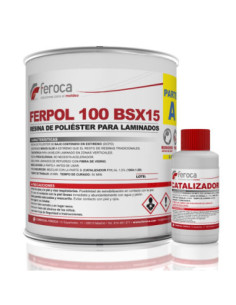 Ferpol 100 BSX15 DCPD
Pre-accelerated polyester for laminates, low styrene.
Ferpol 100 BSX15 DCPD
Pre-accelerated polyester for laminates, low styrene.
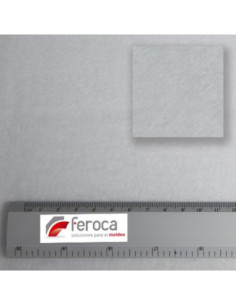 Fibreglass Surface Veil 34 g/m²
Fine finish layer over foam or mat.
Fibreglass Surface Veil 34 g/m²
Fine finish layer over foam or mat.
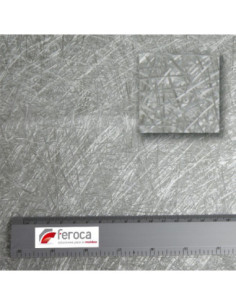 Fibreglass Mat 300 g/m²
Structural reinforcement in laminates over set pieces.
Fibreglass Mat 300 g/m²
Structural reinforcement in laminates over set pieces.
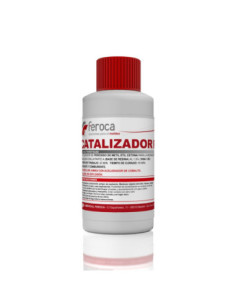 Catalizador F11
Initiates the curing of polyester resin.
Catalizador F11
Initiates the curing of polyester resin.
Polyurethane rubbers for texture moulds
Polyurethane rubber moulds are the key tool for reproducing natural textures on sets: rock walls, tree bark, earth floors, cobblestones or any organic surface. They are made by taking the mould directly from the original — a real stone, a log, a wall — and then applied to foam or resin pieces under pressure. Thixotropic rubbers allow you to brush the mould onto vertical surfaces without dripping.
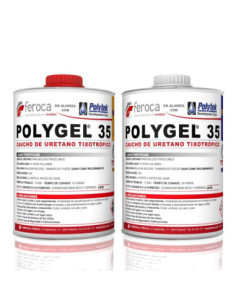 Polygel® 35
Brushable thixotropic rubber, ideal for vertical texture moulds.
Polygel® 35
Brushable thixotropic rubber, ideal for vertical texture moulds.
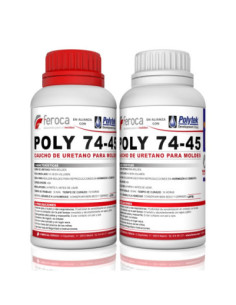 Poly 74-45
Shore A45, good tear resistance, casting moulds.
Poly 74-45
Shore A45, good tear resistance, casting moulds.
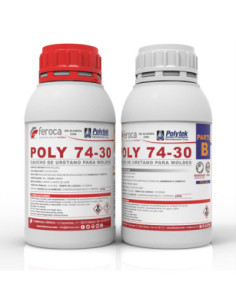 Poly 74-30
Shore A30, very soft, easy demoulding on complex geometries.
Poly 74-30
Shore A30, very soft, easy demoulding on complex geometries.
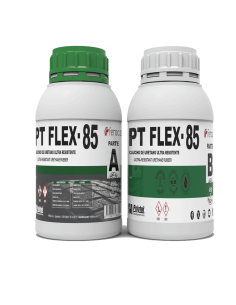 PT Flex 85
Shore 85A, ultra-resistant for heavy-use moulds.
PT Flex 85
Shore 85A, ultra-resistant for heavy-use moulds.
Plaster and burlap for set design
Plaster remains a fundamental material in set design and theatrical décor: it allows you to build organic shapes by hand, reinforce structures with burlap and achieve surfaces that perfectly mimic stone or render. Plaster bandages are especially useful for creating terrain mock-ups, diorama bases and large-format elements quickly and cost-effectively.
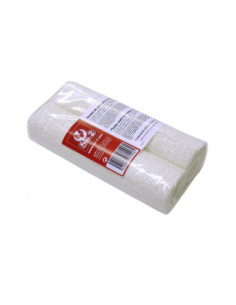 Vendas de Yeso Escayola Sio-2
Sets in 2-3 min, fast structure for set pieces.
Vendas de Yeso Escayola Sio-2
Sets in 2-3 min, fast structure for set pieces.
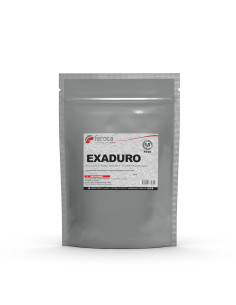 EXADURO
High Brinell resistance, moulds and counter-moulds for set design.
EXADURO
High Brinell resistance, moulds and counter-moulds for set design.
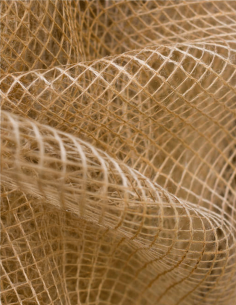 Arpillera
Jute reinforcement for large-format plaster structures.
Arpillera
Jute reinforcement for large-format plaster structures.
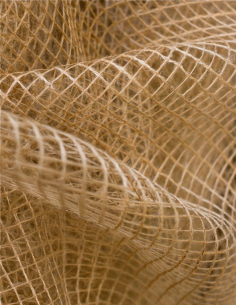 Arpillera Precortada
Ready-cut strips, quick reinforcement with plaster.
Arpillera Precortada
Ready-cut strips, quick reinforcement with plaster.
Release agents and auxiliaries
Whether you're working with polyurethane, fibreglass or plaster moulds, the right release agent is essential for extending mould life and getting pieces with a clean finish. Always apply the release agent before each pour, especially on new moulds where it's worth applying several coats.
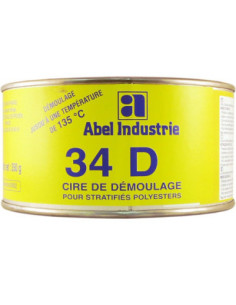 Desmoldeante 34D
Paste wax for rigid polyester moulds.
Desmoldeante 34D
Paste wax for rigid polyester moulds.
 ACMOS 82-2405
Silicone-free spray, compatible with polyester and polyurethane.
ACMOS 82-2405
Silicone-free spray, compatible with polyester and polyurethane.
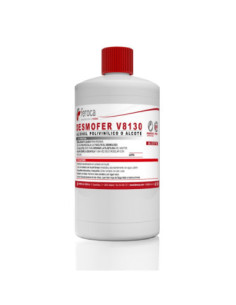 Alcohol Polivinílico PVA
Thin film between mould and piece, clean demoulding.
Alcohol Polivinílico PVA
Thin film between mould and piece, clean demoulding.
Pigments and finishes
To mass-colour polyurethane resins and give the piece a base tone before painting, translucent pigments are the cleanest solution. They let you adjust the colour precisely and reduce the painting work afterwards on pieces produced in series.
 UltraColor
Translucent dyes for polyester, epoxy and polyurethane.
UltraColor
Translucent dyes for polyester, epoxy and polyurethane.
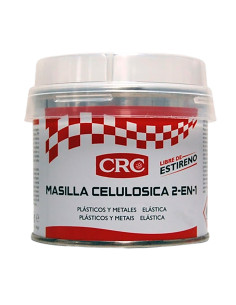 CRC Masilla Celulósica
Fine finish, filling cracks and surface defects.
CRC Masilla Celulósica
Fine finish, filling cracks and surface defects.
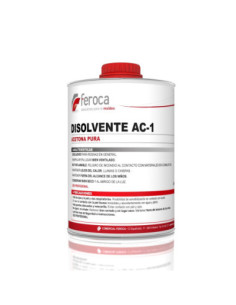 AC-1 Acetona
Tool cleaning and thinning of polyester resins.
AC-1 Acetona
Tool cleaning and thinning of polyester resins.
Frequently asked questions about theming and set design
Which foam is best for carving large-format set pieces like rock walls or logs?
For hand carving with a craft knife or gouges, PolyFoam R-5 and PolyFoam R-8 are the most suitable because they have a fine, uniform cell that doesn't crumble when cut. If you need greater surface hardness and can accept a slightly higher weight, EASYFOAM 300 offers a higher density (250–450 kg/m³) and a Shore 40-50D hardness that makes fine detail work easier. In any case, once the piece is carved it's a good idea to protect it with a coat of polyester resin or a polyurethane rubber to prevent the foam from getting damaged with use.
How do you waterproof a polyurethane foam piece for outdoor use?
The most common and cost-effective system is to laminate over the foam with Ferpol 100 BSX15 polyester resin and 300 g/m² fibreglass mat. Two or three coats are applied, alternating veil and mat until the desired thickness is achieved. This coating creates a rigid, waterproof shell that also protects the foam from impacts and UV radiation. Before applying the resin to polyurethane foam, make sure the surface is clean and dry; if the foam has open cells, apply a very diluted primer coat first to seal it. For exteriors with prolonged sun exposure, apply a gelcoat or specific polyurethane paint as the final finish.
Which polyurethane rubber should I use to take texture moulds directly from a real wall or stone?
It depends on the orientation of the surface. If the wall is vertical, you need a thixotropic rubber such as Polygel® 35, which you can brush on without it dripping and build up the thickness in several coats. If you can lay the original piece horizontally, Poly 74-30 or Poly 74-45 are good casting options: you pour them directly over the original and get a flat mould in a single operation. In both cases, apply a release agent to the original surface before pouring the rubber — even over stone or concrete — to make demoulding easier without damaging the mould.
Can I use integral-skin foam to build parade heads or figures that will be handled and transported frequently?
Yes, that's precisely one of the most common uses of SKINFOAM 350. The integral skin that forms in contact with the mould is resistant to abrasion and light impacts, and the flexible interior acts as a shock absorber. For parade heads that need to withstand washing or heavy friction, you can reinforce the outer skin with a thin coat of flexible polyurethane paint. If the piece needs to be black without painting, SKINFOAM 350 BLACK gives you that skin colour straight out of the mould. Bear in mind that to get a good integral skin the mould needs to be well heated (between 35 and 50 °C) before pouring the foam.
Which polyurethane resin should I use to produce accessories and small figures in series for a themed installation?
For series production with polyurethane rubber moulds, the EasyFlo family of resins are the most practical thanks to their 1:1 mix by volume and fast cure. EasyFlo 60 demoulds in 15–30 minutes and gives a bright white piece ready to paint. If you need more working time for complex pieces, EasyFlo 90 gives you 5 minutes. For pieces that will take strong impacts, the semi-rigid EasyFlo 120 is the best option because it combines rigidity with impact resistance. In all cases, apply ACMOS 82-2405 spray release agent or 34D wax to the mould before each pour to extend its useful life.