Shopping Cart



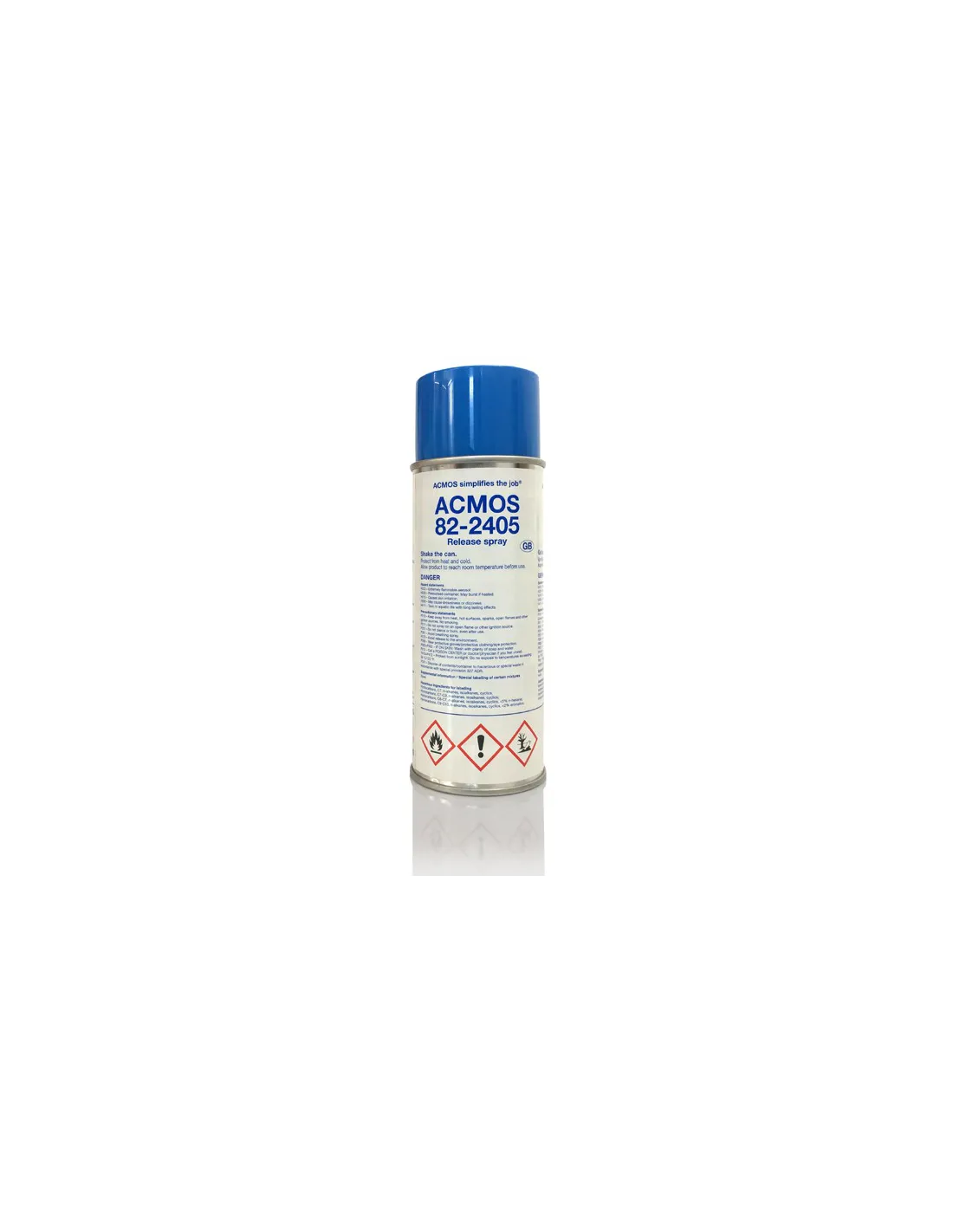
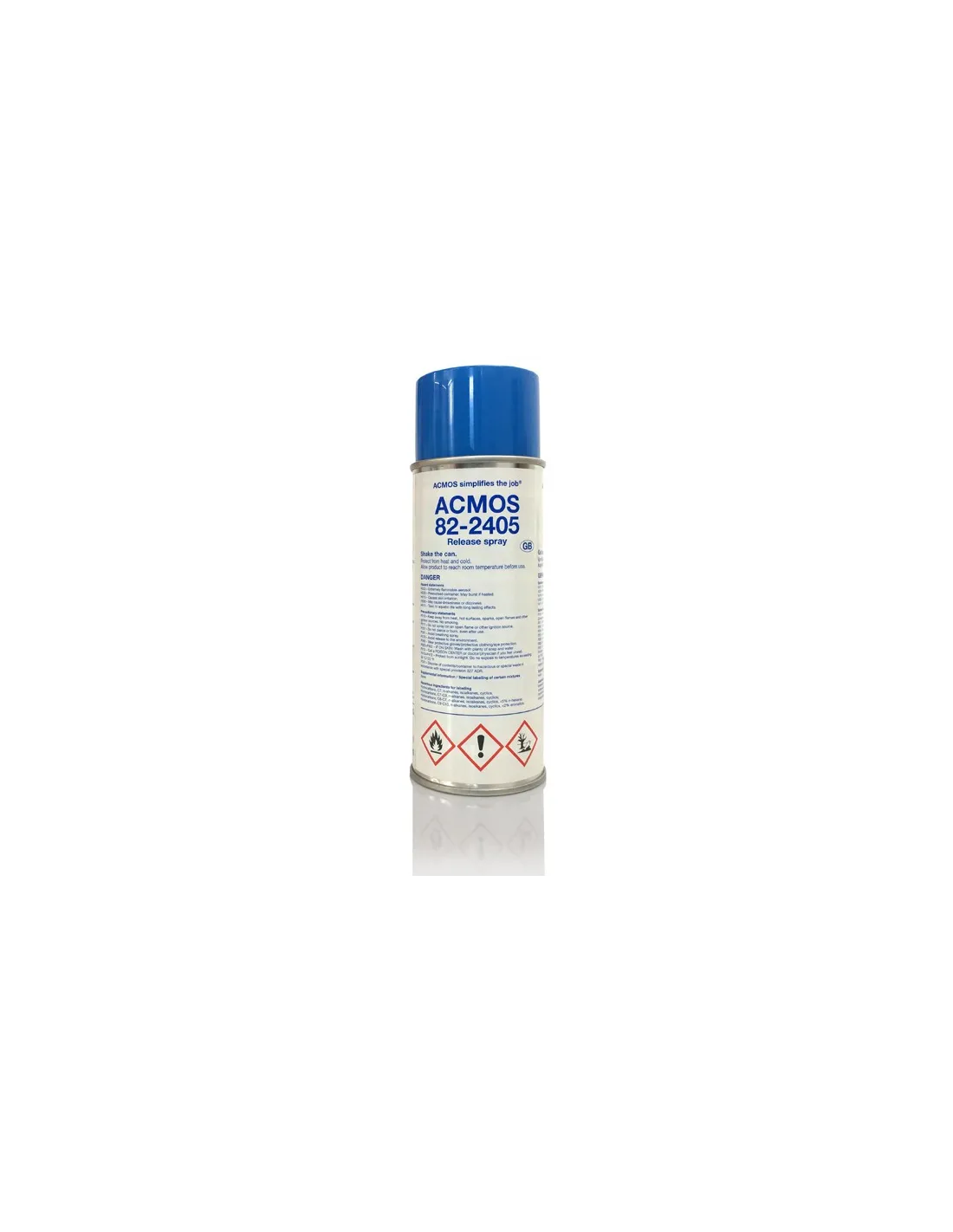
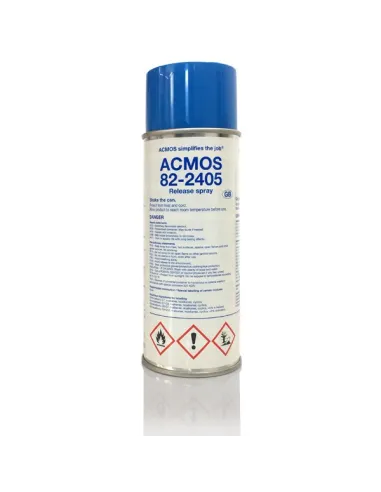
ACMOS 82-2405 -Wax spray release agent-
303250000
€17.00
20,57 € Tax incl.
20,57 € Tax incl.
This product cannot be shipped by air. To the Balearic Islands it is sent by sea freight. For deliveries to the Canary Islands, please contact us before ordering.
Wax-based spray release agent, silicone-free and CFC-free. Compatible with polyester, epoxy, PMMA and polyurethanes. Matte, washable finish. 340 g.
ACMOS 82-2405 is a wax-based aerosol release agent, free from silicones and CFC propellants, designed to ensure clean demolding from polyester, epoxy resin, PMMA and polyurethane moulds. Its formula leaves a matte finish without transferring contaminants to the part, making it especially suitable when the final piece is to be painted, coated or bonded afterwards. Cost-effective, reliable and suited to both professional workshops and serial production.
Technical specifications
| Property | Value |
|---|---|
| Type | Wax-based aerosol release agent |
| Presentation | Spray / aerosol |
| Net content | 340 g |
| Silicones | Silicone-free |
| CFC propellants | CFC-free |
| Finish | Matte |
| Washability | Washable |
| Compatibility | Polyester, epoxy resins, PMMA, polyurethanes |
| Storage temperature | 10 °C – 30 °C |
What it is used for
ACMOS 82-2405 is designed for any laminating, casting or moulding process where clean demolding is required without the risk of silicone contamination. Wax does not migrate to the part the way silicone would, making it the right choice whenever the piece will undergo post-processing.
- Demolding of polyester resin laminates from fibreglass or gel coat moulds.
- Demolding of parts cast with casting resins in rigid moulds.
- Mould protection in epoxy resin composite laminates.
- Moulding of transparent PMMA (acrylic) parts.
- Serial production of polyurethane parts: castings, rigid or flexible foams.
- Building and conditioning new moulds before first production run.
- Mould maintenance between production runs.
How to use it
- Clean the mould — Make sure the mould surface is clean, dry and free from previous casting residue, dust or grease.
- Shake the can — Shake the spray can well for a few seconds before use to homogenise the formulation.
- Apply at the correct distance — Spray from a distance of 25–30 cm, using smooth, continuous movements to cover the entire mould cavity.
- Allow to dry — Wait for the wax layer to dry completely before pouring or laminating. Under normal workshop conditions, a few minutes are sufficient.
- Apply multiple coats on new moulds — For moulds being used for the first time, apply 3–4 successive coats, allowing each one to dry before the next. This saturates the mould surface and ensures clean release during the first production runs.
- Reapply between runs — In serial production, apply a fresh coat every 3–5 cycles or whenever you notice demolding becoming more difficult.
- Demold carefully — Once the part has cured, demold as normal. The wax layer allows clean release without sticking.
Tips for use
New moulds: saturate the surface properly
A new mould has a porous surface that absorbs wax during the first applications. Do not skimp on the initial coats: apply at least 3–4 layers, allowing each one to dry completely. If you skip this step and start producing too soon, the part may stick and damage the mould. Once the mould is broken in, a single maintenance coat between runs will be enough.
Silicone-free: the part is ready to paint or bond straight away
One of the key advantages of ACMOS 82-2405 over silicone-based release agents is that it does not contaminate the part surface. Silicones create an invisible film that prevents the adhesion of paints, adhesives or coatings, requiring a degreasing process afterwards. With this product, the part comes out ready for finishing. If you need to polish the part after demolding, you can use fine polishing compound or coarse polishing compound depending on the finish level you need.
Storage and basic safety
Store the can upright, away from heat sources and direct sunlight, between 10 °C and 30 °C. As an aerosol, never puncture or incinerate the can even when empty. Work in well-ventilated areas and wear gloves if handling the product intensively.
Frequently asked questions
Why is it important to use a silicone-free release agent?
Silicones leave a film on the part surface that interferes with the adhesion of paints, varnishes, adhesives and coatings. If the part is to receive any post-processing, a silicone-based release agent requires an additional cleaning step that is not always sufficient. ACMOS 82-2405 uses wax as the release agent, which does not migrate to the part and does not compromise subsequent adhesion.
How many coats should I apply to a new mould?
On new moulds, apply 3 to 4 successive coats, allowing each one to dry completely before the next. The first uses of the mould absorb some wax into the surface pores, and if not properly saturated, the part may stick. Once the mould is broken in, a maintenance coat every 3–5 cycles is usually sufficient.
Which resins is this release agent compatible with?
ACMOS 82-2405 is compatible with polyester resins (laminating, casting and transparent), epoxy resins, PMMA and polyurethanes. It is not intended for silicones, as these typically release by virtue of their own non-stick properties and do not require an external release agent.
Can I use this release agent on fibreglass moulds?
Yes. Fibreglass moulds with gel coat are one of the most common applications for this product. ACMOS 82-2405 is applied to the mould gel coat before laminating with polyester or epoxy resin, protecting the mould surface and ensuring clean release without damage.
How often should the release agent be reapplied?
In serial production, one coat every 3–5 cycles is usually sufficient on already-saturated moulds. If you notice that demolding starts to require more force or that the part is sticking in certain areas, apply a fresh coat before the next cycle. Do not wait until the problem becomes serious: the mould can be damaged if the part has to be forced out.
Does the release agent affect the surface finish of the part?
ACMOS 82-2405 leaves a matte finish on the part. If you need a glossy finish, make sure the mould itself has a gloss finish and that the release agent coat is thin and even. Too thick a coat can cause surface irregularities. If the part needs to be polished after demolding, you can use specific polishing compounds to achieve the desired level of gloss.
Is it safe to use this product in enclosed spaces?
As an aerosol, it generates airborne particles during application. Always work in well-ventilated spaces or with extraction. Wear gloves if handling the product intensively. The can contains no CFC propellants, so its environmental impact in that regard is reduced, but it is still a flammable aerosol: keep it away from flames and heat sources.
How long does it take to dry before pouring the resin?
Under normal workshop conditions (20–25 °C), the wax layer dries within a few minutes. There is no need to wait a long time: once the surface no longer feels wet to the touch (without touching it directly to avoid contamination), it is ready for pouring or laminating.
No reviews
Tap to zoom