Shopping Cart


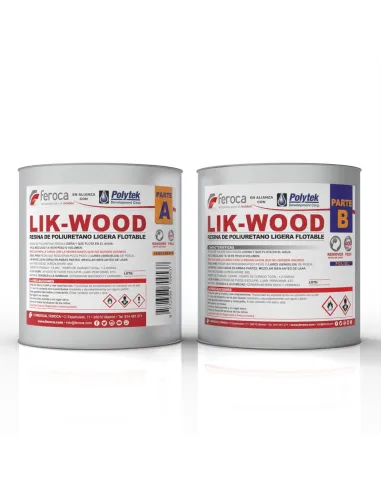
Lik-Wood -Lightweight resin with buoyancy-
432016101
Temporarily out of stock
€25.00
30,25 € Tax incl.
30,25 € Tax incl.
Lightweight polyurethane resin that floats on water. 1:1 mix ratio, 65D hardness, 5-6 min pot life. Ideal for fishing lures and low-weight prototypes.
Lik-Wood is a low-density rigid polyurethane resin (0.63 g/cm³) that floats on water and weighs 60% less than conventional urethane systems. With a manageable viscosity, fast cure and wood-like behaviour once cured, it is the ideal option when weight is a critical factor in part design.
Technical specifications
| Parameter | Value |
|---|---|
| Application | Casting |
| Mix ratio (weight) | 100A : 100B |
| Mix ratio (volume) | 100A : 100B |
| Pot life | 5-6 min. |
| Cure time | 1-2 hours |
| Shore Hardness | 65D |
| Colour | Cream |
| Mixed viscosity | 700 cP |
| Specific gravity | 0.63 g/cm³ |
| Heat resistance | 56 °C |
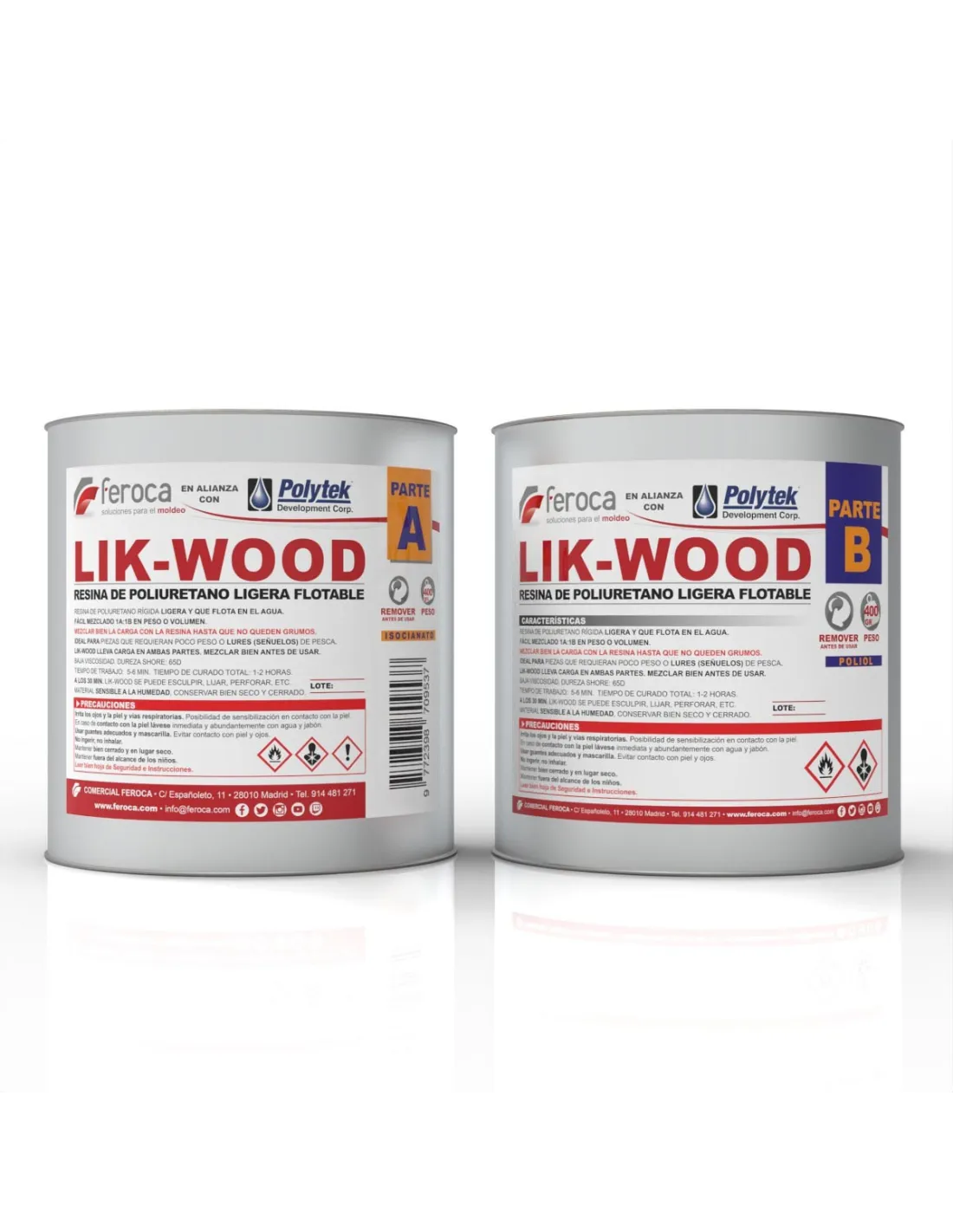
| Presentation | 800 g (400 g A + 400 g B) |
What it is used for
Thanks to its density below 1 g/cm³, Lik-Wood produces parts that float on water and can be machined (sanded, carved, drilled, filed) from 30 minutes after casting. Its rigidity and surface texture similar to wood make it a versatile material for multiple sectors:
- Lightweight, machinable fishing lures
- Composite part cores to reduce weight
- Lightweight backing for laminates and surface layers
- Low-density models, patterns and prototypes
- Temporary moulds and working tools
- Bases for craft or light industrial production models
- Decorative parts requiring low structural weight
How to use it
- Prepare the mould: make sure the mould is clean and dry. Apply a suitable release agent to the mould cavity to aid demoulding, especially if it is rigid.
- Condition the components: bring both parts (A and B) to room temperature (ideally 20-25 °C). Stir each component separately before measuring.
- Weigh or measure the components: mix at a ratio of 100A:100B, both by weight and by volume. Use a precision scale or graduated containers.
- Mix: pour component B into A and stir vigorously and continuously for at least 30 seconds, scraping the sides and bottom of the container. Pot life is 5-6 minutes, so work quickly.
- Pour into the mould: cast the mixture into the mould in a continuous, steady stream to minimise air entrapment. You can tilt the mould during pouring.
- Cure: allow to cure at room temperature for 1 to 2 hours. After 30 minutes the part is already machinable, although full cure is reached within that time range.
- Demould and finish: carefully remove the part. You can now sand, carve, drill or paint it according to the intended use.
Warning: Lik-Wood is a two-component polyurethane resin. Avoid contact of uncured components with ambient moisture or water, as the isocyanate (part A) reacts with moisture and may generate bubbles or affect the cure. Close containers tightly after each use and work in a dry environment. Consult the safety data sheet before use. Wear nitrile gloves, safety glasses and ensure adequate ventilation.
Usage tips
Temperature and bubbles
Lik-Wood's viscosity (700 cP) is quite fluid, which makes pouring easy, but also means the mixture can entrap air readily if stirred excessively or with abrupt circular movements. Mix with slow figure-of-"8" movements during the last 10 seconds. If you have access to a vacuum chamber, degas the mixture for 60-90 seconds before pouring to obtain void-free parts.
Machining and finishing
One of Lik-Wood's key advantages is that just 30 minutes after casting you can start working the part with hand or power tools. For fishing lures, work the final shape with 80-120 grit sandpaper and finish with 220-400 grit before painting. It accepts acrylic paints, polyurethane lacquers and epoxy coatings very well. If you want to add colour in mass, use pigments specifically for polyurethane compatible with two-component systems.
Recommended moulds
Lik-Wood can be cast into silicone moulds, polyurethane moulds or rigid moulds with a release agent. For fishing lures with complex shapes, condensation silicone moulds offer the best demoulding without the need for additional release agent. If you use rigid moulds (resin, wood, metal), always apply a release agent before each casting.
Frequently asked questions
Why does this resin float on water?
Lik-Wood has a specific gravity of 0.63 g/cm³, lower than water (1 g/cm³). This is achieved through the specific formulation of its polyurethane components, which generate a microporous internal structure during cure. The result is a rigid yet lightweight part that floats naturally.
Can I use this resin to make functional fishing lures?
Yes, that is precisely one of its main uses. Lik-Wood produces parts with 65D hardness, natural buoyancy and ease of machining — three key characteristics for lure making. Once cured, the part can be sanded, carved and painted to achieve the desired final finish.
How much working time do I have before it starts to cure?
Lik-Wood's pot life is 5-6 minutes from the moment the two components are mixed. After that time the mixture starts to thicken and no longer flows properly. Prepare the mould and all equipment before mixing, and work quickly once the reaction has started.
When can I demould and start machining the part?
From 30 minutes after casting, Lik-Wood already has enough rigidity to be machined (sanded, carved, drilled). Full cure is reached between 1 and 2 hours at room temperature. For applications requiring maximum strength, wait for full cure before subjecting the part to stress.
Can this resin be coloured?
Yes. You can incorporate pigments compatible with polyurethane systems directly into the mixture before pouring. Bear in mind that some colourants can slightly shorten the pot life, especially if they contain moisture or solvents. Run a test beforehand with the amount of pigment you intend to use.
What type of mould is most suitable for this resin?
Silicone moulds offer the best demoulding without the need for additional release agents. You can also use rigid moulds (resin, wood, metal or plaster) provided you apply a compatible release agent before each casting. For complex shapes with undercuts, flexible silicone moulds are the preferred option.
Does the resin accept paint or surface coatings?
Yes. Once cured and machined, Lik-Wood accepts acrylic paints, two-component polyurethane lacquers and epoxy coatings without the need for a special primer in most cases. For best results, lightly sand the surface (220 grit) before painting to improve adhesion.
What is the difference between this resin and a conventional rigid polyurethane resin?
The main difference is density. A conventional rigid resin such as Feropur PR55+E55 has a density above 1 g/cm³ and produces parts that sink in water. Lik-Wood, at 0.63 g/cm³, weighs 60% less and floats. This makes it unique for applications where low weight or buoyancy are essential.
- Color
- Cream
- Working Time
- 5-6 min.
- Curing Time
- 1-2horas
- Shore Hardness
- 65D
- Volume Mixing Ratio
- 100A:100B
- Mixed Weight Ratio
- 100A:100B
- Application
- Casting
No reviews
Tap to zoom