
Shopping Cart

The hyperrealism in silicone process
Reproducing believable synthetic skin involves three overlapping layers of work: intrinsic pigmentation mixed into the mass before pouring, building the body of the piece with an elastomer of suitable hardness, and the surface finish with silicone-based paint. Each phase has its own materials and requires different technical decisions.
1. Capturing the shape: lifecast and human body moulds
Before pouring the finishing silicone you need a precise mould. In hyperrealism the original is usually the human body itself, so self-releasing silicones with very fast cure times are used — ones that don't irritate the skin or trap hair. The quality of the mould directly determines the level of detail in the positive.
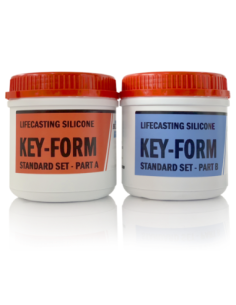 KEY-FORM
Self-releasing silicone specifically designed for body lifecasting.
KEY-FORM
Self-releasing silicone specifically designed for body lifecasting.
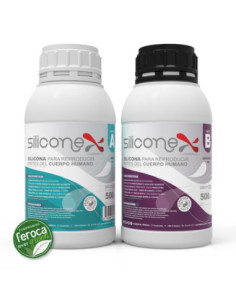 Silicone X
Shore A25, 1:1 ratio, for cloning body parts.
Silicone X
Shore A25, 1:1 ratio, for cloning body parts.
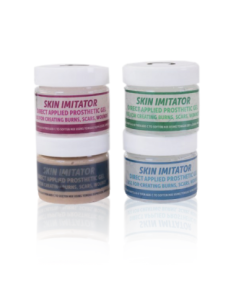 Skin Imitator
Skin-safe adhesive silicone, cures in 5–7 min.
Skin Imitator
Skin-safe adhesive silicone, cures in 5–7 min.
Ultra-low hardness platinum silicones for synthetic skin
The Shore 00 hardness family is the backbone of hyperrealism. These elastomers offer exceptional translucency, deformation and recovery similar to human tissue, and accept large proportions of pigment without affecting the cure. They are the reference materials for encapsulated FX prosthetics, Reborn figures, silicone dolls and animatronic pieces.
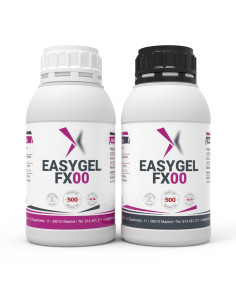 EasyGel FX00
Shore 00-30, translucent, specifically for FX prosthetics and Reborn.
EasyGel FX00
Shore 00-30, translucent, specifically for FX prosthetics and Reborn.
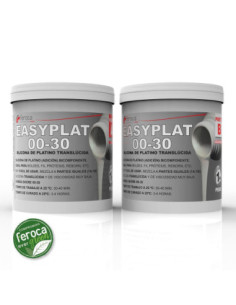 EASYPLAT 00-30
Shore 00-30 translucent, 1:1 ratio, very low viscosity.
EASYPLAT 00-30
Shore 00-30 translucent, 1:1 ratio, very low viscosity.
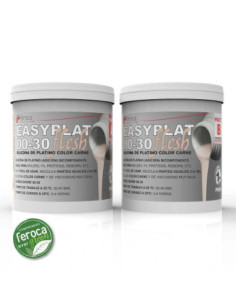 EASYPLAT FLESH 00-30
Same as the 00-30 but in a base flesh tone.
EASYPLAT FLESH 00-30
Same as the 00-30 but in a base flesh tone.
 PlatSil Gel-0020
Shore 00-20, 40 min working time, for large-volume pieces.
PlatSil Gel-0020
Shore 00-20, 40 min working time, for large-volume pieces.
Shore 00 or Shore A? The Shore 00 scale is used for extremely soft materials: a Shore 00-30 is roughly equivalent to Shore A3. If you need a piece with a bit more structural consistency — prosthetic edges, mask walls — use the Shore A10–A20 range silicones you'll find in the next section.
Shore A10–A25 platinum silicones for prosthetics and FX moulds
When a piece needs to withstand heavy handling, be applied repeatedly or serve as a production mould, Shore A10 to A25 hardnesses are used. They maintain the translucency needed for the skin effect and allow you to build encapsulated prosthetics with layers of different hardness — softer on the inside, firmer at the transition edge.

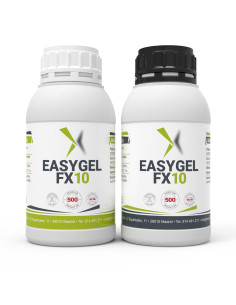 EasyGel FX10
Shore A10 translucent, 35 min working time, for FX prosthetics.
EasyGel FX10
Shore A10 translucent, 35 min working time, for FX prosthetics.
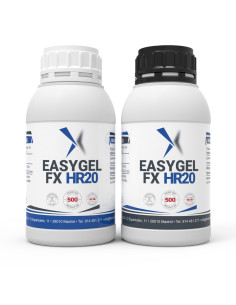 EasyGel FX HR20
Shore A20, cures in 25 min, high tear resistance.
EasyGel FX HR20
Shore A20, cures in 25 min, high tear resistance.
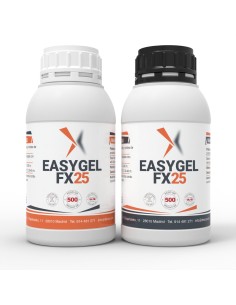 EasyGel FX25
Shore A25 translucent, 1:1 ratio, for FX moulds and prosthetics.
EasyGel FX25
Shore A25 translucent, 1:1 ratio, for FX moulds and prosthetics.
 PlatSil 73-15
Shore A15 translucent, 20 min working time, classic FX reference.
PlatSil 73-15
Shore A15 translucent, 20 min working time, classic FX reference.
Other translucent platinum silicones of interest
Depending on the project you may need longer working times, different viscosities or intermediate hardnesses. This selection complements the main range to cover specific production situations.
 PlatSil Gel-00
Shore 00-30, 6 min working time, for small pieces and details.
PlatSil Gel-00
Shore 00-30, 6 min working time, for small pieces and details.
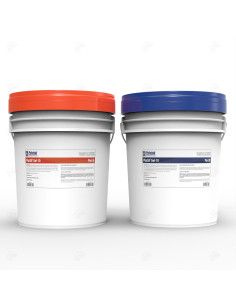 PlatSil Gel-10
Shore A10 translucent, ideal for encapsulated prosthetics.
PlatSil Gel-10
Shore A10 translucent, ideal for encapsulated prosthetics.
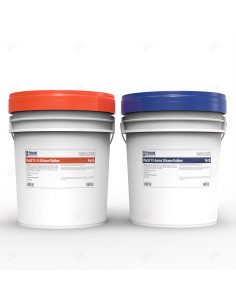 PlatSil FS-10
Shore A13 translucent, 1:1 ratio, fast cure in mould.
PlatSil FS-10
Shore A13 translucent, 1:1 ratio, fast cure in mould.
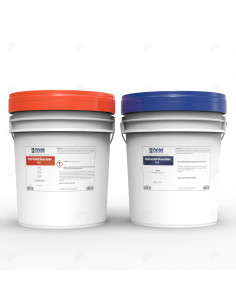 PlatSil Gel-0030
Shore 00-30, 45 min working time, for large-format castings.
PlatSil Gel-0030
Shore 00-30, 45 min working time, for large-format castings.
Deadener: adjusting hardness and texture in silicone
Deadener is a liquid additive miscible with EasyGel FX platinum silicones that reduces the final hardness and modifies the texture of the material towards a more "dead" or gelatinous feel, identical to human adipose tissue. It is incorporated directly into the mix before pouring.
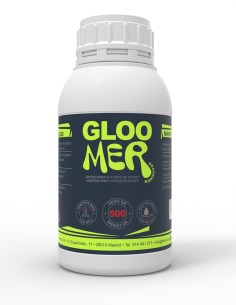 Gloomer Deadener
Intrinsic pigmentation: colour mixed into the mass
Intrinsic pigmentation involves mixing silicone-compatible pigments directly into the components before curing. It is the fundamental technique of hyperrealism: the colour lives inside the piece, not just on its surface, reproducing the chromatic depth of real skin. It is worked in layers of different tones — dermis, hypodermis, veins — poured successively.
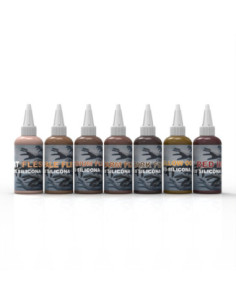 DYE PLAT - FLESH TONES
Concentrated flesh tones for intrinsic skin pigmentation.
DYE PLAT - FLESH TONES
Concentrated flesh tones for intrinsic skin pigmentation.
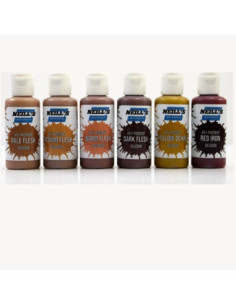 Key-Pigments
Created by Neill Gorton for film and TV FX prosthetics.
Key-Pigments
Created by Neill Gorton for film and TV FX prosthetics.
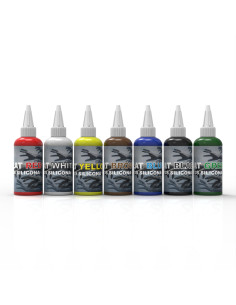 DYE PLAT - FX
Concentrated liquid pigments for the entire silicone range.
DYE PLAT - FX
Concentrated liquid pigments for the entire silicone range.
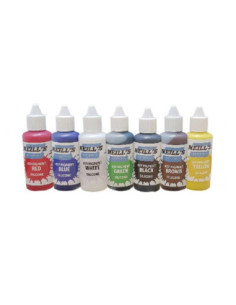 Silicone Pigments
Wide range, compatible with platinum and tin silicones.
Silicone Pigments
Wide range, compatible with platinum and tin silicones.
Flocking: capillaries and veins beneath the skin
Flocking is a polyamide microfibre additive that, mixed in small proportions into translucent silicones, simulates the capillary and venous network visible beneath the skin. It is the essential complement to mass pigmentation for taking figures, prosthetics and dolls to the next level of realism.
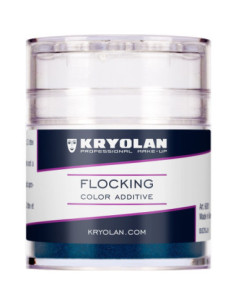 Flocking Colour Additive
Polyamide microfibres to simulate capillaries in translucent silicone.
Flocking Colour Additive
Polyamide microfibres to simulate capillaries in translucent silicone.
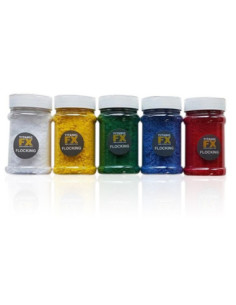 Titanic Fx Flocking — 5-colour Pack
Try all 5 flocking colours in a single pack.
Titanic Fx Flocking — 5-colour Pack
Try all 5 flocking colours in a single pack.
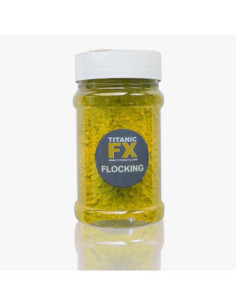 Titanic Fx Flocking — Yellow
Yellow tone for lymphatic vessels and subcutaneous undertones.
Titanic Fx Flocking — Yellow
Yellow tone for lymphatic vessels and subcutaneous undertones.
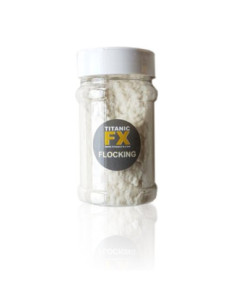 Titanic Fx Flocking — White
White fibres to lighten mixes and add a soft opacity.
Titanic Fx Flocking — White
White fibres to lighten mixes and add a soft opacity.
Silicone-based surface paint
Once the piece has cured, surface finishes — pigmented pores, spots, blush, surface veins — are applied with silicone-based paint. This type of paint bonds chemically to the silicone substrate, preventing the flaking that acrylic or alcohol-based paints suffer. The Plat-Paint New base is specially formulated for platinum silicones.
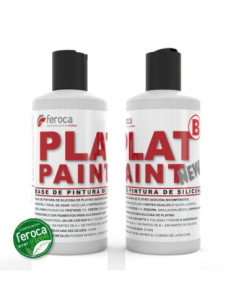 Plat-Paint New
Two-component silicone paint base for prosthetics and figures.
Plat-Paint New
Two-component silicone paint base for prosthetics and figures.
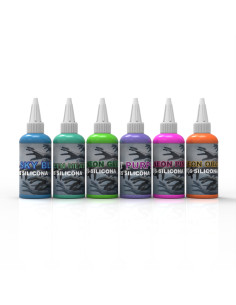 DYE PLAT FANTASY
Vibrant colours for surface painting of fantasy effects.
DYE PLAT FANTASY
Vibrant colours for surface painting of fantasy effects.
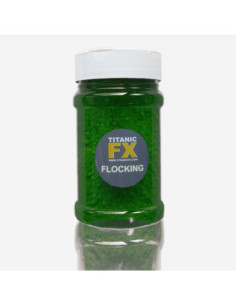 Titanic Fx Flocking — Green
Green fibres for surface veins mixed into paint.
Titanic Fx Flocking — Green
Green fibres for surface veins mixed into paint.
Silicones for hyperrealism: quick selection table
| Product | Shore Hardness | Working Time | Translucency | Main Use |
|---|---|---|---|---|
| EasyGel FX00 | 00-30 | 35 min | High | FX prosthetics, Reborn, inner skin layer |
| EASYPLAT 00-30 | 00-30 | 30–40 min | High | FX, animatronics, silicone figures |
| EASYPLAT FLESH 00-30 | 00-30 | 30–40 min | Medium (flesh tone) | Unpigmented flesh base, Reborn |
| PlatSil Gel-0020 | 00-20 | 40 min | High | Large-volume pieces, soft tissue |
| PlatSil Gel-0030 | 00-30 | 45 min | High | Castings, large formats |
| EasyGel FX10 | A10 | 35 min | High | FX prosthetics, edge layers |
| PlatSil 73-15 | A15 | 20 min | High | Encapsulated prosthetics, film FX |
| EasyGel FX HR20 | A20 | 10 min | High | Series production, fast cure |
| EasyGel FX25 | A25 | — | High | FX moulds and durable prosthetics |
| KEY-FORM | — | — | — | Lifecasting, mould on skin |
Frequently asked questions about silicone hyperrealism
What Shore hardness is most suitable for reproducing human skin?
Human skin has an approximate hardness of Shore 00-20 to Shore 00-30 depending on the body area and the thickness of the underlying adipose tissue. For figures and prosthetics that are seen but not handled intensively, Shore 00-30 is the most common range. For pieces that are handled or applied repeatedly, Shore A10–A15 offers greater durability while maintaining a very soft feel.
How do I correctly mix pigment into the mass?
Add the pigment to component A before incorporating component B. Stir with a spatula until the colour is completely homogeneous. Then add component B in the indicated ratio and mix again. If you're using highly concentrated pigments like DYE PLAT or Key-Pigments, work with minimal amounts: just a few drops are enough to colour several kilograms of silicone. Don't exceed 3% of the total weight to avoid affecting the cure.
What is flocking for and how is it used?
Flocking simulates the network of capillaries and small veins visible beneath translucent skin. It is added in very small quantities — less than 0.5% by weight — to the translucent silicone mix before pouring. The microfibres remain suspended in the elastomer and, once cured, create a fine grain that imitates the subdermal appearance. It is best used in an inner layer of the piece, not the surface layer.
What is the difference between intrinsic pigmentation and surface painting?
Intrinsic pigmentation is the colour mixed into the silicone mass before curing. It provides depth, translucency and the vivid colour effect characteristic of hyperrealism. Surface painting, applied with Plat-Paint New and silicone pigments, adds fine details to the outer layer: pores, spots, blush, surface veins. In a professional hyperrealistic piece both techniques are combined.
What is a deadener and when should I use it?
A deadener is an additive that lowers the effective hardness of the silicone and modifies its texture towards a more gelatinous and "dead" feel, similar to adipose tissue. It is used when you need a piece even softer than Shore 00-30, or when you want different parts of the same figure to have different mechanical behaviours. Gloomer Deadener is specifically formulated for the EasyGel FX range.
Does silicone paint peel off over time?
Silicone-based paint such as Plat-Paint New bonds to the platinum silicone substrate through chemical affinity, so its adhesion is incomparably superior to that of alcohol or acrylic paints. With normal use and proper storage, the paint does not flake. However, platinum silicones are incompatible with organic solvents, so avoid contact with acetone or isopropyl alcohol on painted pieces.
Can the cure of platinum silicone be inhibited by contamination?
Yes. Platinum silicones are sensitive to contaminants that inhibit the catalyst: latex, sulphur-containing clays, organic tin, some cyanoacrylate adhesives and residues from condensation catalysts. Before pouring onto any mould or surface, always carry out a compatibility test with a small amount of silicone. If the cure is not complete within the indicated time, the most likely cause is inhibition by a contaminant.