Shopping Cart



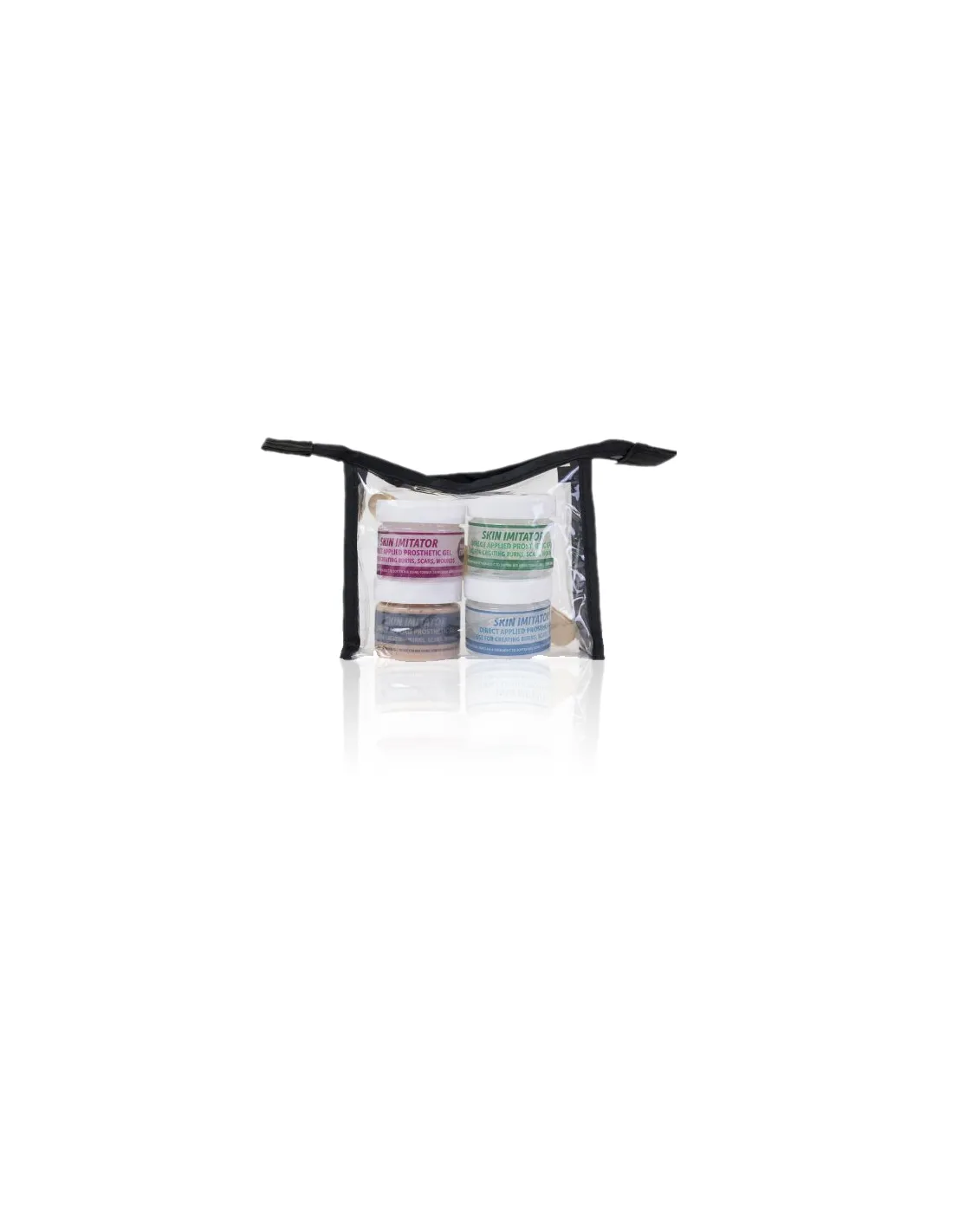
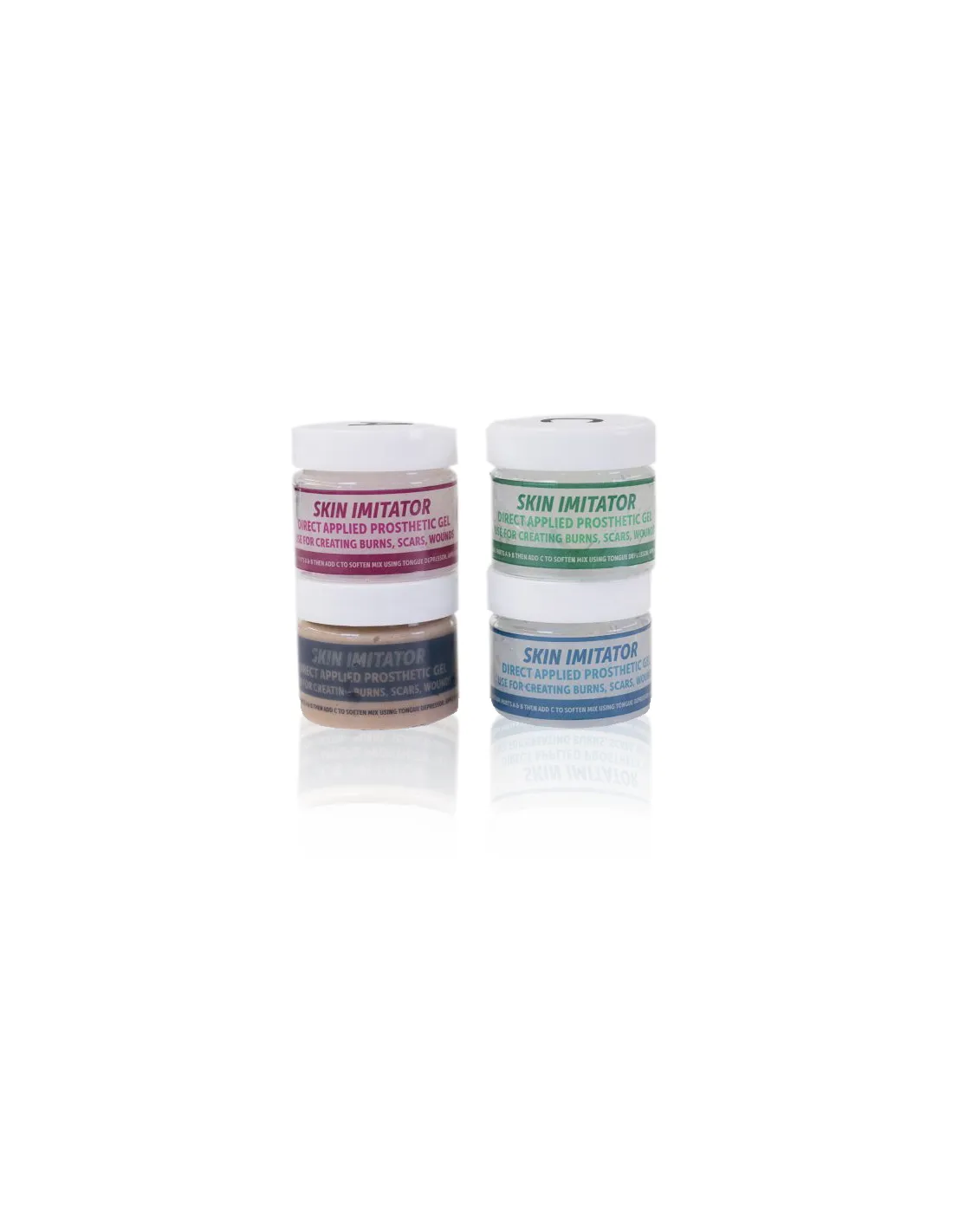
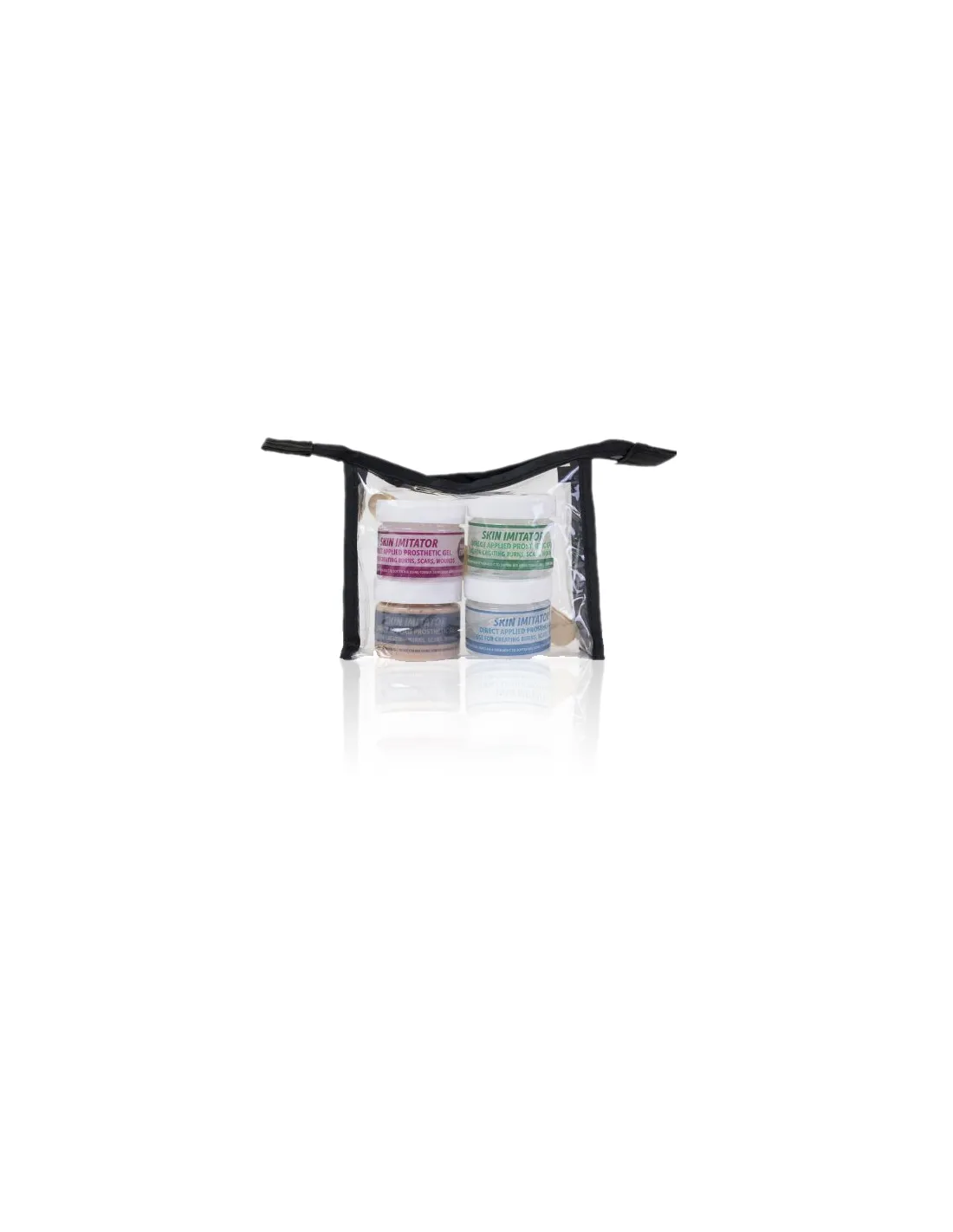
Skin Imitator -Silicone adhesive for make-up effects-
590160001
€35.00
42,35 € Tax incl.
42,35 € Tax incl.
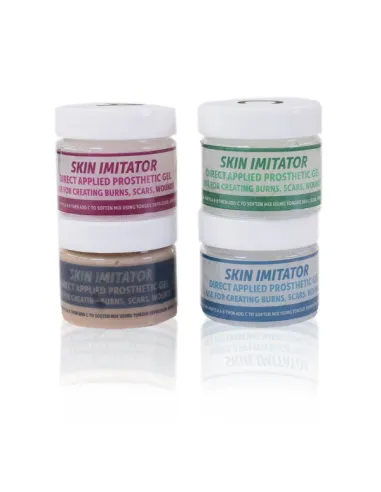
Skin-safe adhesive platinum silicone, cures in 5-7 min. 200 ml kit with clear base, flesh base, catalyst and thinner for SFX effects.
Skin Imitator is an adhesive platinum silicone formulated by SculptGel to create makeup effects directly on skin: open wounds, scars, burns, lacerated skin and all kinds of prosthetic effects in direct contact. The 200 ml kit includes two bases (clear and flesh), a common catalyst and a thinner to adjust fluidity, with a cure time of just 5-7 minutes on skin.
Technical specifications
| Parameter | Value |
|---|---|
| Silicone type | Platinum (addition), skin-safe |
| Kit contents | Clear base, flesh base, catalyst, thinner |
| Total volume | 200 ml |
| Cure time on skin | 5-7 minutes |
| Base A colour | Clear |
| Base B colour | Flesh (compatible with Key-Pigment Medium Flesh) |
| Suitable for skin use | Yes |
What it is used for
Skin Imitator is designed for makeup artists, special effects artists and professionals in the film and theatre industry who need to create realistic makeup effects applied directly onto the skin of an actor or model, with minimal working time and a very natural result. The flesh base is matched to Key-Pigment Medium Flesh to blend seamlessly with existing silicone prosthetics.
- Open wounds and realistic-looking lacerations
- Scars, keloids and aged skin
- Burn and blister effects
- Drips and viscous fluids using the included thinner
- Blending prosthetic edges directly onto skin
- Torn or peeled skin effects for film, theatre and photography
- Makeup effects for character competitions and events
How to use it
- Clean and thoroughly dry the area of skin where you will apply the effect. Any residue of oil, cream or sweat can inhibit adhesion.
- Decide which base to use: the clear one for very thin skin effects or overlays, and the flesh one for higher-volume effects that need to blend with the natural skin tone.
- Mix the chosen base with the catalyst in the ratio indicated by SculptGel. Stir well until a homogeneous mixture is obtained.
- If you need a drip effect or a more liquid texture, add the thinner included in the kit until the desired consistency is reached.
- Apply the mixture to the skin with a spatula, brush or directly with your finger depending on the effect you are after. Model quickly: you have between 1 and 3 minutes of working time before curing begins.
- Allow to cure for 5-7 minutes. Once cured, the silicone remains adhered to the skin in a flexible, movement-resistant way.
- Paint the effect with paints compatible with platinum silicone or with Collodion to accentuate areas of tension or scarring.
- To remove it, peel gently from the edges. No aggressive solvents are required.
Warning: platinum silicone inhibition
Skin Imitator is a platinum-cured (addition) silicone. Contact with certain substances can inhibit its cure, leaving the silicone tacky or uncured. Avoid contact with:
Skin Imitator is a platinum-cured (addition) silicone. Contact with certain substances can inhibit its cure, leaving the silicone tacky or uncured. Avoid contact with:
- Sulfur-based clays and modelling compounds (sulfur-based clays)
- Latex and latex-containing products
- Tin silicones (condensation) and moulds made with them
- Freshly cast or incompletely cured polyester resin
- Uncured epoxy resins
- Petroleum jelly and some mineral-based creams
- Some paints and urethane rubbers
Usage tips
Make the most of both bases for greater versatility
The clear base is ideal for thin layers that simulate taut skin or for creating translucent blister effects. The flesh base, calibrated to match Key-Pigment Medium Flesh, reduces subsequent makeup time and makes the transition between the prosthetic and real skin easier. You can mix both bases together to obtain intermediate tones or glazes.
Work at a stable ambient temperature
The 5-7 minute cure time is calculated at around 20-25 °C. In heat (film set with studio lights, a hot day, very warm skin), curing accelerates and working time decreases dramatically. If you need more manipulation time, work in a cool environment or apply the mixture onto the spatula before transferring it to the skin. In cold conditions the process slows down, which can be useful for complex effects.
Integration with silicone prosthetics
If you are integrating Skin Imitator with prosthetics made from PlatSil Gel-00 or other platinum silicones, make sure the prosthetic is fully cured before contact. To blend the edges of encapsulated prosthetics onto skin, consider using an encapsulant such as Key-Cap Plastic before applying Skin Imitator, which will improve the adhesion of the final makeup. Remember that Skin Imitator is NOT compatible with tin silicone moulds or surfaces such as EASYL 3520 or Silastic 3481, as tin inhibits the cure of platinum.
Frequently asked questions
What type of silicone is suitable for applying directly onto skin?
It must be a platinum silicone specifically formulated and tested for dermal contact, as industrial or tin silicones do not guarantee biocompatibility. Skin Imitator is designed exactly for this use: adhesive, flexible and with fast curing on skin.
Why has the silicone remained tacky or failed to cure?
The most common problem with platinum silicones like Skin Imitator is inhibition by contaminants. The most frequent culprits are sulfur-based clays, latex, tin silicones, petroleum jelly and some moisturising creams. Clean the skin thoroughly with alcohol before applying, and make sure all tools are clean and free of residues from other materials.
Can I mix the two bases together before adding the catalyst?
Yes. You can mix the clear base and the flesh base in any proportion to obtain different degrees of translucency or tone. Add the catalyst once you have achieved the desired base mixture and stir well before applying.
What is the thinner included in the kit for?
The thinner reduces the viscosity of the mixture, allowing you to create drip effects, fluids and more liquid textures. It also makes brush application easier when a very thin, even layer is needed. Use it sparingly: too much thinner can affect the mechanical properties and cure time.
How much time do I have to work the silicone before it cures?
Working time is approximately 1-3 minutes depending on ambient temperature and the body heat of the skin. Full cure occurs in 5-7 minutes. Work in small quantities and have everything ready before mixing in the catalyst.
Can it be used with tin silicones or on tin silicone moulds?
No. The tin present in condensation silicones such as EASYL 3520 or Silastic 3481 directly inhibits the cure of any platinum silicone. They must not come into contact at any point in the process.
How is it removed from skin without causing damage?
Once cured, Skin Imitator can be removed by peeling gently from the edges. Being a flexible silicone, it gives way without tearing the skin. If there is difficulty, apply a little silicone oil or cosmetic oil under the edge to facilitate removal. Avoid pulling sharply.
Is it compatible with conventional makeup applied on top?
Water-based paints and makeups do not adhere well to silicone. To paint over Skin Imitator, use paints specifically designed for platinum silicones or alcohol-based makeup. Collodion can be incorporated into the process to accentuate contractions and scar textures before painting.
Video tutorial
SFX Casualty Makeup with Skin Imitator
No reviews
Tap to zoom