Shopping Cart



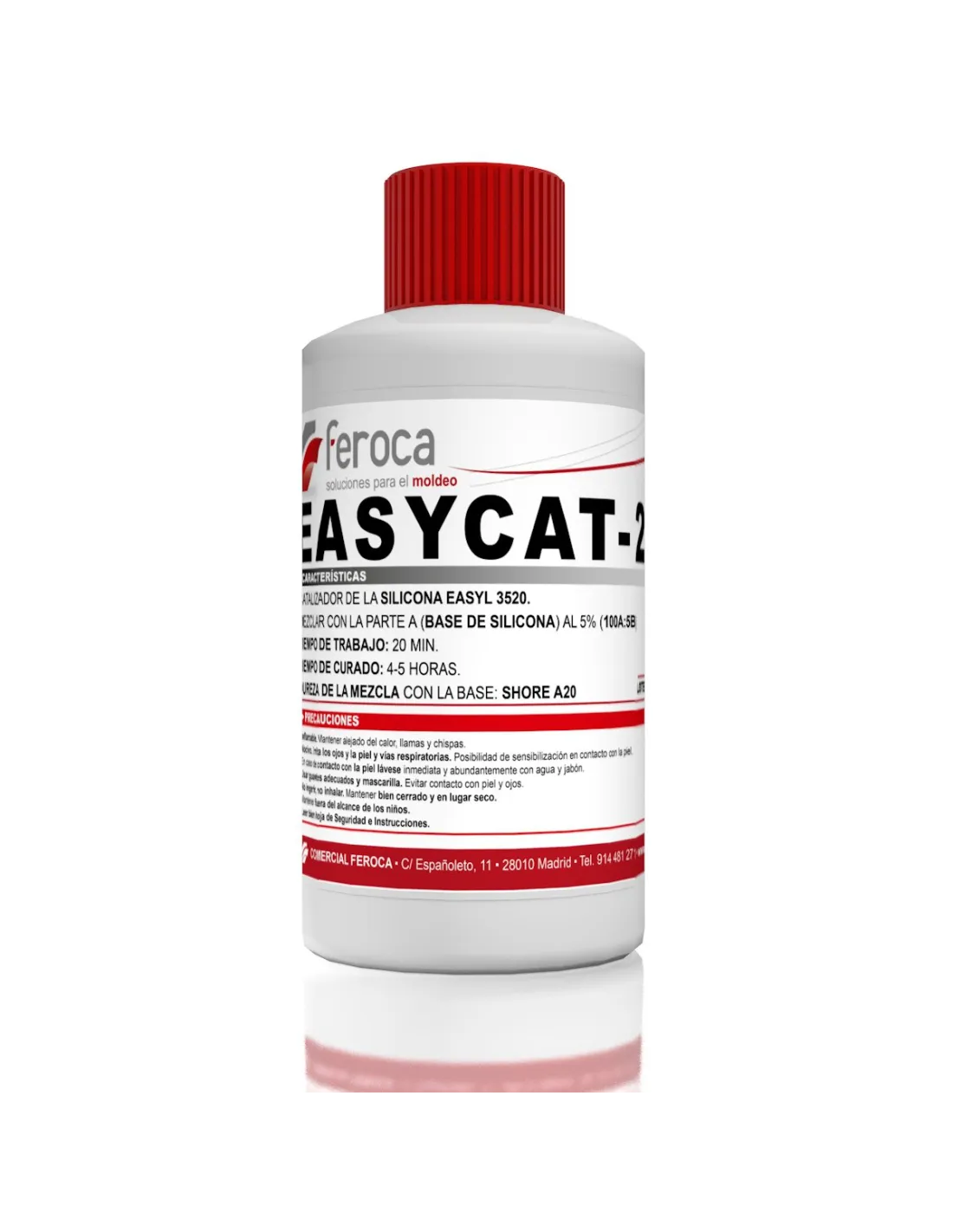
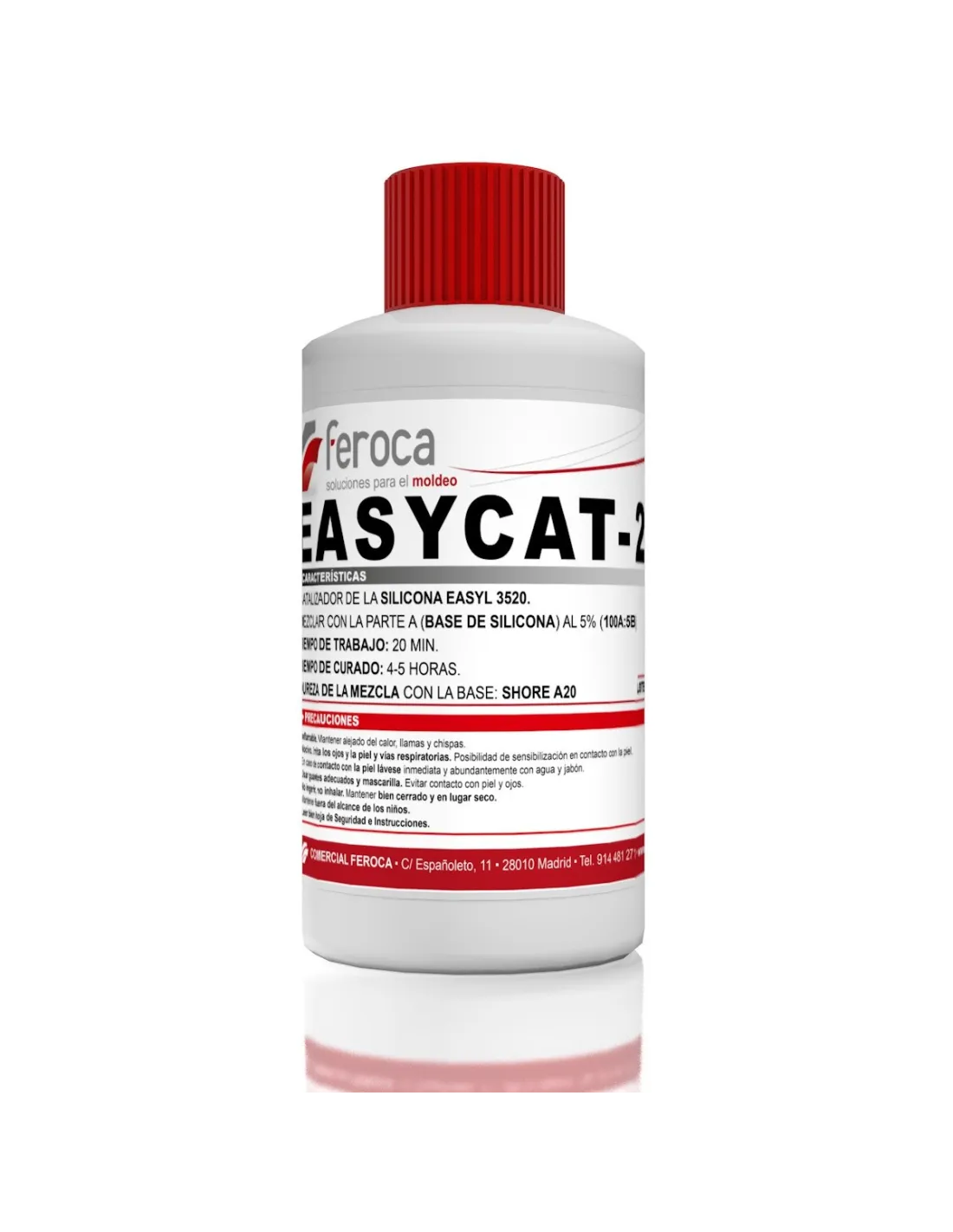
EasyCat 3520 Catalyst
201352302
€3.00
3,63 € Tax incl.
3,63 € Tax incl.
Catalyst for Easyl 3520 and Easyclear. Usage ratio: 5% by weight over the base.
EasyCat 3520 is the specific hardener for the tin condensation silicones Easyl 3520 and its translucent version Easyclear. Used at 5% by weight over the base, it ensures uniform and reproducible curing in every casting.
Technical specifications
| Parameter | Value |
|---|---|
| Type | Condensation catalyst (tin) |
| Usage ratio | 5% by weight over the base |
| Compatibility | Easyl 3520, Easyclear |
| Presentation | Liquid |
What it is used for
EasyCat 3520 activates the curing of Easyl 3520 and Easyclear condensation silicones. Use it whenever you need to prepare these silicones for pouring, brushing or applying into moulds of any kind.
- Moulding figures, sculptures and industrial parts with Easyl 3520
- Making translucent moulds with Easyclear
- Special effects, prosthetics and scale models
- Reproducing originals in plaster, wood, resin or ceramic
- Casting moulds, skin moulds and moulds with rigid support
How to use it
- Weigh the amount of base (Easyl 3520 or Easyclear) you need for your mould.
- Calculate 5% of that weight: that is the amount of EasyCat 3520 you need to add.
- Add the catalyst to the base and mix thoroughly, stirring well from the bottom and sides of the container.
- Pour or apply the mixture onto the original using your preferred technique (casting, brush, etc.).
- Respect the working time and curing time indicated for the base silicone.
- Demould once curing is complete.
Usage tips
Always weigh the catalyst — do not measure by volume
EasyCat 3520 is a dense liquid. Measuring by volume can result in incorrect ratios and poor or overly rigid curing. Always use a precision scale to ensure the exact 5%.
Temperature and curing time
Condensation silicones cure faster at higher temperatures and slower in cold environments. If you work in a workshop with low temperature (below 18 °C), allow for longer curing times. Do not force curing by applying excessive direct heat to the mixture.
Storing the catalyst
Seal the container tightly after each use and store in a cool, dry place away from direct light. A poorly stored catalyst may lose effectiveness and cause incomplete or sticky cures on the mould surface.
Frequently asked questions
Can I use this catalyst with other condensation silicones?
EasyCat 3520 is specifically formulated for Easyl 3520 and Easyclear. It is not recommended for use with other condensation silicones, as the ratios and chemistry may not be compatible. For other silicones such as Silastic 3483 or Silastic 3481, always use the catalyst specified by the manufacturer.
What happens if I add more than 5% catalyst?
Exceeding the recommended percentage does not significantly speed up curing and can alter the mechanical properties of the mould: increased rigidity, reduced elasticity or a sticky surface. Always respect the indicated 5%.
What if I add less than 5%?
An insufficient ratio can cause incomplete curing, leaving sticky or ungelled areas inside the mould. In extreme cases, the silicone may never cure. Always weigh precisely.
Does the catalyst affect the working time of the silicone?
Working time (pot life) is determined primarily by the base formulation and ambient temperature. EasyCat 3520 at 5% operates within the normal parameters indicated for Easyl 3520 and Easyclear. Higher temperatures shorten the pot life.
Can I buy the catalyst separately if I run out before the base?
Yes. EasyCat 3520 is sold independently precisely so you can rebalance your stock without having to purchase a complete base and catalyst kit.
Does this catalyst work with the auto-thixotropic version Easyl Brushable?
No. Easyl Brushable has its own catalyst and specific ratios. Always check the product data sheet for the specific product to use the correct catalyst.
Do condensation silicones carry an inhibition risk like platinum silicones?
No. Condensation silicones such as Easyl 3520 and Easyclear are not sensitive to inhibition by sulphur, tin or other common contaminants. This is an important advantage over platinum silicones in certain working environments.
What is the difference between using Easyl 3520 and Easyclear with this catalyst?
The difference lies in the base, not the catalyst. Easyl 3520 produces an opaque mould in a standard colour, while Easyclear produces a translucent mould that allows you to see the original inside. EasyCat 3520 is used at the same 5% in both cases.
No reviews
Tap to zoom