
Shopping Cart
Industrial materials: molds, resins, foams and laminates
From functional prototype to serial production: Feroca distributes the materials that R&D departments, manufacturing workshops and architecture studios need to make durable molds, cast parts with tight tolerances and laminate lightweight structures. High-resistance polyurethane rubbers, rigid resins, core foams, Jesmonite and fiberglass — all available with technical data sheets and expert advice.

Molds for industrial production
In production, the mold is the most critical asset in the process: a rubber that can withstand hundreds or thousands of pours without deforming or losing detail defines the profitability of the run. Polyurethane rubbers are the standard choice due to their combination of tear resistance, dimensional stability and fast cure times. For parts with very fine detail or when the cast material is epoxy, high-resistance tin silicone such as Silastic 3481 is also a well-established option in the industry.
Polyurethane rubbers for long production runs
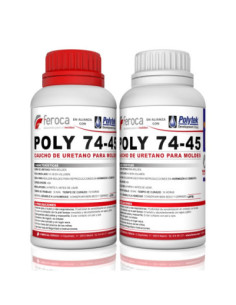 Poly 74-45
Shore A45. High resistance for concrete, plaster and abrasive materials.
Poly 74-45
Shore A45. High resistance for concrete, plaster and abrasive materials.
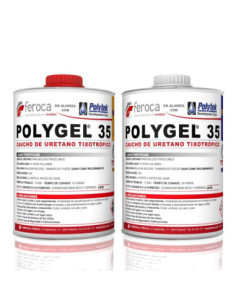 Polygel 35
Thixotropic Shore A35. For brush-on molds on vertical surfaces.
Polygel 35
Thixotropic Shore A35. For brush-on molds on vertical surfaces.
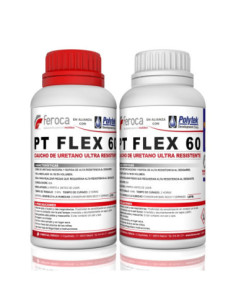 PT Flex 60
Shore A60, ultra-resistant. For high-cycle production molds.
PT Flex 60
Shore A60, ultra-resistant. For high-cycle production molds.
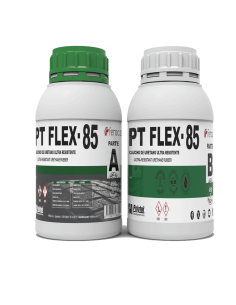 PT Flex 85
Shore A85, maximum rigidity in rubber. For molds requiring minimal distortion.
PT Flex 85
Shore A85, maximum rigidity in rubber. For molds requiring minimal distortion.
Silicone for production molds with fine detail
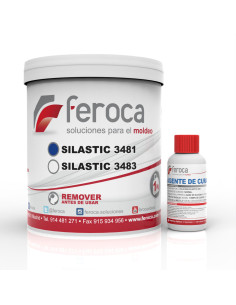 Silastic 3481
Shore A30, high tear resistance. Well-established industrial reference.
Silastic 3481
Shore A30, high tear resistance. Well-established industrial reference.
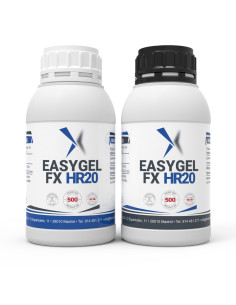 EasyGel FX HR20
Fast cure, high tear resistance. For demanding production runs.
EasyGel FX HR20
Fast cure, high tear resistance. For demanding production runs.
Service life of a PU rubber mold: under normal conditions (correct release agent, storage at a stable temperature), a well-made mold can handle between 50 and 300+ pours depending on the complexity of the part and the material being cast.
Casting resins for functional parts
Polyurethane resins are the standard for manufacturing technical plastic parts by mold casting. They allow you to go from a prototype in a few hours to a short production run without investing in injection tooling. The choice between rigid and semi-rigid depends on the final application: parts that need to absorb impacts or flex call for Shore 65D; those requiring structural rigidity call for Shore 75D or higher.
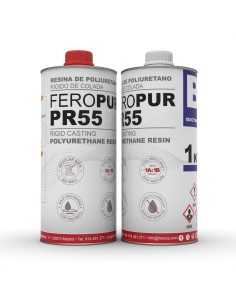 Feropur PR55+E55
Rigid PU Shore 75D. For functional parts, prototypes and tooling.
Feropur PR55+E55
Rigid PU Shore 75D. For functional parts, prototypes and tooling.
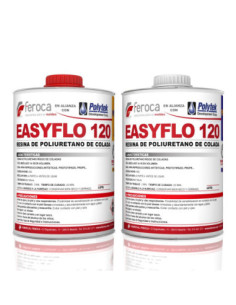 EasyFlo 120
Semi-rigid PU Shore 65D. Ideal for rotocasting and parts requiring flex.
EasyFlo 120
Semi-rigid PU Shore 65D. Ideal for rotocasting and parts requiring flex.
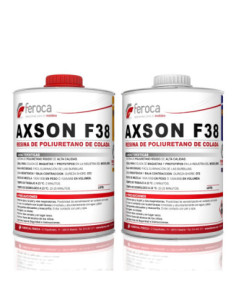 SikaBiresin F38
PU resin for modelmaking, low expansion, Shore 80D. For precision prototypes.
SikaBiresin F38
PU resin for modelmaking, low expansion, Shore 80D. For precision prototypes.
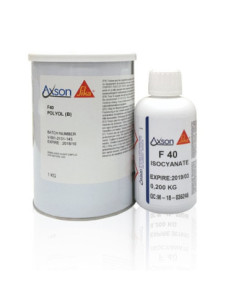 Axson F40
Rigid PU resin Shore 85D, low viscosity. For functional parts and replicas.
Axson F40
Rigid PU resin Shore 85D, low viscosity. For functional parts and replicas.
Polyurethane foams for cores and insulation
Rigid polyurethane foams are used to lighten structures (sandwich panel cores), fill cavities in large-volume parts reducing weight and resin consumption, and for rapid prototyping of shapes that will later be machined or coated. The final density is adjustable within a range: more material in the mold = higher density and strength.
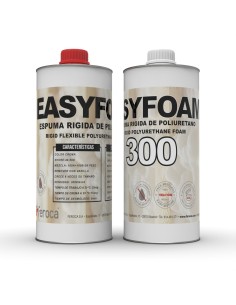 EASYFOAM 300
Rigid foam 250–450 kg/m³. For structural cores and part lightweighting.
EASYFOAM 300
Rigid foam 250–450 kg/m³. For structural cores and part lightweighting.
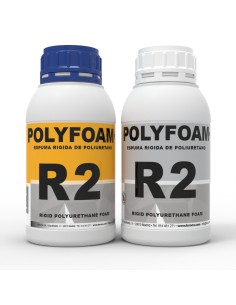 PolyFoam R2
Very low density rigid foam (30–50 kg/m³). For ultra-lightweight cores.
PolyFoam R2
Very low density rigid foam (30–50 kg/m³). For ultra-lightweight cores.
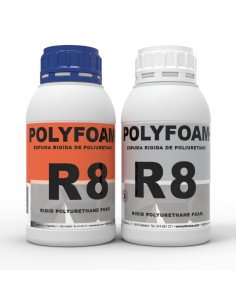 PolyFoam R8
High density rigid foam (100–130 kg/m³). For lightweight structural parts.
PolyFoam R8
High density rigid foam (100–130 kg/m³). For lightweight structural parts.
Jesmonite: acrylic resin for architecture and industrial decoration
Jesmonite is a water-based acrylic resin system developed specifically for architectural castings, coatings and decorative elements that must comply with fire reaction regulations. It does not emit significant VOCs during the process, making it compatible with facilities without forced extraction. It accepts marble, quartz, mica and pigment fillers to reproduce stone, cement or terrazzo finishes with high fidelity.
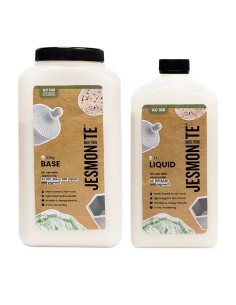 Jesmonite AC100
Acrylic resin for castings and laminates. Fire reaction certification.
Jesmonite AC100
Acrylic resin for castings and laminates. Fire reaction certification.
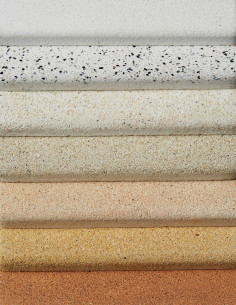 Jesmonite AC730
Acrylic cement with stone/cement effect. For architectural decoration.
Jesmonite AC730
Acrylic cement with stone/cement effect. For architectural decoration.
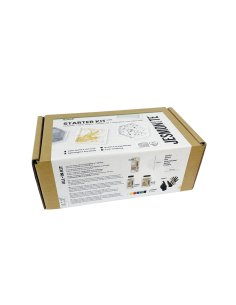 Jesmonite AC100 Kit
Complete kit to get started with Jesmonite with no minimum investment.
Jesmonite AC100 Kit
Complete kit to get started with Jesmonite with no minimum investment.
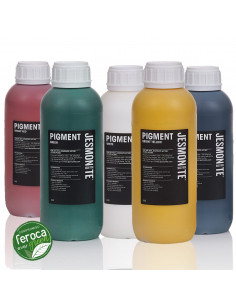 Pigmentos Jesmonite
Specific pigments for AC100/AC730. Solid colors and special effects.
Pigmentos Jesmonite
Specific pigments for AC100/AC730. Solid colors and special effects.
Fiberglass laminates
Fiberglass mat is the standard reinforcement material for polyester and epoxy laminates in industrial manufacturing, marine and tooling construction. It is used to reinforce the rigid back-mold of production molds (rigid shell over the silicone or rubber), for manufacturing fiberglass molds for long production runs and for structural reinforcement of cast parts that must withstand mechanical loads.
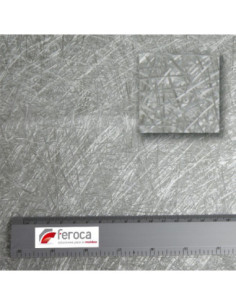 Fibra de Vidrio Mat 300
300 g/m². Standard structural reinforcement for laminates and back-molds.
Fibra de Vidrio Mat 300
300 g/m². Standard structural reinforcement for laminates and back-molds.
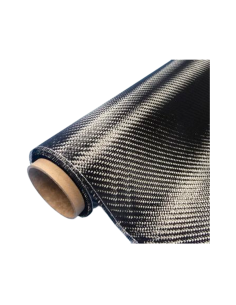 Carbono TWILL 160g
2/2 TWILL carbon fabric, 160g/m². High stiffness and low weight.
Carbono TWILL 160g
2/2 TWILL carbon fabric, 160g/m². High stiffness and low weight.
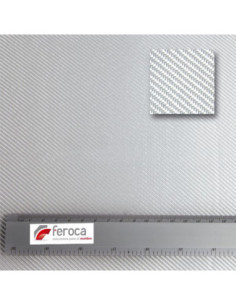 Fibra de Vidrio Tejido 163g
Fiberglass woven fabric for structural laminates. Higher strength than mat.
Fibra de Vidrio Tejido 163g
Fiberglass woven fabric for structural laminates. Higher strength than mat.
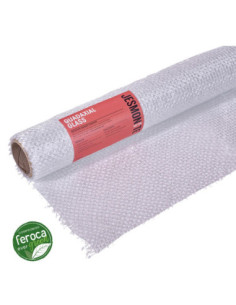 Tejido Cuatriaxial
Multiaxial fiberglass for multidirectional structural reinforcements.
Tejido Cuatriaxial
Multiaxial fiberglass for multidirectional structural reinforcements.
Plaster for back-molds and prototypes
Plaster remains the most economical and fastest material for making the rigid back-mold that supports the silicone or rubber mold. It is also used for low-cost functional prototypes when the required strength is not high. Choose high-strength plaster for back-molds that will undergo many casting cycles or internal pressure during filling.
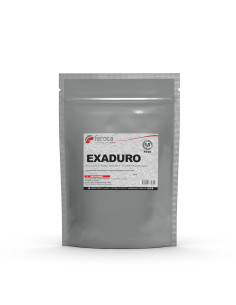 EXADURO
Hard plaster 1,300 kg/cm². The standard for industrial back-molds.
EXADURO
Hard plaster 1,300 kg/cm². The standard for industrial back-molds.
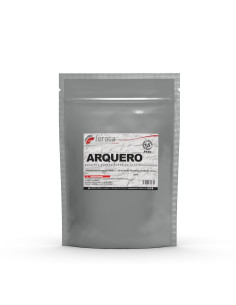 Arquero
High resistance 5,000+ kg/cm². For industrial back-molds.
Arquero
High resistance 5,000+ kg/cm². For industrial back-molds.
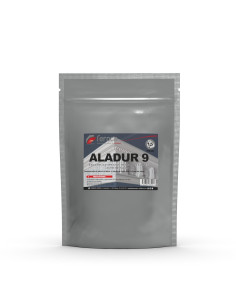 ALADUR 9
For high-detail reproductions. Low expansion, very smooth surface.
ALADUR 9
For high-detail reproductions. Low expansion, very smooth surface.
Quick guide: material by application
| Application | Recommended material | Main advantage |
|---|---|---|
| Mold for runs of 50–500 parts | Poly 74-45 / PT Flex 60 (PU rubber) | Tear and abrasion resistance superior to silicone; fast cure |
| Brush-on mold on vertical surface | Polygel 35 (thixotropic PU rubber) | Does not drip; applied by brush in layers with no need for an initial shell |
| Rigid plastic functional prototype | Feropur PR55+E55 | Shore 75D, excellent surface finish, suitable for machining |
| Semi-rigid or rotomolded part | EasyFlo 120 | Shore 65D, low viscosity for rotocasting and hollow parts |
| Lightweighting of large parts or cores | EASYFOAM 300 | Adjustable density 250–450 kg/m³; free rise or in-mold expansion |
| Decorative architectural element or fire-rated application | Jesmonite AC100 / AC730 | Water-based, no VOCs, fire reaction certified, stone and cement finishes |
| Structural reinforcement or mold shell | Fibra de Vidrio Mat 300 | Stiffness and tensile strength with low weight and cost |
| Low-cost rigid back-mold | EXADURO | High hardness, easy to mix and apply, low price per kg |
Frequently asked questions
How many pours can a polyurethane rubber mold handle?
It depends on the hardness of the rubber, the material being cast and how consistently the release agent is applied. As a rough guide: a well-maintained Poly 74-45 mold can easily handle between 100 and 300 pours of polyurethane resin. Higher-hardness models such as PT Flex 60 or PT Flex 85 can exceed 500 pours under production conditions. For abrasive materials such as concrete or plaster, the number drops: expect between 30 and 80 pours before the mold starts to show surface wear.
The key to maximizing service life is to always apply release agent before each pour, store the mold protected from UV light and ozone, and avoid sharp bends that could cause cracks in the rubber.
What is the difference between Feropur PR55 and EasyFlo 120?
They are two polyurethane resins with different applications. Feropur PR55+E55 is a rigid resin (Shore 75D) formulated for functional parts that need structural rigidity: tooling, mechanical prototypes, parts that will be machined or tapped. Its cure is somewhat slower, which allows you to fill complex geometries without the exotherm being an issue.
EasyFlo 120 is semi-rigid (Shore 65D) and has a very low viscosity that makes it ideal for rotocasting (hollow parts with thin walls) and for molds with narrow channels that Feropur would not flow through easily. It is also the choice when you need the part to absorb impacts or have some flex without breaking.
What is Jesmonite AC100 used for?
Jesmonite AC100 is a water-based acrylic resin system designed for architectural castings, interior coatings and decorative elements that must comply with fire reaction regulations (Euroclass B-s1,d0 classification). Unlike polyester or epoxy resins, it does not emit styrene or solvents during the process, which simplifies workshop ventilation.
It is commonly used for countertops, basins, interior facade panels, decorative sculptures and signage elements. It accepts marble, quartz, mica and specific pigment fillers to reproduce stone, cement, terrazzo or slate finishes with high fidelity. It can also be laminated with fiberglass to increase mechanical strength in thin-walled parts.
Can I pigment polyurethane resin?
Yes. Polyurethane resins accept specific PU pigments, both in paste and powder form, which are mixed into component A (polyol) before adding component B (isocyanate). The typical percentage is between 1% and 3% by weight of the total mix — above that range, the pigment can interfere with the cure reaction and reduce the final mechanical strength.
Important: do not use epoxy or silicone pigments — each system has its own pigments formulated to be compatible with the chemistry of the material. For Jesmonite there are specific Pigmentos Jesmonite, which guarantee compatibility and long-term color stability.
What resin should I use for functional prototypes?
For a prototype that needs to behave like a real plastic part — bearing loads, accepting threads, being machined or fitting together — the choice is Feropur PR55+E55. At Shore 75D it offers rigidity comparable to many engineering thermoplastics and can be machined with conventional tooling.
If the prototype needs to be hollow or thin-walled (to bring the weight closer to the final product), use EasyFlo 120 by rotocasting. For single-use prototypes or form-check purposes (not mechanical function verification), EXADURO plaster is the fastest and most economical option.