
Shopping Cart
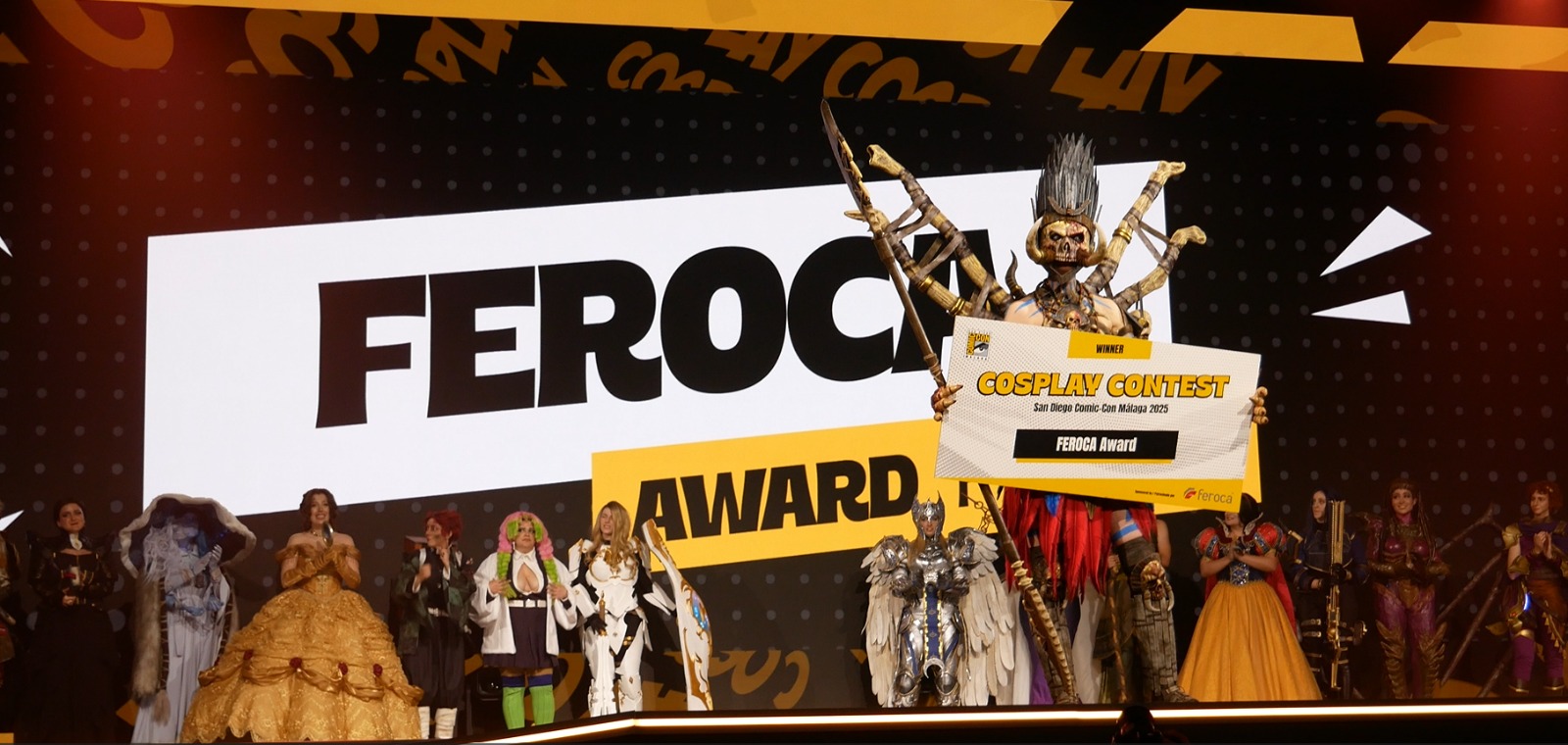
EVA foam: the foundation of every armour build
High-density EVA foam (156 kg/m³) is the starting material for most cosplay armours and props. You can cut it with a craft knife, thermoform it with a heat gun, sand it, prime it and paint it. At Feroca you'll find it in grey, black and white sheets in 2, 5 and 10 mm thicknesses, so you can choose the right thickness for each area of the piece: 2 mm works well for detail parts and trim, 5 mm for intermediate panels, and 10 mm for structural or high-volume areas. We also stock pre-made profiles in round, half-round and triangular cross-sections that speed up the construction of ribs, edges and mouldings without the need to cut and bend sheets.
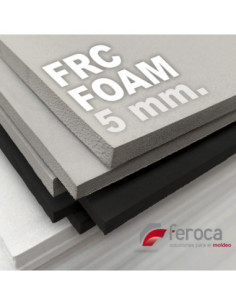 FRC FOAM GRIS 5mm
Grey EVA sheet 5 mm, high density, thermoformable.
FRC FOAM GRIS 5mm
Grey EVA sheet 5 mm, high density, thermoformable.
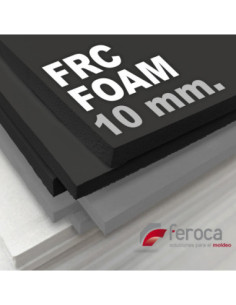 FRC FOAM NEGRA 10mm
Black EVA sheet 10 mm for structural areas.
FRC FOAM NEGRA 10mm
Black EVA sheet 10 mm for structural areas.
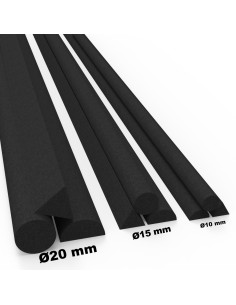 Kit de Perfiles EVA 1 metro
9 EVA profiles: round, half-round and triangular.
Kit de Perfiles EVA 1 metro
9 EVA profiles: round, half-round and triangular.
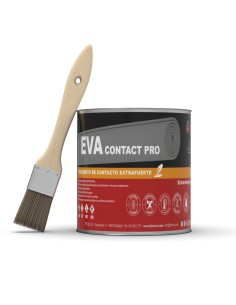 EVA Contact Pro
Professional toluene-free contact adhesive for EVA.
EVA Contact Pro
Professional toluene-free contact adhesive for EVA.
EVA AIR: foam clay for details and joins
EVA AIR is a hand-mouldable foam clay that air-dries in 24–48 hours with no oven or lamp required. Once cured it can be sanded, dremelled and painted, and its big advantage over other fillers is that it retains a slight flexibility that prevents cracking in areas that bend. Use it to sculpt gems, horns, filigree and handles, to seal joints between sheets and to fill gaps before priming. Available in black, grey and white in 300 g pots.
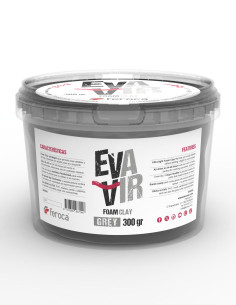 EVA AIR Gris
Grey foam clay, air-dry, ultra-lightweight.
EVA AIR Gris
Grey foam clay, air-dry, ultra-lightweight.
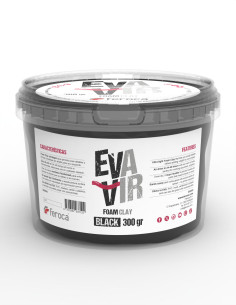 EVA AIR Negra
Black foam clay, flexible and sandable once cured.
EVA AIR Negra
Black foam clay, flexible and sandable once cured.
Worbla thermoplastics: precision and reusability
Worbla thermoplastics are activated with a heat gun between 80 and 120 °C depending on the grade and become fully malleable: you can press them onto a mould, stretch them, bond layers together thanks to their self-adhesive surface, or knead offcuts to create a mouldable putty. Once cooled they become rigid and can be sanded, primed and painted. They are infinitely reusable, which reduces material waste. If you need to produce several identical copies of a small piece, the A4 and A5 vacuum formers let you use suction to obtain exact replicas with every heating cycle.
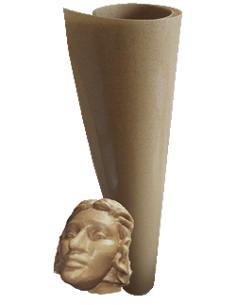 Worbla's Finest Art
Classic thermoplastic, self-adhesive, activates at 90 °C.
Worbla's Finest Art
Classic thermoplastic, self-adhesive, activates at 90 °C.
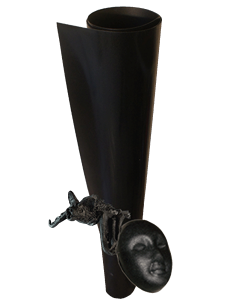 Worbla's Black Art
Black thermoplastic, finer surface, 90 °C.
Worbla's Black Art
Black thermoplastic, finer surface, 90 °C.
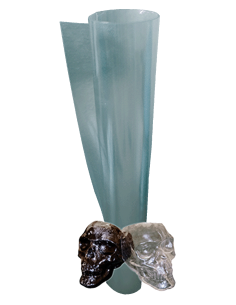 Worbla's Transpa Art
Transparent thermoplastic for gems and visors.
Worbla's Transpa Art
Transparent thermoplastic for gems and visors.
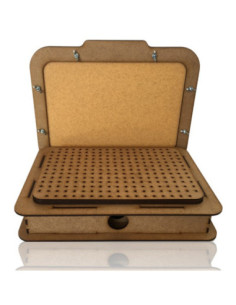 Termoconformadora A4
A4 vacuum former for short production runs.
Termoconformadora A4
A4 vacuum former for short production runs.
Polyurethane resins: rigid and durable props
When you need pieces that can withstand impacts, have a controlled weight and can be painted with the same finish as the rest of the costume, polyurethane resin is the best option. You pour it into silicone moulds, demould in minutes and sand or paint it directly. For very large props or armour cores you can use rigid foam instead of solid resin: you get the same volume at a fraction of the weight.
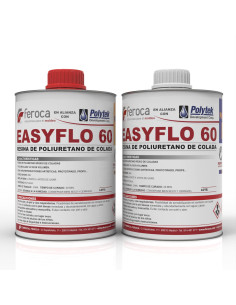 EasyFlo 60
White resin, 1:1 mix, fast demould.
EasyFlo 60
White resin, 1:1 mix, fast demould.
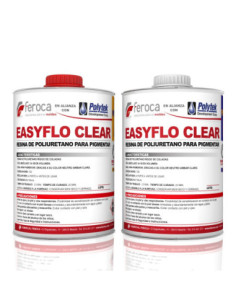 EasyFlo Clear
Translucent amber resin, ideal for pigmenting.
EasyFlo Clear
Translucent amber resin, ideal for pigmenting.
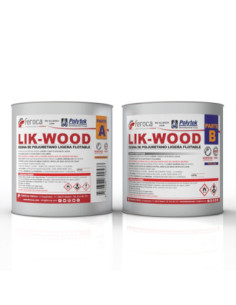 Lik-Wood
Ultra-lightweight resin, floats on water, 65 Shore D.
Lik-Wood
Ultra-lightweight resin, floats on water, 65 Shore D.
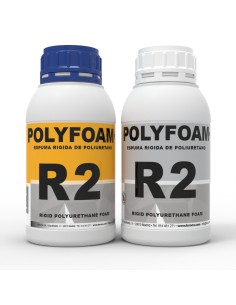 PolyFoam R2
Lightweight rigid foam for cores and volume fills.
PolyFoam R2
Lightweight rigid foam for cores and volume fills.
Platinum silicones: moulds, prosthetics and character makeup
Platinum silicone has two main uses in cosplay: making the moulds you pour resin or foam into to produce props in series, and creating prosthetics and synthetic skin for facial and body character makeup. For prop moulds, Shore A25 to A40 grades are used as they offer good tear resistance and allow clean demoulding without distortion. For prosthetics and skin, Shore 00-30 and A10 grades are used — very soft silicones that mimic the texture of real skin and can be tinted with specific pigments.
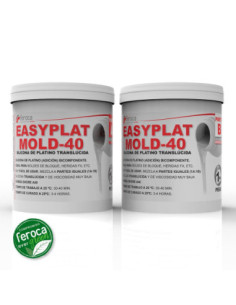 EASYPLAT MOLD-40
Shore A40 silicone for durable prop moulds.
EASYPLAT MOLD-40
Shore A40 silicone for durable prop moulds.
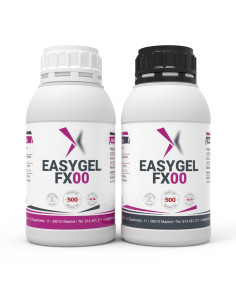 EasyGel FX00
Shore 00-30 for FX prosthetics and synthetic skin.
EasyGel FX00
Shore 00-30 for FX prosthetics and synthetic skin.
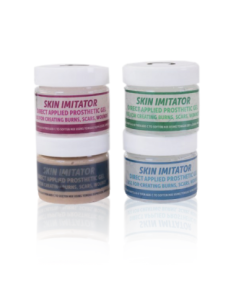 Skin Imitator
Skin-safe adhesive silicone, cures in 5–7 min.
Skin Imitator
Skin-safe adhesive silicone, cures in 5–7 min.
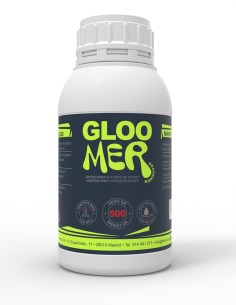 Gloomer Deadener
Softens platinum silicones for a more realistic feel.
Gloomer Deadener
Softens platinum silicones for a more realistic feel.
Pigments and paints for silicone and EVA
Pigmenting silicone in the mass before curing is the most professional way to colour a prosthetic, because the colour penetrates the entire volume and won't flake off with movement. For this, use pigments specifically formulated for platinum silicones. Once the piece is cured, or when working directly on EVA and latex, use flexible paints that won't crack when the piece is bent.
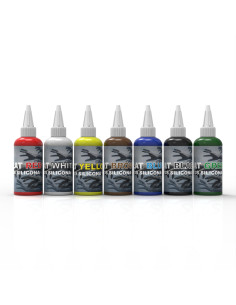 DYE PLAT FX
Concentrated liquid pigments for platinum silicone.
DYE PLAT FX
Concentrated liquid pigments for platinum silicone.
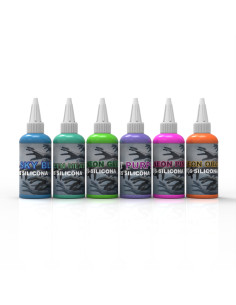 DYE PLAT FANTASY
Vivid and fantasy colour range for silicone.
DYE PLAT FANTASY
Vivid and fantasy colour range for silicone.
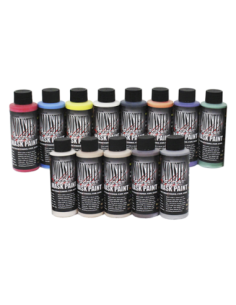 Mask Paint
Concentrated elastic paint for EVA, latex and foam.
Mask Paint
Concentrated elastic paint for EVA, latex and foam.
Finishes and liquid vinyl paints
Liquid vinyl in spray form is applied in several thin coats over the already-primed piece and forms a flexible film that won't crack when the piece is bent. You can choose from matte, metallic, chameleon or candy finishes depending on the character you're building. It's peelable, so if you're not happy with the result you can remove it and reapply.
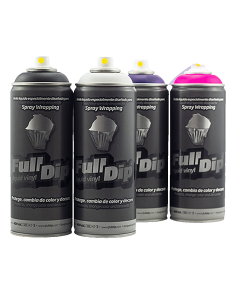 FullDip Colores Sólidos
Matte spray vinyl, flexible and UV-resistant.
FullDip Colores Sólidos
Matte spray vinyl, flexible and UV-resistant.
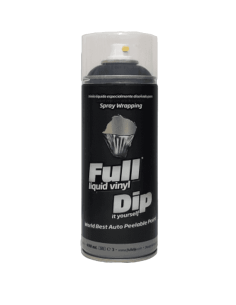 FullDip Metalizados
Flexible metallic finish, no cracking.
FullDip Metalizados
Flexible metallic finish, no cracking.
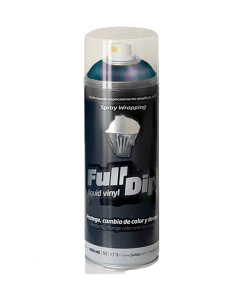 FullDip Camaleón
Multicolour chameleon effect, requires black base.
FullDip Camaleón
Multicolour chameleon effect, requires black base.
FX makeup and character makeup
Full facial character makeup takes a cosplay to a professional level. In addition to silicone materials for prosthetics, at Feroca we stock specific FX makeup kits that include everything you need to start working on character makeup from scratch, as well as professional makeup removers for the safe removal of products applied to the skin.
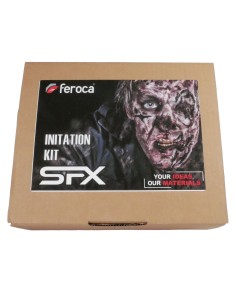 Kit de Iniciación SFX
Complete kit: sculpting, moulding, casting and FX pigmentation.
Kit de Iniciación SFX
Complete kit: sculpting, moulding, casting and FX pigmentation.
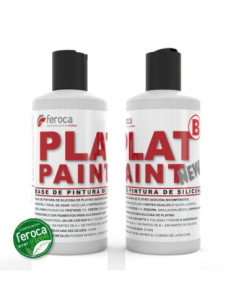 Plat-Paint New
Silicone paint base for prosthetics and effects.
Plat-Paint New
Silicone paint base for prosthetics and effects.
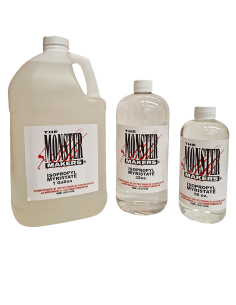 Isopropyl Myristate
Professional oil-based makeup remover for FX makeup.
Isopropyl Myristate
Professional oil-based makeup remover for FX makeup.
Starter kits and closure accessories
If you're just starting out or want a reference kit before buying individual materials, the moulding and starter kits let you go through the complete process from start to finish with measured quantities. For armour closures, magnetic clasps offer a clean, quick-release fastening system with no visible seams.
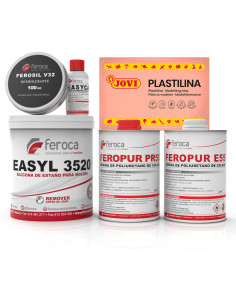 Kit de moldeo para resinas
Silicone + resin + release agent to start moulding.
Kit de moldeo para resinas
Silicone + resin + release agent to start moulding.
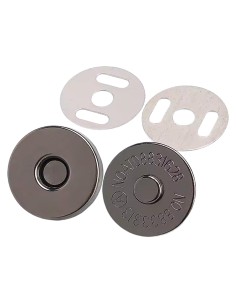 Corchetes imantados Cosplay
Black 14 mm magnetic closures for armours.
Corchetes imantados Cosplay
Black 14 mm magnetic closures for armours.
Frequently asked questions about cosplay materials
What's the difference between EVA foam and Worbla thermoplastic for building armours?
EVA foam is easy to cut and thermoform with a heat gun or heat plate, it's more cost-effective per surface area and absorbs impacts well without splintering, making it ideal for large panels and pieces that will take knocks. Its surface is porous and needs to be sealed with primer before painting. Worbla, on the other hand, has a finer surface and can self-bond layer upon layer without adhesive, which makes detail work and edge reinforcement much easier. Its cost per square metre is higher, but reusing offcuts makes up for that on longer projects. Many cosplayers combine both: EVA for the main body and Worbla for details and finished edges.
Which polyurethane resin is best suited for cosplay props?
For props that need to be white or painted with solid colours, EasyFlo 60 is the usual choice: 1:1 mix by volume, working time of around 90 seconds and demould in 10–15 minutes. If you want to tint the piece with translucent pigments for gem or crystal effects, use EasyFlo Clear, which is translucent amber and accepts pigments for deep colours. When weight is a critical factor, such as in long swords or shields, Lik-Wood offers very low density with good surface hardness. In all cases the mould should be made from platinum silicone to ensure a clean release without a release agent.
Which silicone should I use to make a facial or character prosthetic?
Prosthetics that are glued to skin require very low hardness platinum silicones (Shore 00-30 or A10) so they flex with facial movement. EasyGel FX00 and EasyGel FX10 are the specific grades for this use: they are mass-pigmented with DYE PLAT Flesh Tones before curing to mimic skin tones, and with Gloomer Deadener you can adjust the final softness if you need something even softer. To adhere the prosthetic to skin, use Skin Imitator, which is a skin-safe adhesive silicone that cures in 5–7 minutes. To remove it without irritating the skin, use Isopropyl Myristate.
How do you paint EVA foam and which finish holds up best to regular use?
Before painting EVA you need to seal its porous surface with at least two coats of flexible primer. Once sealed, Mask Paint is the go-to paint: it's specifically formulated for elastic surfaces such as EVA, latex and polyurethane foam, it doesn't crack when bent and holds up well to continuous use throughout a convention. For metallic, camouflage or chameleon effects, FullDip in spray is applied over the base coat of paint and forms a peelable flexible film that won't damage the underlying work if you need corrections. Always apply in thin coats and allow each one to dry before the next.
Can I use EVA AIR on thermoplastic or only on EVA foam sheets?
EVA AIR bonds well to roughed-up EVA foam sheets, but you can also use it on Worbla and on polyurethane foam if you sand the surface first to create mechanical adhesion. It's not compatible with smooth, non-porous surfaces without an intermediate primer. Its main advantage over epoxy or polyester fillers is that it remains flexible after curing, making it ideal for areas of the armour that bend with body movement, such as elbows, knees or articulation joints. It also produces no strong odours and requires no special ventilation.
What kit do you recommend for someone starting cosplay from scratch?
If your goal is to build a first armour piece, start with a sheet of FRC FOAM GRIS 5mm, EVA Contact Pro adhesive to join the parts, a half-round EVA profile for the edges and EVA AIR to seal joints and add details. For the final paint job, Mask Paint and one or two FullDip colours in solid shades cover most starter projects. If you also want to explore facial character makeup at the same time, the Kit de Iniciación SFX includes all the materials needed to complete the sculpting, moulding, casting and pigmentation process in a single purchase, without having to buy individual components until you're clear on the quantities you typically need.