Shopping Cart



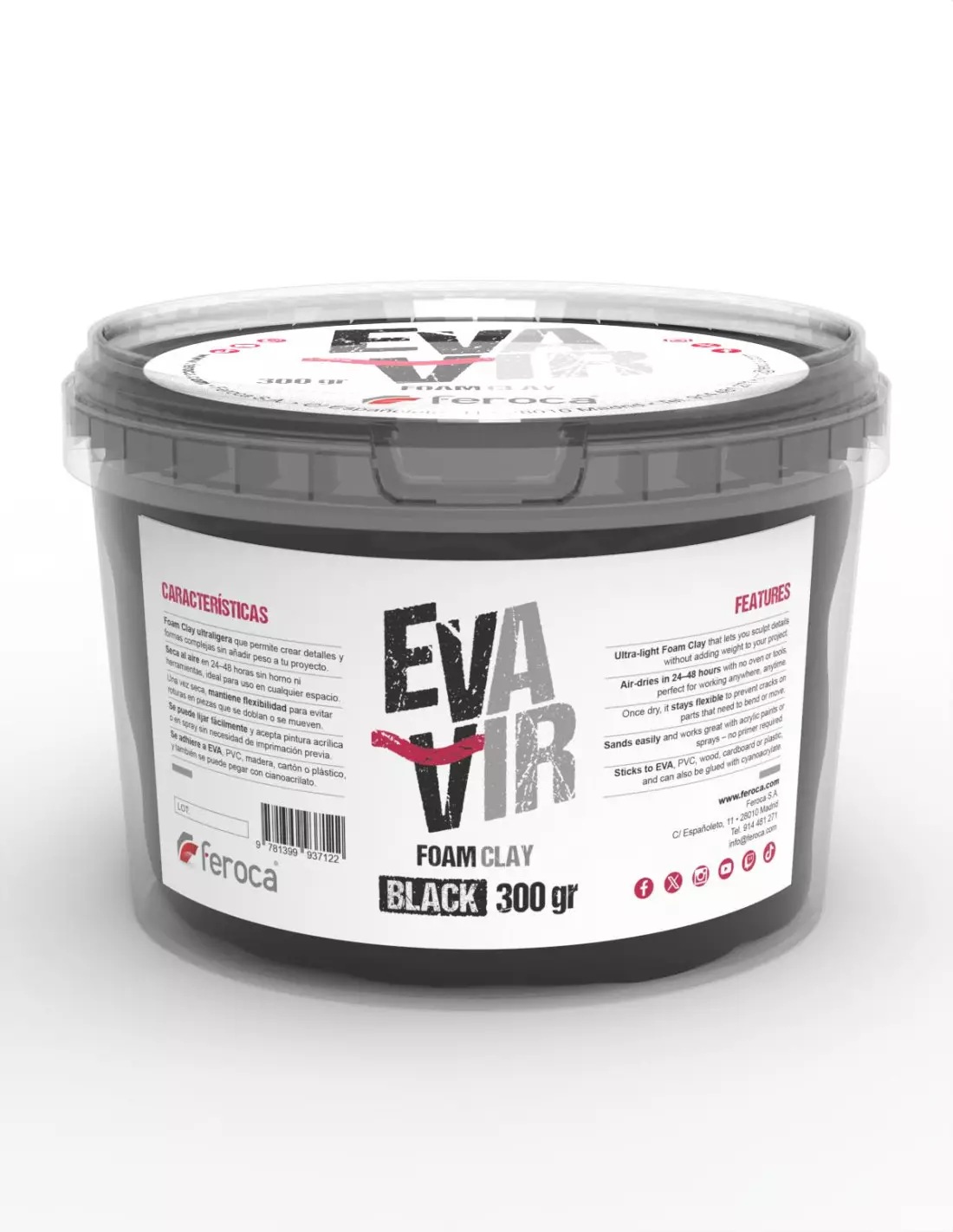
EVA AIR Black- Foam Clay Professional -
208256300
Temporarily out of stock
€12.50
15,13 € Tax incl.
15,13 € Tax incl.
EVA AIR professional black Foam Clay, 300 g. Air-dry in 24-48 h, ultra-lightweight and flexible. Ideal for cosplay, props and EVA foam armatures.
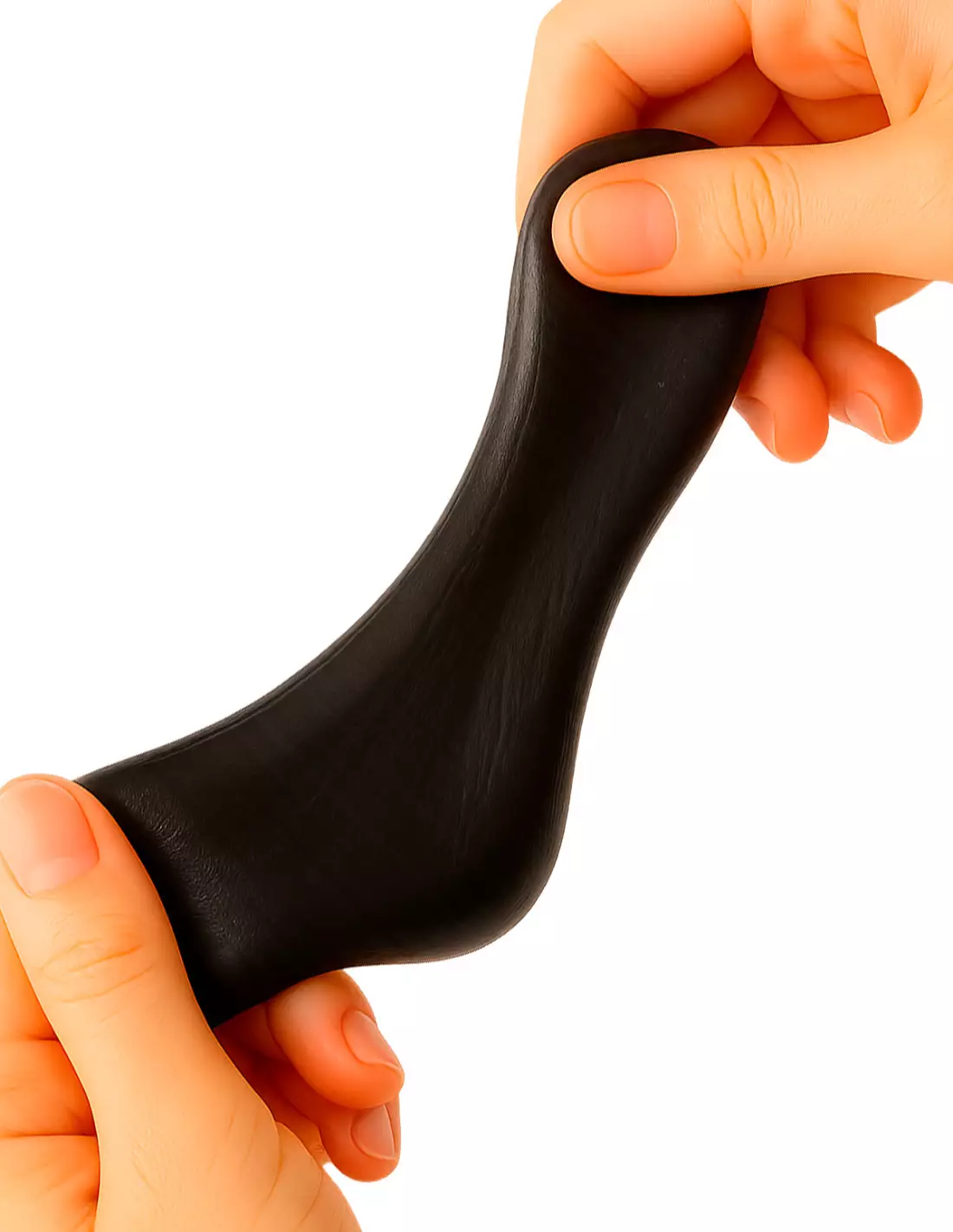
EVA AIR is an ultra-lightweight, mouldable EVA foam clay formulated specifically for cosplayers and professional makers who need to finish armatures, props and accessories with precise detail and minimal weight. It is worked by hand without special tools, air-dries in 24-48 hours and retains slight flexibility once cured, making it ideal for parts that must withstand movement or impact. Available in black, grey and white in 300 g containers.
Technical specifications
| Parameter | Value |
|---|---|
| Format | 300 g per container |
| Available colours | Black, Grey, White |
| Material type | EVA foam clay |
| Drying method | Air-dry (room temperature) |
| Drying time | 24-48 hours |
| Flexibility after cure | Yes, slight residual flexibility |
| Machinability | Sandable, cuttable and millable without cracking |
| Adhesion compatibility | EVA foam, polyurethane foams, thermoplastics |
| Toxicity | Non-toxic, odourless |
What it is used for
EVA AIR is designed for prop building and cosplay work where detail and low weight are the priority. Thanks to its direct adhesion to EVA foam sheets and its ability to be machined once dry, it integrates seamlessly into professional workshop workflows.
- Sculpting filigree, engravings and relief details on EVA armatures
- Building horns, gems, crests and decorative elements for props
- Sealing and filling joins between EVA sheets without adding weight
- Making grips, guards and detail elements for cosplay weapons
- Casting in silicone moulds for repetitive production of small parts
- Repairing and restoring damaged or deformed props
- Adding volume over thermoplastic bases without risk of heat deformation
How to use it
- Knead the material for 1-2 minutes until you obtain a homogeneous, lump-free texture. The heat from your hands softens the material and improves workability.
- Sculpt directly by hand or with silicone spatulas to achieve fine detail. If you are casting in a mould, press the material in firmly to avoid air pockets.
- To bond it to a high-density EVA foam sheet, lightly scuff the EVA surface with 80-grit sandpaper before applying the material.
- Apply uniform pressure to ensure full contact with the substrate.
- Allow to dry at room temperature for 24-48 hours. For pieces thicker than 1 cm, rotate the piece every 12 hours to ensure even drying on all sides.
- Once dry, sand with fine-grit sandpaper (180-320) to remove imperfections and achieve the desired texture.
- Apply a flexible primer before painting with flexible acrylics to prevent cracking in flex zones.
Usage tips
Thickness control for even drying
EVA AIR dries from the outside in. Layers thicker than 8-10 mm may have a dry surface while the core is still soft. If you need volume, work in 5-8 mm layers and allow each one to dry before adding the next. This method also reduces the risk of surface cracks caused by shrinkage.
Finishing and machining
Once fully dry, the material accepts orbital sanding, rotary tool milling and cutting with a craft knife. Always wear a particle mask when using rotary tools, as the fine dust generated can irritate the respiratory tract. For seamless transitions between the foam clay and the EVA sheet, sand in circular motions starting with 120 grit and finishing with 320.
Painting and final finish
The porous surface of EVA AIR absorbs primer well, but it is advisable to apply two thin coats rather than one thick coat to avoid filling in the sculpted detail. Flexible acrylics and water-based paints adhere correctly. If you are going for a metallic or very smooth effect, apply a coat of flexible sealer between the primer and the topcoat to reduce absorption and make blending easier.
Frequently asked questions
Can it be used in silicone moulds for repetitive production?
Yes. EVA AIR can be pressed into silicone moulds to reproduce identical parts such as gems, buttons or decorative reliefs. You do not need a release agent because silicone is naturally non-stick. Leave the material inside the mould for at least 24 hours before demoulding to avoid deformation.
How long does it take to dry completely?
Under normal workshop conditions (room temperature 18-25 °C, moderate humidity), EVA AIR dries in 24-48 hours for layers up to 5-8 mm thick. Thicker pieces may require between 48 and 72 hours. High ambient humidity extends drying time; in very humid environments you can use a dehumidifier or forced ventilation to speed up the process.
Can a dry piece be repaired if it breaks or cracks?
Yes. Apply fresh material directly over the damaged area, press firmly and allow to dry again. Adhesion between new material and already-cured material is good provided the surface is clean and lightly sanded. For very fine cracks, slightly dampen the area before applying the new material to improve integration.
Can it be painted without primer?
Technically yes, but it is not recommended. The porous surface of EVA AIR absorbs paint unevenly, which can result in patchy or blotchy finishes. A flexible primer applied in two thin coats seals the porosity, improves colour adhesion and prevents flaking in areas that flex or rub during use.
How do you store leftover material to prevent it from drying out?
Seal the original container tightly or wrap the leftover material in cling film, removing as much air as possible. Store in a cool place away from heat sources. Properly sealed, the material can remain workable for weeks. If a thin surface crust has formed when you open it, remove it — the interior is usually in good condition.
What is the difference between using foam clay and a professional sculpting clay for the same job?
Professional sculpting clays such as oil-based ones do not air-dry, are reusable and are designed to create mould masters with maximum detail. EVA AIR, on the other hand, dries permanently and becomes part of the finished piece; it is not suitable for reuse. The advantage of EVA AIR over sculpting clay for cosplay finishes is that the result is the finished piece, ready to sand and paint, with no need to make a mould.
Does it withstand contact with water or rain?
EVA AIR has some resistance to ambient moisture, but it is not formulated for prolonged immersion or heavy rain without protection. For outdoor events, apply a flexible acrylic sealer over the final paint to protect both the colour and the base material. This also improves the mechanical durability of the piece against light scrapes and impacts.
Can it be combined with EVA foam sheets of different thicknesses?
No reviews
Tap to zoom