Shopping Cart



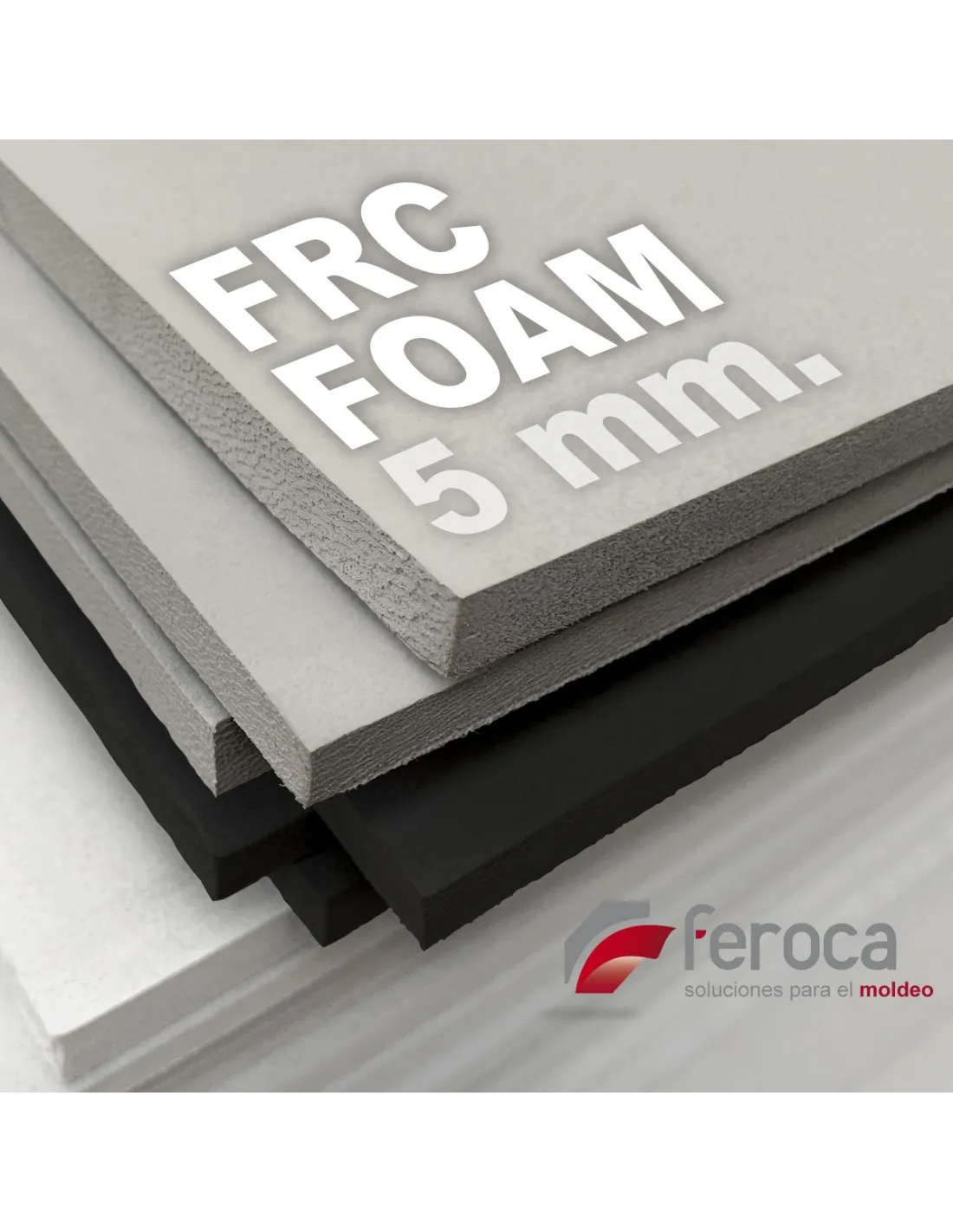
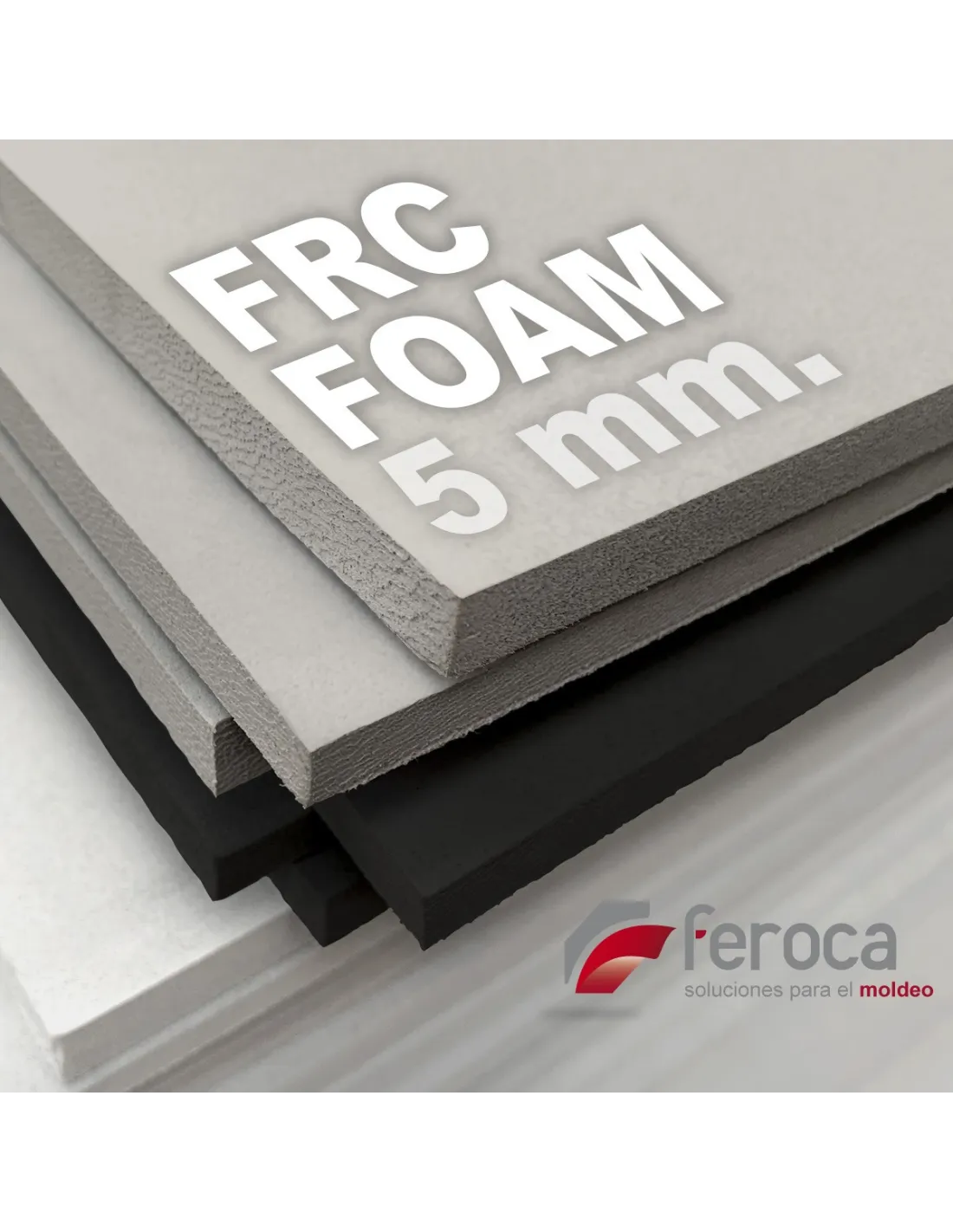
FRC FOAM GREY 5mm -High Density EVA Rubber-
208170201
€13.00
15,73 € Tax incl.
15,73 € Tax incl.
High-density EVA foam (156 kg/m³), 5 mm thick. Shore Hardness 30–35°. Ideal for cosplay, props and scenography. Easy to cut, heat-shape and paint.
FRC FOAM Grey 5 mm is a high-density EVA foam (156 kg/m³) designed for cosplay construction, props and scenography. Its intermediate thickness makes it the most versatile option in the range: enough body for structured pieces, but with the flexibility needed to shape curves and complex forms with heat.
Technical specifications
| Parameter | Value |
|---|---|
| Material | High-density EVA foam (Ethylene Vinyl Acetate) |
| Thickness | 5 mm |
| Density | 156 kg/m³ |
| Shore Hardness | 30° - 35° |
| Colour | Grey |
| Format | Sheet (various sizes to choose from, shipped rolled) |
| Dimensions | Approximate (factory cut) |
What it's used for
FRC FOAM 5 mm is the go-to thickness for any handcraft project requiring pieces with their own volume. Its density clearly sets it apart from budget foams: it holds up to work, bonds well and accepts detailed finishes.
- Armour and breastplates for cosplay
- Helmets, shoulder guards and heat-moulded protection pieces
- Props and replicas of weapons, shields or accessories
- Theatre scenography and props
- Architectural models and volume prototypes
- Components combined with thermoplastics such as Worbla or Thibra for structural reinforcement and surface detail
- Bases and fills in special effects and character makeup
How to use it
- Design and cut the pattern. Draw the pieces directly onto the sheet with a marker or pen. Cut with scissors or a sharp-bladed craft knife; the material gives without excessive effort.
- Shape with heat. Apply a heat gun or hot air tool at a safe distance (10–15 cm) until the surface softens and becomes workable. Shape it with your hands or over a mould and hold the pressure until it cools.
- Bond the pieces. Join the parts with cyanoacrylate contact adhesive or a contact glue specifically for EVA. Apply to both surfaces, allow the solvent to evaporate (if applicable) and press firmly.
- Clean up the joints. Sand the joins with sandpaper or a rotary tool at low speed to remove steps and refine the finish. Always wear a dust mask when sanding.
- Paint and finish. Apply a coat of flexible primer or latex before painting. Acrylic paints and water-based sprays adhere well to the prepared surface.
Caution with the heat gun: the temperatures needed to shape EVA can cause skin burns. Work with protective gloves and never direct the hot air flow towards uncontrolled areas. Sanding generates fine dust: use an approved particle respirator.
Usage tips
Moulding temperature
FRC FOAM 5 mm needs slightly more heat than the 2 mm version to soften uniformly throughout its full thickness. Work with the heat gun in constant motion to avoid burning the surface before the core becomes flexible. If you are moulding over a convex form (a helmet, for example), heat the outer face and try to keep the inner face in direct contact with the template for greater precision.
Combining with thermoplastics
The most professional result in cosplay armour is achieved by using 5 mm EVA as the structural base and covering detail areas with a thin layer of thermoplastic. The thermoplastic captures texture and surface relief while the EVA absorbs impacts and keeps the piece lightweight. Heat both materials before joining them for good adhesion without additional adhesive.
Painted and sealed finishes
The EVA surface is slightly porous and elastic, which can cause cracking if rigid paint is applied directly. Always prime with a coat of diluted latex, flexible primer or thinned PVA glue before painting. This seals the surface and creates a base that moves with the material without cracking.
Frequently asked questions
Can it be cut with regular scissors?
Yes. FRC FOAM 5 mm cuts perfectly with sewing scissors or a fresh-bladed craft knife. For very long or straight lines, a craft knife with a metal ruler offers more precision. Avoid blunt scissors as they compress the material instead of cutting cleanly.
What adhesive works best for bonding EVA foam?
Contact adhesives (spray or brush-on contact glue) and medium-viscosity cyanoacrylates are the most widely used in the workshop. Apply to both surfaces to be joined, allow the manufacturer's stated open time and press firmly. For mechanically stressed joints, reinforce with heat at the join point.
What is the difference between the various FRC FOAM thicknesses?
The 2 mm version is ideal for details, edges and areas that require a lot of curvature. The 5 mm (this product) is the most versatile: structure and curvature in balance. The 10 mm version is used when real volume is needed, such as thick breastplates or bases for bulky props. Density (156 kg/m³) and hardness (30–35°) are the same across all three thicknesses.
Can it be painted directly without primer?
Technically yes, but the result is worse. Without primer, paint tends to crack when the piece is bent because the EVA surface is elastic. Applying a coat of diluted latex or flexible primer before painting ensures the finish moves with the material without flaking off.
Are the sheet dimensions exact?
Dimensions are approximate because cutting is carried out at the factory and there may be small variations. Bear this in mind when planning your patterns and always leave a safety margin at the edges.
How is the material shipped?
FRC FOAM sheets are shipped rolled to ease transport and reduce the risk of damage. Once received, lay the sheet flat in a flat area for a few hours to allow it to recover its natural shape before working with it.
Can it be used outdoors or in contact with water?
EVA is a moisture-resistant material and does not deteriorate from brief contact with water. However, if the painted finish is not properly sealed it may be affected. For outdoor or wet-weather use, apply a flexible topcoat varnish over the finished piece.
What is the difference between grey, black and white FRC FOAM?
Only the base colour. The technical properties (density 156 kg/m³, hardness 30–35°) are identical across all three colours. The choice depends on the final finish: grey and black reduce the number of dark paint coats needed, while white makes it easier to achieve vivid, light colours.
Video tutorials
Casco de ★STAR WARS★ tutorial 𝗚𝗢𝗠𝗔 𝗘𝗩𝗔 🛸 Armadura MANDALORIAN ► [Boba Fett] cosplay
Feroca Live: EVA Foam, creating a mask step by step
FRC FOAM for cosplay: the foundation of every armor
High-density EVA rubber FRC FOAM (156 kg/m³) is the starting material for most cosplay armor. It cuts with a utility knife, heat-forms with a heat gun and bonds with contact adhesive. Unlike craft foam, it holds its shape under heat, accepts texturing with thermal tools and survives an entire convention without warping.
- 2 mm — details, beveled edges, secondary layers and small pieces
- 5 mm — main armor panels: chest plates, bracers, greaves
- 10 mm — voluminous pieces: pauldrons, helmets and structural bases
For rigid armor with fine detail, combine it with Worbla Finest Art: encapsulate the foam between two layers of Worbla for rigidity with minimal weight. Add volume and three-dimensional textures with EVA AIR Foam Clay.
```No reviews
Tap to zoom