Shopping Cart



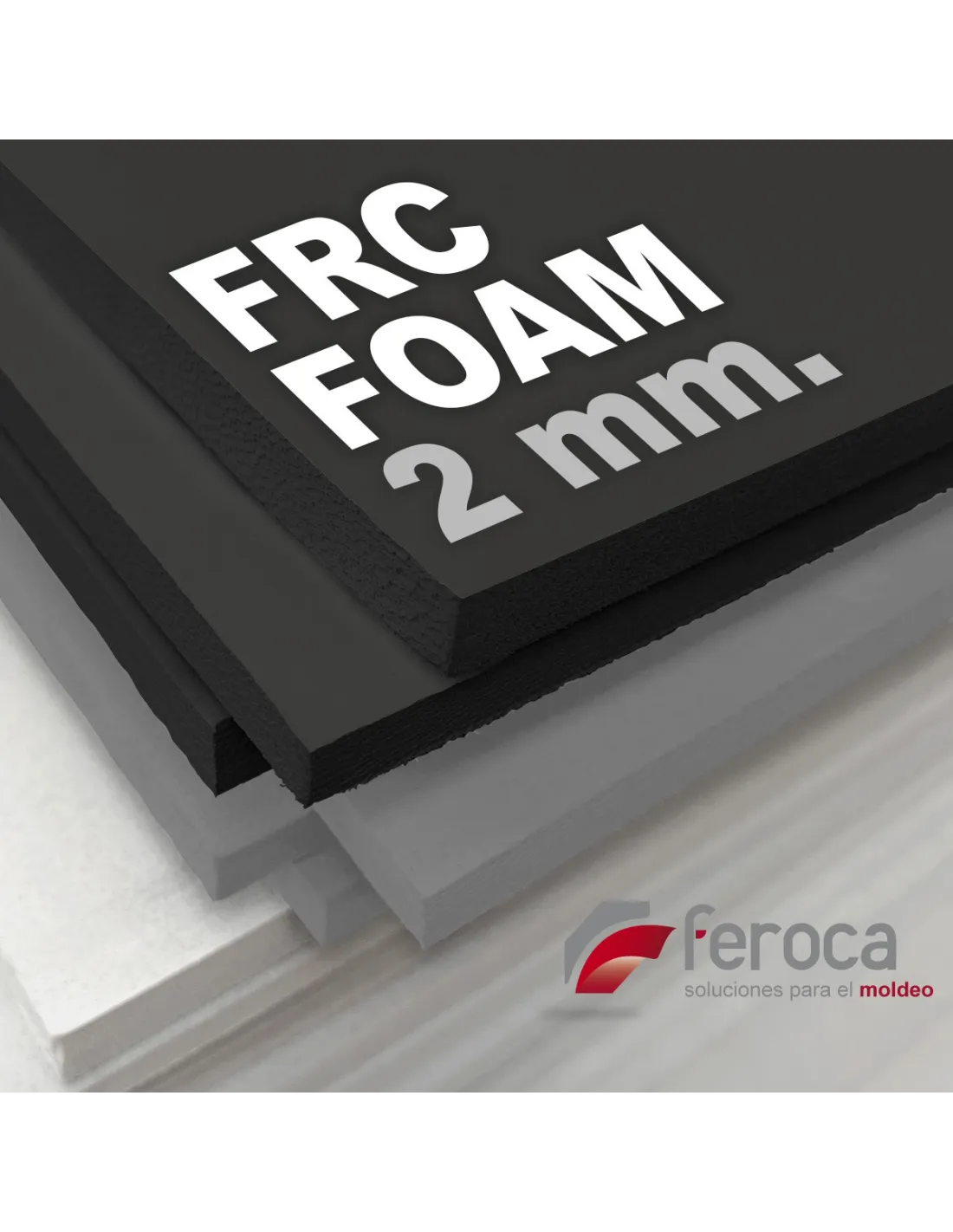
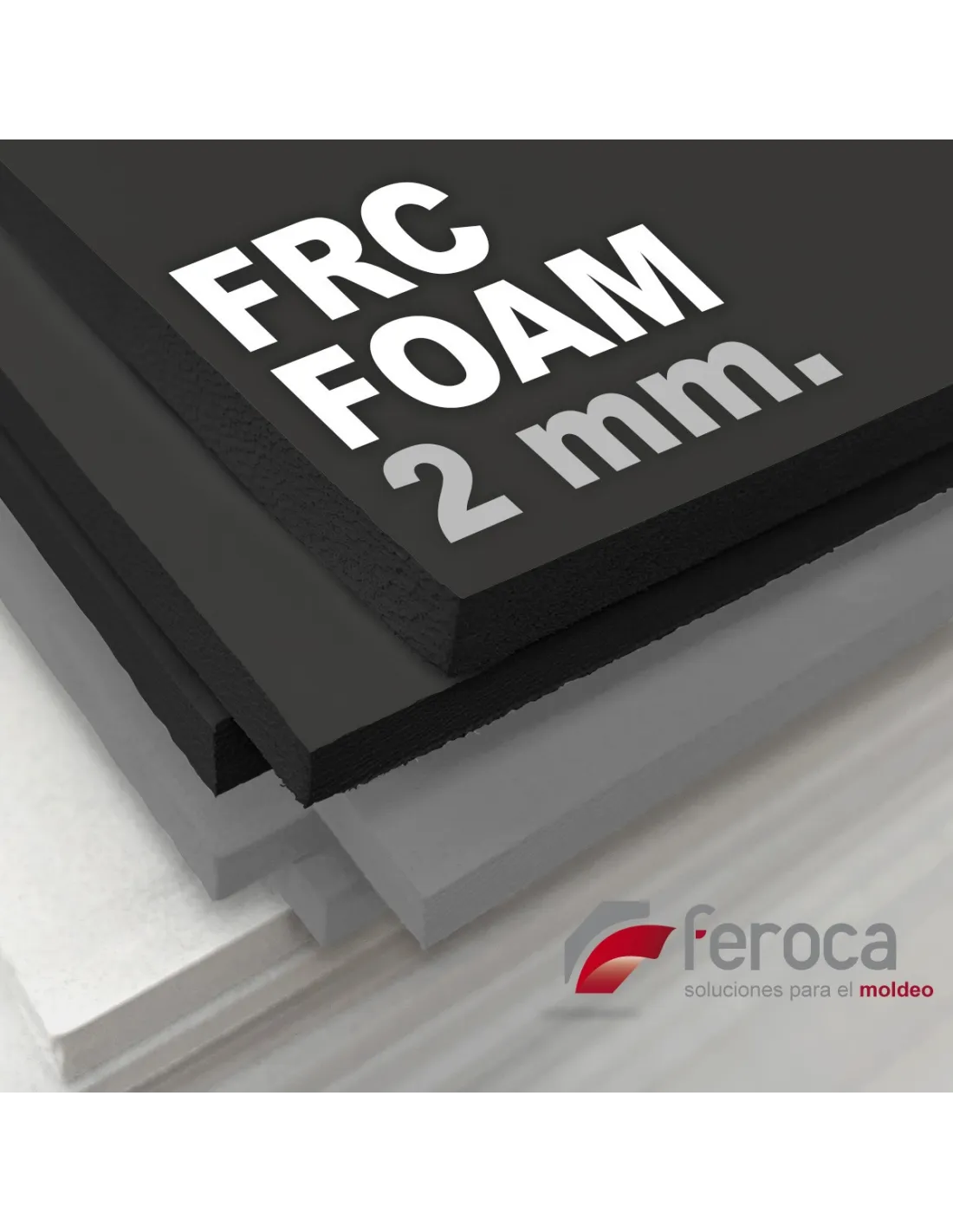
FRC FOAM BLACK 2mm -High Density EVA Rubber-
208250101
€7.50
9,08 € Tax incl.
9,08 € Tax incl.
High-density black EVA foam (156 kg/m³, 30–35° Shore), 2 mm thick. Ideal for cosplay, props and scenography. Easy to cut, heat-shape and paint.
FRC FOAM Black 2 mm is a high-density EVA rubber (156 kg/m³) designed for those who need a reliable, manageable and versatile material for cosplay, prop-making and scenography projects. Its uniform black finish, ease of cutting and ability to be heat-shaped make it one of the most widely used foams in professional prop and costume fabrication workshops.
Technical specifications
| Parameter | Value |
|---|---|
| Material | EVA rubber (Ethylene Vinyl Acetate) |
| Colour | Black |
| Thickness | 2 mm |
| Density | 156 kg/m³ (high density) |
| Hardness | 30° - 35° Shore |
| Presentation | Rolled sheet (various sizes available) |
| Dimensions | Approximate (factory cut) |
What it is used for
FRC FOAM Black 2 mm is the ideal thickness for fine-detail pieces: outer layers of armours, decorative elements, costume pattern templates or lightweight reinforcement structures. Its high density ensures that pieces retain their shape without losing flexibility.
- Building armours and accessories for cosplay
- Making lightweight masks and helmets
- Props for theatre, film and television
- Scenography and set decoration
- Reinforcements and fills in composite pieces with thermoplastics such as Worbla or Thibra
- Patterns and templates for transferring shapes to other materials
- Educational projects and detailed scale models
How to use it
- Design your piece: draw or print the pattern and transfer it onto the FRC FOAM sheet using a marker or awl.
- Cut with precision: use scissors or a fresh-blade craft knife. The sharper the blade, the cleaner the cut. For tight curves, fine-tipped scissors give the best results.
- Heat-shape: apply heat with a heat gun at about 5–10 cm distance. The foam will soften within seconds; shape it as desired with your hands (protected) or over a curved surface. Once cooled, it will hold its shape.
- Bond the pieces: use contact adhesive (cyanoacrylate or spray contact adhesive) to join sections. Apply to both surfaces, let dry for a few seconds and press firmly.
- Refine the seams: sand gently with fine sandpaper or a rotary tool at low speed. Always wear a particle mask to avoid inhaling the dust generated.
- Paint and finish: apply acrylic paints directly onto the foam or use spray paint. For a more durable finish, apply a coat of flexible primer before painting.
Caution when using heat: heat guns can reach very high temperatures. Do not direct the airflow towards your skin. Work in a ventilated space. When sanding EVA rubber, always wear a fine-particle mask: the dust generated can irritate the respiratory tract.
Tips and tricks
Heat control for shaping
The key to clean shapes is to heat evenly and quickly: move the heat gun in circles at a constant distance. If you overheat a single spot, the foam may deform unevenly or scorch on the surface. For small pieces, a couple of seconds of heat is enough. If the piece cools before you have finished shaping it, briefly reapply heat.
Combining with thermoplastics
FRC FOAM 2 mm works very well as a base or core for layers of thermoplastics: the thermoplastic provides rigidity and surface detail, while the EVA rubber adds lightweight volume and absorbs impacts. Heat both materials simultaneously and press together so they bond without the need for additional adhesive.
Finishing and painting
To prevent acrylic paint from cracking when the piece is bent, add a flexible medium to the acrylic or use paint specifically designed for elastic surfaces. If you want a leather-like finish, apply a thin coat of black paint and rub with a damp sponge before it fully dries; the result is a very convincing texture for dark armours. You can also texturise the surface before painting by applying localised heat or engraving with a blunt-tipped tool.
Frequently asked questions
What EVA foam thickness is best for fine-detail pieces?
For fine-detail pieces, outer armour layers or decorative elements, the 2 mm thickness of FRC FOAM Black is the most suitable. It provides flexibility and adapts well to small curves without building up bulk. For body structures or voluminous pieces, 5 mm or 10 mm thicknesses are more appropriate.
Can it be painted directly without primer?
Yes, FRC FOAM accepts acrylic paint directly on the surface. However, to improve adhesion and prevent paint from peeling in flex zones, it is recommended to apply a thin coat of flexible primer or acrylic medium before painting. Spray paint also adheres well, though it is best to apply thin coats and allow drying between them.
How do you bond two EVA foam pieces together?
The most common method is contact adhesive: apply to both surfaces, allow to sit for a few seconds until slightly tacky and press firmly. Cyanoacrylate also works well for small, precise joints. Avoid low-viscosity silicone, as it does not penetrate the foam effectively.
How much heat can it withstand before permanently deforming?
High-density FRC FOAM EVA rubber starts to soften at around 60–70 °C, the temperature at which it can be shaped. At room temperature (20–25 °C) it is stable and will not deform on its own. It is not suitable for outdoor use with prolonged direct sun exposure or for applications that continuously exceed 50 °C.
Is it necessary to wear a mask when working with this foam?
When cutting and bending, it is not strictly necessary. However, when sanding or using rotary tools it is mandatory to wear a particle mask (FFP2 or equivalent), as fine EVA dust can irritate the respiratory tract. When applying heat in enclosed spaces, ensure the work area is well ventilated.
Can it be combined with thermoplastics to make stiffer pieces?
Yes, this is one of the most popular combinations in cosplay workshops. FRC FOAM 2 mm acts as a lightweight core, and thermoplastics such as Worbla or Thibra bond directly onto it when heated. The result is a piece with volume, surface detail and greater rigidity without sacrificing too much weight.
Are the sheets shipped flat or rolled?
FRC FOAM sheets are shipped rolled to facilitate transport and reduce the risk of damage. Upon receipt, lay them flat on a surface and, if necessary, apply gentle heat by hand or leave them to rest for a few hours to regain flatness. Dimensions are approximate due to factory cutting.
What is the difference between standard density and high density EVA foam?
Conventional EVA foam typically has densities below 80–100 kg/m³, making it softer and more porous. FRC FOAM has a density of 156 kg/m³, which translates into a smoother surface, greater abrasion resistance, a better paint finish and improved long-term durability. For props and armours that will see intensive use, high density makes a clear difference.
Video tutorials
Casco de ★STAR WARS★ tutorial 𝗚𝗢𝗠𝗔 𝗘𝗩𝗔 🛸 Armadura MANDALORIAN ► [Boba Fett] cosplay
Directo Feroca: Goma EVA, creando una máscara paso a paso
No reviews
Tap to zoom