Shopping Cart



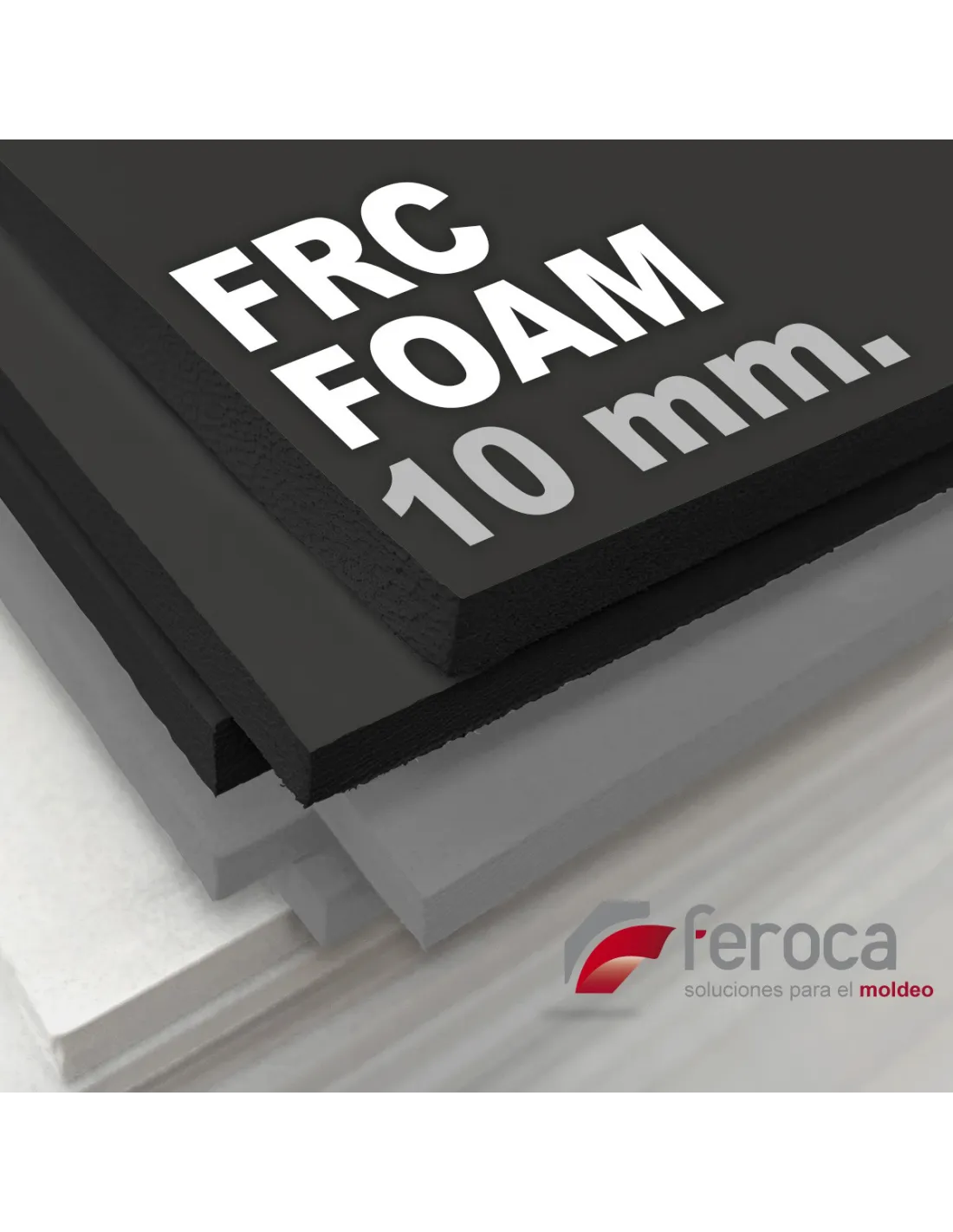
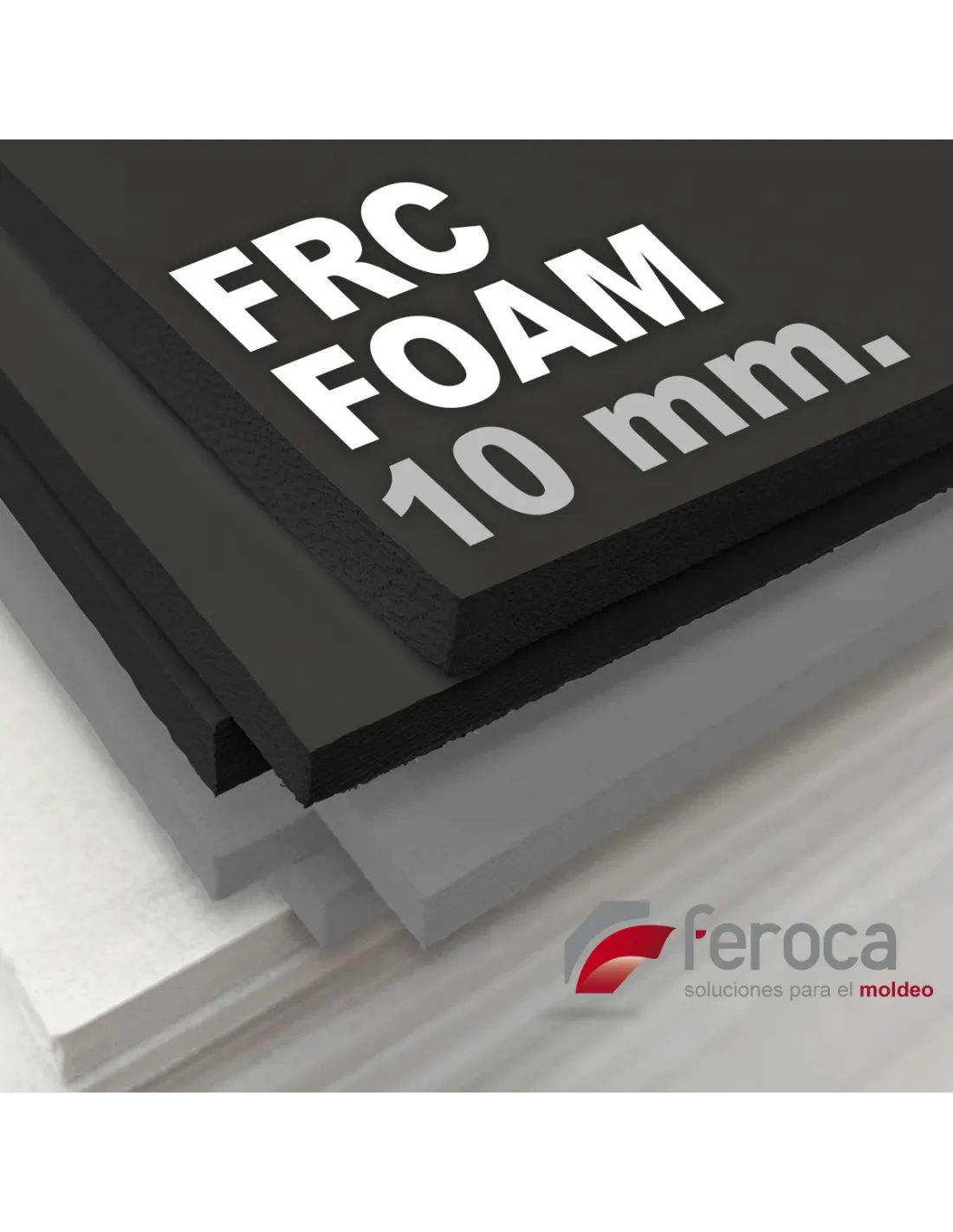
FRC FOAM BLACK 10mm -High Density EVA Rubber-
208250301
Product available with different options
€19.00
22,99 € Tax incl.
22,99 € Tax incl.
High-density black EVA foam (156 kg/m³), 10 mm thick. Cuttable, thermoformable and paintable. Ideal for cosplay, props and scenography.
FRC FOAM Black 10mm is a high-density EVA foam (156 kg/m³) built for workshop use: it cuts cleanly, thermoforms with heat and accepts acrylic paint without primer. At 10 mm thick it is the most robust option in the range, perfect for cosplay structures, armour, volumetric props and scenography where you need body and rigidity without excess weight.
Technical specifications
| Parameter | Value |
|---|---|
| Material | EVA Foam (Ethylene-Vinyl Acetate) |
| Colour | Black |
| Thickness | 10 mm |
| Density | 156 kg/m³ (high density) |
| Shore Hardness | 30º – 35º |
| Available formats | Several sheet sizes to choose from |
| Shipping | Rolled |
| Size note | Approximate dimensions due to factory cutting |
What it is used for
FRC FOAM Black 10mm is the reference material in cosplay workshops and prop-making for its balance of rigidity, lightness and ease of handling. Its 10 mm thickness makes it especially suitable for pieces that need inherent volume without internal structures.
- Armour and breastplates for cosplay and LARP
- Helmets, shoulder pads and large-volume structural pieces
- Props and replicas of weapons, shields and prop objects
- Theatrical scenography and event sets
- Bases and substrates to combine with thermoplastics such as Worbla or Thibra
- Structural fill in volumetric figures and scale models
- Padding and cushioning in costumes and special wardrobe
How to use it
- Design and pattern: draw the pieces on paper or cardboard and transfer them to the FRC FOAM sheet using a marker or fine-tip pen.
- Cut: use a fresh-blade craft knife or sturdy scissors. For clean cuts in 10 mm, a precision knife with a metal guide gives the best results.
- Thermoform: apply heat with a heat gun or hot-air stripper, keeping your distance to avoid burning the surface. EVA softens in seconds; shape it with your hands (protected) or over a form and hold it in position until it cools and the shape sets.
- Bond: join the pieces with a cyanoacrylate or neoprene contact adhesive. Apply to both faces, leave to rest according to the adhesive instructions and press firmly.
- Clean up the joints: once bonded, smooth and shape the joins with a rotary grinding tool or fine-grit sandpaper. Always work with a particle mask to avoid inhaling the dust generated.
- Paint: apply acrylic paints by brush or spray directly onto the surface. For highly detailed finishes or realistic textures, combine FRC FOAM with Worbla or Thibra before painting.
- Add final details: acrylic varnishes, patinas or primers increase finish durability and abrasion resistance.
Usage tips
Heat control when thermoforming
At 10 mm thick, FRC FOAM needs a little more heating time than thinner gauges. Move the heat gun in circles to heat evenly and avoid hot spots that burn the surface. If you need a sharp curve, heat in several short passes rather than one long one. Never hold the heat gun still over the EVA: the surface melts in seconds and the damage is irreversible.
Strong, clean bonding
For high-strength joins on large-volume pieces, neoprene contact adhesives work better than cyanoacrylates on wide surfaces. Apply a thin coat to both faces, wait until the adhesive is almost dry to the touch (between 3 and 5 minutes depending on ambient temperature) and join the pieces with firm pressure. Joints come out cleaner if you seal and sand the cut edge before bonding.
Surface preparation for painting
High-density FRC FOAM accepts acrylic paint directly, but a quick pass of heat over the surface before painting closes the micro-pores and improves adhesion. For metal-effect or worked-leather finishes, a flexible acrylic primer as a base extends the life of the finish and prevents cracking when the piece is flexed.
Frequently asked questions
What is the difference between the various EVA foam thicknesses?
Thickness determines the volume and rigidity of the finished piece. 2 mm thicknesses are ideal for fine details, surface layers and flat decorative elements. 5 mm provides a balance between flexibility and body. FRC FOAM at 10 mm is the stiffest in the range and is reserved for structural pieces, armour, helmets or any element that must hold its shape without internal support. The density (156 kg/m³) is the same across all thicknesses.
Can it be painted directly without primer?
Yes. FRC FOAM accepts acrylic paint directly onto its surface. However, a flexible acrylic primer improves adhesion and finish durability, especially on pieces that will be flexed or subject to frequent abrasion. For metallic effects or highly detailed finishes, primer is especially recommended.
What adhesive bonds EVA foam best?
Neoprene contact adhesives work very well on wide surfaces because they allow positioning time and create a flexible bond. For small, localised joins, cyanoacrylate adhesives are faster. In both cases, apply to both surfaces to be joined and press firmly.
Can EVA foam be sanded or carved down?
Yes. You can carve down, round off and texture FRC FOAM with a rotary grinding tool or medium-grit sandpaper. Sanding generates fine EVA dust that can irritate the respiratory tract, so it is essential to work with a particle mask (FFP2 or higher) and in a well-ventilated space.
Is EVA foam resistant to moisture and outdoor use?
EVA is a low water-absorption material and tolerates occasional moisture well. For outdoor use or pieces exposed to harsh conditions, it is recommended to seal the surface with acrylic varnish or polyurethane spray, which also protects the paint and increases surface mechanical resistance.
How does it combine with thermoplastics?
FRC FOAM 10 mm is an excellent structural base for thermoplastics such as Worbla or Thibra. It is used as a volume core: the EVA is thermoformed into the desired shape and then covered with the hot thermoplastic, which adheres to the EVA surface and adds rigidity, detail and an ideal surface for painting. This technique reduces thermoplastic consumption and lightens the final result.
Are the sheets shipped rolled? Do they return to flat?
Yes, FRC FOAM sheets are shipped rolled for ease of transport. When unrolling them, lay them flat with a weight on top for a few hours at room temperature. If you need to speed up the process, a gentle pass of heat along the outer face while keeping it flat helps it recover its flatness in minutes.
What sheet sizes are available?
FRC FOAM Black 10mm is available in several sheet sizes to choose from in the product selector. Dimensions are approximate due to factory cutting, so a small variation is normal. If your project requires exact dimensions, discard the sheet edges when patterning.
Video tutorials
★STAR WARS★ helmet tutorial 𝗘𝗩𝗔 𝗙𝗢𝗔𝗠 🛸 MANDALORIAN Armour ► [Boba Fett] cosplay
Feroca Live: EVA Foam, creating a mask step by step
No reviews
Tap to zoom