Shopping Cart



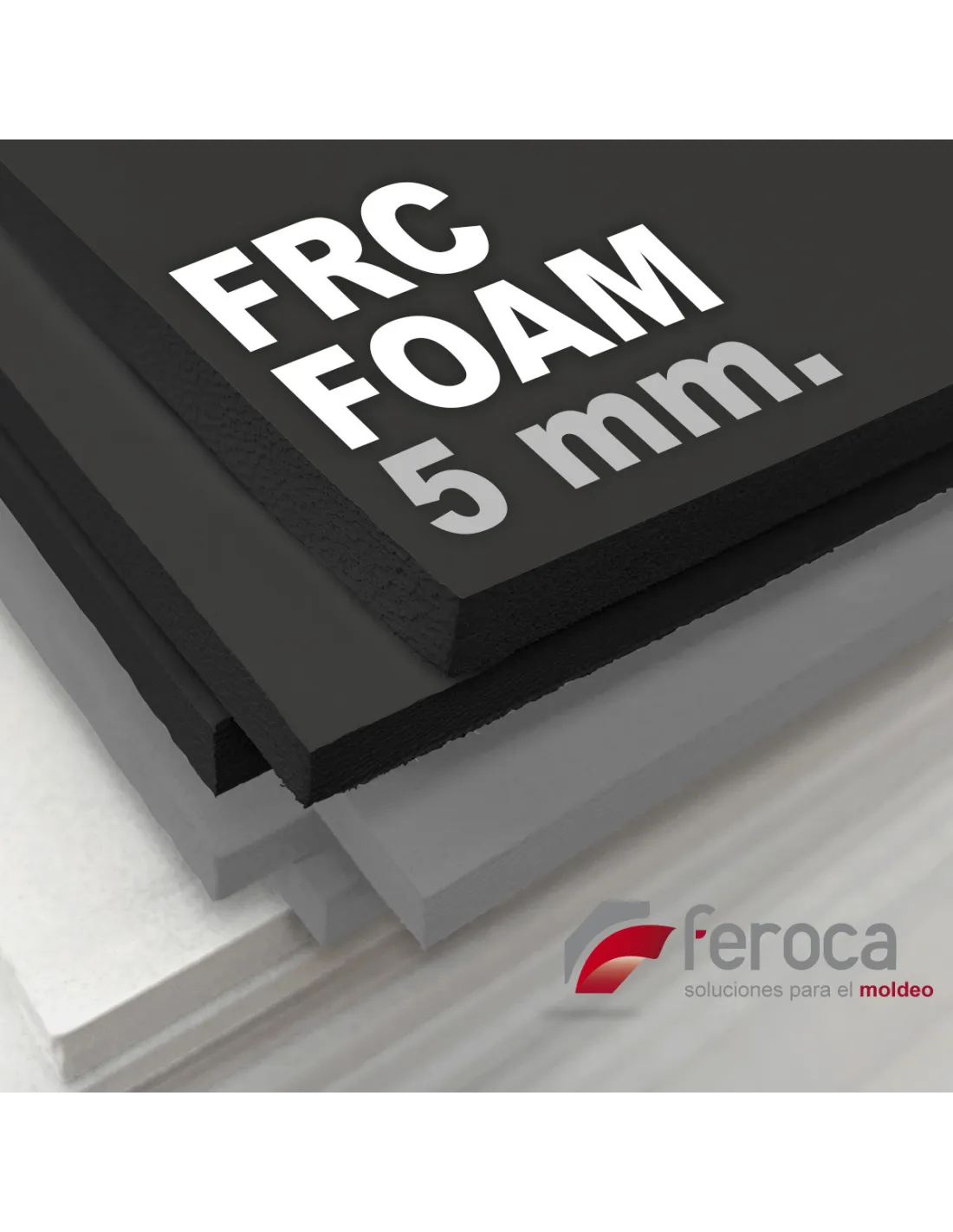
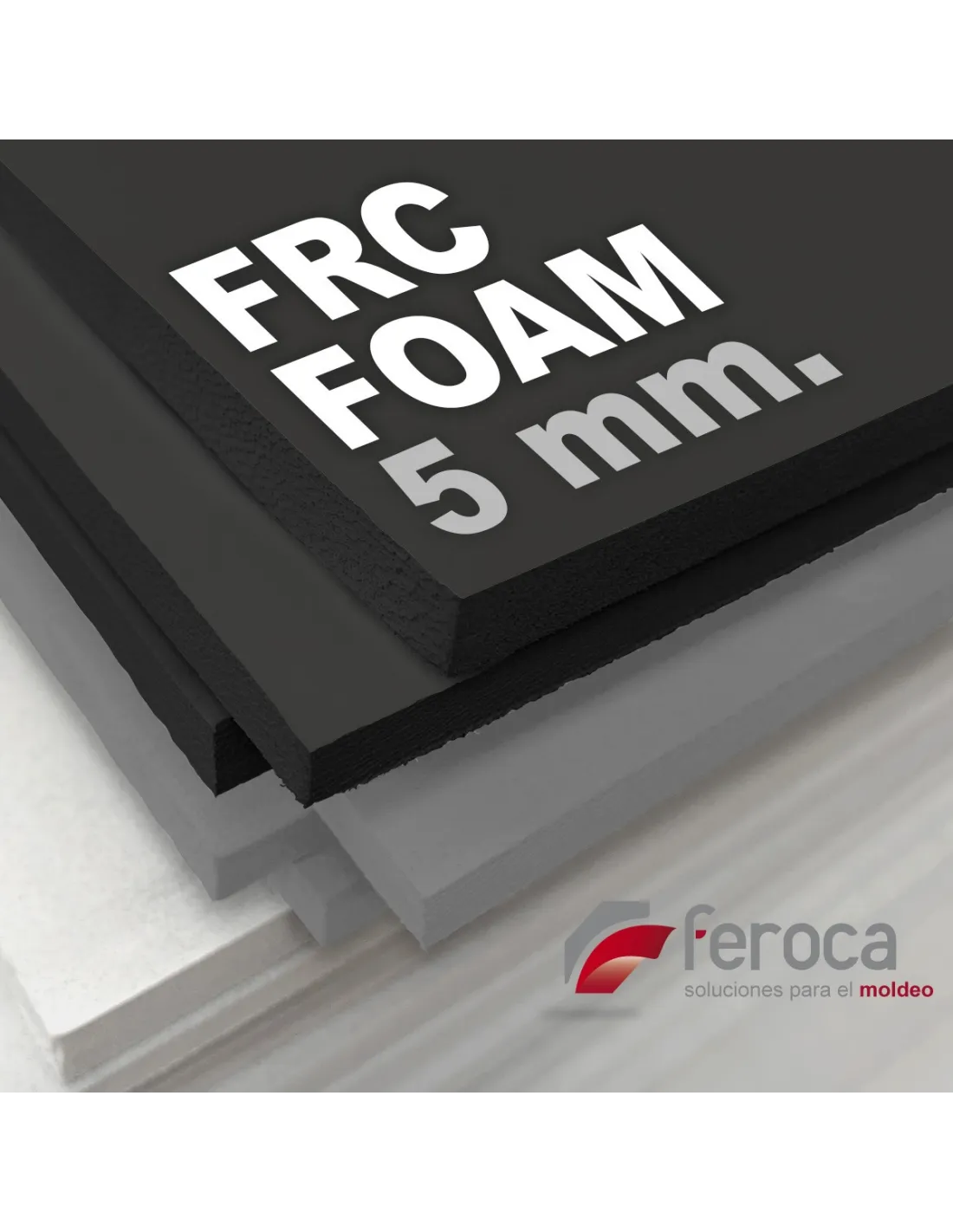
FRC FOAM BLACK 5mm -High Density EVA Rubber-
208250201
€13.00
15,73 € Tax incl.
15,73 € Tax incl.
High-density black EVA foam (156 kg/m³), 5 mm thick. Ideal for cosplay, props and scenography. Easy to cut, heat-mould and paint.
FRC FOAM Black 5 mm is a high-density EVA foam (156 kg/m³) designed for demanding cosplay, scenography and prop-making professionals and hobbyists. Its combination of rigidity, lightness and ease of use makes it the go-to material for building armours, masks and props with clean, long-lasting finishes.
Technical specifications
| Material | EVA foam (Ethylene-Vinyl Acetate) |
|---|---|
| Density | 156 kg/m³ |
| Thickness | 5 mm |
| Colour | Black |
| Shore Hardness | 30 - 35 Shore A (approx.) |
| Presentation | Rolled sheets (various sizes available) |
| Cuttability | Scissors, craft knife or scalpel |
| Heat-mouldable | Yes (heat gun / heat stripper) |
| Paintable | Yes (acrylic paints and sprays) |
| Note on dimensions | Approximate due to factory cutting |
What it's used for
FRC FOAM Black 5 mm is the usual choice when you need an intermediate thickness with good rigidity and excellent heat response. Its black base colour reduces priming work on dark projects and saves layers of paint.
- Armours and chest pieces for cosplay
- Character masks and helmets
- Props and prop weapons
- Theatre and television scenography
- Architectural and presentation scale models
- Reinforcements and fillers in combination with thermoplastics such as Worbla or Thibra
- Templates and cutting moulds for repeated part series
How to use it
- Design and trace — Draw the pattern directly onto the sheet with a marker or pen. Dimensions are approximate, so check the actual measurements before cutting.
- Cut — Use scissors for curved shapes or a craft knife with a metal ruler for straight lines. A precision scalpel allows bevelled cuts for cleaner joins.
- Heat-mould — Apply the heat gun or heat stripper at about 10–15 cm from the surface, moving it continuously. The foam softens in seconds; bend it to the desired shape and hold it until it cools. Work with heat-resistant gloves.
- Bond the pieces — Use contact adhesive (gel cyanoacrylate for spot bonds, or spray contact adhesive for large surfaces). Press for a few seconds and allow to cure according to the adhesive instructions.
- Clean up the joins — Sand or file the joints gently to level the surfaces. Always work with an FFP2 mask to avoid inhaling EVA dust.
- Prime and paint — Apply a coat of flexible primer or acrylic paint directly. Add thin layers and allow to dry between coats. For metallic or textured effects, use sprays specifically formulated for rubber.
- Combine with thermoplastics — On the FRC FOAM base you can bond sheets of Worbla or Thibra to add rigidity and surface detail.
Heat caution: heat guns and heat strippers reach high temperatures that can cause burns. Do not bring the heat source closer than 10 cm to the foam or hold it fixed on the same spot. Work in a ventilated area. When sanding or cutting large quantities, always use a particle mask.
Tips and tricks
Achieve perfect cuts
Slightly heat the surface before cutting tight curves: warm foam yields better and the knife won't drag the material. Change the craft knife blade frequently; a dull blade crushes the foam instead of cutting it cleanly.
Seamless joins
For invisible joins, cut the edges at a 45° bevel. Gluing two opposing bevels together gives you a right-angle joint with very little excess material. Apply a quick pass of the heat gun over the finished joint to seal the pores and smooth the surface before painting.
Durable paint finishes
EVA foam does not absorb paint well without prior preparation. A thin coat of flexible primer or diluted PVA glue acts as a sealer and improves the adhesion of any acrylic paint. For pieces that will receive heavy abrasion, apply a flexible varnish over the final finish to prevent chipping.
Frequently asked questions
What EVA foam thickness should I choose for my project?
It depends on the type of piece. For small details and complex curved areas, 2 mm offers greater flexibility. 5 mm, like this FRC FOAM Black, is the most versatile thickness: it holds its shape well after moulding and is rigid enough for medium-sized armours and structures. For large, flat pieces that need to be self-supporting, 10 mm is the best option.
How do you bond two pieces of EVA foam?
The most common method is contact adhesive: apply a thin coat to both surfaces, allow it to lose its shine (1–2 minutes) and press firmly. For quick bonds on small areas, gel cyanoacrylate works very well. Avoid water-based adhesives for structural joins, as EVA is non-porous and the bond will be very weak.
Can EVA foam be heat-moulded more than once?
Yes. FRC FOAM can be reheated and reshaped several times without degrading. Bear in mind that each heat cycle may slightly alter the surface texture, so it is preferable to get it right in the first attempts. If the piece has been glued with adhesive, reheat carefully to avoid separating the joins.
Which paints work best on EVA foam?
Flexible acrylic paints are the most recommended, both in pots for brush application and in spray form. Always apply in thin coats. For greater durability, seal the finish with a flexible varnish. Avoid enamel or solvent-based paints without checking compatibility first, as they may attack the foam surface.
Does the sheet arrive in the exact size stated?
Dimensions are approximate due to the factory cutting process. A small variation is normal. Sheets are sent rolled to protect the material during transport; when you receive them, lay them flat on a surface and allow them to recover their natural shape before cutting.
Is it possible to combine EVA foam with thermoplastics?
Yes, and it is a very common combination in professional cosplay projects. FRC FOAM acts as a lightweight, shock-absorbing structural base, while thermoplastics such as Worbla or Thibra bond on top to add rigidity and surface detail. When heated, the thermoplastic adheres directly to the EVA without the need for additional adhesive in most cases.
What is the difference between the black, grey and white versions of FRC FOAM?
The base colour affects the painting process. The black version requires fewer coats for dark and metallic finishes. The grey is the most neutral and most widely used when the final finish is light-coloured or when you need to see contrast during work. The white is ideal when the final colour is very light or when painting in pure colour. The physical properties (density, hardness, heat behaviour) are identical across all three colours.
Is EVA foam suitable for skin contact use?
FRC FOAM is a material commonly used in cosplay and prop applications that come into contact with the skin. However, if you have sensitive skin or known allergies to synthetic polymers, carry out a patch test on a small area before prolonged use. For masks covering the face or neck, ensure the piece has adequate ventilation.
Video tutorials
★STAR WARS★ helmet tutorial 𝗘𝗩𝗔 𝗙𝗢𝗔𝗠 🛸 MANDALORIAN Armour ► [Boba Fett] cosplay
Feroca Live: EVA Foam, creating a mask step by step
FRC FOAM for cosplay: the foundation of every armor
High-density EVA rubber FRC FOAM (156 kg/m³) is the starting material for most cosplay armor. It cuts with a utility knife, heat-forms with a heat gun and bonds with contact adhesive. Unlike craft foam, it holds its shape under heat, accepts texturing with thermal tools and survives an entire convention without warping.
- 2 mm — details, beveled edges, secondary layers and small pieces
- 5 mm — main armor panels: chest plates, bracers, greaves
- 10 mm — voluminous pieces: pauldrons, helmets and structural bases
For rigid armor with fine detail, combine it with Worbla Finest Art: encapsulate the foam between two layers of Worbla for rigidity with minimal weight. Add volume and three-dimensional textures with EVA AIR Foam Clay.
```
No reviews
Tap to zoom