Shopping Cart



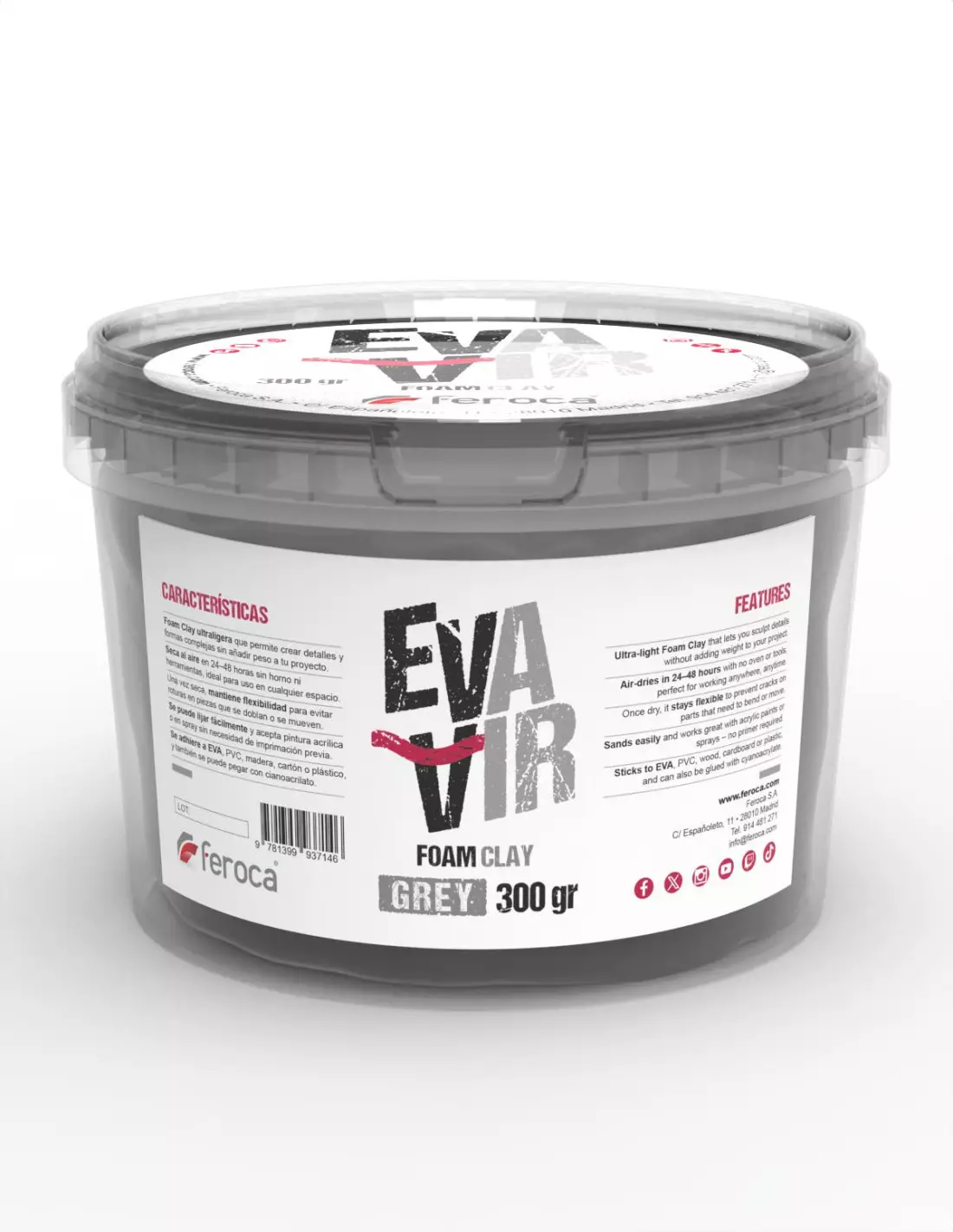
EVA AIR Gray- Foam Clay Professional -
208258300
€12.50
15,13 € Tax incl.
15,13 € Tax incl.
Professional EVA AIR Foam Clay for cosplay. Air-dries in 24–48 h, ultra-lightweight and flexible. Sand, cut and paint without cracking. 300 g.
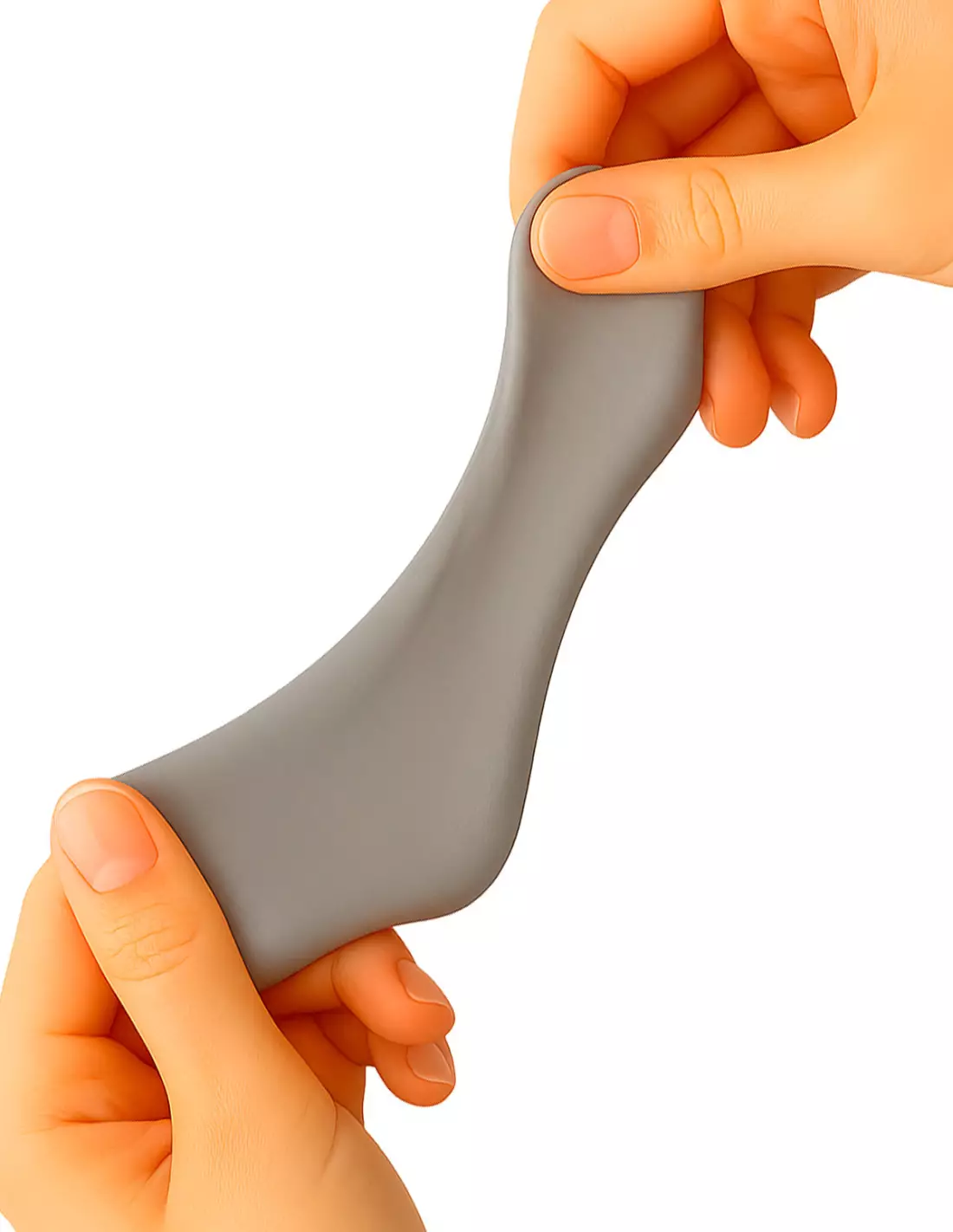
EVA AIR is an ultra-lightweight, mouldable EVA rubber Foam Clay, formulated for cosplayers and professional makers who need to finish armatures, props and accessories with precision and minimal weight. It is worked by hand, air-dries without an oven and retains slight flexibility once hardened, making it ideal for pieces that must withstand movement or impact. Available in Grey, Black and White in 300 g containers.
Technical specifications
| Property | Value |
|---|---|
| Material type | Mouldable EVA rubber Foam Clay |
| Drying time | 24–48 h air dry |
| Flexibility after cure | Slight (non-rigid) |
| Presentation | 300 g container |
| Available colours | Grey, Black, White |
| Toxicity | Non-toxic, odourless |
| Compatibility | EVA, foam, thermoplastics |
| Post-processing | Sandable, cuttable, primeable and paintable |
What it is used for
EVA AIR is designed for the cosplay workshop and prop fabrication, where you need to add volume, detail or finish to EVA rubber structures without adding unnecessary weight. It is also useful for any maker working with foam who needs a compatible filling or modelling material that dries without heat.
- Filigree, relief work and ornaments on cosplay armatures
- Horns, carved gems, handles and prop accessories
- Sealing and filling joints between EVA rubber sheets
- Modelling repetitive pieces in silicone moulds
- Repairing damaged areas on already-built armatures
- Miniature details where sheet EVA rubber cannot reach
- Textured finishes on thermoplastic structures
How to use it
- Open the container and take the required amount. Knead with your hands until you obtain a smooth, uniform, bubble-free texture; body heat speeds up the process.
- Model directly by hand or press into silicone moulds for repetitive pieces.
- To adhere to EVA rubber sheets, degrease or lightly sand the surface before applying.
- Flatten, texture or add fine detail with modelling tools or sculpting sticks.
- Leave to air-dry at room temperature for 24–48 h. For thick pieces (>1 cm), turn them every 12 h to ensure uniform drying.
- Once dry, sand with fine-grit sandpaper to smooth surfaces or refine detail.
- Prime with flexible primer and paint with flexible acrylics for a durable professional finish.
Usage tips
Working temperature
EVA AIR is most workable at room temperature or slightly warm. If your workshop is cold and the material feels less pliable, knead it for a few minutes between your palms — no external heat is needed. Avoid working near direct heat sources during modelling: the material may start drying unevenly on the outside.
Bonding with EVA sheet
For a solid bond with high-density EVA rubber sheets, sand or roughen the contact area before pressing EVA AIR onto it. The rough surface provides mechanical grip and prevents the piece from detaching once dry. For additional reinforcement on pieces under tension, apply a thin layer of contact adhesive before placing the material.
Painting and finishing
Because EVA AIR retains some flexibility after curing, it can handle movement without cracking — but this also means rigid paints may flake off. Always use primers and acrylics formulated for flexible materials. The base colour (Grey, Black or White) lets you save undercoat layers: choose the shade closest to your final finish to reduce the number of coats needed.
Frequently asked questions
Does it need an oven or UV lamp to dry?
No. EVA AIR dries completely in air within 24–48 h at room temperature. No additional equipment is needed, which makes it especially practical for workshops without specialist infrastructure or for working at events and conventions.
What is the maximum thickness that can be modelled without drying problems?
For pieces more than 1 cm thick, turn the piece every 12 h so that drying is uniform from all sides. With very large cross-sections, the interior may take longer than 48 h to consolidate fully. If you need a lot of volume, consider building a core from sheet EVA rubber and using EVA AIR only on the exterior for the detail work.
Can it be used in silicone moulds for production runs?
Yes, and this is one of its most efficient applications. Press EVA AIR into the silicone mould, compact it well to avoid voids and leave to dry. Because it is flexible and does not bond strongly to silicone, demoulding is straightforward. Ideal for manufacturing repetitive elements such as scales, gems or decorative appliqués in large quantities.
Can it be sanded and painted like conventional EVA rubber?
Yes. Once dry, EVA AIR behaves similarly to EVA rubber: it accepts fine-grit sandpaper, cutting with a craft knife or scissors, and priming before painting with acrylics. Use flexible primer and paint so the finish does not crack with the movement of the piece.
How is leftover material stored?
Seal the container airtight after each use. If the material has been exposed to air during work, wrap it in cling film before closing the container to prevent a surface skin from forming. Stored correctly, it retains its properties for several months.
Is it safe to use indoors without special ventilation?
Yes. EVA AIR is non-toxic and does not emit strong odours during modelling or drying. It can be used safely in enclosed workshops, domestic rooms or shared workspaces without the need for extraction or special protective equipment.
Can it be combined with other modelling materials to build props?
Absolutely. EVA AIR is designed to complement sheet EVA rubber structures by providing fine detail where sheet material cannot reach. It can also be used alongside thermoplastics to seal joints or add relief. For projects requiring harder, more detailed modelling from scratch, materials such as Chavant professional sculpting clays are a complementary alternative.
What is the difference between the available colours (Grey, Black, White)?
The technical behaviour is identical in all three versions. The only difference is the base colour, which lets you choose the shade closest to your final paint finish and reduce the number of coats needed. Grey is the most versatile for metallic or neutral finishes; Black makes dark or matte black finishes easier; White is ideal for light colours, pastels or pure white finishes.
No reviews
Tap to zoom