Shopping Cart


EVA Profiles Kit 1 meter
208263000
€25.00
30,25 € Tax incl.
30,25 € Tax incl.
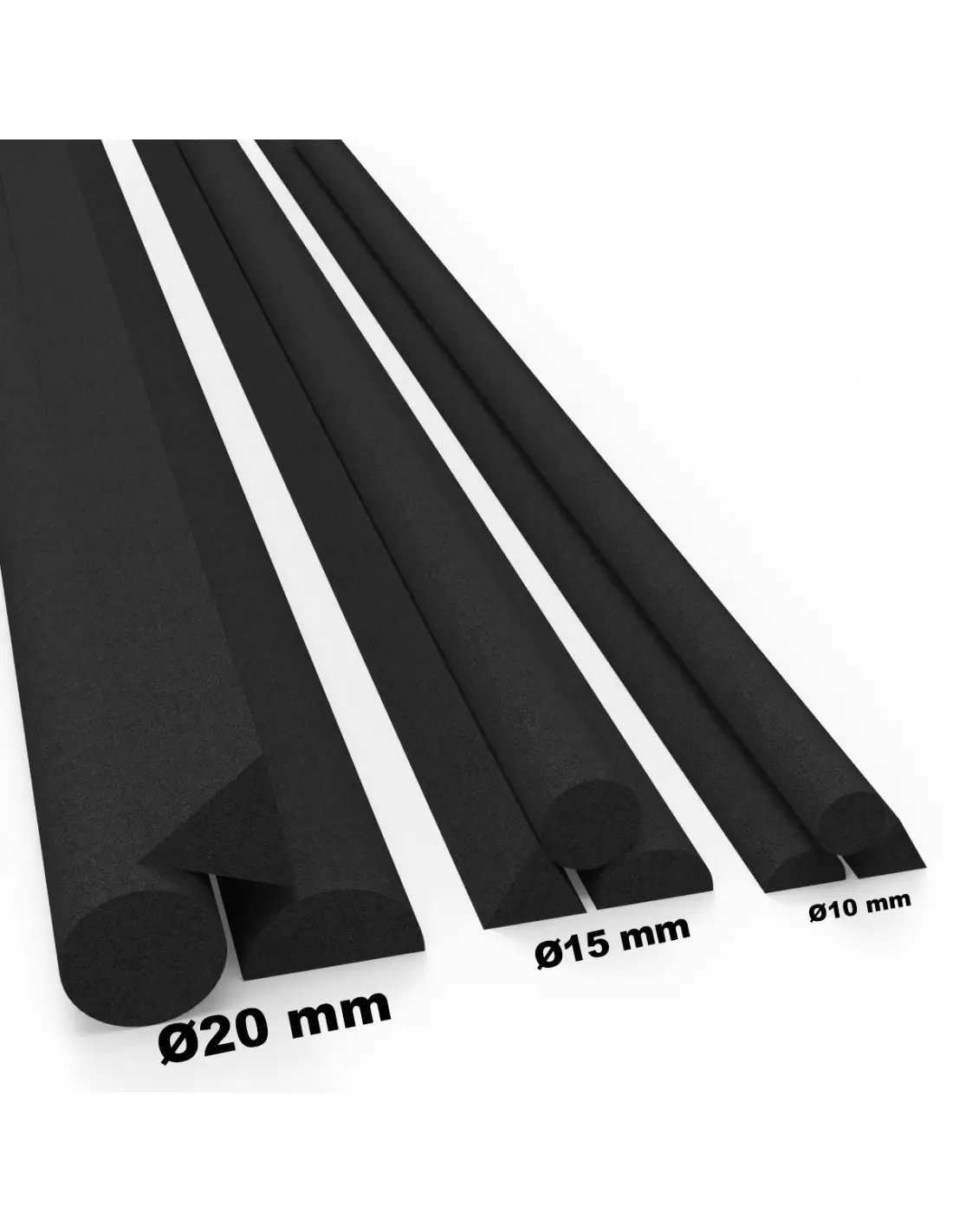
Kit of 9 EVA profiles of 1 m (3 round, 3 half-round, 3 triangular) in Ø10, Ø15 and Ø20 mm. Thermoformable and lightweight.
EVA foam profiles are prefabricated mouldings that let you add reliefs, trims and clean edges onto any EVA foam base without having to carve from scratch. This kit brings together the three most commonly used profiles in cosplay and prop making — round, half-round and triangular — in three different diameters, all in 1-metre lengths ready to cut, thermoform and bond with contact adhesive.
Technical specifications
| Feature | Detail |
|---|---|
| Material | EVA foam (ethylene-vinyl acetate) |
| Length per profile | 1 metre |
| Profiles included | 9 in total: 3 round, 3 half-round, 3 triangular |
| Diameters / sizes | Ø10 mm, Ø15 mm, Ø20 mm (one of each per profile type) |
| Shore Hardness | 30–35° |
| Machining | Cuttable with craft knife, scalpel or saw; sandable and paintable |
| Thermoformable | Yes, with a heat gun at low temperature |
| Recommended bonding | Contact adhesive |
| Supply colour | Grey |
What it's used for
These profiles are designed to add volume, decorative structure and a professional finish to armours, helmets and props without the hours of carving that building them from sheet foam would require. Combined with FRC FOAM 2 mm, FRC FOAM 5 mm or FRC FOAM 10 mm, they allow you to build multilayer pieces with strong visual coherence and minimal weight.
- Perimeter trims on chest, back, shoulder and thigh armour pieces
- Decorative ribs and "ribbing" on helmets and pauldrons
- Simulation of pipes, cables and conduits on sci-fi and cyberpunk props
- Guards and grips on swords, axes and fantasy weapons
- Panel frames and design dividers on science fiction props
- Ornamental details on shields, belts and straps
How to use it
- Plan the layout. Draw or mark on your base piece (made of FRC FOAM) the position where the profile will go, taking curves and angles into account.
- Cut to size. Use a sharp craft knife or scalpel to cut the profile to the exact length. For angled cuts, tilt the blade or use a guide.
- Thermoform if needed. Apply gentle heat with a heat gun at a distance of 10–15 cm to soften the profile and adapt it to curved surfaces. Keep the heat moving to avoid burns.
- Hold the shape while it cools. Press the profile against the desired curve or use a template until it regains rigidity (10–20 seconds).
- Apply contact adhesive. Spread a thin layer on the back of the profile and on the base piece area. Allow the solvent to evaporate according to the adhesive instructions (usually 1–3 minutes).
- Bond and press. Join the surfaces firmly and hold the pressure for a few seconds. The bond is immediate on contact.
- Sand and finish. Once bonded, sand the ends and transitions if necessary. The profile accepts primer, acrylic paint and lacquer finishes.
Tips for use
Clean cuts without deformation
A blunt craft knife crushes the foam before cutting it, leaving irregular edges. Replace the blade frequently or use a scalpel with a new blade. For straight, repeated cuts, a fixed metal guide will save you time and mistakes. If you need bevels, tilt the blade between 30° and 45° and cut in a single continuous stroke.
Thermoforming without marks or bubbles
Always move the heat gun in continuous passes: if you concentrate heat on one spot, the surface melts and bubbles appear that cannot be corrected. The optimal distance is 10 to 15 cm. For very pronounced curves, heat and bend in several progressive passes rather than forcing it all at once. If you are working with Ø10 mm profiles, take extra care: being thinner, they heat up very quickly.
Visual integration with the base piece
The grey colour of the profiles matches that of the FRC FOAM sheets, which makes the final painting easier with no absorption differences. To make the transition between the profile and the sheet invisible, apply a layer of diluted contact adhesive or acrylic sealer at the joint before painting. If you are going to use spray paint, first apply a coat of flexible primer to prevent cracking.
Frequently asked questions
Can EVA foam profiles be painted?
Yes. The EVA profiles in this kit accept acrylic paint, flexible spray paint and lacquer finishes. For best results, first apply a flexible primer to seal the surface and prevent the paint from cracking when bending or handling the piece.
What adhesive is recommended for bonding EVA profiles to other surfaces?
Contact adhesive is the most common and effective option. It is applied to both surfaces, the solvent is allowed to evaporate, and the surfaces are pressed together. Make sure the adhesive is compatible with foams to avoid attacking the material.
Is it possible to bond these profiles to materials other than EVA?
Yes, as long as the adhesive is compatible with both surfaces. EVA profiles bond well to cardboard, wood, foamed PVC and other rigid plastics using contact adhesive. On very smooth or porous surfaces, prepare the base with a light sanding to improve adhesion.
How many different profiles does the kit include and in what sizes?
The kit contains 9 profiles in total: 3 round, 3 half-round and 3 triangular. Each type comes in three diameters — Ø10 mm, Ø15 mm and Ø20 mm — allowing you to combine them to create visual hierarchies and details at different scales.
What tools are used to cut EVA foam without damaging it?
The most common tools are a craft knife with a new blade, a scalpel and a fine-blade saw. For straight cuts, a metal guide ensures clean lines. Avoid blunt tools: they crush the foam before cutting it and leave irregular edges.
At what temperature is EVA foam thermoformed?
EVA profiles are softened with a heat gun at a low temperature, keeping a distance of 10 to 15 cm to avoid burns or bubbles on the surface. High temperatures are not needed: it is enough for the material to feel flexible to the touch to be able to curve and shape it.
Are EVA profiles suitable for outdoor use or for costumes that will experience heavy wear?
EVA foam is lightweight and resistant to light impact, but it is not designed for heavy mechanical stress or prolonged outdoor exposure without sealing. For outdoor use or pieces subject to heavy movement, apply a coat of flexible sealer and make sure the adhesive joints are well reinforced.
Can EVA foam be sanded to smooth edges or create bevels?
Yes. EVA foam sands easily using medium-fine grit sandpaper (120–180). Sanding allows you to smooth cuts, create transitions between pieces and shape bevels. Work with smooth, even strokes to avoid removing too much material.
No reviews
Tap to zoom