
Shopping Cart
Materials for making molds: silicone, alginate, latex and more
Molding is the technique of capturing the shape of an original to reproduce it as many times as you need. Here you'll find all the materials to do it: tin and platinum silicones, alginates, latex, polyurethane rubbers, plaster and release agents. Each material has its ideal use case — this page helps you choose the one that best suits your project.
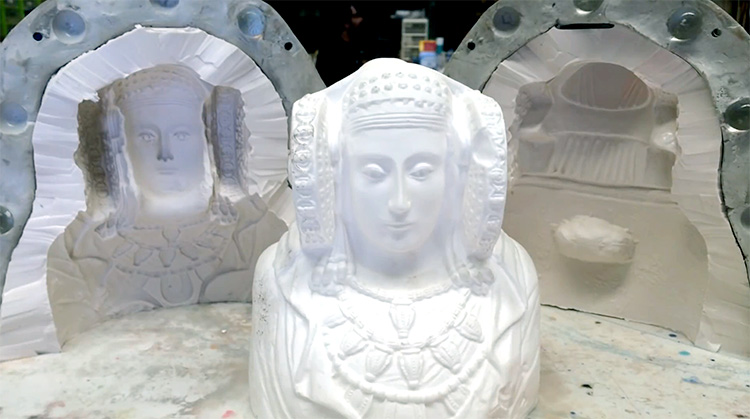
Silicone for molds
Silicone is the most versatile molding material: it reproduces the finest detail, requires no release agent on most surfaces, and withstands hundreds of pours. There are two families with different characteristics:
Tin silicones (condensation)
They cure with ambient humidity and are more affordable. They are the ideal starting point for anyone beginning to make molds. They accept marble or slate fillers and work well with polyurethane resins and plaster. Their main limitation is that they are incompatible with certain epoxy resins.
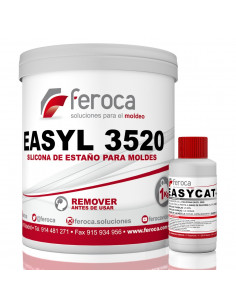 EASYL 3520
Affordable, 10:1 ratio, Shore A20. Ideal for beginners.
EASYL 3520
Affordable, 10:1 ratio, Shore A20. Ideal for beginners.
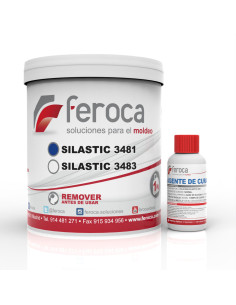 Silastic 3481
Professional, Shore A30, high tear resistance.
Silastic 3481
Professional, Shore A30, high tear resistance.
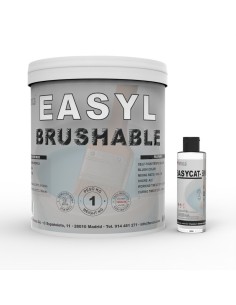 EASYL Brushable
Self-thixotropic, drip-free. For brush-on and blanket molds.
EASYL Brushable
Self-thixotropic, drip-free. For brush-on and blanket molds.
Platinum silicones (addition)
They cure without by-products, giving them greater dimensional precision and durability compared to tin silicones. They are the choice for long production runs, epoxy resins and applications that require translucent molds to see the interior. Important: they are sensitive to inhibition by contact with certain materials (sulfur, amines, metallic tin).
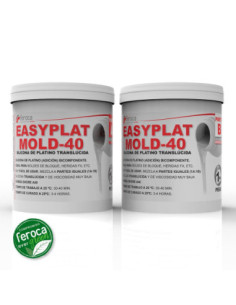 EASYPLAT MOLD-40
Translucent, Shore A40, extremely high precision and durability.
EASYPLAT MOLD-40
Translucent, Shore A40, extremely high precision and durability.
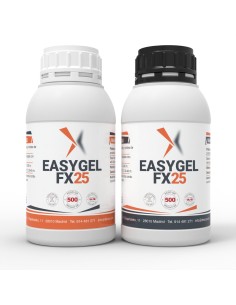 EasyGel FX25
Shore A25, for FX prosthetics and detail molds.
EasyGel FX25
Shore A25, for FX prosthetics and detail molds.
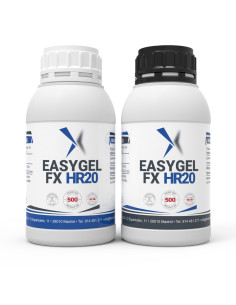 EasyGel FX HR20
Fast cure, high tear resistance. For demanding production runs.
EasyGel FX HR20
Fast cure, high tear resistance. For demanding production runs.
Tin or platinum? To get started, tin silicone is enough. If you're going to do runs of more than 50 pours, use epoxy resins, or need a mold that lasts for years, go with platinum.
Alginate for human body molds
Alginate is the only molding material suitable for applying directly to skin, hair and eyes. It is the standard in special effects, prosthetics and body art. It is mixed with water, sets in a few minutes and captures micro-details such as fingerprints. Being natural and biodegradable, the mold only lasts a few hours, so it is used for single pours or very short runs. Plaster or gypsum paste is used for the casting.
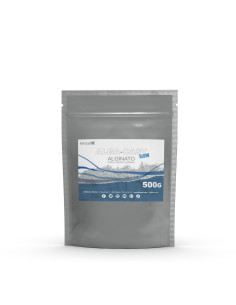 Alga-Cast Slow
Longer working time. For complex areas or beginners.
Alga-Cast Slow
Longer working time. For complex areas or beginners.
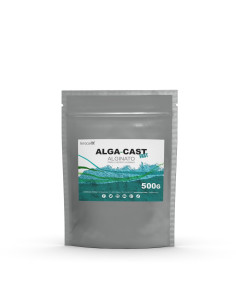 Alga-Cast Fast
Fast setting. For hands, feet and hair-free areas.
Alga-Cast Fast
Fast setting. For hands, feet and hair-free areas.
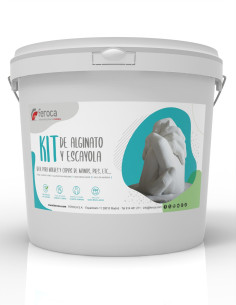 Kit Alginato + Escayola
Complete kit for hand and foot molds.
Kit Alginato + Escayola
Complete kit for hand and foot molds.
Latex for molds
Liquid latex is applied with a brush in successive layers over the original. It is the most affordable method for rigid originals with simple geometry (figures, bas-reliefs, decorative elements). It requires patience — between 8 and 15 layers are needed — but the result is a very flexible mold that releases easily. It is not suitable for skin.
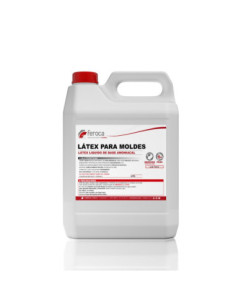 Látex Líquido para Moldes
Polyurethane rubber for molds
Polyurethane rubbers offer superior tear and abrasion resistance compared to silicone, making them especially well suited for concrete molds, plaster, abrasive materials and industrial production runs. They cure in a few minutes, but require a release agent to prevent them from bonding to the original.
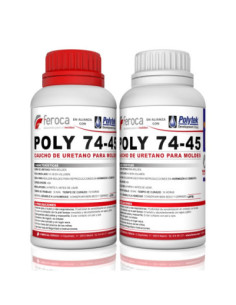 Poly 74-45
Shore A45. High resistance for concrete and plaster molds.
Poly 74-45
Shore A45. High resistance for concrete and plaster molds.
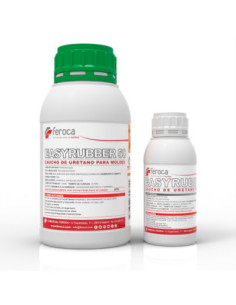 EasyRubber 50
Shore A50, demolded in 7 min. The fastest in the range.
EasyRubber 50
Shore A50, demolded in 7 min. The fastest in the range.
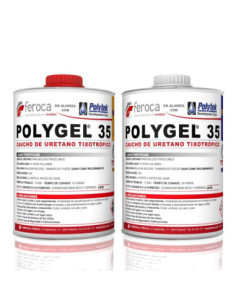 Polygel 35
Thixotropic, drip-free. For vertical surfaces.
Polygel 35
Thixotropic, drip-free. For vertical surfaces.
Plaster for molds and shell molds
Plaster is used both for casting alginate molds and for making the shell mold (the rigid casing that supports the flexible mold). Not all plasters are equal: hardness and expansion during setting vary enormously between products. For shell molds, choose hard plasters; for high-detail reproductions, use high-density, low-expansion ones.
 EXADURO
Hard plaster for shell molds. 1,300 kg/cm².
EXADURO
Hard plaster for shell molds. 1,300 kg/cm².
 Arquero
High resistance 5,000+ kg/cm². For industrial use.
Arquero
High resistance 5,000+ kg/cm². For industrial use.
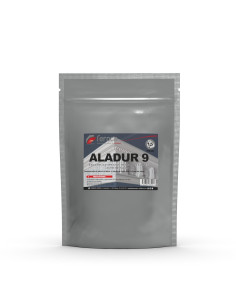 ALADUR 9
For high-detail reproductions. Low expansion.
ALADUR 9
For high-detail reproductions. Low expansion.
Release agent: essential in many processes
Release agent prevents the mold material from bonding to the original (or vice versa). With silicone it is not always necessary, but with polyurethane rubber it is essential on porous surfaces. There are two main families: spray (more convenient for large surfaces) and liquid (more uniform and controlled).
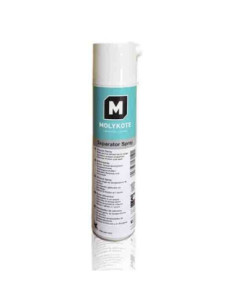 Molykote Separator Spray
Silicone spray. For non-metallic materials.
Molykote Separator Spray
Silicone spray. For non-metallic materials.
 ACMOS 82-2405
Wax spray. For polyester, epoxy and polyurethane.
ACMOS 82-2405
Wax spray. For polyester, epoxy and polyurethane.
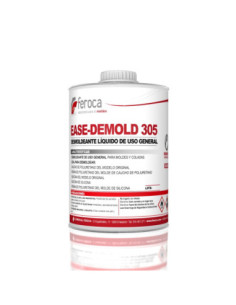 Ease-Demold 305
Universal liquid. Total control for complex geometries.
Ease-Demold 305
Universal liquid. Total control for complex geometries.
What material do you need? — Quick selection guide
| Mold material | Best for | Main advantage | Limitation |
|---|---|---|---|
| Tin silicone | Beginners, figures, bas-reliefs, PU resins and plaster | Affordable, easy to use | Incompatible with some epoxy resins; shorter lifespan than platinum |
| Platinum silicone | Long production runs, epoxy resins, maximum precision | High durability, zero shrinkage | Higher cost; sensitive to inhibition by sulfur and amines |
| Alginate | Human body molds (hands, face, feet) | The only one suitable for skin; captures micro-details | Single-use mold (lasts only a few hours) |
| Latex | Simple figures, low budget, short runs | Very affordable, flexible | Slow application (many layers); not suitable for skin |
| Polyurethane rubber | Concrete, plaster, abrasive materials, industrial production | Superior tear resistance, fast cure | Requires release agent; sensitive to moisture in the mix |
| Plaster | Shell molds, alginate castings, low-cost prototypes | Very affordable, rigid, easy to work with | Fragile; not flexible; absorbs water |
Frequently asked questions about molding
What is the difference between tin silicone and platinum silicone?
Tin silicone (condensation) cures through a reaction with air moisture and releases a small by-product (alcohol) during the process, which causes slight shrinkage and limits its use with some epoxy resins. It is more affordable and perfect for getting started.
Platinum silicone (addition) cures without by-products, giving it greater dimensional precision, better tear resistance and a much longer mold lifespan. It is the choice for long production runs or when working with epoxy resins. The only thing to watch out for is inhibition: certain materials (sulfur-containing clays, cyanoacrylate adhesives, certain varnishes) can prevent it from curing properly.
Can alginate be used directly on skin?
Yes, as long as you use an alginate formulated for that purpose. Alga-Cast Slow and Alga-Cast Fast are tested and approved for contact with human skin. No release agent is needed — alginate does not stick to skin on its own. It is a good idea to lubricate any hair with baby oil so the alginate doesn't pull on it when demolding.
How many layers of latex do I need for a mold?
It depends on the size of the original and how you plan to use the mold. As a general guideline, between 8 and 12 layers is enough for small and medium pieces with a limited number of pours planned. For larger molds or production runs, it is recommended to apply 15–20 layers. Each layer must be completely dry before applying the next — typically 30–60 minutes between layers at room temperature, longer in humid environments. The last 2–3 layers can be reinforced with cotton gauze for greater dimensional stability.
Is a release agent needed when working with silicone?
It depends on the material of the original and the material you are going to cast. Silicone generally does not stick to most non-porous surfaces (plastic, metal, glass, treated wood) without any release agent. You do need a release agent when the original is porous (untreated wood, plaster, cardboard), when you are going to pour another silicone over the mold silicone, or when the original is already made of silicone. When in doubt, a thin coat of spray release agent never hurts.
What plaster should I use for a shell mold?
For the shell mold (the rigid casing that supports the silicone mold) you need a hard plaster that won't deform under the pressure of the pours. EXADURO is the most common choice: it combines good resistance (1,300 kg/cm²) with controlled expansion during setting, which prevents it from deforming the mold. For shell molds that will see heavy use or require tighter tolerances, Arquero offers 5,000 kg/cm² and minimal expansion.
Can I use polyurethane rubber for concrete molds?
Yes, in fact it is one of the most common applications. Polyurethane rubbers for molds, such as Poly 74-45, offer abrasion and tear resistance that makes them ideal for concrete, plaster and filled material pours. It is essential to apply release agent to the original before pouring the rubber, and also to the mold before each concrete pour — fresh concrete can bond if this step is skipped.
What is the difference between a block mold and a brush-on or blanket mold?
In a block mold the original is completely surrounded by silicone or rubber poured inside a container (molding box). It is the simplest method and gives the mold more body, but uses considerably more material. In a brush-on or blanket mold the material is applied in layers over the original with a brush, building up a thin "skin" that is then reinforced with a rigid shell mold (plaster or fiberglass). It uses less material and is the right technique for large pieces or when the original does not fit in a box. For brush-on molds, choose a thixotropic material such as Polygel 35 — it won't drip on vertical surfaces.