
Shopping Cart
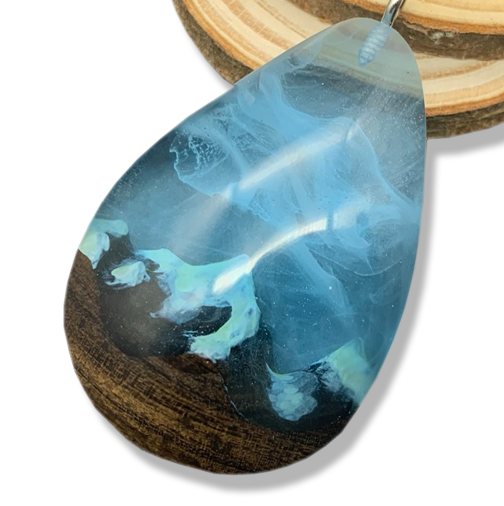
Epoxy resins for jewelry
Epoxy resin is the main material in handmade jewelry: it cures with crystal-clear transparency, accepts pigments and inclusions, and can be used in silicone molds without a release agent. The choice of system depends on the thickness of the piece and the finish you're looking for.
Casting epoxy for pieces and pendants
For pendants, earrings, rings and small-format pieces, the best option is a low-viscosity resin that flows well in the mold, captures detail and cures without bubbles. ClearWater Epoxi is the reference standard in handmade jewelry: 1:1 mix, optical transparency and a hard finish ready to polish.
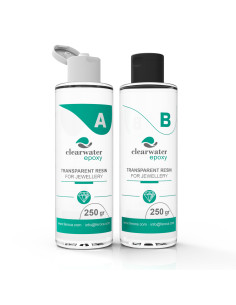 ClearWater Epoxi
Transparent epoxy for jewelry, simple 1:1 mix.
ClearWater Epoxi
Transparent epoxy for jewelry, simple 1:1 mix.
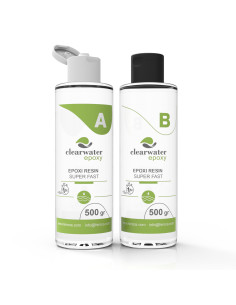 ClearWater Epoxi Super Fast
Fast cure in 1-2 h, 80D hardness.
ClearWater Epoxi Super Fast
Fast cure in 1-2 h, 80D hardness.
 ClearWater Deep Pour Epoxi
High depth up to 12 cm in a single pour.
ClearWater Deep Pour Epoxi
High depth up to 12 cm in a single pour.
Epoxy for doming and resin drops
Doming involves applying a convex layer of resin to the surface of a piece to protect it and give it a drop-like finish. It's commonly used on flat earrings, badges and cabochons. There are two variants depending on the result you're after: flexible or rigid.
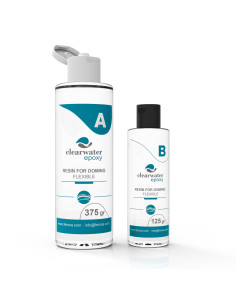 ClearWater Epoxi Doming Flexible
Flexible resin drop, soft to the touch.
ClearWater Epoxi Doming Flexible
Flexible resin drop, soft to the touch.
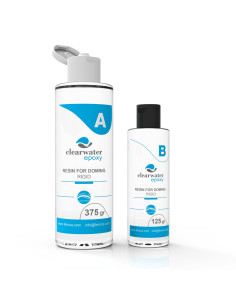 ClearWater Epoxi Doming Rígida
Rigid resin drop, high optical clarity.
ClearWater Epoxi Doming Rígida
Rigid resin drop, high optical clarity.
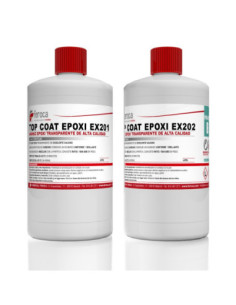 Epofer EX201+E202 Top Coat Epoxi
Transparent top coat for jewelry and costume jewelry.
Epofer EX201+E202 Top Coat Epoxi
Transparent top coat for jewelry and costume jewelry.
UV resin for details and repairs
When you need to add a specific detail, fill a gap or apply a quick finishing coat without mixing two components, single-component UV resin is the most convenient solution. It cures in seconds under UV light and leaves a crystal-clear finish.
 ClearWater UV Resin Adhesive
Silicone molds for jewelry
A good silicone mold is essential for getting pieces with sharp detail, clean edges and effortless demolding. In jewelry you work with small-format, high-precision pieces, so the silicone must reproduce even the smallest relief and must not stain the transparent resin.
Platinum silicone for jewelry molds
Platinum silicone is the first choice when the mold will come into contact with transparent epoxy resins: it has no cure by-products that could inhibit the resin, it is dimensionally stable and allows hundreds of uses without any loss of detail. Shore A20-A40 hardnesses are the most common for jewelry pieces.
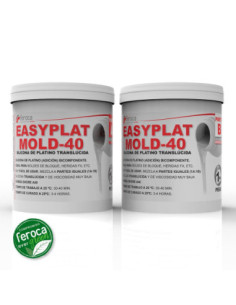 EASYPLAT MOLD-40
Shore A40 translucent, 1:1 mix, ideal for molds.
EASYPLAT MOLD-40
Shore A40 translucent, 1:1 mix, ideal for molds.
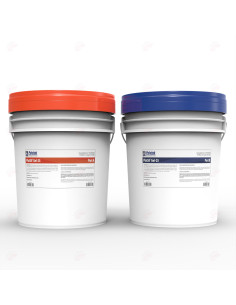 PlatSil Gel-25
Shore A25 translucent, great detail, 1:1 mix.
PlatSil Gel-25
Shore A25 translucent, great detail, 1:1 mix.
 EasyPlat ACQUA
Transparent platinum silicone Shore A25, 1:1 mix.
EasyPlat ACQUA
Transparent platinum silicone Shore A25, 1:1 mix.
Tin silicone for budget molds
If you're looking for a more affordable option for simple jewelry molds or want to test shapes before producing in platinum silicone, tin silicones are a valid alternative. They are compatible with polyurethane resins and plaster, though with transparent epoxy it's best to use a release agent.
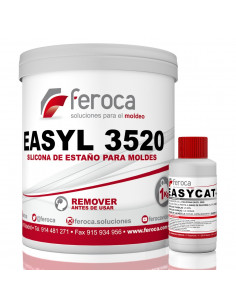 EASYL 3520
Shore A20, great elasticity for undercuts.
EASYL 3520
Shore A20, great elasticity for undercuts.
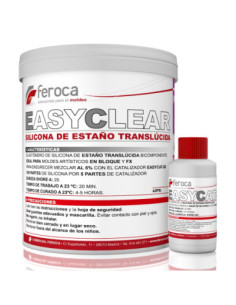 EASYCLEAR
Translucent silicone Shore A20, lets you see the piece.
EASYCLEAR
Translucent silicone Shore A20, lets you see the piece.
Ready-to-use silicone molds
If you don't want to make your own mold, at Feroca you'll find a selection of ready-made platinum silicone molds, ready to pour resin directly into. They are compatible with epoxy, polyurethane and acrylic resins.
 Silicone mold - OVAL PLATE
Ready-to-use mold, 18×9.5 cm.
Silicone mold - OVAL PLATE
Ready-to-use mold, 18×9.5 cm.
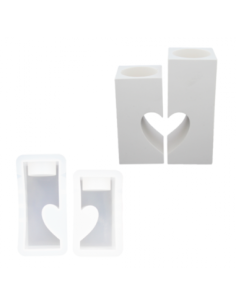 Silicone mold - HEART CANDLESTICK
Two-part platinum silicone mold, heart shape.
Silicone mold - HEART CANDLESTICK
Two-part platinum silicone mold, heart shape.
Pigments and effects for resin jewelry
Color and visual effects are what set a handmade piece apart from mass production. The choice of pigment depends on whether you want an opaque color, a translucent tint that lets inclusions show through, or a pearlescent and metallic effect.
Translucent dyes
Translucent dyes let you color epoxy resin without losing transparency, so inclusions like flowers, glass spheres or metal leaf remain visible. They are the most widely used in handmade jewelry.
 UltraColor
Vibrant translucent dyes for epoxy and polyurethane.
UltraColor
Vibrant translucent dyes for epoxy and polyurethane.
 Piñata -Alcohol Inks-
Saturated fast-drying inks for resins.
Piñata -Alcohol Inks-
Saturated fast-drying inks for resins.
Metallic and pearlescent effects
For metallic, pearlescent or iridescent finishes, powder pigments are the most versatile solution. They can be mixed directly into the resin or applied to the cured surface to create depth effects.
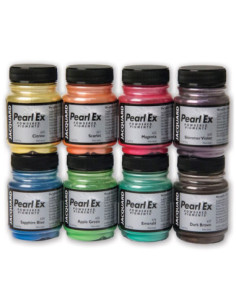 Pigmentos en Polvo Pearl Ex
Pearlescent and metallic, inert, compatible with epoxy.
Pigmentos en Polvo Pearl Ex
Pearlescent and metallic, inert, compatible with epoxy.
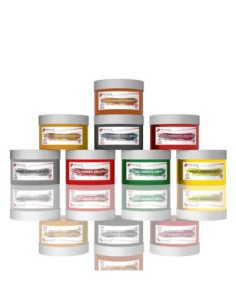 Magic Powder
Shiny metallic powder for resins and silicones.
Magic Powder
Shiny metallic powder for resins and silicones.
Opaque pigments
When you want a solid color with no transparency, paste pigments and opaque powder pigments offer the greatest coverage and stability. They are used in jewelry pieces where the desired visual effect is pure color, without seeing the inside of the resin.
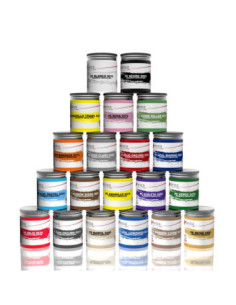 Pigmento empastado
High-concentration opaque pigments for resins.
Pigmento empastado
High-concentration opaque pigments for resins.
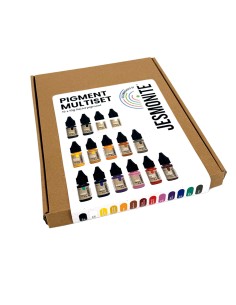 Jesmonite Pigment Set de 15 x 10g
Set of 13 colors for acrylic resins, high concentration.
Jesmonite Pigment Set de 15 x 10g
Set of 13 colors for acrylic resins, high concentration.
Inclusions and decorative elements
Encapsulating elements in resin is one of the most distinctive techniques in handmade jewelry. Feroca's glass spheres and crushed crystals are compatible with epoxy resins and can be sanded and polished once cured to achieve a smooth, shiny finish.
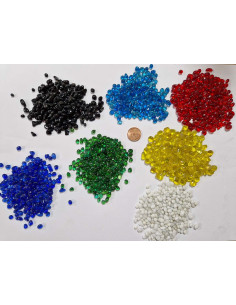 CRYSTAL PEARLS
Glass spheres 3-6 mm, encapsulable in epoxy.
CRYSTAL PEARLS
Glass spheres 3-6 mm, encapsulable in epoxy.
 CRYSTAL CRUSH
Colored crushed crystals, 4-8 mm, sandable.
CRYSTAL CRUSH
Colored crushed crystals, 4-8 mm, sandable.
Finishing and polishing
Once the piece is demolded, the finish is what makes the difference between amateur jewelry and professional production. The usual process involves sanding with wet-and-dry paper in progressively finer grits and finishing with polishing paste to restore the optical transparency of the resin.
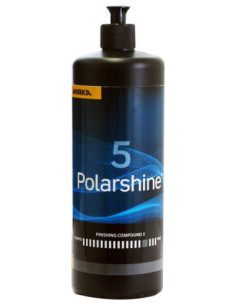 PolarShine 5
Final polishing paste for high gloss on resin.
PolarShine 5
Final polishing paste for high gloss on resin.
 PolarShine 10
Medium-grit polishing paste, removes fine scratches.
PolarShine 10
Medium-grit polishing paste, removes fine scratches.
 PolarShine 35
Coarse paste for removing marks and deep scratches.
PolarShine 35
Coarse paste for removing marks and deep scratches.
Resin comparison table for jewelry: quick selection guide
Use this table to identify the most suitable resin for the type of piece you want to make.
| Product | Type of piece | Mix ratio | Working time | Main feature |
|---|---|---|---|---|
| ClearWater Epoxi | Pendants, rings, cabochons | 100A:100B | 30 min | Optical transparency, general use |
| ClearWater Epoxi Super Fast | Small pieces for fast production | 100A:100B | ~10 min | Cures in 1-2 h, 80D hardness |
| ClearWater Epoxi Doming Flexible | Flat earrings, badges | 100A:30B | 25 min | Flexible drop, soft to the touch |
| ClearWater Epoxi Doming Rígida | Flat earrings, badges | 100A:30B | 25 min | Rigid drop, high clarity |
| Epofer EX201+E202 Top Coat | Finishing coat over costume jewelry | 100A:60B | 25 min | Glossy top coat for jewelry |
| ClearWater UV Resin Adhesive | Details, repairs, finishes | Single component | No limit (without UV) | Instant cure under UV light |
| ClearWater Deep Pour Epoxi | Bulky pieces, encapsulation | 100A:33B | Variable | Up to 12 cm depth in a single pour |
Frequently asked questions about resin jewelry
What is the best epoxy resin for making pendants and earrings?
For pendants and earrings, ClearWater Epoxi is the most well-rounded option: simple 1:1 mix, optical transparency, 30 minutes of working time and cure in 24 hours. If you want to shorten production times, ClearWater Epoxi Super Fast cures in 1-2 hours with the same clarity.
What is the difference between flexible and rigid doming resin?
ClearWater Epoxi Doming Flexible creates a convex layer that gives slightly to the touch, making it more impact-resistant and more comfortable in earrings. ClearWater Epoxi Doming Rígida produces a harder surface with greater optical clarity, suitable when the piece won't receive direct impacts.
Which silicone should I use for making jewelry molds?
For molds intended for transparent epoxy resins, platinum silicone is the right choice because it doesn't inhibit the epoxy cure. EASYPLAT MOLD-40 or PlatSil Gel-25 are good options: translucent, 1:1 mix and with enough hardness to hold their shape in small-format pieces.
How do you add color to epoxy resin for jewelry?
For vivid translucent effects, use UltraColor dyes or Piñata Alcohol Inks: mix them directly into the resin before pouring and they maintain transparency. For pearlescent and metallic effects, Pigmentos en Polvo Pearl Ex or Magic Powder are the best option. If you want a completely opaque color, use Pigmento empastado.
How do you polish epoxy resin to get a shiny finish?
The polishing process involves progressively sanding with wet-and-dry paper (from grit 400 up to 2000) and finishing with polishing pastes. The recommended sequence is: PolarShine 35 to remove coarse sanding marks, PolarShine 10 to refine the surface and PolarShine 5 for the final high-gloss finish.
Can I encapsulate flowers or objects inside epoxy resin?
Yes. To encapsulate flowers, leaves or small elements like CRYSTAL PEARLS or CRYSTAL CRUSH, pour a first layer of resin, wait for it to gel without fully hardening, place the element and cover with a second layer. For thicker pieces, ClearWater Deep Pour Epoxi allows encapsulation in a single pour of up to 12 cm.
What release agent is used with platinum silicone molds?
Platinum silicone molds don't require a release agent with epoxy resins: the piece releases on its own thanks to the low adhesion of the silicone. Even so, to keep the mold in good condition and make cleaning easier, you can clean the cavity with Epoxi Cleaner between pours.
Compatibility note: Tin (condensation) silicones can inhibit the cure of some epoxy resins in direct contact. For best results with transparent epoxy resins, always use platinum (addition) silicone molds. Check the product data sheet before combining new materials.