Shopping Cart


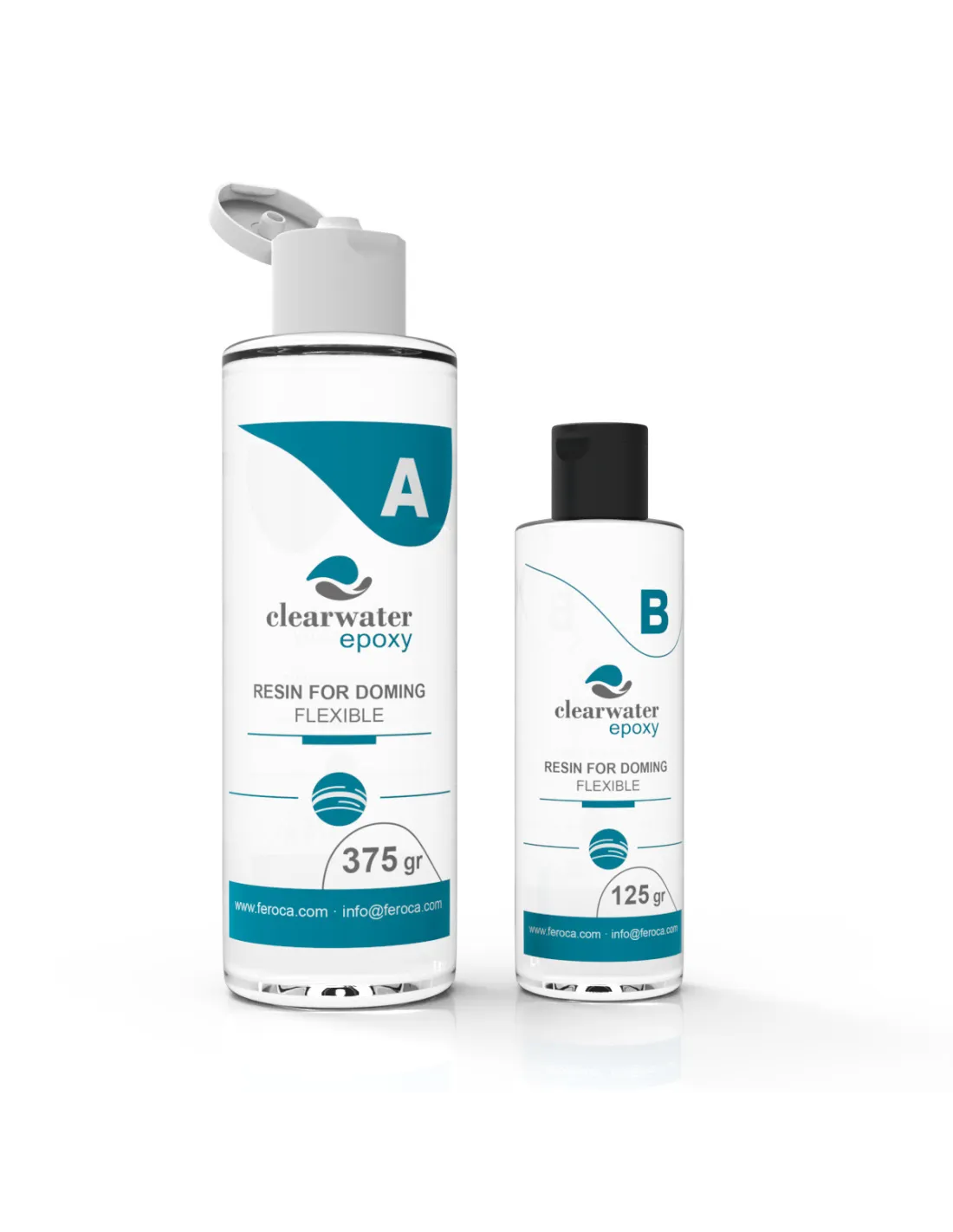
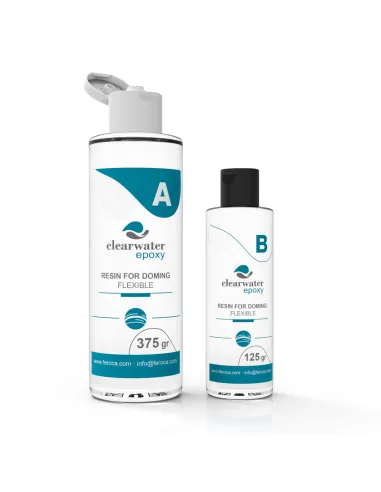
ClearWater Epoxy Doming Flexible -Resin Drop
405802002
Temporarily out of stock
€15.00
18,15 € Tax incl.
18,15 € Tax incl.
Flexible epoxy resin for doming (resin dome technique). Mix ratio 100A:30B by weight, Shore A60, transparent, UV anti-yellowing. Ideal for magnets, keyrings and pins.
ClearWater Epoxi Doming Flexible is a two-component epoxy resin specifically formulated for the "resin dome" or doming technique: when applied to a flat surface, it forms a transparent convex dome that protects and enhances the object. With a Shore A60 hardness once cured, the result is flexible to the touch, impact-resistant and with high UV anti-yellowing resistance, making it the professional choice for series production of magnets, keyrings, pins and decorative items.
Technical specifications
| Parameter | Value |
|---|---|
| Material type | Two-component flexible epoxy resin |
| Colour | Transparent |
| Mix ratio (by weight) | 100 A : 30 B |
| Working time | 40 minutes |
| Cure time | 24 hours at room temperature |
| Shore Hardness | A60 |
| Finish | Transparent, glossy, non-tacky |
| UV resistance | High (anti-yellowing) |
| Application | Art, 3D, doming |
What it is used for
This resin is designed for decorative and surface protection applications where a dome finish, flexible and completely transparent, is required. It is especially suitable for series production of personalised items and merchandise:
- Decorative magnets with dome effect
- Keyrings with logos, photographs or illustrations
- Pins and badges with doming finish
- Resin stickers and 3D labels
- Protection and enhancement of handmade jewellery
- Transparent or pigmented gems and cabochons in silicone moulds
- Decorative effects on wood, paper and cardboard
- Art and craft projects where final flexibility is required
How to use it
- Prepare the surface on which you will apply the resin: it must be clean, dry and dust-free. If the substrate is porous, apply a sealing coat first.
- Weigh the components accurately using a kitchen or laboratory scale: 100 parts of component A (resin) to 30 parts of component B (hardener), always by weight.
- Mix both components in a flat-bottomed cup for 2–3 minutes, scraping the sides and bottom thoroughly to ensure a homogeneous mixture. Avoid stirring vigorously in a way that incorporates air.
- If you want to add colour, incorporate epoxy-compatible pigments at this stage and mix until fully integrated.
- Pour the mixture onto the surface or mould in small amounts. The surface tension of the resin will keep it domed without overflowing as long as you do not exceed the edges of the substrate.
- Remove any surface bubbles by gently passing a gas torch at low flame or a hot-air dryer at a distance of approximately 15–20 cm.
- Leave to cure horizontally on a level surface at room temperature for 24 hours. Avoid dust by covering the piece with a box or cover that does not touch the resin.
- Demould or handle the piece once the full cure time has elapsed. The material will have reached its Shore A60 hardness and its characteristic flexibility.
Important notice — Epoxy cure inhibition: Although epoxy resins are not as sensitive to inhibition as platinum silicones, some contaminants can interfere with curing or cause tacky surfaces. Avoid contact with sulphur-containing clays, very damp surfaces and substrates with amine or solvent residues. Always work in a clean environment and wear nitrile gloves. Strictly follow the mix ratio: excess or insufficient hardener will leave the resin uncured or with soft spots.
Usage tips
Temperature and working environment
The ideal working temperature is between 20 °C and 25 °C. Below 18 °C, viscosity increases and curing slows considerably; above 30 °C, working time is shortened. In cold workshops, gently warm component A by submerging it in warm water (no higher than 40 °C) for a few minutes before mixing. Relative humidity should not exceed 70 % to avoid matt or milky surfaces.
Bubble control and dome effect
The anti-foam formulation of this resin minimises the appearance of bubbles, but overly vigorous mixing can incorporate air. Always mix with slow, circular movements. To maximise the dome effect, ensure the supporting surface is perfectly level before pouring. If working with silicone moulds for cabochons or gems, a slight excess of resin will naturally create the domed effect as it tensions over the mould edge.
Demoulding and post-cure
For pieces moulded in silicone, demoulding is straightforward thanks to the flexibility of the cured material. If working on rigid non-porous substrates (acrylic, glass, metal) and the piece needs to be removable, apply a thin layer of Release agent 34D beforehand and allow to dry before pouring the resin. A post-cure at 40–50 °C for 2–3 hours improves final mechanical resistance and reduces any slight residual tackiness.
Frequently asked questions
Can I use this resin for thick encapsulations or volume fills?
It is not its optimal use. ClearWater Epoxi Doming Flexible is formulated for thin layers using the doming technique. For large-volume encapsulations or thick castings, the exothermic reaction can generate excessive heat in thick layers. For those projects we recommend other ClearWater casting epoxy resins with lower exotherm.
Can this resin be pigmented?
Yes. You can add paste or powder pigments compatible with epoxy systems. Add them after mixing the two components and before pouring. Use small amounts (no more than 3–5 % of the total mix) to avoid altering the cure ratio or transparency if you are looking for a translucent effect.
How long do I have to work with the mixture?
The working time is approximately 40 minutes at 20–25 °C. At higher temperatures this time is reduced. Prepare only the amount you will use in each session and work in small batches if you have many pieces to cover.
Does the cured piece withstand heat? Can I use it in candles or containers for hot liquids?
No. This resin is not formulated to withstand high temperatures or to contain hot liquids. It is also not suitable as a container for candles. Its thermal resistance is that of a standard epoxy and it may soften under direct heat.
Is it Food Safe?
No. ClearWater Epoxi Doming Flexible is not certified for food contact. If you need an epoxy resin approved for surfaces in contact with food, please refer to the EpoFood -Epoxi Alimentaria Incolora- in Feroca's catalogue.
Why is my surface still tacky after 24 hours?
The most common causes are: incorrect mix ratio (always weigh, never measure by volume), insufficient mixing (less than 2 minutes scraping the sides thoroughly), workshop temperature below 18 °C, or very high ambient humidity. Check these factors before repeating the casting.
What type of moulds can I use with this resin?
Silicone moulds are the most recommended because they require no release agent and offer clean demoulding thanks to their flexibility. You can also pour onto flat acrylic, glass or metal surfaces by first applying Release agent 34D. Avoid expanded polystyrene moulds, which dissolve on contact with epoxy.
Can it be applied over paper or printed photographs?
Yes, it is one of its most common applications. For best results, seal the paper first with a thin coat of epoxy or compatible varnish and allow to dry before applying the doming layer. This prevents the resin from soaking into the paper and darkening or wrinkling it.
- Color
- Transparent
- Working Time
- 40min
- Curing Time
- 24horas
- Shore Hardness
- A60
- Mixed Weight Ratio
- 100A:30B
- Type
- Resin
- Application
- 3D
Art
No reviews
Tap to zoom