Shopping Cart


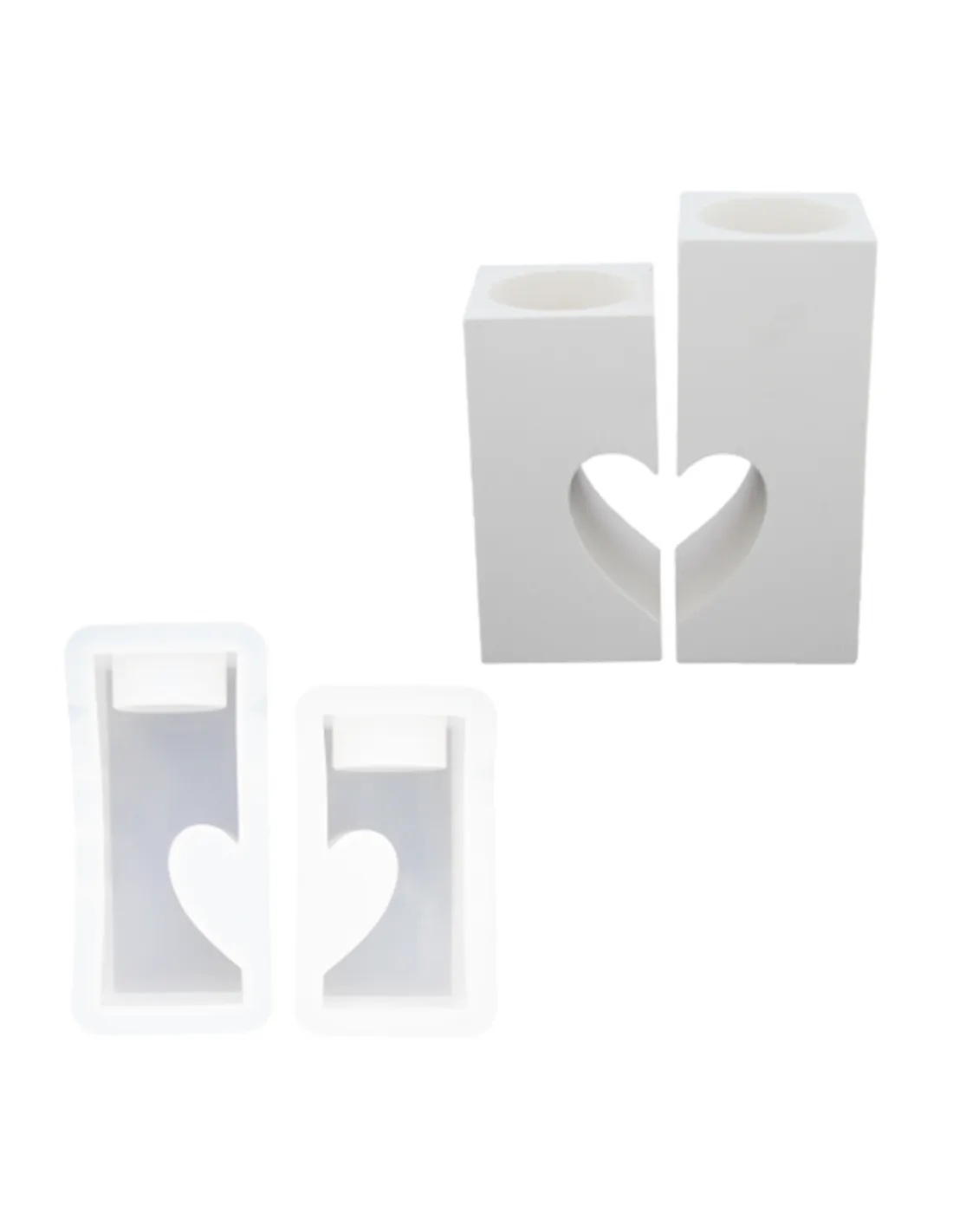
Silicone mold-CANDELABRO CORAZON
443095015
€23.00
27,83 € Tax incl.
27,83 € Tax incl.
2-part platinum silicone mould (7x14 + 7x12 cm) for heart candelabra. Ideal for acrylic resins, easy demoulding.
The Candelabro Corazón platinum silicone mould is specifically designed for reproducing decorative pieces in acrylic resins. Made up of two parts that combine for precise, clean results, it allows you to work with pigments, fillers and colour effects with easy demoulding and no damage to the piece.
Technical specifications
| Feature | Detail |
|---|---|
| Material | Platinum silicone (addition cure) |
| Number of parts | 2 |
| Part 1 dimensions | 7 x 14 cm |
| Part 2 dimensions | 7 x 12 cm |
| Recommended use | Acrylic resins |
| Demoulding | Easy, without deformation of the piece |
What it is used for
This mould is designed for reproducing heart-shaped decorative candelabras using acrylic resins. Its flexibility and tear resistance make it suitable for repeated castings without loss of detail. Common applications:
- Production of decorative candelabras in acrylic resin
- Home décor pieces with colour effects and veining
- Reproduction of figures with mineral fillers or pigments
- Craft projects, advanced hobby work and small-batch production
- Prototyping and reproduction of ornamental pieces for events and personalised gifts
How to use it
- Clean the mould with a dry cloth before each use to remove any residue from previous castings.
- If it is the first time you are using the mould or you want to ease demoulding, apply a thin layer of Ferosil V 32 Release Agent Paste and allow to dry for a few minutes.
- Prepare the Acrystal Prima + Basic Crystal mix following the manufacturer's instructions.
- Add the desired pigments, fillers or effects to the mix and blend thoroughly.
- If you need to extend the working time, add Retardante Acrystal as indicated on the product.
- Pour the mix into the mould slowly and continuously to avoid the formation of bubbles.
- If the application requires greater consistency or working vertically, use Tixotropante Acrystal to thicken the mix.
- Place the two mould parts correctly assembled and hold them together until cured.
- Allow the full cure time before demoulding. Do not force the piece.
- Demould carefully by flexing the mould to release the piece without damaging it.
- Clean the mould and store it in a cool place, away from dust and direct light.
Warning — Platinum silicone inhibition: This mould is made from platinum silicone (addition cure). If you are making your own platinum silicone moulds to use alongside this product, be aware that curing can be inhibited by contact with materials containing sulphur (such as certain sulphur-based clays), latex, cyanoacrylate adhesives, some varnishes and paints, or tin residues. If in doubt, always carry out a compatibility test before the final casting. The already manufactured and cured mould does not present this risk in normal use with acrylic resins.
Usage tips
Mixing and pigmentation
To achieve veining or marbling effects, do not fully blend the pigments before pouring. Introduce the colour in several passes and stir gently with a spatula to create natural lines. With acrylic resins such as Acrystal, working times are short, so prepare all materials before mixing.
Working time control
In warm environments, resin curing speeds up. If you need more time to work the effect or fill the mould calmly, add a few drops of Retardante Acrystal to the mix. In cold environments, the process will be slower than usual, which can be an advantage for detailed work.
Mould maintenance and service life
Platinum silicone moulds can withstand multiple castings without losing definition if properly cared for. Avoid excessive bending or storing them under weight. Do not expose them to aggressive products such as solvents or acids. Between uses, clean the mould with warm water and mild soap, and allow it to dry completely before storing.
Frequently asked questions
Can I use this mould with polyurethane or epoxy resins?
This mould is designed and optimised for Acrystal-type acrylic resins. Although platinum silicone is generally compatible with other resin systems, the best results in terms of demoulding and detail definition are achieved with acrylic resins. For other materials, always carry out a prior test on a small area.
Is it necessary to use a release agent with a silicone mould?
In most cases, silicone has natural non-stick properties that facilitate demoulding without the need for an additional agent. However, for first castings or with heavily loaded mixes, applying a thin layer of Ferosil V 32 extends the mould's service life and protects the finest details.
How many castings can a platinum silicone mould handle?
It depends on the cast material and how well the mould is cared for, but under normal conditions of use with acrylic resins, a well-maintained platinum silicone mould can exceed 20–50 castings without appreciable loss of detail.
Can I add mineral fillers or glitter to the resin before pouring?
Yes. Acrylic resins accept mineral fillers (marble powder, quartz, etc.) and decorative elements such as glitter or metallic pigments very well. Add the fillers to the mix before pouring into the mould and make sure they are evenly distributed to avoid weak spots in the final piece.
How do I avoid bubbles in the finished piece?
Pour the mix slowly, in a thin stream and from a certain height to break bubbles before they enter the mould. You can tap the mould gently on the table after filling to bring bubbles to the surface. If you have a vacuum chamber, degassing the mix before pouring will give you optimal results.
How should a silicone mould be stored correctly?
Store the mould clean and dry, lying flat or in its natural shape without forced bends. Avoid contact with products containing sulphur, latex or aggressive solvents. A cool, dry place away from direct sunlight considerably extends its service life.
Can I use the mould to make candles or soaps?
Platinum silicone withstands moderate temperatures, making it compatible with low-to-medium melting point candle waxes. For cold-process soaps, check compatibility with the type of lye used. In any case, if the mould is listed for acrylic resins, its guaranteed optimal use is with that material.
What should I do if the piece does not cure correctly inside the mould?
Check that the resin mixing ratio is correct and that the components are thoroughly blended. Also make sure the mould has not been in contact with any inhibiting materials. Ambient temperature also plays a role: below 18 °C curing slows down considerably. Apply gentle heat (30–35 °C) to speed up the process if necessary.
No reviews
Tap to zoom