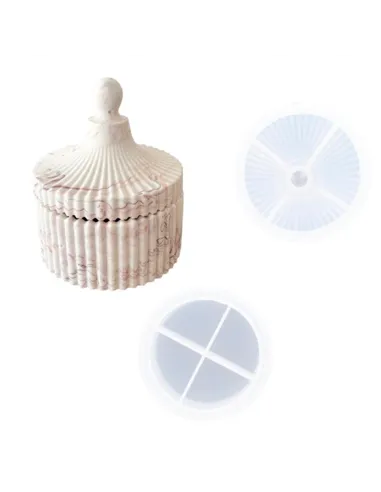
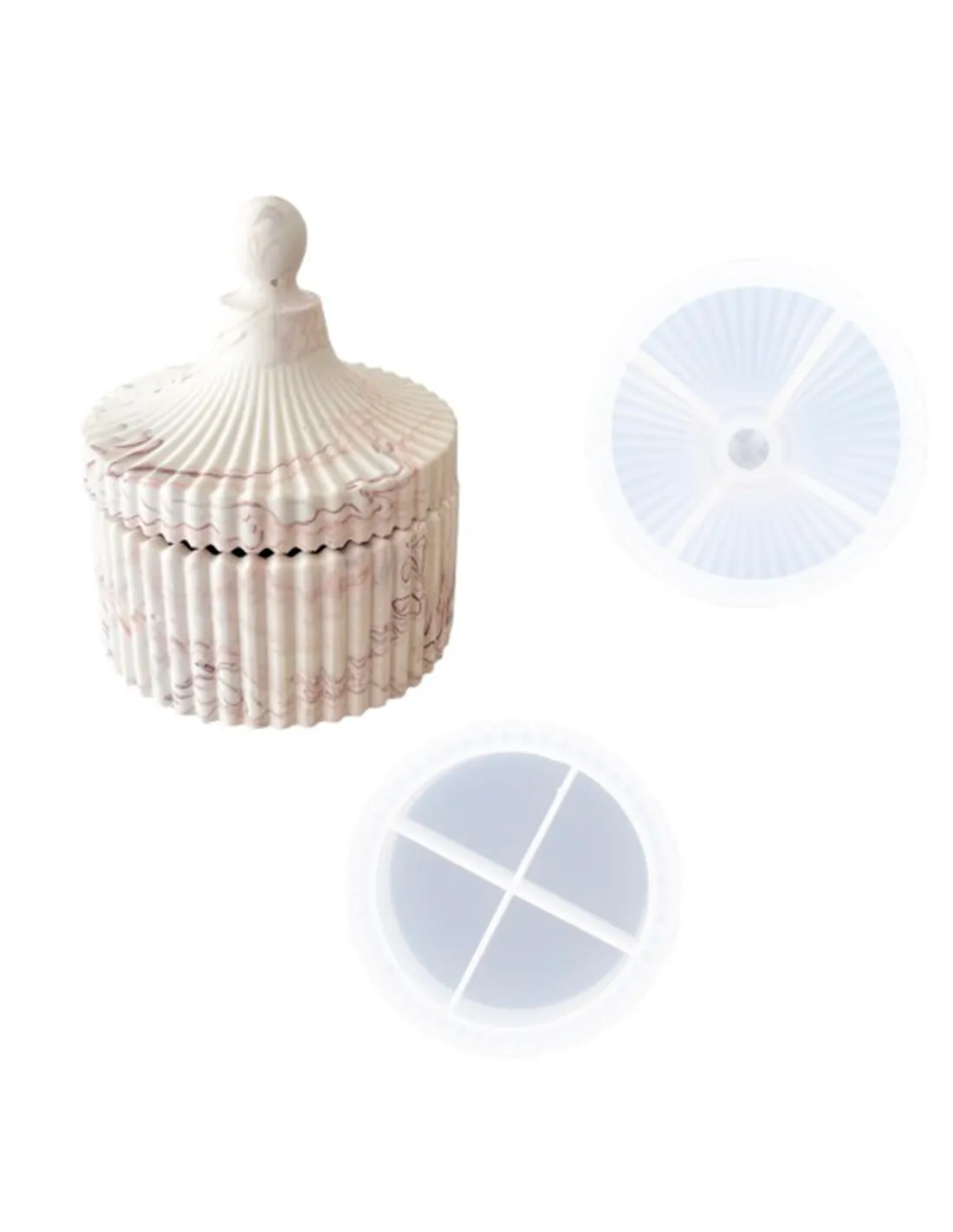
Two-part platinum silicone mould designed to create decorative storage boxes by casting acrylic resins. Its closed geometry with separate lid and body allows you to produce functional, finished pieces directly from the mould, with clean release and no need for additional treatments.
Technical specifications
| Mould material | Platinum silicone |
|---|
| Number of parts | 2 (lid + body) |
|---|
| Lid dimensions | 8.2 cm × 6 cm |
|---|
| Body dimensions | 8.2 cm × 4 cm |
|---|
| Compatible material | Acrylic resins |
|---|
| Release | Easy, no adhesion |
|---|
What it is used for
This mould is designed to produce decorative and functional boxes in acrylic resin, with complete freedom to customise colours, transparencies and effects. It is ideal for both batch production and one-off handcrafted pieces.
- Decorative storage boxes in transparent or pigmented acrylic resin
- Pieces with marble, geode or veining effects using pigments and fillers
- Gift items and large-format jewellery
- Short-run reproductions for sale or commission
- Prototypes and models with a professional finish
How to use it
- Clean the mould with a dry cloth and make sure there are no residues from previous castings.
- If you are going to do several castings in a row, apply a thin layer of paste release agent for silicones to extend the life of the mould.
- Prepare your acrylic resin —for example Acrystal Prima + Basic Crystal or Jesmonite AC100— following the manufacturer's recommended ratios.
- Add pigments, fillers or metallic effects if you want to customise the piece before mixing.
- Pour the mixture slowly and in a thin stream to avoid bubbles. Start with the body and then fill the lid.
- Allow to cure for the time indicated by the chosen resin at room temperature.
- Once cured, gently flex the silicone mould to release the piece without forcing it.
- Remove the box and the lid, and let the pieces rest for at least 24 h before sanding, polishing or varnishing if necessary.
Warning — platinum inhibition: This mould is made from platinum silicone (addition cure). Platinum can be inhibited and fail to cure correctly if it comes into contact with materials containing sulphur (such as sulphur-containing clays), tin compounds, latex, cyanoacrylate adhesives or certain cleaning products. If you are going to use it to make pieces that will later touch the mould, make sure the materials are compatible beforehand by carrying out a small cure test.
Usage tips
Avoid bubbles in the casting
Pour the resin from a height and in a thin stream so that air escapes before the mixture reaches the bottom of the mould. If you have access to a vacuum chamber, degas the mixture for about 2–3 minutes before pouring. With acrylic resins such as Jesmonite AC730 you can achieve very clean stone effects without needing a vacuum.
Pigmentation and colour effects
To achieve veining effects or colour lines, add pigments separately in small portions and do not mix them fully. When pouring, the movement of the resin will create natural patterns. Work with the resin at a temperature between 20 and 25 °C to have more working time before curing.
Mould maintenance and lifespan
After each casting, carefully remove cured resin residues without using metal tools that could damage the silicone. A well-maintained platinum silicone mould can withstand many reproductions. If you cast very frequently, occasionally applying a paste release agent considerably extends its useful life.
Frequently asked questions
What resins are compatible with this type of mould?
This platinum silicone mould is compatible with water-based acrylic resins, such as Acrystal Prima + Basic Crystal or Jesmonite AC100. It is not recommended for polyurethane or epoxy resins without first testing compatibility, as some catalysts can inhibit the curing of platinum silicone.
Do I need a release agent to use this mould?
With acrylic resins, release is generally clean without a release agent thanks to the non-stick nature of platinum silicone. However, if you cast very frequently or want to extend the life of the mould, it is advisable to occasionally apply a thin layer of Ferosil V 32 paste release agent.
How many reproductions can a silicone mould withstand?
It depends on the material cast, the working temperature and the care taken during release. With acrylic resins and correct use, a platinum silicone mould can yield dozens or even hundreds of reproductions. Cleaning the mould thoroughly after each use and not forcing the release are the most important factors for maximising its lifespan.
Can I add pigments and fillers directly to the resin before pouring?
Yes. You can add pigments, mineral fillers, glitters or other decorative effects to the acrylic resin before pouring it into the mould. To achieve marble or veining effects, add the pigments without mixing them fully and let the resin itself create the pattern as it flows.
What happens if the resin does not cure properly inside the mould?
If the resin remains soft or tacky, the most common causes are: incorrect mixing ratios, working temperature too low, or contamination of the mould with inhibiting materials (sulphur, tin, latex). Always check the manufacturer's ratios and make sure the mould is clean and free of contaminants before each casting.
Can I use this mould with cement or plaster?
The mould is designed and optimised for acrylic resins. Although platinum silicone is technically compatible with plaster or acrylic cements such as Jesmonite AC730, the closed geometry of the box may make uniform filling with thicker materials more difficult. Prior testing is recommended.
How do I clean the mould between castings?
Remove cured resin residues by hand or with a soft plastic spatula, without metal tools. If there are adhered residues, you can clean with a damp cloth. Avoid using aggressive solvents that could degrade the silicone. Store the mould away from direct sunlight and dust.
Are the two mould parts assembled together during casting?
No. The mould consists of two independent parts —lid and body— which are filled separately. Each part produces one element of the final box. Once cured, both pieces fit together to form the complete box.
How much product do I need?Calculate the exact amount before buying and avoid wasting material.
Go to the calculator →