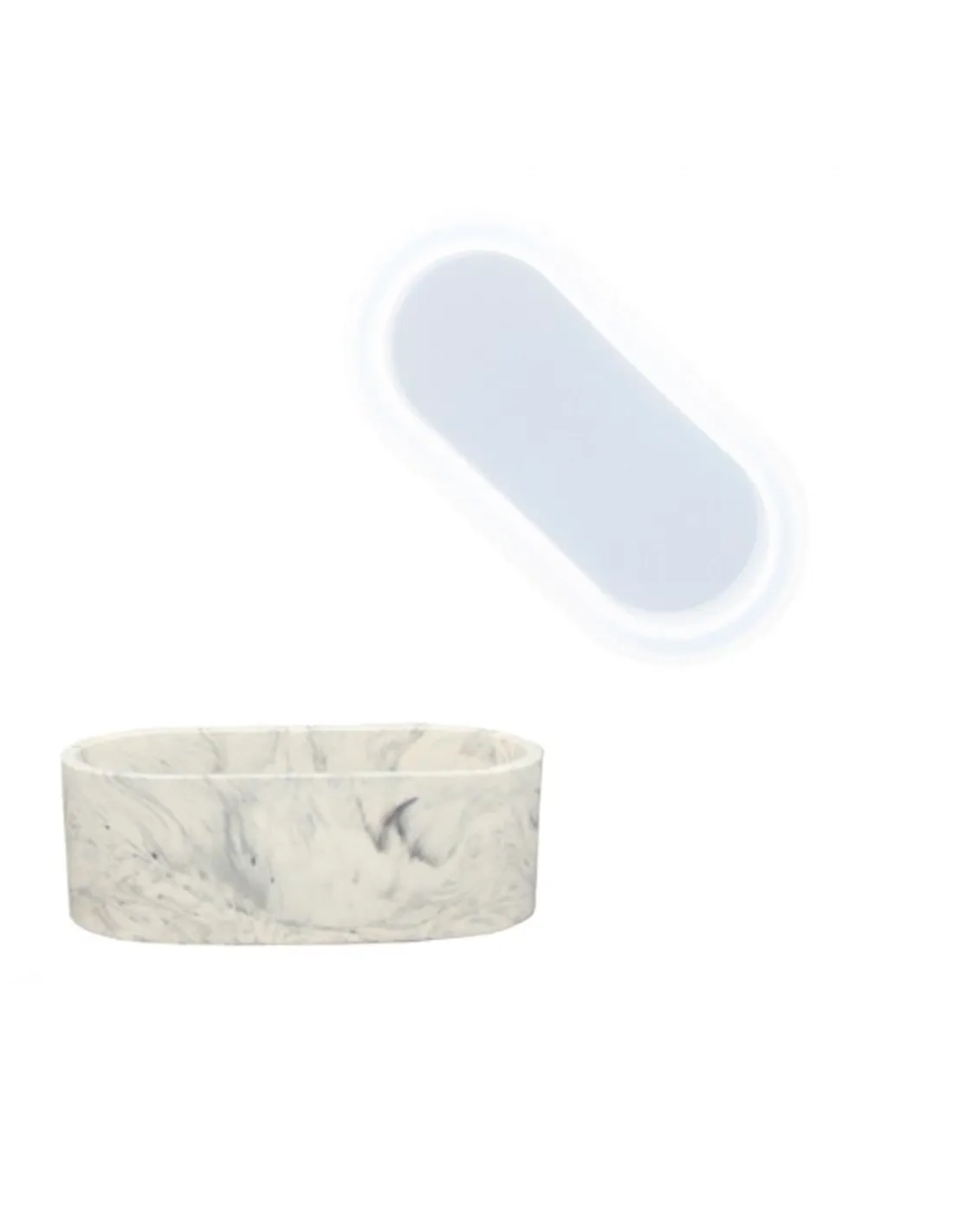
Platinum silicone mould in an oval plant pot shape, designed for use with acrylic resins such as Jesmonite or Acrystal. Its dimensions of 10.3 x 5.5 x 3.7 cm make it perfect for creating decorative pieces with pigments and fillers, achieving veining, marble or stone effects. The silicone material guarantees clean, effortless demoulding, even in castings with aggregates or paste pigments.
Technical specifications
| Feature | Value |
|---|
| Mould material | Platinum silicone (addition cure) |
| Shape | Oval plant pot |
| Interior dimensions | 10.3 cm x 5.5 cm x 3.7 cm |
| Main application | Acrylic resins (casting) |
| Demoulding | Easy, no release agent required in most applications |
| Reusability | High (multiple uses) |
What it is used for
This mould is designed for the production of decorative pieces in acrylic resins, acrylic cement and similar casting materials. It is particularly suitable for pigmentation and marbling techniques where precise control of colour lines is required.
- Decorative plant pots in acrylic resin with marble, stone or terrazzo effect
- Decorative pieces in acrylic cement with a handcrafted finish
- Small-batch production of miniature plant pots for florists or décor shops
- Prototypes and catalogue samples using pigmented acrylic materials
- Creative workshops and DIY projects with water-safe acrylic resins
How to use it
- Prepare your acrylic resin —for example Jesmonite AC100 or Acrystal Prima + Basic Crystal— following the manufacturer's instructions.
- Add pigments or fillers to the mix before pouring. For veining effects, work with separate colour mixes.
- Pour the mix directly into the silicone mould. For marble effects, you can blend colours with gentle movements of the mould or with a fine spatula.
- Allow to cure for the time indicated by the casting material you are using. Do not accelerate the process with heat unless the resin manufacturer specifically allows it.
- Once the piece has cured, gently flex the silicone mould to release the walls and carefully remove the pot.
- Clean the mould with warm water and allow it to dry completely before reuse.
Warning — Inhibition in platinum silicones: Although this mould is already manufactured, if you use other platinum silicones in your workshop, be aware that they can be inhibited by contact with sulphur-containing materials (sulphur-based clays, certain rubbers), latex, cyanoacrylate adhesives or tin. Inhibition causes the silicone to fail to cure correctly in the contact area. This already-cured mould is not affected, but bear this risk in mind when working with other platinum silicones in the same environment.
Usage tips
Release agent: use only if necessary
Platinum silicone has natural non-stick properties, so in most castings with acrylic resins you will not need a release agent. If you are producing in series or working with heavily loaded formulations, you can apply a thin coat of Ferosil V 32 Paste Release Agent to extend the life of the mould and ensure perfect demoulding even after many uses.
Decorative effects with pigments and fillers
To achieve a marble or stone effect in plant pots, prepare at least two mixes of different colours. Pour the first into the bottom of the mould, add the second in thin streams and gently move the mould or use a fine spatula to create the veins. With Jesmonite AC730 Stone Effect Acrylic Cement you can achieve very convincing concrete or natural stone finishes.
Mould maintenance and durability
Clean the mould after each use with warm water, avoiding aggressive solvents that could degrade the silicone. Store away from heat sources and direct sunlight. Avoid stacking it under weight, as this could cause permanent deformation. Properly stored, a platinum silicone mould allows hundreds of reproductions with consistent results.
Frequently asked questions
Do I need a release agent to use this type of mould?
Usually not. Platinum silicone moulds like this one have excellent non-stick properties and in most applications with acrylic resins they do not require a release agent. If you are producing in series or using very dense mixes with coarse aggregates, applying a thin coat of paste release agent such as Ferosil V 32 can extend the life of the mould.
What materials can I cast in this mould?
It is designed specifically for water-based acrylic resins such as Jesmonite AC100, Acrystal Prima + Basic Crystal or Jesmonite AC730. You can also use it with plaster or conventional cement, although the finishes will differ. For highly exothermic epoxy or polyester resins, check compatibility first, as excessive heat can reduce the mould's lifespan.
How many reproductions can a silicone mould withstand?
It depends on the cast material and how well the mould is cared for. With water-based acrylic resins, which are low-aggression materials, a well-maintained platinum silicone mould can withstand hundreds of castings with no appreciable loss of detail. Using release agents and cleaning carefully after each use maximises its durability.
Can I add fillers or aggregates to the mix without damaging the mould?
Yes. Fine aggregates (quartz sand, marble powder, microspheres) are perfectly compatible with this mould. Coarser aggregates or those with sharp edges may increase demoulding effort, in which case using a paste release agent is recommended. In no case do standard aggregates damage the silicone.
How do I achieve a veined or marble effect in the piece?
Prepare two or more acrylic resin mixes with different pigment colours. Pour the first into the mould, add the second in threads or drops and gently move the mould or use a fine spatula to create the veins without fully blending. With practice and colour combinations you can convincingly imitate marble, terrazzo or natural stone.
Is there a risk of the resin sticking to the mould?
With water-based acrylic resins this is very unlikely. Platinum silicone is naturally non-stick against these materials. If the piece does not come out easily, gently flex the mould from the edges towards the centre before pulling. Forcing it dry can deform the piece or the mould.
Can I use this mould with paste or liquid pigments?
Yes, paste or liquid pigments compatible with acrylic resins do not affect the silicone mould. Make sure the pigment is compatible with the resin you are using (some solvent-based pigments can interfere with the curing of certain resins). For water-based acrylic resins, use water-based pigments or those specifically formulated for that system.
Can I heat the mould to speed up curing?
Platinum silicone can withstand moderate temperatures, but it is not advisable to apply direct heat without knowing the thermal behaviour of the resin you are using. Water-based acrylic resins cure well at room temperature. Always follow the casting material manufacturer's guidelines before applying additional heat.
How much product do I need?Calculate the exact amount before buying and avoid wasting material.
Go to the calculator →