Shopping Cart



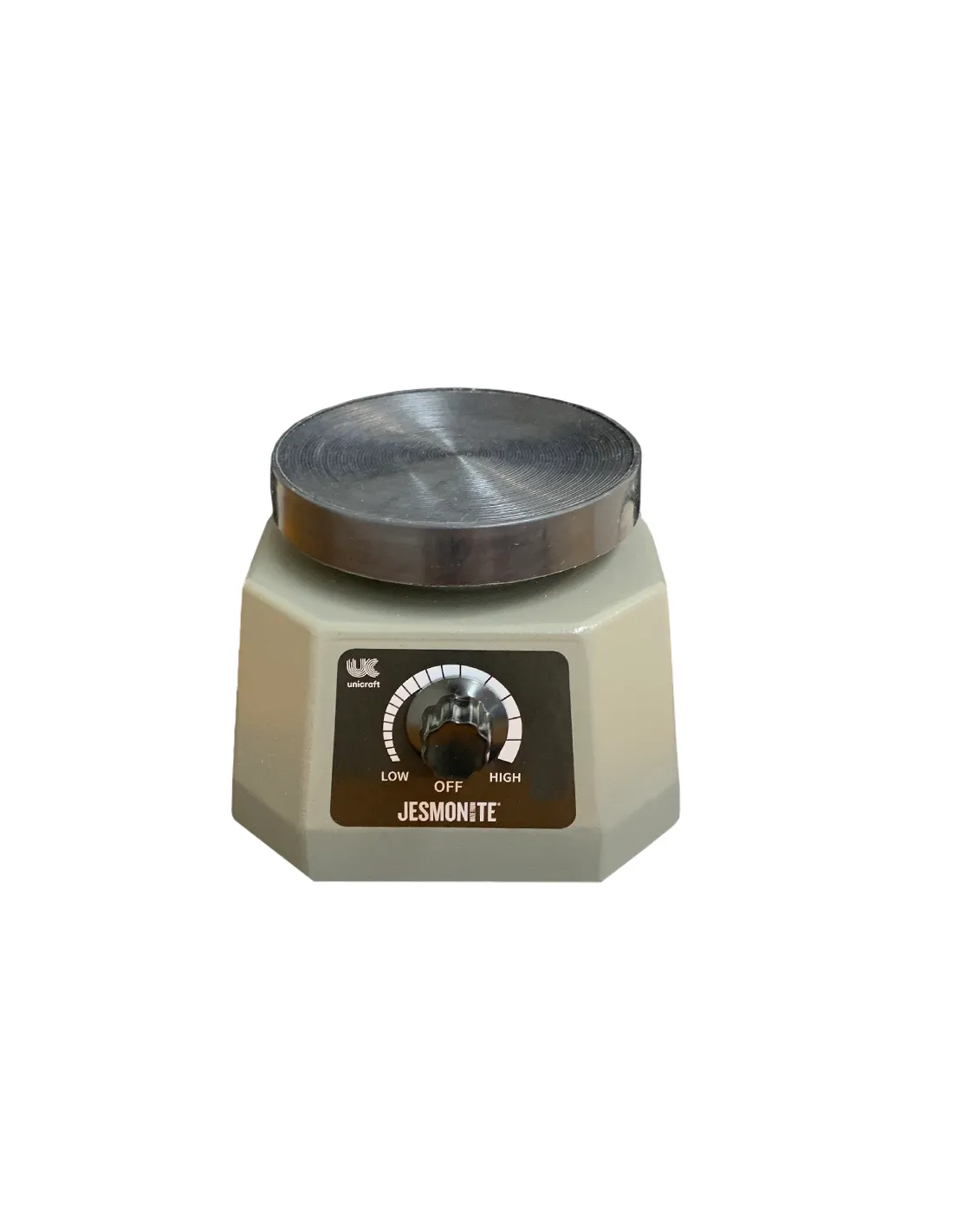
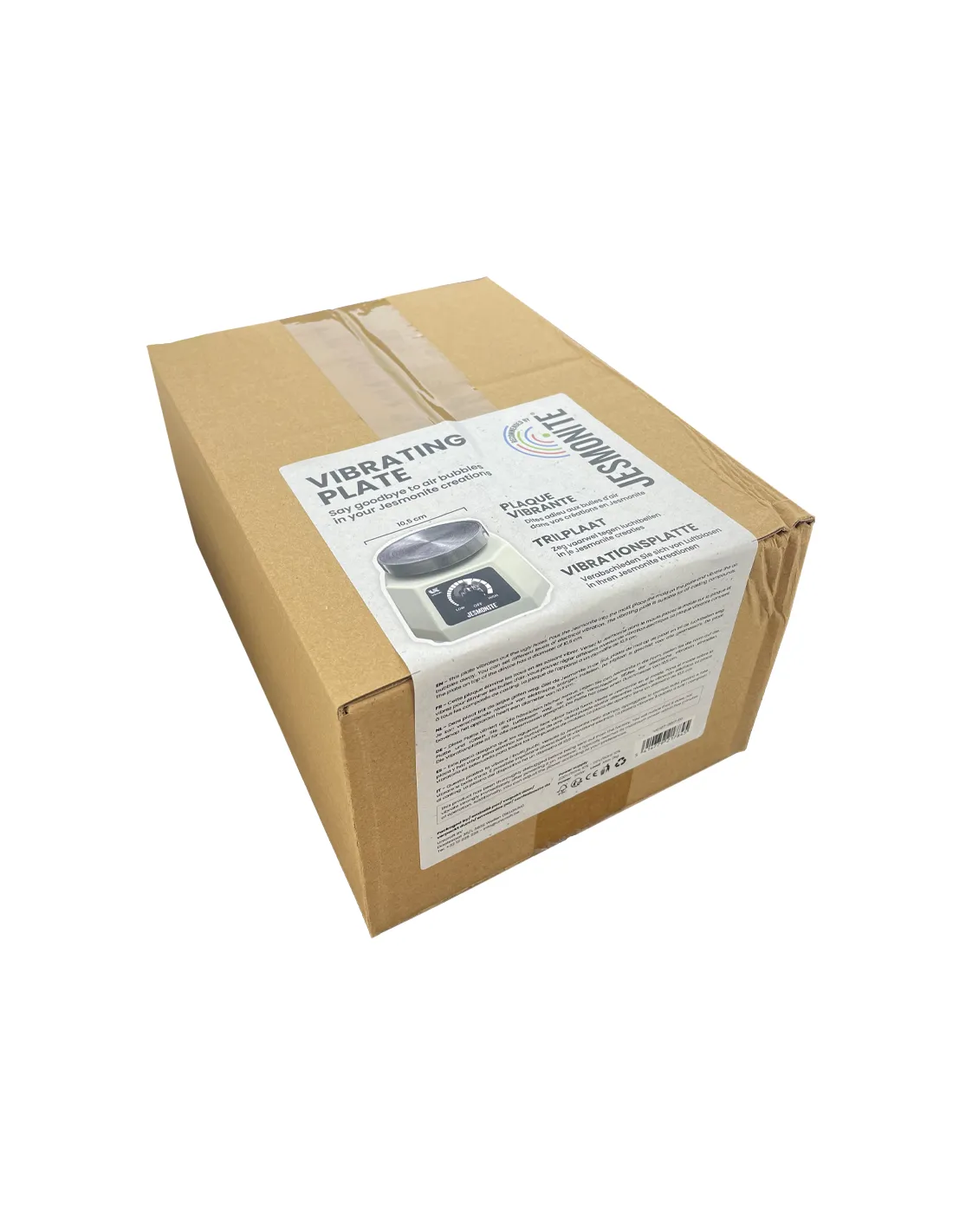
Vibrating Plate Jesmonite
443060003
€65.00
78,65 € Tax incl.
78,65 € Tax incl.
Anti-bubble vibrating plate for Jesmonite and resin castings. Eliminates trapped air and guarantees smooth, professional finishes.
The Vibrating Plate Jesmonite is a workshop tool designed to eliminate air bubbles from mineral and acrylic resin castings. Place the mould on the plate, activate the vibration and trapped air rises to the surface in seconds, leaving pieces with a smooth, defect-free finish. A minimal investment that makes a visible difference in the final result.
Technical specifications
| Feature | Detail |
|---|---|
| Main function | Air bubble elimination by mechanical vibration |
| Compatibility | Jesmonite, acrylic resins, plaster, decorative cement and similar casting materials |
| Construction | Resistant and durable materials suitable for continuous workshop use |
| Use | Place the mould on the plate with the freshly poured casting and activate the vibration |
| User level | Professional, semi-professional and artisan |
What it is used for
The vibrating plate is an essential accessory when working with casting materials that tend to trap air bubbles during mixing or pouring. Its use is especially critical for pieces that require a clean surface finish or that will be displayed unpainted.
- Castings of Acrystal Prima and Basic Crystal in silicone or polyester moulds
- Jesmonite projects: decorative countertops, figures, panels and cladding
- Series production of artisan pieces where consistency of finish is essential
- Castings of fine plaster, decorative cement or any poured material that generates bubbles
- Art, decoration and signage pieces in mineral resin
- Creative workshops looking for professional results without a vacuum chamber
How to use it
- Prepare the mix of your casting material (Jesmonite, Acrystal or other) following the proportions indicated by the manufacturer. Correct mixing already reduces the initial number of bubbles.
- Pour the mix into the mould carefully, in a thin stream and from a certain height to minimise air incorporation.
- Place the filled mould on the surface of the Vibrating Plate Jesmonite.
- Activate the vibrating plate. Air bubbles trapped in the mass will rise to the surface within a few seconds.
- Maintain the vibration for between 30 and 60 seconds, or until you stop seeing bubbles breaking at the surface.
- Remove the mould, switch off the plate and leave the piece to cure on a level surface.
- Demould once the recommended curing time for the material used has been reached.
Usage tips
Work quickly
Use the vibrating plate as soon as you pour the casting, before the material starts to gain viscosity. The sooner you apply the vibration, the easier it will be for bubbles to migrate to the surface. With materials that have a short working time, have the plate already switched on before pouring.
Combine with good mixing technique
The plate eliminates bubbles, but does not create them from nothing. Always mix with slow, folding movements to incorporate as little air as possible. If you use thixotropic agent in your formula, bear in mind that it increases viscosity and may cause bubbles to take a little longer to rise: in that case, extend the vibration time.
Take care of the mould and the load
Make sure the mould is perfectly supported and stable on the plate, with no rocking that could displace the casting. For very deep moulds or those with complex geometries, consider pouring in two layers and vibrating between each one to ensure no air pockets remain in hard-to-reach areas. If you work with a casting ladle, control the flow of pouring carefully to avoid introducing turbulence.
Frequently asked questions
Is it only for Jesmonite or can I use it with other materials?
The Vibrating Plate Jesmonite is compatible with any casting material that generates air bubbles: acrylic resins such as Acrystal Prima or Basic Crystal, fine plaster, decorative cement and similar. The name refers to the brand with which it is usually marketed, but its function is universal across poured materials.
Does it eliminate all bubbles or only surface ones?
The vibration causes bubbles trapped throughout the entire mass to rise to the surface, not just the surface ones. Effectiveness depends on the viscosity of the material and the time the vibration is applied. In low-viscosity materials the result is excellent; in materials with higher viscosity (for example, mixes with thixotropic agent) it may be necessary to extend the vibration cycle.
Is a vacuum chamber necessary if I use the vibrating plate?
It depends on the level of demand of the work. For most projects with Jesmonite and mineral resins, the vibrating plate delivers more than satisfactory results without the need for vacuum. A vacuum chamber is more suitable for platinum silicones or polyurethane resins with very short working times. For acrylic castings and creative projects, vibration is the most practical and accessible solution.
How long should I leave the mould on the plate?
In most cases, between 30 and 60 seconds is sufficient. Observe the surface of the casting: while bubbles are still appearing and bursting, continue with the vibration. When the surface becomes still and shows no visible activity, you can remove the mould and leave it to cure in a static position.
Can I use it with flexible silicone moulds?
Yes, flexible silicone moulds are perfectly compatible with the vibrating plate. In fact, it is the most common combination in workshops that work with Jesmonite. Make sure the mould is supported in a stable manner and, if it is very flexible, place it inside a rigid support to prevent the vibration from deforming the piece during the process.
Does it need maintenance?
Maintenance is minimal. Clean the surface of the plate after each use to prevent the build-up of cured material residue that could affect how the mould sits. Periodically check the fixing elements and the electrical connection to ensure safe and consistent operation.
Does it work with large, heavy moulds?
The plate is designed for regular use in creative and artisan workshops. For large-format or considerably heavy moulds, check that the load does not exceed the plate's capacity and that the vibration is transmitted correctly across the entire base of the mould. For high-volume industrial production, a higher-powered vibrating unit may be required.
No reviews
Tap to zoom