Shopping Cart


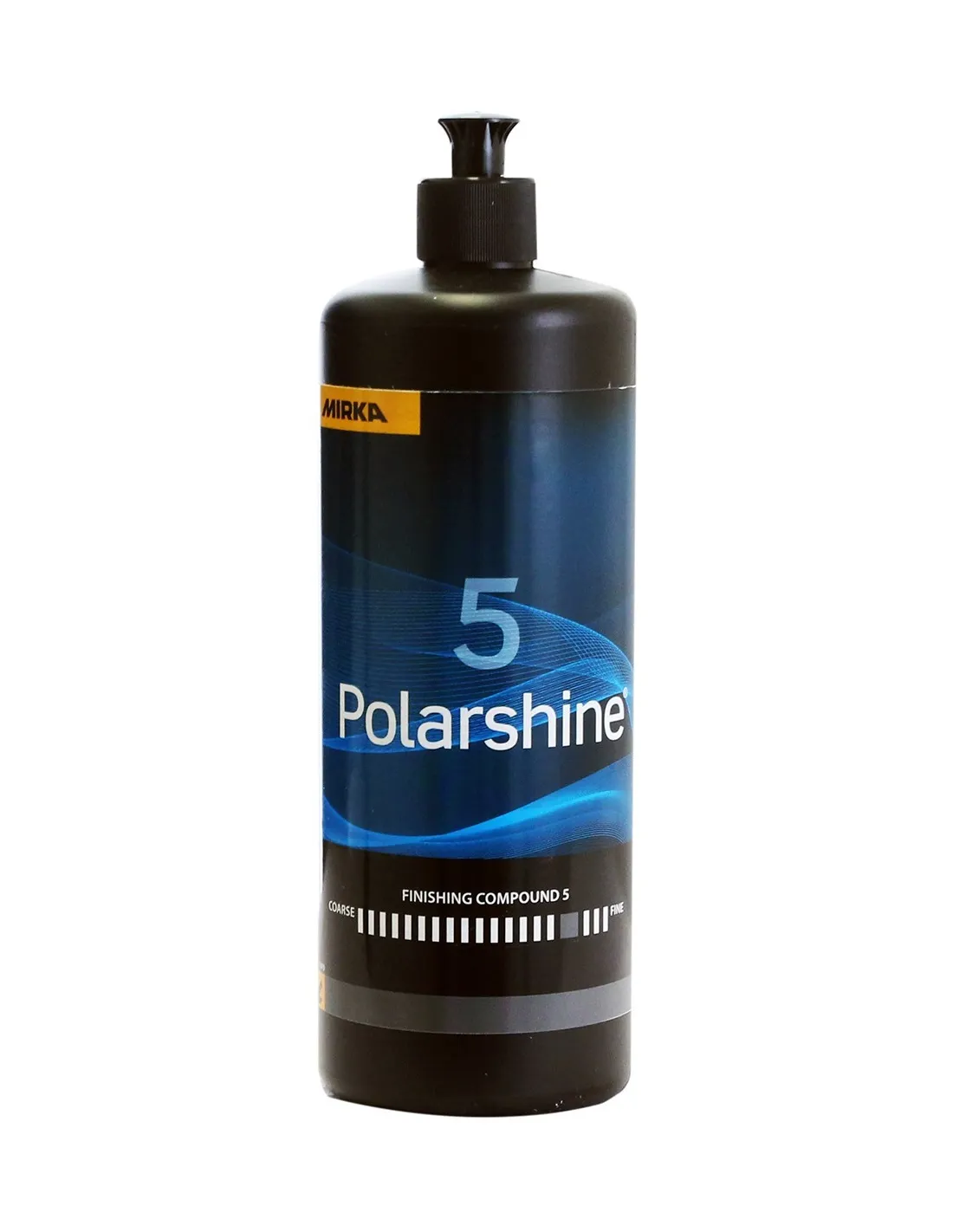
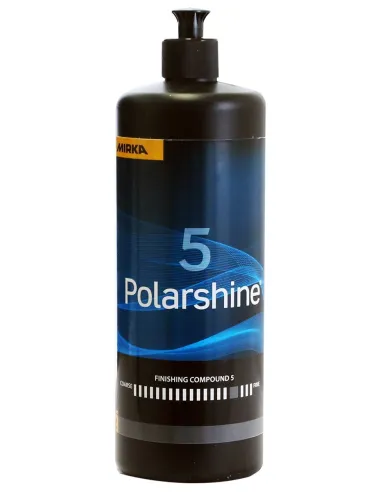
PolarShine 5 -Finishing Paste-
301804000
€22.00
26,62 € Tax incl.
26,62 € Tax incl.
Water-based polishing compound for high-gloss finishes on lacquers, gel coats and composites. Removes sanding marks and levels surfaces with low splatter. 250 ml.
PolarShine 5 is a water-based coarse polishing compound designed to achieve high-gloss finishes on lacquers, gel coats, varnishes and composites. It removes fine sanding marks and levels the surface to a superior finish, reducing the risk of overheating thanks to its specific formulation for machine use. Its high viscosity minimises splatter and makes it easy to work with in both industrial and marine environments.
Technical specifications
| Property | Detail |
|---|---|
| Type | Coarse polishing compound |
| Base | Water |
| Finish | High gloss |
| Application | Orbital / rotary polisher |
| Compatible substrates | Gel coats, lacquers, varnishes, composites, paints |
| Pack size | 250 ml |
What it is used for
PolarShine 5 is intended for the initial polishing stage on surfaces showing fine sanding marks, blending between old and new paints, or minor imperfections. It is the entry-level compound in a progressive polishing process that can be continued with finer-grade compounds.
- Removal of sanding marks on paints, lacquers and varnishes
- Polishing gel coat layers on fibreglass and composite parts
- Restoring gloss on oxidised or weathered surfaces
- Blending and levelling old and new paints
- Demanding marine and industrial applications
- First stage in multi-step polishing systems
How to use it
- Clean the surface with a clean cloth and, if there are resin residues or contamination, use Epoxi Cleaner to degrease it properly before polishing.
- Make sure the surface is dry and dust-free before applying the compound.
- Apply a small amount of PolarShine 5 directly onto the polishing pad or onto the surface.
- Work with an orbital or rotary polisher at a medium-low speed initially to distribute the product without splatter.
- Gradually increase the speed to work the compound until the sanding marks disappear.
- Remove residue with a clean microfibre cloth.
- If the surface requires it, continue the process with PolarShine 10 for a finer finish.
Usage tips
Surface temperature control
PolarShine 5 is formulated to reduce the risk of overheating, but on gel coat surfaces or delicate lacquers it is important not to keep the pad stationary on the same area for more than a few seconds. Always keep the pad moving and avoid applying excessive pressure. In hot weather, work in small sections and remove the residue quickly.
Choosing the right pad
For a coarse polishing compound like PolarShine 5, use a medium-cut foam pad or a wool pad to maximise defect removal. If working with a rotary polisher, a wool pad is the most aggressive and effective option for the first stages. With a dual-action orbital polisher, a cut foam pad works very well with a lower risk of marring the surface.
Multi-step polishing system
For the best possible result, follow a progressive process: start with PolarShine 35 if the surface has deep scratches or coarse sanding marks, continue with PolarShine 5 to remove the marks left by the previous compound, and finish with PolarShine 10 to achieve maximum gloss and smoothness.
Frequently asked questions
What is the difference between a coarse and a fine polishing compound?
A coarse polishing compound, such as PolarShine 5, contains larger abrasive particles that allow deeper defects to be removed: sanding marks, surface oxidation or differences between old and new paint layers. A fine polishing compound, such as PolarShine 10, has finer abrasives and is used in the next stage to refine the finish and maximise gloss, removing the small marks left by the coarse compound.
Can it be used by hand or is a polisher required?
PolarShine 5 is designed to be used with an orbital or rotary polisher, where the mechanical action allows the full abrasive capacity of the compound to be exploited. Hand application is possible on small areas or hard-to-reach spots, but the result will be significantly inferior and will require much more physical effort to remove surface defects.
Does it work on fibreglass and composites?
Yes. PolarShine 5 is particularly well suited for polishing gel coat layers on fibreglass and composite parts, which are common surfaces in marine and industrial applications. It is compatible with the most common finishes on these types of materials, provided the gel coat or lacquer layer is thick enough for polishing.
How much compound should be applied per pass?
Work with small amounts: a few drops or a coin-sized amount on the pad or surface is enough to cover an area of approximately 30x30 cm. Using too much compound does not improve the result and makes even distribution more difficult. It is better to repeat the application on the same area if necessary than to saturate the pad.
Is sanding required before applying the compound?
It depends on the condition of the surface. If there are deep scratches or marked imperfections, it is advisable to sand progressively up to a fine grit (P1500–P2000) before using PolarShine 5. If the surface only shows fine sanding marks or loss of gloss, you can start directly with the compound without prior sanding.
Is the compound suitable for plastic surfaces?
PolarShine 5 is formulated primarily for lacquers, varnishes, gel coats and composites. For plastic surfaces, it is important to first test in a hidden area to ensure the compound does not cause marks or reactions on the material, as some plastics can be sensitive to medium-cut abrasives. If in doubt, start with PolarShine 10, which is less aggressive.
How do you clean the tools and work area after use?
As it is a water-based compound, clean-up is straightforward. Product residue on the surface is removed with a clean microfibre cloth. Polishing pads can be washed with water and mild soap. If there are dried residues on work surfaces or tools, Epoxi Cleaner can help with general clean-up of the work area.
Can it be used on a part where epoxy resin has been applied?
Yes, provided the resin is fully cured and the surface has a topcoat (lacquer, gel coat or varnish) over it. Polishing directly on epoxy resin without a topcoat is not recommended, as the aesthetic result will not be optimal. To prepare the surface before polishing, clean thoroughly with Epoxi Cleaner and make sure there are no Release agent residues.
No reviews
Tap to zoom