Shopping Cart


Piñata -Alcohol Inks-
638201001
€4.00
4,84 € Tax incl.
4,84 € Tax incl.
Piñata alcohol inks by Jacquard: highly saturated, fast-drying, UV resistant. Ideal for effects in epoxy resins, glass, metal, leather and more.
Piñata alcohol inks are highly saturated, transparent, fast-drying dyes formulated to adhere to non-porous surfaces: glass, metal, plastic, ceramic, leather, epoxy resin and polymer clay, among others. Thanks to their alcohol base, they offer unmatched colour intensity, UV resistance, water impermeability and the ability to reactivate and blend shades while wet to create unique effects, including the popular water and ocean simulations in transparent epoxy resins.
Technical specifications
| Property | Detail |
|---|---|
| Ink type | Alcohol ink (alcohol base) |
| Finish | Transparent / high saturation |
| Drying | Fast (alcohol evaporation) |
| UV resistance | Yes — dyes selected for their light stability |
| Water resistance | Waterproof once dry |
| Acidity | Acid-free |
| Cleaning / thinning | isopropyl alcohol or Piñata Transparent Extender |
| Wet reactivation | Yes — allows blending and feathering of colours |
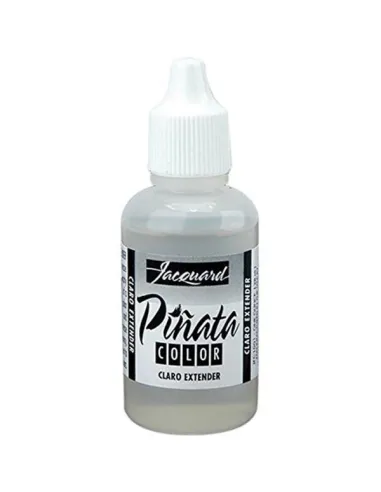
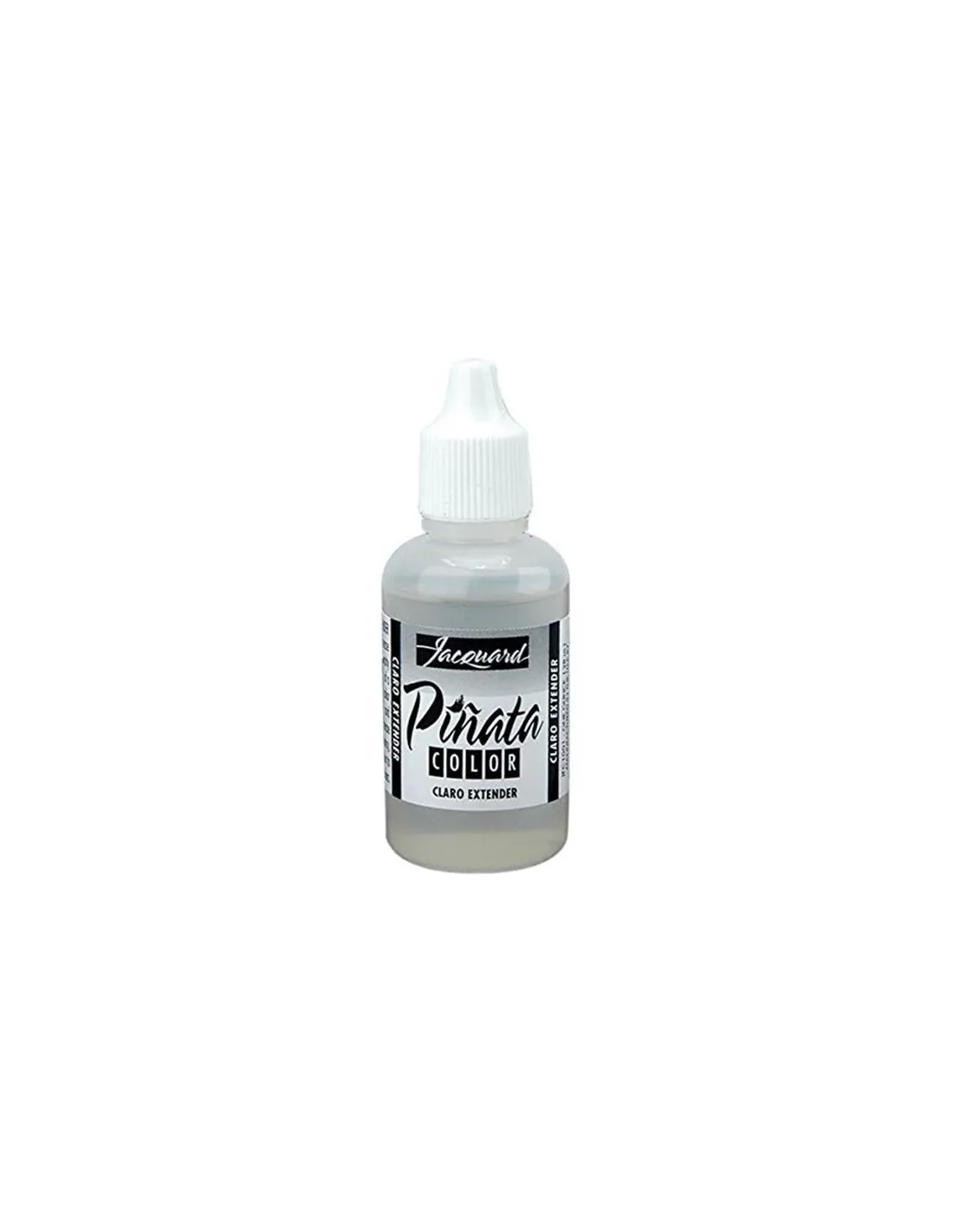
| Available formats | Colour bottles (14.7 ml) — Transparent Extender and Cleaner in 30 ml bottles |
| Compatible surfaces | Glass, metal, plastic, vinyl, ceramic, stone, leather, epoxy resin, aluminium foil, wood, clay, fibreglass, acrylic, polymer clay |
What it is used for
Piñata inks are used in any application requiring transparent, intense colour on non-porous surfaces. Their unique wet behaviour makes them the preferred tool for fluid and blending effects in resin work. The most common uses include:
- Creating water, ocean and marble effects in transparent epoxy resins (river tables, fluid art paintings, jewellery)
- Colouring resin, polymer clay and glass pieces
- Dyeing leather, skin and vinyl
- Decorative finishes on ceramic, metal and plastic
- Stained glass simulation on transparent surfaces
- Scrapbooking, card making and fine arts in general
- Faux finish techniques (wood, stone, oxidised metal)
- Colouring laminating epoxy resins in decorative layers
How to use it
- Prepare the surface: it must be clean, dry and grease-free. On very smooth surfaces (glass, polished metal) a light sanding improves adhesion.
- Apply the ink directly from the bottle dropper, with a brush, sponge or airbrush depending on the desired effect.
- For blending and feathering effects, work wet: apply several inks before they dry and let them flow or guide them with a heat gun or ink blower.
- To use with epoxy resin, add a few drops of Piñata ink to the already-mixed resin (part A + B) or drop directly onto the still-liquid resin layer to create cell and ocean effects.
- If you need to thin or lighten the colour, use the Piñata Transparent Extender or isopropyl alcohol.
- To clean tools (brushes, airbrush), use the Piñata cleaner or isopropyl alcohol before the ink dries.
- Allow to dry completely. Drying time depends on the layer applied and ventilation; thin layers dry almost instantly.
- If working on epoxy resin, always seal with a final coat of epoxy top coat to protect the colour and add gloss.
Usage tips
Ocean and water effects in epoxy resin
To achieve waves and depth in river tables or epoxy paintings, work in layers. Pour the resin into the "water" area, add a few drops of Piñata ink in blue, turquoise and green tones directly onto the still-liquid surface and use a blower to create movement. Piñata white (Snow Cap) applied at the crest of the waves adds a foam effect. Always seal with a transparent epoxy top coat to protect and unify the finish.
Colour mixing and layering
The alcohol base allows reactivating already-dry layers by adding more ink or extender, making it easy to create gradients, transparencies and colour depth. Experiment by mixing directly on the surface: the fast drying gives control, but working wet allows colours to flow and blend organically. For more opaque or impasto colours, combine with paste pigment on the base resin.
Storage and conservation
Close the bottle tightly after each use to prevent alcohol evaporation. Store in a cool, dry place away from heat sources or open flames (alcohol is flammable). If the bottle has been open for a while and the ink has thickened, add a few drops of Piñata Transparent Extender or isopropyl alcohol and shake well. Do not use water as a thinner: it can break the ink and ruin the transparent effect.
Frequently asked questions
Can these inks be used directly mixed into epoxy resin?
Yes, Piñata inks are compatible with epoxy resins. You can add a few drops to the already-mixed resin component to tint it transparently, or drop them onto the still-liquid resin surface to create feathering and cell effects. For uniform, opaque colouring, combine them with paste pigment.
Are they permanent on glass and metal?
Piñata inks are indelible and waterproof once dry, but on glass and metal they can be scratched by mechanical abrasion. For pieces that will receive frequent handling, it is recommended to protect with a compatible varnish or top coat (for example, an epoxy top coat for maximum hardness).
How do you clean a surface if you made a mistake?
While the ink is still wet, it is easily removed with isopropyl alcohol or the Piñata cleaner. Once dry, the ink is harder to remove from porous surfaces (leather, wood), although on non-porous surfaces (glass, metal) concentrated alcohol can help lift it with friction.
Can they be used with an airbrush?
Yes. Piñata inks have a low viscosity that makes them ideal for airbrush use. Thin them slightly with Piñata Transparent Extender or isopropyl alcohol if needed to adjust the flow. Clean the airbrush immediately after use with isopropyl alcohol.
Are they suitable for outdoor pieces or direct sun exposure?
The Piñata formulation uses dyes selected for their UV light resistance, making them more stable than other alcohol inks on the market. For prolonged outdoor or direct sun exposure, it is always recommended to protect with a UV-resistant top coat or varnish to ensure colour durability.
How many drops of ink are needed to colour epoxy resin?
Being highly saturated, just a few drops produce very intense colour. As a starting point, 2–5 drops per 100 g of mixed resin are sufficient for transparent effects. Increase the amount gradually until the desired intensity is achieved. Note that adding too much ink may interfere with the curing of some resins sensitive to contaminants; always do a test first.
Can they be mixed with other types of resin pigments?
Yes, they can be combined with other resin-compatible colorants. For transparent effects, Piñata inks are the best option. If you want more opaque or metallic colours, combine them with paste pigment or with PolyColor Dyes in the same resin mix.
Can they be used on porous surfaces such as wood or paper?
Yes, although Piñata inks are specifically formulated for non-porous surfaces. On wood and paper they absorb faster and the colour may spread; in faux finish or decorative dyeing techniques on wood this can be precisely the desired effect. On very porous paper the result is similar to other alcohol inks for scrapbooking.
No reviews
Tap to zoom