
Shopping Cart
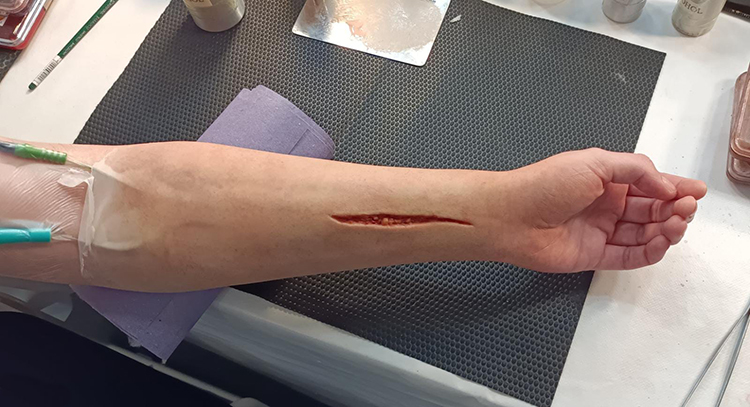
Silicone for soft tissue (Shore 00-20)
Human soft tissue — muscle, subcutaneous fat, visceral parenchyma — has a Shore 00 hardness of between 10 and 30 units. To reproduce it in a simulator you need ultra-soft platinum silicones that won't tear when surgical instruments are inserted and that recover their shape after manipulation. The Shore 00 range references are the most widely used in training laboratories and anatomical mannequin manufacturers.
 PlatSil Gel-0020
Shore 00-20 translucent. The softest for adipose tissue.
PlatSil Gel-0020
Shore 00-20 translucent. The softest for adipose tissue.
 PlatSil Gel-0030
Shore 00-30, 45 min working time. Muscle and viscera.
PlatSil Gel-0030
Shore 00-30, 45 min working time. Muscle and viscera.
 EASYPLAT FLESH 00-30
Flesh colour, Shore 00-30. Ideal for surface layers.
EASYPLAT FLESH 00-30
Flesh colour, Shore 00-30. Ideal for surface layers.
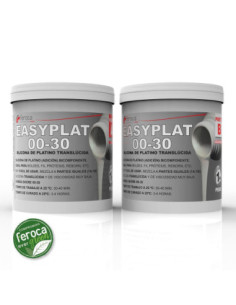 EASYPLAT 00-30
Translucent, Shore 00-30. Cost-effective 1:1 mix.
EASYPLAT 00-30
Translucent, Shore 00-30. Cost-effective 1:1 mix.
Silicone for soft tissue with deadener
In many simulators the feel does not depend solely on the chosen Shore hardness: the viscoelastic response — that sensation of progressive resistance characteristic of tissues — is achieved by softening the silicone with a deadener. Gloomer Deadener transforms any silicone in the EasyGel FX range into a material that precisely imitates the compressibility of subcutaneous tissue without losing structural cohesion.
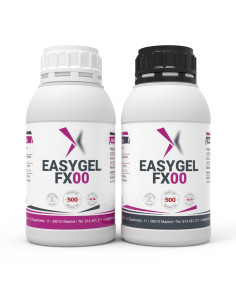 EasyGel FX00
Shore 00-30, translucent. Ideal base with deadener.
EasyGel FX00
Shore 00-30, translucent. Ideal base with deadener.
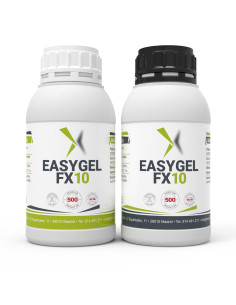 EasyGel FX10
Shore A10, 35 min working time. Dermis and subcutaneous layer.
EasyGel FX10
Shore A10, 35 min working time. Dermis and subcutaneous layer.
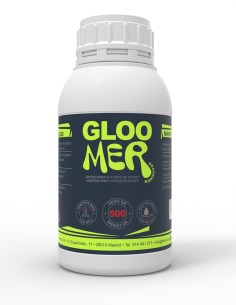 Gloomer Deadener
Adds viscoelasticity. Simulates real tissue response.
Gloomer Deadener
Adds viscoelasticity. Simulates real tissue response.
Silicone for cartilage and intermediate structures (Shore A10-A25)
Hyaline cartilage, dense connective tissue and deep muscle layers have a hardness of between Shore A10 and Shore A25. Silicones in this range reproduce the cutting resistance that a surgeon in training perceives when practising incisions, sutures or dissections. The translucency of these materials also allows the inner layers of the simulator to be visualised, which makes it easier to design models with layered anatomy.
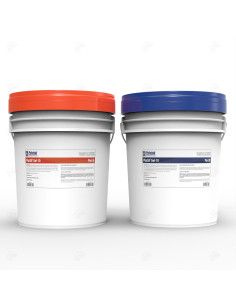 PlatSil Gel-10
Shore A10 translucent. Cartilage and connective tissue.
PlatSil Gel-10
Shore A10 translucent. Cartilage and connective tissue.
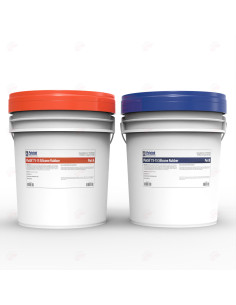 PlatSil 73-15
Shore A15, 20 min working time. Mid muscle layers.
PlatSil 73-15
Shore A15, 20 min working time. Mid muscle layers.
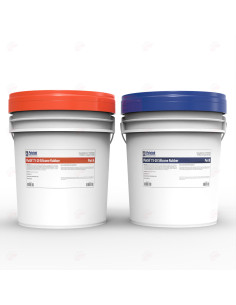 PlatSil 73-20
Shore A22 translucent. Semi-rigid cartilage.
PlatSil 73-20
Shore A22 translucent. Semi-rigid cartilage.
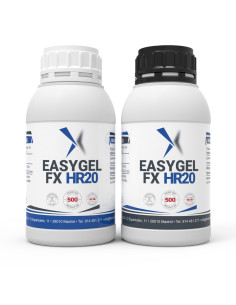 EasyGel FX HR20
Shore A20, cures in 25 min. Fast series production.
EasyGel FX HR20
Shore A20, cures in 25 min. Fast series production.
Silicone for outer skin and lifecast
The skin layer of a medical simulator must feel natural to the touch: neither too rigid nor excessively tacky. Lifecast silicone and skin-safe adhesive silicones allow you to create an outer shell that bonds to the rest of the layers without visible seams. Silicone paint completes the finish with accurate anatomical tones.
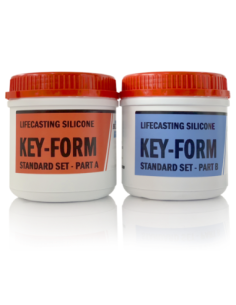 KEY-FORM
Self-releasing, 1:1. Skin shell for simulators.
KEY-FORM
Self-releasing, 1:1. Skin shell for simulators.
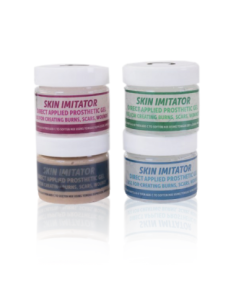 Skin Imitator
Adhesive, skin-safe. Cures in 5-7 min.
Skin Imitator
Adhesive, skin-safe. Cures in 5-7 min.
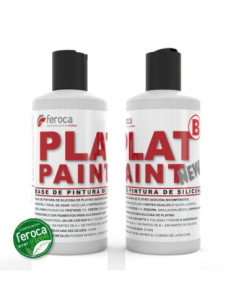 Plat-Paint New
Two-part silicone paint. Precise anatomical tone.
Plat-Paint New
Two-part silicone paint. Precise anatomical tone.
Gelatines for single-use simulators
Disposable simulators — especially those used in suture courses or emergency practice sessions — are usually made with prosthetic gelatine. These are food-grade materials, re-usable by thermal melting and much more cost-effective than silicone when the module does not need to last more than one session. The cutting behaviour and cohesion of 300 Bloom gelatine closely approximates that of real dermal tissue, making it the go-to material for incision and suture training.
 Titanic Fx Gelatina Prostética — Carne
300 Bloom, flesh colour. Disposable suture simulators.
Titanic Fx Gelatina Prostética — Carne
300 Bloom, flesh colour. Disposable suture simulators.
 Titanic Fx Gelatina Prostética — Sin color
300 Bloom, translucent. Pigmentable to match anatomy.
Titanic Fx Gelatina Prostética — Sin color
300 Bloom, translucent. Pigmentable to match anatomy.
Core and internal structure of the simulator
Beneath the silicone layers, the simulator needs a core that supports the whole assembly and reproduces the rigidity of bone or dense cartilage. Rigid and semi-flexible polyurethane foams are the standard material for this purpose: lightweight, machinable and able to receive silicone on their surface without the need for a release agent.
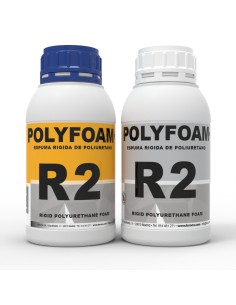 PolyFoam R2
Rigid, 64-128 kg/m³. Bone core for simulators.
PolyFoam R2
Rigid, 64-128 kg/m³. Bone core for simulators.
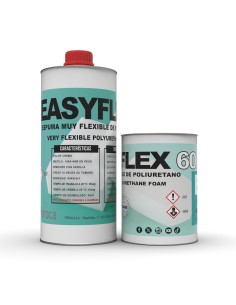 EASYFLEX 60
Flexible, 60 kg/m³. Soft inner filling for the mannequin.
EASYFLEX 60
Flexible, 60 kg/m³. Soft inner filling for the mannequin.
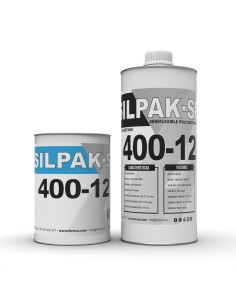 SilPak SP 400-12
Semi-flexible, 192 kg/m³. Bone-to-soft-tissue transition.
SilPak SP 400-12
Semi-flexible, 192 kg/m³. Bone-to-soft-tissue transition.
Selection table by tissue type
| Tissue to simulate | Target hardness | Recommended material | Use |
|---|---|---|---|
| Adipose tissue / viscera | Shore 00-20 | PlatSil Gel-0020 / EasyGel FX00 + Gloomer | Soft inner layers |
| Muscle / parenchyma | Shore 00-30 | PlatSil Gel-0030 / EASYPLAT 00-30 | Mid muscle layers |
| Dermis / subcutaneous | Shore A10-A15 | PlatSil Gel-10 / PlatSil 73-15 / EasyGel FX10 | Deep skin layer |
| Cartilage | Shore A20-A25 | PlatSil 73-20 / EasyGel FX HR20 / EasyGel FX25 | Cartilaginous structures |
| Outer skin | Shore A25 | KEY-FORM / Skin Imitator | Surface shell |
| Bone / rigid support | Rigid | PolyFoam R2 / PolyFoam R-5 | Structural core |
| Disposable simulator | Soft / dermal | Titanic Fx Gelatina Prostética | Suture and incision practice |
Platinum silicone inhibition: some polyurethane foams and resins contain tin, sulphur or amine compounds that inhibit the curing of platinum silicone. Before pouring silicone onto a foam core, apply a barrier coat of acrylic lacquer or carry out a compatibility test in a non-visible area.
Frequently asked questions about medical simulation
What is the difference between the Shore 00 and Shore A scales?
They are two different measurement scales for different durometers. The Shore 00 scale measures extremely soft materials — gels, soft foams, adipose tissue — that fall outside the range of the Shore A scale. A Shore 00-30 is softer than a Shore A10. For adipose tissue and viscera use the 00 scale; for deep muscle, cartilage and dermis, the A scale is the right one.
Is platinum silicone biocompatible for contact with students?
Cured platinum silicones are physiologically inert and non-toxic once curing is complete. However, "biocompatible" in the strictly medical sense (implants, prolonged contact with mucous membranes) requires specific certifications. For use in training simulators handled with gloves, platinum silicone is safe and widely accepted in the industry.
Can I pigment silicones to reproduce anatomical colours?
Yes. Platinum silicones accept pigments specifically designed for silicone — not water-based or acrylic pigments, which can inhibit curing. Plat-Paint New base lets you paint the outer surface of the simulator with precise dermal tones. For mass pigmentation, check the range of silicone pigments available at Feroca.
What is Gloomer Deadener for and how do you use it?
Gloomer Deadener is an additive that, when mixed with EasyGel FX silicones before curing, reduces the cohesion of the silicone network and produces a viscoelastic material with a slower response. The higher the proportion of deadener, the softer and more "dead" the feel of the simulator will be. It is added to part A or B before combining both components; there is no fixed ratio and it is adjusted to achieve the desired effect.
How do you make a suture simulator with gelatine?
Melt Titanic Fx Gelatina Prostética in a bain-marie or in a microwave at low power until you get a homogeneous liquid. Pour into a flat or anatomical mould, let it set at room temperature and demould. The resulting block can be cut into layers with different densities to simulate skin, subcutaneous tissue and muscle. Once training is over, the gelatine can be re-melted and reused several times.
Which foam should I use for the bone core and how do I combine it with silicone?
PolyFoam R2 and PolyFoam R-5 are the standard references for bone cores: lightweight, machinable with workshop tools and capable of taking complex shapes in a closed mould. Before pouring platinum silicone onto the cured foam, apply a coat of acrylic lacquer or shellac to seal off any possible inhibitors. Once the barrier is dry, the silicone cures normally on the foam surface.