
Shopping Cart


Platinum silicones for reborn: soft and translucent
The most important material when creating a reborn baby is platinum silicone. You need a very low Shore hardness — between 5 and 15 on the 00 scale, or between Shore A5 and A15 — so that the piece has the same softness and tactile response as real skin. Translucency is equally essential: it allows light to pass through the material and creates the characteristic depth of tone found in a newborn's skin. Platinum silicones do not inhibit on skin contact and do not cause allergic reactions, making them suitable for contact prosthetics as well.
Below are the most commonly used silicones for reborn pieces, listed from softest to firmest:
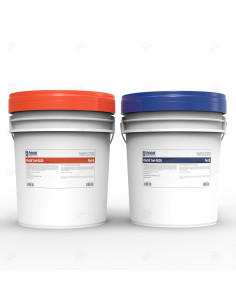 PlatSil Gel-0020
Shore 00-20, translucent, 40 min working time.
PlatSil Gel-0020
Shore 00-20, translucent, 40 min working time.
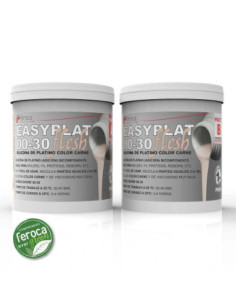 EASYPLAT FLESH 00-30
Shore 00-30, flesh color, 1:1 mix.
EASYPLAT FLESH 00-30
Shore 00-30, flesh color, 1:1 mix.
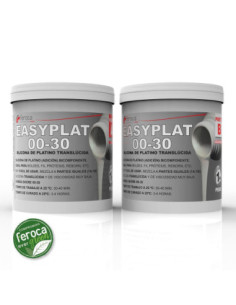 EASYPLAT 00-30
Shore 00-30, translucent, low viscosity.
EASYPLAT 00-30
Shore 00-30, translucent, low viscosity.
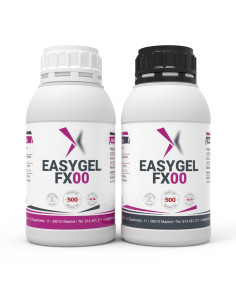 EasyGel FX00
Shore 00-30, for FX prosthetics and reborn.
EasyGel FX00
Shore 00-30, for FX prosthetics and reborn.
Platinum silicones Shore A10–A25 for more structured pieces
When you need pieces with a bit more body — for example full bodies, articulated parts, or figures that must hold their shape without an inner support — silicones between Shore A10 and A25 offer the ideal balance. They remain translucent and soft to the touch, but have enough elastic memory to recover their shape after handling.
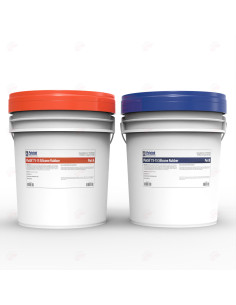 PlatSil 73-15
Shore A15, translucent, 20 min working time.
PlatSil 73-15
Shore A15, translucent, 20 min working time.
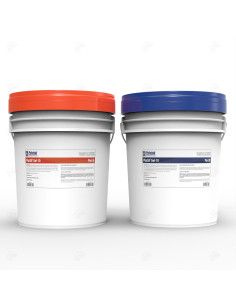 PlatSil Gel-10
Shore A10, translucent, ideal for prosthetics.
PlatSil Gel-10
Shore A10, translucent, ideal for prosthetics.
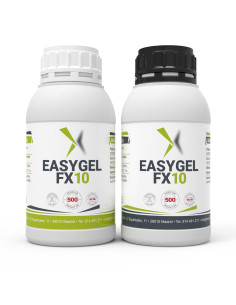 EasyGel FX10
Shore A10, 35 min working time, translucent.
EasyGel FX10
Shore A10, 35 min working time, translucent.
Additives for adjusting texture: deadener and flocking
Platinum silicone in its pure state has a certain surface tension that doesn't always perfectly mimic the tactile response of skin. Deadener further softens the cured silicone and eliminates the rubbery feel, bringing the touch closer to that of real soft tissue. Flocking, on the other hand, is a polyamide microfiber additive that, when mixed into the silicone before curing, creates that translucent capillary streaking visible just beneath the surface of a baby's skin.
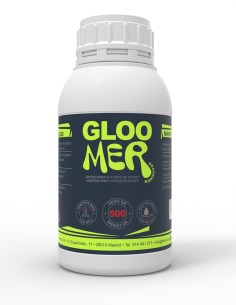 Gloomer Deadener
Softens EasyGel FX silicones, eliminates rubbery effect.
Gloomer Deadener
Softens EasyGel FX silicones, eliminates rubbery effect.
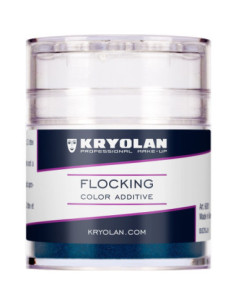 Flocking Color Additive
Microfibers to simulate veins and natural skin.
Flocking Color Additive
Microfibers to simulate veins and natural skin.
Intrinsic pigments: mass coloring of silicone
Intrinsic coloring involves mixing pigments directly into the uncured silicone before pouring it into the mold. The result is a color that lives inside the material, not on the surface, which means it won't peel, won't wear off with handling, and maintains a translucency similar to that of real skin. This is the standard method for giving a reborn baby its base tone: flesh-toned pigments are blended in small proportions until the desired shade is achieved, and the remaining chromatic details are added later with exterior paint.
Intrinsic pigments must be specifically compatible with platinum silicone. Conventional pigments for resins or acrylic paints can inhibit the cure. Always use pigments formulated for this type of catalyst.
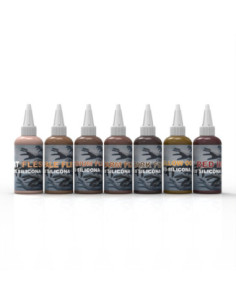 DYE PLAT - FLESH TONES
Concentrated flesh tones, platinum-compatible.
DYE PLAT - FLESH TONES
Concentrated flesh tones, platinum-compatible.
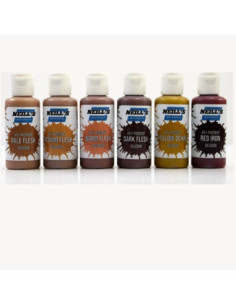 Key-Pigments
Flesh tone system for FX prosthetics.
Key-Pigments
Flesh tone system for FX prosthetics.
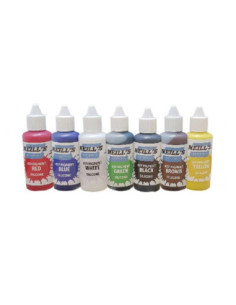 Silicone Pigments
High concentration for platinum and tin silicones.
Silicone Pigments
High concentration for platinum and tin silicones.
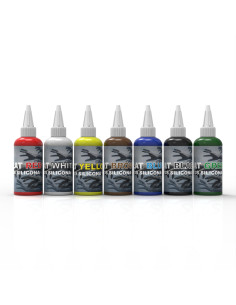 DYE PLAT - FX
Concentrated liquid pigments for platinum and tin silicones.
DYE PLAT - FX
Concentrated liquid pigments for platinum and tin silicones.
Exterior paint: detail finishes on cured silicone
Once the piece has cured with its intrinsic base color, the finest details — capillaries, spots, blush, lips, eyelids — are applied with exterior paint on the surface of the silicone. To paint on cured platinum silicone, a specific paint base also formulated in silicone is used, which ensures the necessary adhesion and flexibility. This base is pigmented by mixing in the same silicone pigments you use for intrinsic coloring.
To adjust the fluidity of the paint mixture and achieve thinner, more transparent layers, you can dilute it with naphtha or hexane. Both solvents are compatible with platinum silicones and evaporate without leaving any residue. Do not use polar solvents such as alcohol or acetone, as they can damage the surface of the piece.
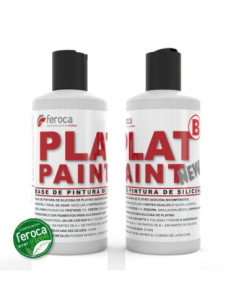 Plat-Paint New
Two-component silicone paint base for prosthetics.
DYE PLAT - FLESH TONES
Flesh tones for mixing into Plat-Paint.
DYE PLAT - FX
Full color range for exterior painting.
Plat-Paint New
Two-component silicone paint base for prosthetics.
DYE PLAT - FLESH TONES
Flesh tones for mixing into Plat-Paint.
DYE PLAT - FX
Full color range for exterior painting.
Molds for reborn: capturing anatomical detail
To reproduce skin textures — pores, folds, surface veins — the mold must capture every detail of the original sculpt. Higher-hardness platinum silicones are the most suitable for making the mold, as they offer dimensional stability and withstand multiple demolding cycles without deforming. The mold silicone should always be different from the piece silicone: choose one with a higher Shore hardness so the mold maintains its geometry under the pressure of the pour.
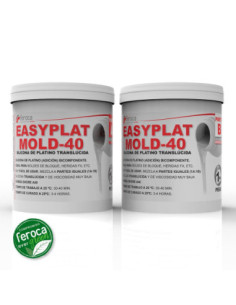 EASYPLAT MOLD-40
Shore A40, translucent, 30 min working time.
EASYPLAT MOLD-40
Shore A40, translucent, 30 min working time.
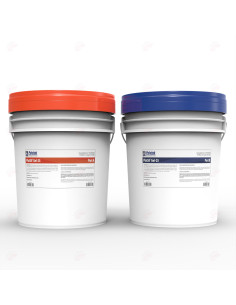 PlatSil Gel-25
Shore A25, translucent, 1:1 mix.
PlatSil Gel-25
Shore A25, translucent, 1:1 mix.
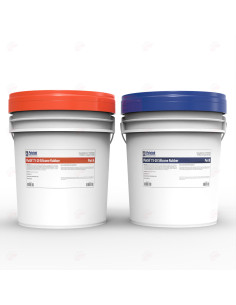 PlatSil 73-20
Shore A22, translucent, stable cure.
PlatSil 73-20
Shore A22, translucent, stable cure.
Frequently asked questions about materials for reborn and hyperrealism
What Shore hardness should I choose for a reborn baby?
For reborn babies it's common to work with Shore 00-20 or Shore 00-30 hardnesses, which are roughly equivalent to Shore A5–A10 on the conventional scale. These hardnesses produce an extremely soft silicone with a tactile response very close to real skin. If you need a particular area of the piece to have a bit more body — for example the torso versus the limbs — you can combine a softer silicone in the exposed parts with a slightly firmer one on the inside. For reborn work we recommend PlatSil Gel-0020, EASYPLAT 00-30 and EasyGel FX00.
What's the difference between intrinsic pigments and exterior paint on silicone?
Intrinsic pigments are mixed into the silicone before curing. The color becomes integrated into the body of the material and cannot be separated from it. This method is ideal for the base skin tone: it gives depth, translucency and permanence. Exterior paint, on the other hand, is applied onto the already cured silicone using a specific paint base — such as Plat-Paint New — pigmented with the same silicone pigments. This second method lets you add fine details like capillaries, birthmarks, shadows and blush, which would be impossible to achieve with mass coloring. In practice, both techniques are used together on the same piece.
What thinner should I use when painting with pigments on platinum silicone?
To thin the silicone paint base and achieve thinner layers or wash effects, use naphtha or hexane. Both are compatible with platinum silicones, do not interfere with the cure, and evaporate completely without leaving any residue. They let you work with fine brushes and achieve very subtle color transitions. Avoid isopropyl alcohol, acetone, and any polar solvent, as they can swell or damage the surface of cured silicone and affect paint adhesion.
Can any pigment inhibit the cure of platinum silicone?
Yes. The platinum catalyst is sensitive to compounds containing sulfur, nitrogen, phosphorus, organic tin, and some conventional dyes. If you add a pigment not formulated for platinum silicones, the silicone may not cure properly or may remain tacky in the contact area. Use only pigments certified for platinum silicones, such as DYE PLAT, Key-Pigments, or Feroca's Silicone Pigments. Before coloring a full batch, always do a cure test with a small amount of the mixture to verify that the pigment does not cause inhibition.
How do I achieve the effect of veins and capillaries beneath the skin on a reborn piece?
There are two main approaches. The first is to add Flocking to the silicone before curing: these polyamide microfibers remain suspended in the mass and, seen through the translucent silicone, mimic the appearance of surface veins. The second is to paint the capillaries with Plat-Paint New diluted in naphtha or hexane, using a fine brush on the cured silicone. Many artists combine both techniques: flocking for the general diffuse streaking, and paint for more precise anatomical details.